. 2021 Oct 11;17(10):e1009810.
doi: 10.1371/journal.pgen.1009810. eCollection 2021 Oct.

Selective sorting of ancestral introgression in maize and teosinte along an elevational cline

Affiliations

Selective sorting of ancestral introgression in maize and teosinte along an elevational cline

Erin Calfee et al. PLoS Genet. .

Abstract

While often deleterious, hybridization can also be a key source of genetic variation and pre-adapted haplotypes, enabling rapid evolution and niche expansion. Here we evaluate these opposing selection forces on introgressed ancestry between maize (Zea mays ssp. mays) and its wild teosinte relative, mexicana (Zea mays ssp. mexicana). Introgression from ecologically diverse teosinte may have facilitated maize's global range expansion, in particular to challenging high elevation regions (> 1500 m). We generated low-coverage genome sequencing data for 348 maize and mexicana individuals to evaluate patterns of introgression in 14 sympatric population pairs, spanning the elevational range of mexicana, a teosinte endemic to the mountains of Mexico. While recent hybrids are commonly observed in sympatric populations and mexicana demonstrates fine-scale local adaptation, we find that the majority of mexicana ancestry tracts introgressed into maize over 1000 generations ago. This mexicana ancestry seems to have maintained much of its diversity and likely came from a common ancestral source, rather than contemporary sympatric populations, resulting in relatively low FST between mexicana ancestry tracts sampled from geographically distant maize populations. Introgressed mexicana ancestry in maize is reduced in lower-recombination rate quintiles of the genome and around domestication genes, consistent with pervasive selection against introgression. However, we also find mexicana ancestry increases across the sampled elevational gradient and that high introgression peaks are most commonly shared among high-elevation maize populations, consistent with introgression from mexicana facilitating adaptation to the highland environment. In the other direction, we find patterns consistent with adaptive and clinal introgression of maize ancestry into sympatric mexicana at many loci across the genome, suggesting that maize also contributes to adaptation in mexicana, especially at the lower end of its elevational range. In sympatric maize, in addition to high introgression regions we find many genomic regions where selection for local adaptation maintains steep gradients in introgressed mexicana ancestry across elevation, including at least two inversions: the well-characterized 14 Mb Inv4m on chromosome 4 and a novel 3 Mb inversion Inv9f surrounding the macrohairless1 locus on chromosome 9. Most outlier loci with high mexicana introgression show no signals of sweeps or local sourcing from sympatric populations and so likely represent ancestral introgression sorted by selection, resulting in correlated but distinct outcomes of introgression in different contemporary maize populations.


Conflict of interest statement

The authors have declared that no competing interests exist.

Figures
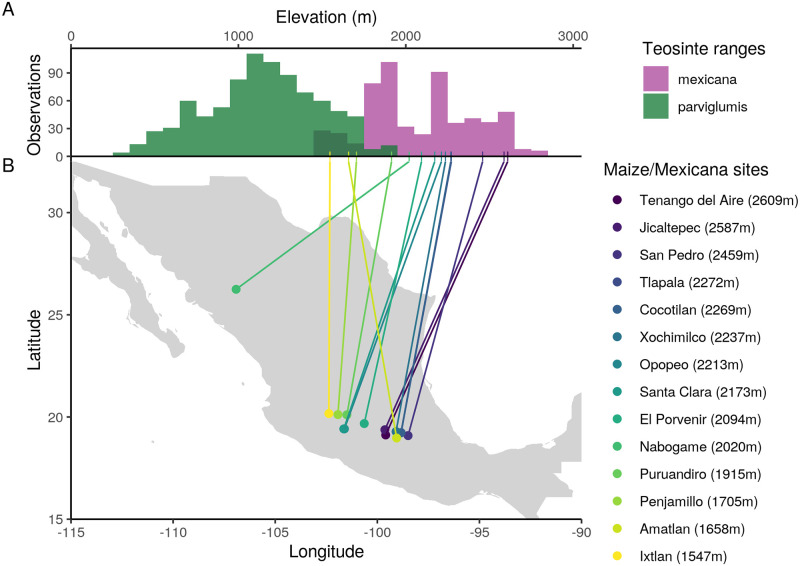
Fig 1
Fig 1. Sampled sympatric maize/mexicana populations compared to the distribution of teosintes.
(A) Elevational range of teosintes based on historical occurrence data (1842–2016) from [29]. Parviglumis and mexicana overlap at middle elevations (dark green) and maize today is grown across this entire elevational range. (B) Geographic location and elevation of contemporary sympatric maize and mexicana population pairs sampled across 14 sites. Map of Mexico created with Natural Earth data (https://www.naturalearthdata.com).
Fig 2
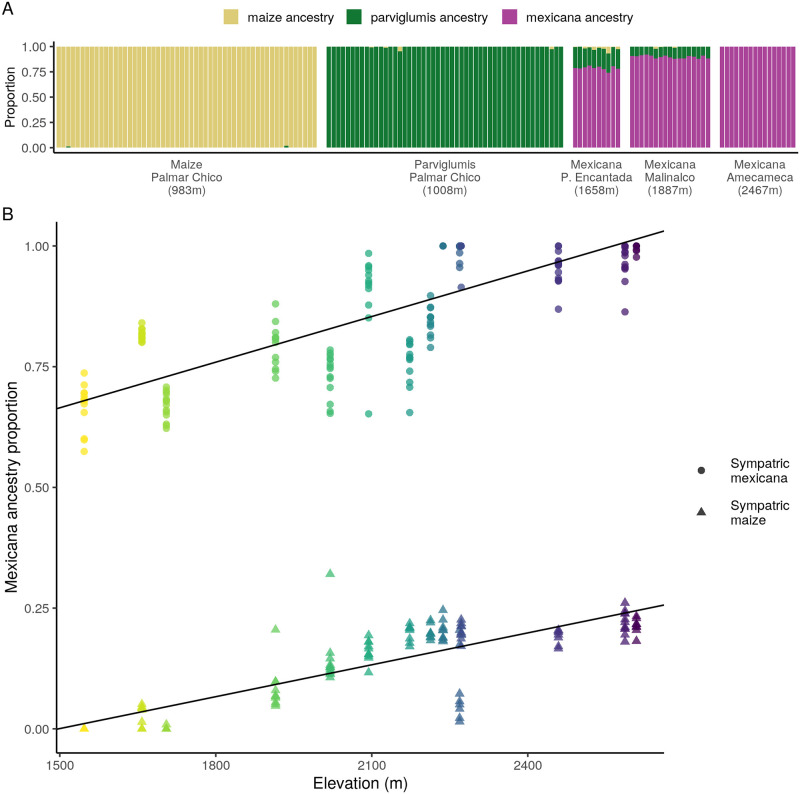
Fig 2. Distribution of mexicana ancestry by elevation.
(A) Genomewide ancestry estimates (NGSAdmix) for reference maize, mexicana and parviglumis individuals, grouped by sampling location. (B) Genomewide mexicana ancestry estimates (NGSAdmix) for sympatric maize and mexicana individuals (n = 305) along an elevational gradient, colored by sampling location. Lines show best linear model fit for mexicana ancestry by elevation for each subspecies separately.
Fig 3
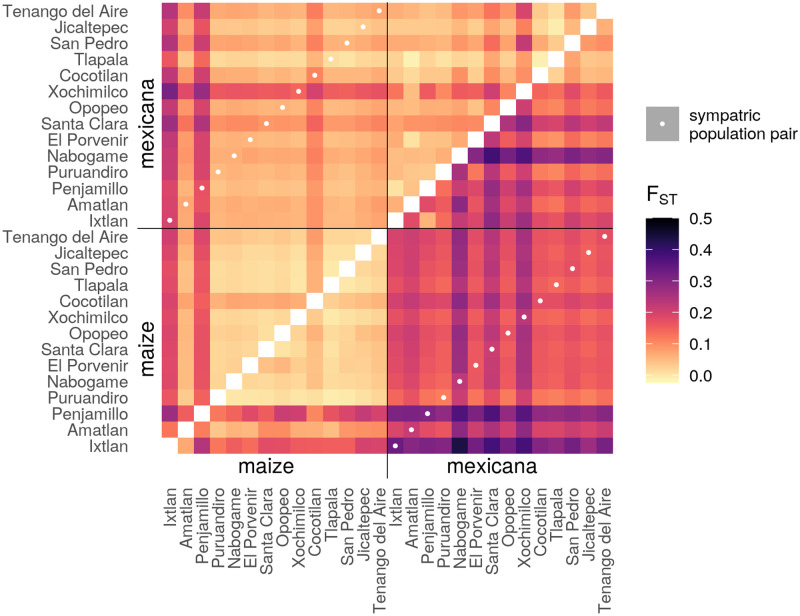
Fig 3. FST between ancestry tracts from different populations.
FST between each pair of populations for maize ancestry tracts are shown in the upper left triangle, while FST estimates for mexicana ancestry tracts are shown in the lower right triangle. Populations are sorted by subspecies, then elevation. Local sympatric maize-mexicana population pairs are highlighted with a white dot and do not show reduced FST relative to other (non-local) maize-mexicana comparisons. Additionally, introgressed mexicana ancestry shows low differentiation between maize populations (creating a light-colored maize block in the left corner of the lower right triangle) and no potential mexicana source populations show especially low FST with this block. Light coloring generally across the upper left triangle reflects the low differentiation within maize ancestry, providing little information to distinguish between potential maize ancestry sources.
Fig 4
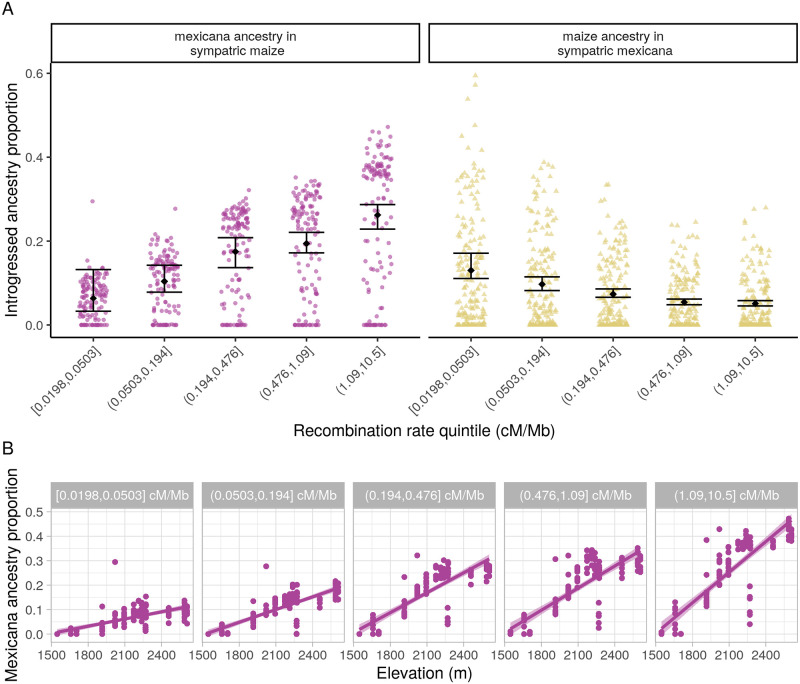
Fig 4. .
(A) Introgressed ancestry by recombination rate. Inferred average genomewide introgressed ancestry in sympatric maize and mexicana individuals (NGSAdmix K = 3), by recombination rate quintiles. Group mean and 95% confidence interval based on bootstrap percentiles (n = 100) are depicted in black. Introgressed ancestry estimates for each individual are shown as points and points are jittered for better visualization. (B) Slope of mexicana ancestry introgressed into maize populations across elevation for each recombination rate quintile, based on NGSAdmix estimates. Each point is a sympatric maize individual and lines show the best-fit linear model for ancestry by elevation (with shaded 95% confidence interval), estimated separately for each quintile.
Fig 5
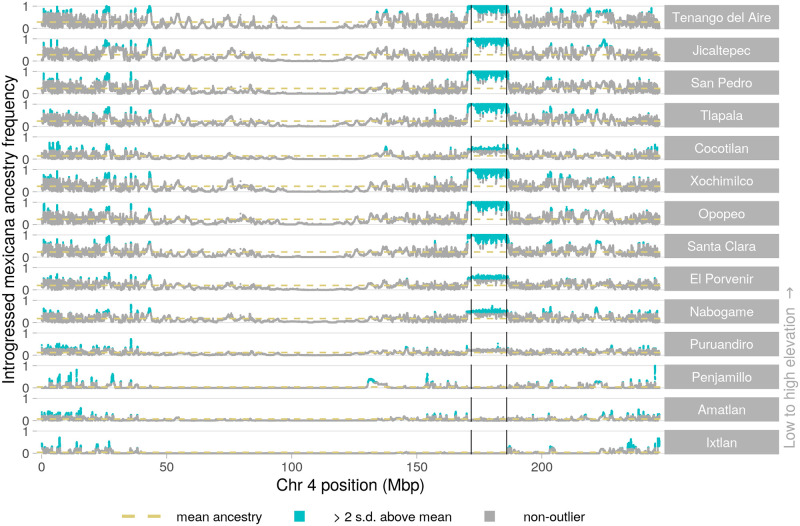
Fig 5. Introgression in maize populations across chromosome 4.
Local introgressed mexicana ancestry frequency for each maize population compared to their genomewide mean. Populations are ordered from high to low elevation (top to bottom). High introgression peaks with more than 2 standard deviations above the population mean introgressed mexicana ancestry are highlighted in blue. Vertical black lines show the previously identified endpoints for a large inversion (Inv4m; coordinates from Fig 3 of [50]). For local ancestry on other chromosomes and for maize introgression into sympatric mexicana, see S11–S29 Figs.
Fig 6
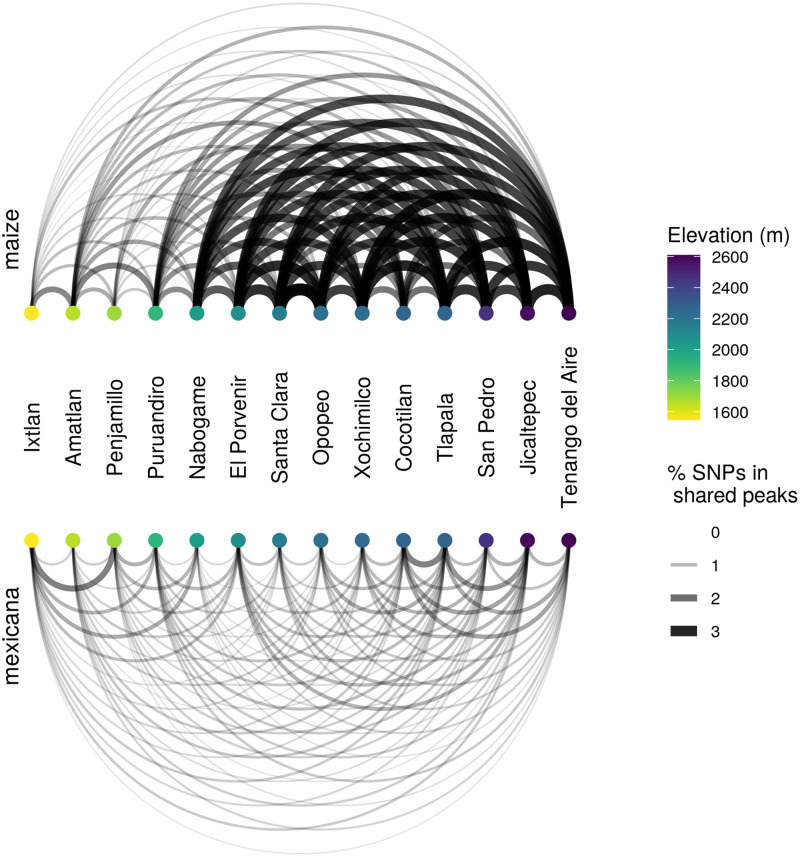
Fig 6. Introgression peaks shared across populations.
Networks for sympatric maize (top) and mexicana (bottom), where each node is a sampled population labelled by location and ordered by elevation. Edges connecting a pair of populations represent the percent of SNPs within shared ancestry peaks (introgressed ancestry > 2 s.d. above each population’s mean ancestry). Sharing between all pairs of populations exceeds expectations based on multivariate-normal simulations that model genomewide covariance in ancestry. The relatively darker thicker lines connecting the high elevation maize populations (except for Cocotilan), indicate that these populations share high introgression peaks at especially high frequencies.
Fig 7
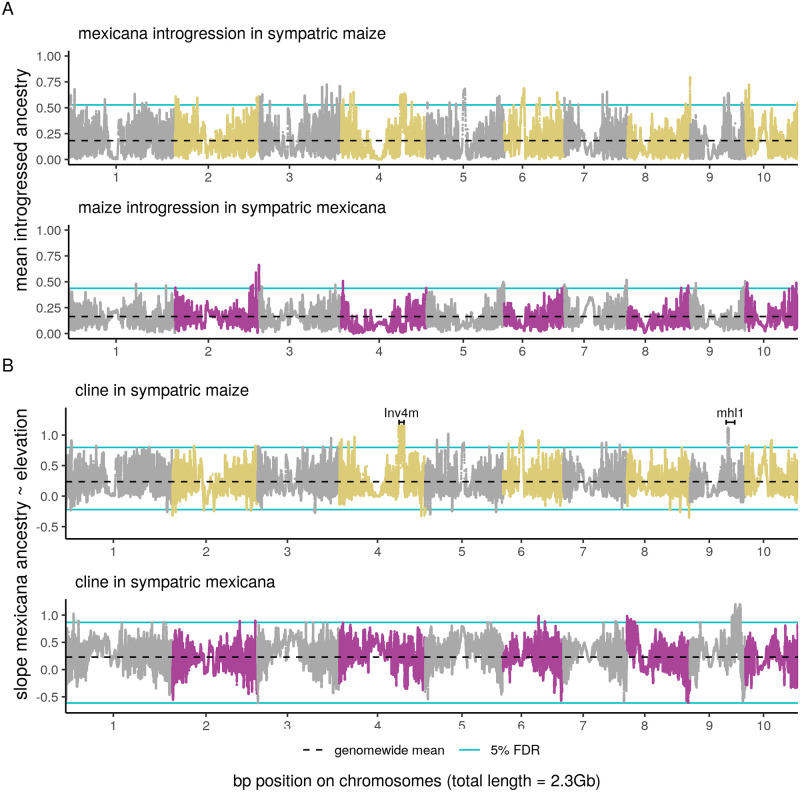
Fig 7. Genomewide scan for selection on introgressed ancestry.
(A) Mean mexicana ancestry introgressed into sympatric maize populations and mean maize ancestry introgressed into sympatric mexicana populations. (B) Slope of mexicana ancestry proportion over a 1 km elevation gain in sympatric maize and mexicana populations. In both (A) and (B) the blue lines show the 5% false discovery rates, set using multi-variate normal simulations. Positions for Inv4m [50] and the mhl1 locus [65] were converted to the maize reference genome v4 coordinates using Assembly Converter (ensembl.gramene.org). Chromosome numbers are placed at the centromere midpoint (approximate centromere positions are from [66]).

References

    1. Powell DL, García-Olazábal M, Keegan M, Reilly P, Du K, Díaz-Loyo AP, et al.. Natural hybridization reveals incompatible alleles that cause melanoma in swordtail fish. Science. 2020;368(6492):731–736. doi: 10.1126/science.aba5216 - DOI - PMC - PubMed
    1. Zuellig MP, Sweigart AL. Gene duplicates cause hybrid lethality between sympatric species of Mimulus. PLOS Genetics. 2018;14(4):e1007130. doi: 10.1371/journal.pgen.1007130 - DOI - PMC - PubMed
    1. Presgraves DC. The molecular evolutionary basis of species formation. Nature Reviews Genetics. 2010;11(33):175–180. doi: 10.1038/nrg2718 - DOI - PubMed
    1. Brandvain Y, Kenney AM, Flagel L, Coop G, Sweigart AL. Speciation and introgression between Mimulus nasutus and Mimulus guttatus. PLoS Genetics. 2014;10(6):e1004410. doi: 10.1371/journal.pgen.1004410 - DOI - PMC - PubMed
    1. Aeschbacher S, Selby JP, Willis JH, Coop G. Population-genomic inference of the strength and timing of selection against gene flow. Proceedings of the National Academy of Sciences. 2017;114(27):7061–7066. doi: 10.1073/pnas.1616755114 - DOI - PMC - PubMed

Publication types