


Potential interactions between antineoplastic agents and medicines used to treat Covid-19
- PMID: 34637360
- PMCID: PMC9619075
- DOI: 10.1177/10781552211040494
Potential interactions between antineoplastic agents and medicines used to treat Covid-19
Abstract
Introduction: Cancer patients with Covid-19 are exposed to treatment combinations that can potentially result in interactions that adversely affect patient outcomes. This study aimed to identify potential drug-drug interactions between antineoplastic agents and medicines used to treat Covid-19.
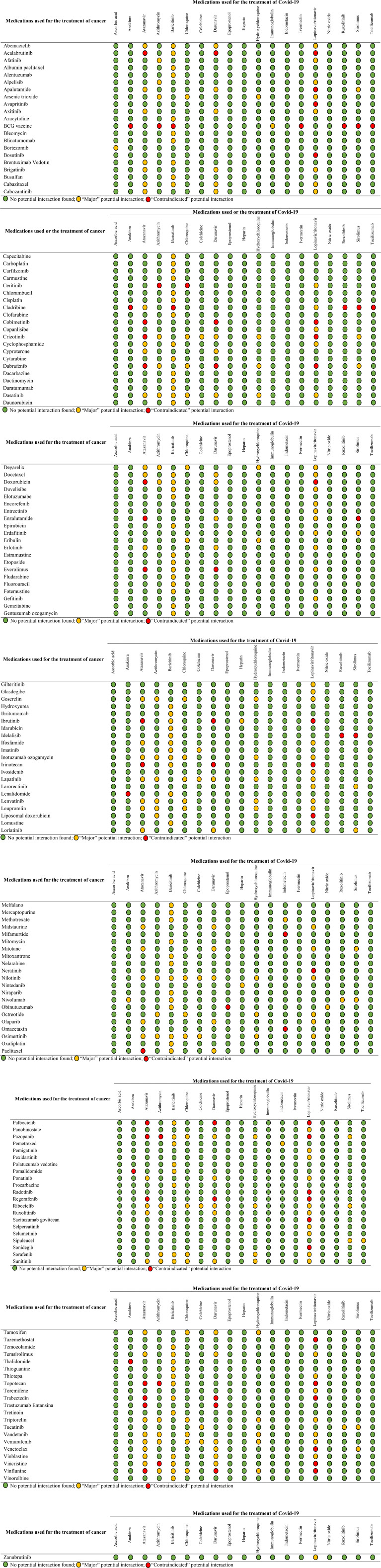
Methods: We conducted a search for potential interactions between 201 antineoplastic agents and 26 medicines used to treat Covid-19 on the Lexicomp® and Micromedex® databases. The following data were extracted: interaction severity ("major" and "contraindicated") and interaction effects (pharmacokinetic and pharmacodynamic). We also sought to identify the therapeutic indication of the antineoplastic drugs involved in the potential drug-drug interactions.
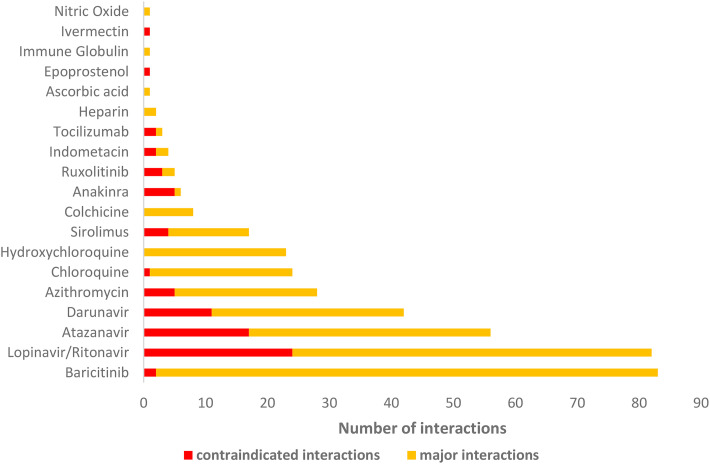
Results: A total of 388 "major" or "contraindicated" drug-drug interactions were detected. Eight drugs or combinations (baricitinib, lopinavir/ritonavir, atazanavir, darunavir, azithromycin, chloroquine, hydroxychloroquine, and sirolimus) accounted for 91.5% of these interactions. The class of antineoplastic agents with the greatest potential for interaction was tyrosine kinase inhibitors (accounting for 46.4% of all interactions). The findings show that atazanavir, baricitinib, and lopinavir/ritonavir can affect the treatment of all common types of cancer. The most common pharmacokinetic effect of the potential drug-drug interactions was increased plasma concentration of the antineoplastic medicine (39.4%).
Conclusions: Covid-19 is a recent disease and pharmacological interventions are undergoing constant modification. This study identified a considerable number of potential drug-drug interactions. In view of the vulnerability of patients with cancer, it is vital that health professionals carefully assess the risks and benefits of drug combinations.
Keywords: Covid-19; antineoplastic agents; drug–drug interactions.
Conflict of interest statement
Detailed information were inserted in the article on how the data can be obtained.
All authors made a substantial contribution to the concept or design of the work; participated of acquisition, analysis, or interpretation of data; drafted the article or revised it critically for important intellectual content; and approved the version to be published.
The author(s) declared no potential conflicts of interest with respect to the research, authorship, and/or publication of this article.
Figures
References
-
- Ferlay J, Laversanne M, Ervik M, et al. Global cancer observatory: cancer tomorrow. International Agency for Research on Cancer, https://gco.iarc.fr/tomorrow (2020, accessed 05 February 2021).
-
- Freitas R, Oliveira LAF, Rosa KSC, et al. Cuidados paliativos em pacientes com câncer avançado e Covid-19. Rev Bras Cancerol 2020; 66: e-1077.
-
- Thuler LCS, Melo AC. Sars-CoV-2/Covid-19 em pacientes com câncer. Rev Bras Cancerol 2020; 66: e-00970.
MeSH terms
Substances
LinkOut - more resources
Full Text Sources
