


Therapeutic acute intermittent hypoxia: A translational roadmap for spinal cord injury and neuromuscular disease
- PMID: 34637802
- PMCID: PMC8820239
- DOI: 10.1016/j.expneurol.2021.113891
Therapeutic acute intermittent hypoxia: A translational roadmap for spinal cord injury and neuromuscular disease
Abstract
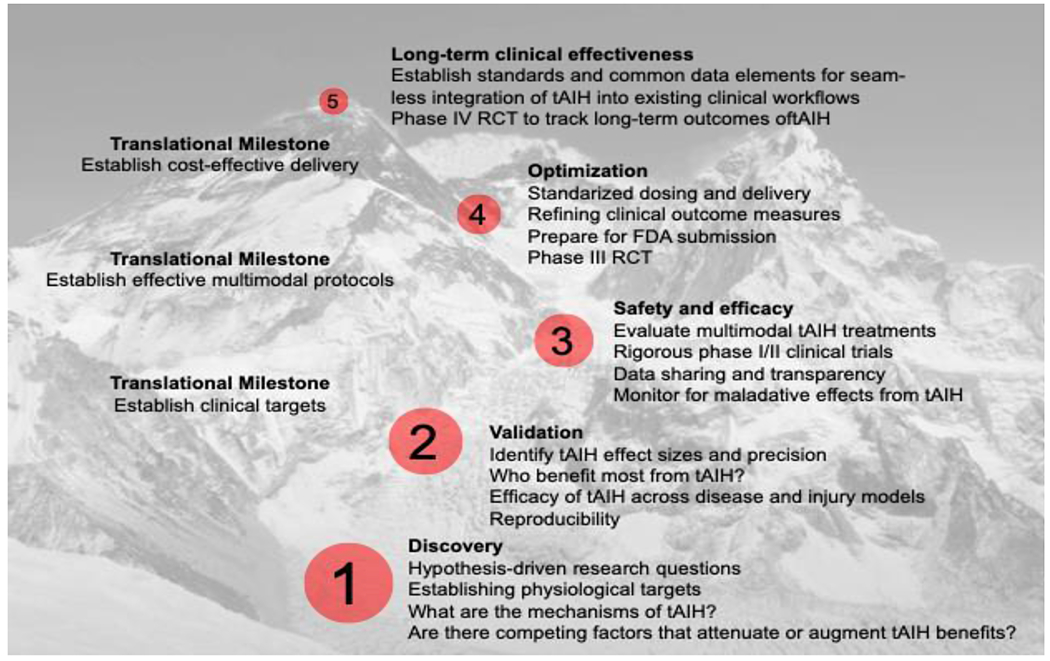
We review progress towards greater mechanistic understanding and clinical translation of a strategy to improve respiratory and non-respiratory motor function in people with neuromuscular disorders, therapeutic acute intermittent hypoxia (tAIH). In 2016 and 2020, workshops to create and update a "road map to clinical translation" were held to help guide future research and development of tAIH to restore movement in people living with chronic, incomplete spinal cord injuries. After briefly discussing the pioneering, non-targeted basic research inspiring this novel therapeutic approach, we then summarize workshop recommendations, emphasizing critical knowledge gaps, priorities for future research effort, and steps needed to accelerate progress as we evaluate the potential of tAIH for routine clinical use. Highlighted areas include: 1) greater mechanistic understanding, particularly in non-respiratory motor systems; 2) optimization of tAIH protocols to maximize benefits; 3) identification of combinatorial treatments that amplify plasticity or remove plasticity constraints, including task-specific training; 4) identification of biomarkers for individuals most/least likely to benefit from tAIH; 5) assessment of long-term tAIH safety; and 6) development of a simple, safe and effective device to administer tAIH in clinical and home settings. Finally, we update ongoing clinical trials and recent investigations of tAIH in SCI and other clinical disorders that compromise motor function, including ALS, multiple sclerosis, and stroke.
Keywords: ALS; Amyotrophic lateral sclerosis; Arm; Barriers; Breathing; Combinatorial treatment; Hand; Intermittent hypoxia; MS; Multiple sclerosis; Plasticity; Road map; SCI; Spinal cord injury; Task-specific training; Therapeutic; Translation; Walking.
Copyright © 2021 Elsevier Inc. All rights reserved.
Conflict of interest statement
Figures
References
-
- Ainslie PN, Barach A, Cummings KJ, Murrell C, Hamlin M, Hellemans J, 2007. Cardiorespiratory and cerebrovascular responses to acute poikilocapnic hypoxia following intermittent and continuous exposure to hypoxia in humans. J Appl Physiol (1985) 102, 1953–1961. 10.1152/japplphysiol.01338.2006 - DOI - PubMed
-
- Allard JS, Ntekim O, Johnson SP, Ngwa JS, Bond V, Pinder D, Gillum RF, Fungwe TV, Kwagyan J, Obisesan TO, 2017. APOEε4 impacts up-regulation of brain-derived neurotrophic factor after a six-month stretch and aerobic exercise intervention in mild cognitively impaired elderly African Americans: A pilot study. Exp Gerontol 87, 129–136. 10.1016/j.exger.2016.11.001 - DOI - PMC - PubMed
Publication types
MeSH terms
Grants and funding
LinkOut - more resources
Full Text Sources
Medical
Miscellaneous
