Review
. 2021 Oct 6;22(19):10799.
doi: 10.3390/ijms221910799.

What Are Reactive Oxygen Species, Free Radicals, and Oxidative Stress in Skin Diseases?

Affiliations
Review

What Are Reactive Oxygen Species, Free Radicals, and Oxidative Stress in Skin Diseases?

Kozo Nakai et al. Int J Mol Sci. .

Abstract

Oxygen in the atmosphere is a crucial component for life-sustaining aerobic respiration in humans. Approximately 95% of oxygen is consumed as energy and ultimately becomes water; however, the remaining 5% produces metabolites called activated oxygen or reactive oxygen species (ROS), which are extremely reactive. Skin, the largest organ in the human body, is exposed to air pollutants, including diesel exhaust fumes, ultraviolet rays, food, xenobiotics, drugs, and cosmetics, which promote the production of ROS. ROS exacerbate skin aging and inflammation, but also function as regulators of homeostasis in the human body, including epidermal keratinocyte proliferation. Although ROS have been implicated in various skin diseases, the underlying mechanisms have not yet been elucidated. Current knowledge on ROS-related and oxidative stress-related skin diseases from basic research to clinical treatment strategies are discussed herein. This information may be applied to the future treatment of skin diseases through the individual targeting of the ROS generated in each case via their inhibition, capture, or regulation.

Keywords: free radicals; oxidative stress; reactive oxygen species; skin.


Conflict of interest statement

The authors declare no competing financial interests.

Figures
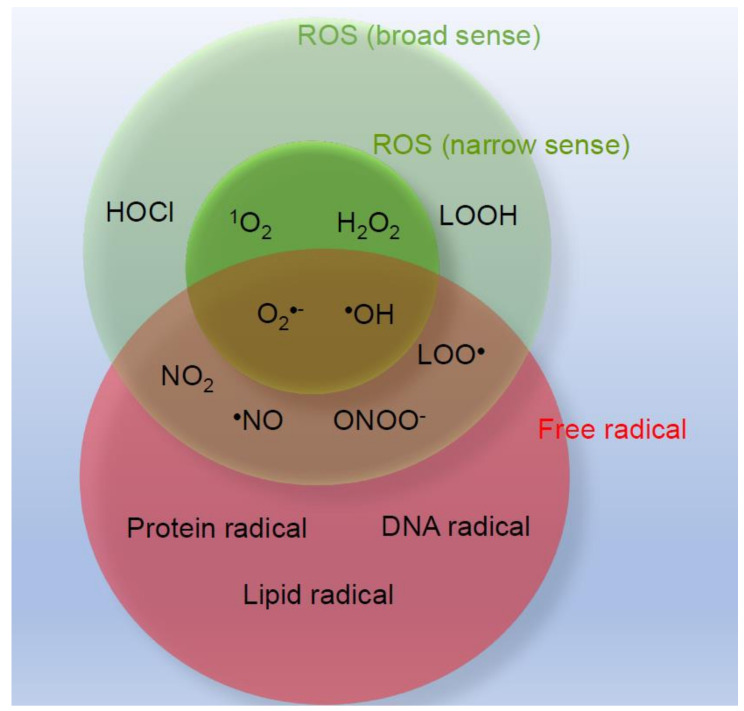
Figure 1
Figure 1
Reactive oxygen species and free radicals.
Figure 2
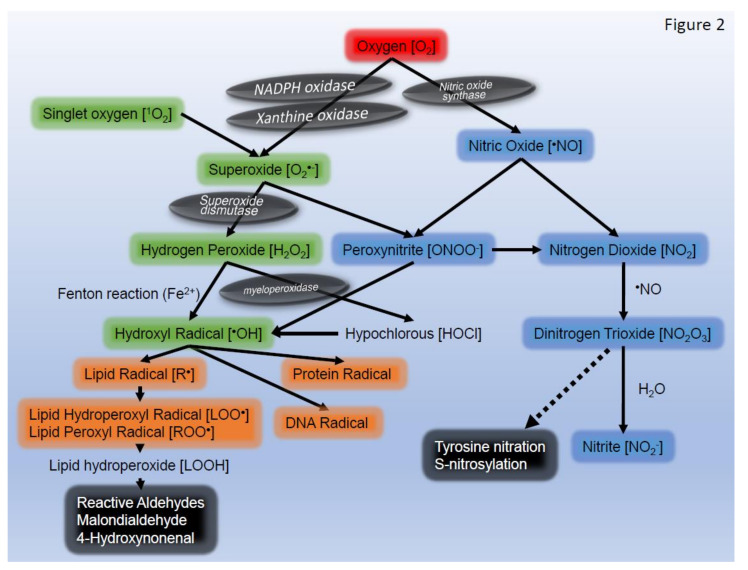
Figure 2
Reaction pathway of reactive oxygen species and free radicals.
Figure 3
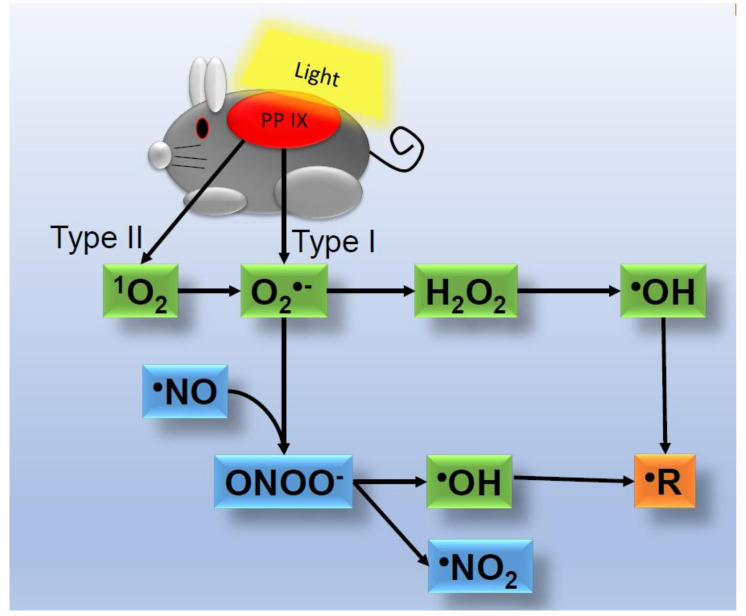
Figure 3
Detection of photo-induced free radicals in the skin of mice using an electron spin resonance method. Lipid radicals and OH are generated in skin treated with protoporphyrin IX (PP IX) plus natural light.
Figure 4
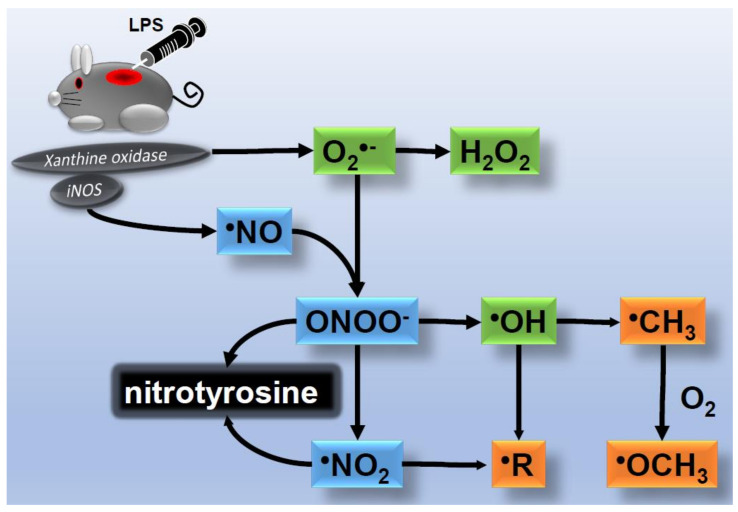
Figure 4
Detection of lipopolysaccharide (LPS)-induced free radicals in the skin of mice using an electron spin resonance method. The activities of XO and iNOS were increased, and NO and O2•− were produced in the early stage of skin inflammation. Carbon-centered radicals (CH3 and OCH3) and lipid radicals were generated.
Figure 5
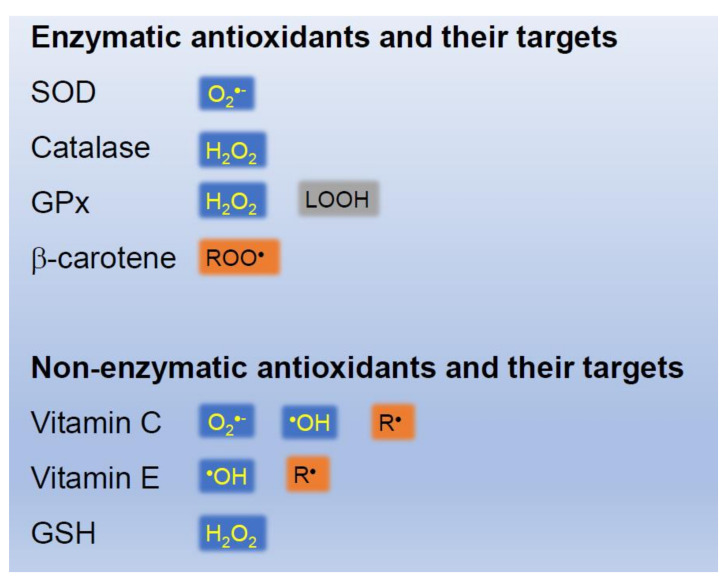
Figure 5
Examples of enzymatic and non-enzymatic antioxidants.
Figure 6
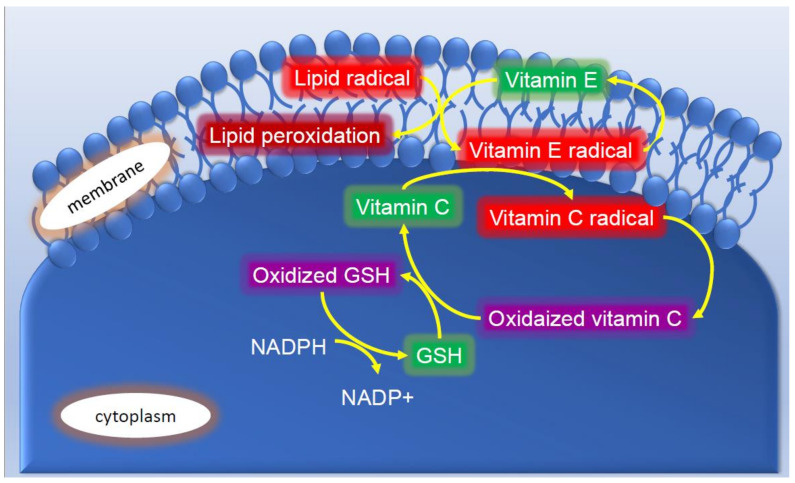
Figure 6
Reaction mechanisms of non-enzymatic antioxidants.
Figure 7
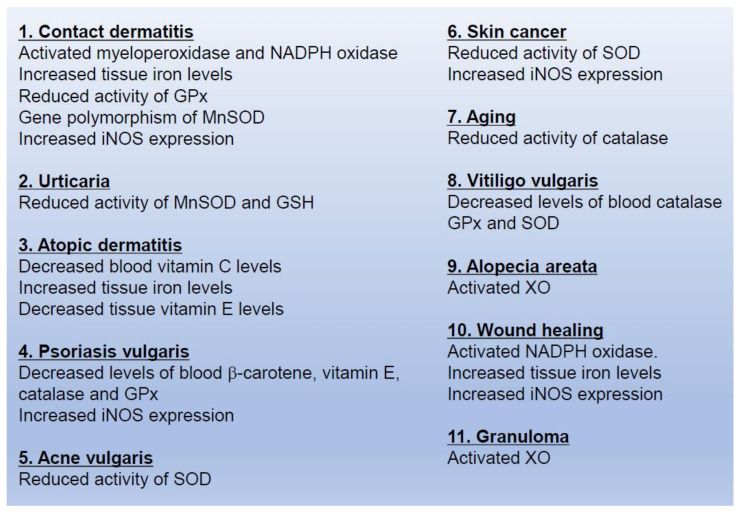
Figure 7
Representative reported abnormalities in the production of reactive oxygen species in skin diseases.

References

    1. Carraro C., Pathak M.A. Studies on the nature of in vitro and in vivo photosensitization reactions by psoralens and porphyrins. J. Investig. Dermatol. 1988;90:267–275. doi: 10.1111/1523-1747.ep12455986. - DOI - PubMed
    1. Poppe W., Grossweiner L.I. Photodynamic sensitization by 8-methoxypsoralen via the singlet oxygen mechanism. Photochem. Photobiol. 1975;22:217–219. doi: 10.1111/j.1751-1097.1975.tb06739.x. - DOI - PubMed
    1. Nakai K., Motten A.G., Chignell C.F. An in vivo study of free radicals generated in murine skin by protoporphyrin IX and visible light. Photochem. Photobiol. 2006;82:738–740. doi: 10.1562/2006-01-30-RA-787. - DOI - PMC - PubMed
    1. Hasan T., Kochevar I.E., McAuliffe D.J., Cooperman B.S., Abdulah D. Mechanism of tetracycline phototoxicity. J. Investig. Dermatol. 1984;83:179–183. doi: 10.1111/1523-1747.ep12263531. - DOI - PubMed
    1. Al-Nu’airat J., Oluwoye I., Zeinali N., Altarawneh M., Dlugogorski B.Z. Review of Chemical Reactivity of Singlet Oxygen with Organic Fuels and Contaminants. Chem. Rec. 2021;21:315–342. doi: 10.1002/tcr.202000143. - DOI - PubMed