Review
. 2021 Sep 24;13(19):3256.
doi: 10.3390/polym13193256.

Chitosan: An Overview of Its Properties and Applications

Affiliations
Review

Chitosan: An Overview of Its Properties and Applications

Inmaculada Aranaz et al. Polymers (Basel). .

Abstract

Chitosan has garnered much interest due to its properties and possible applications. Every year the number of publications and patents based on this polymer increase. Chitosan exhibits poor solubility in neutral and basic media, limiting its use in such conditions. Another serious obstacle is directly related to its natural origin. Chitosan is not a single polymer with a defined structure but a family of molecules with differences in their composition, size, and monomer distribution. These properties have a fundamental effect on the biological and technological performance of the polymer. Moreover, some of the biological properties claimed are discrete. In this review, we discuss how chitosan chemistry can solve the problems related to its poor solubility and can boost the polymer properties. We focus on some of the main biological properties of chitosan and the relationship with the physicochemical properties of the polymer. Then, we review two polymer applications related to green processes: the use of chitosan in the green synthesis of metallic nanoparticles and its use as support for biocatalysts. Finally, we briefly describe how making use of the technological properties of chitosan makes it possible to develop a variety of systems for drug delivery.

Keywords: antimicrobial; antioxidant; biocatalysis; biological activity; chitin; chitosan; drug delivery; metallic nanoparticles.


Conflict of interest statement

The authors declare no conflict of interest.

Figures

Figure 1
Figure 1
Functional groups in chitosan’s structure that are able to be chemically modified.
Figure 2
Figure 2
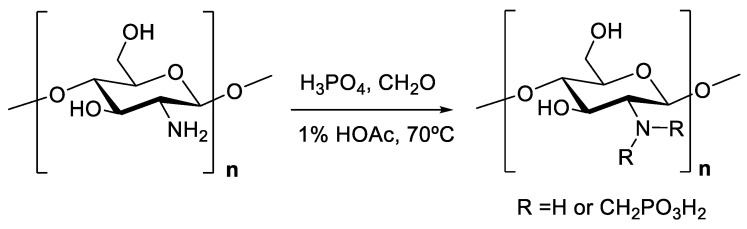
Scheme of phosphorylated chitosan derivative synthesis.
Figure 3
Figure 3
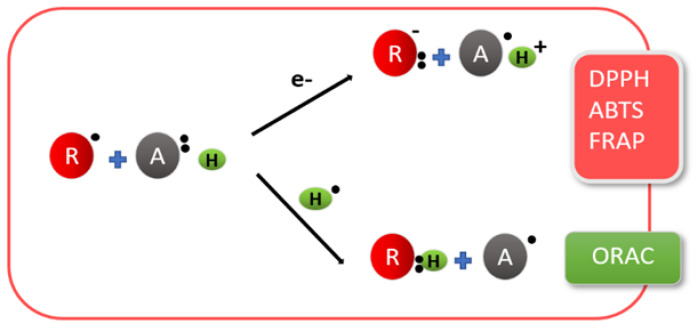
Methodologies used to determine antioxidant activities.
Figure 4
Figure 4
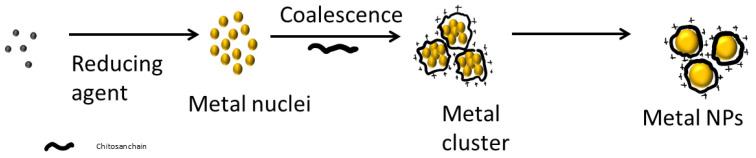
Scheme of metallic nanoparticle production and stabilization with chitosan.
Figure 5
Figure 5
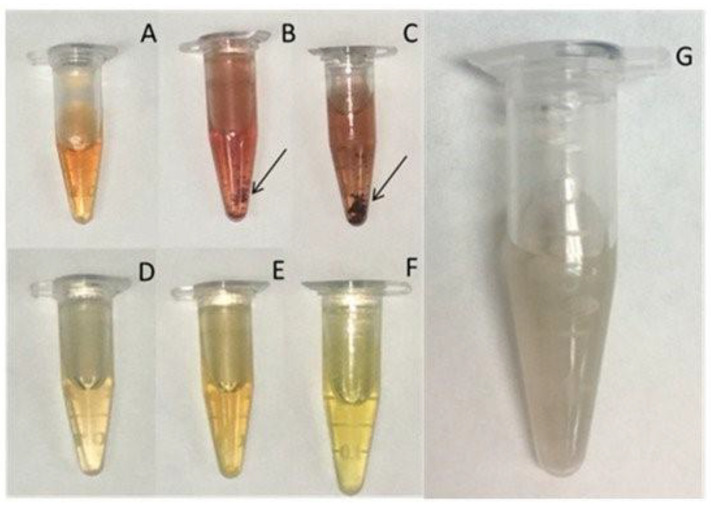
Visual evaluation of AgNP–polymer solutions after 5 h at 90 °C. (A) F1Q, (B) F2Q, (C) F3Q, (D) F1L, (E) F2L, (F) F3L, and (G) parent chitosan. Arrows indicate the presence of aggregates. © 2021 by the authors. Licensee MDPI, Basel, Switzerland (CC BY) license [123].
Figure 6
Figure 6
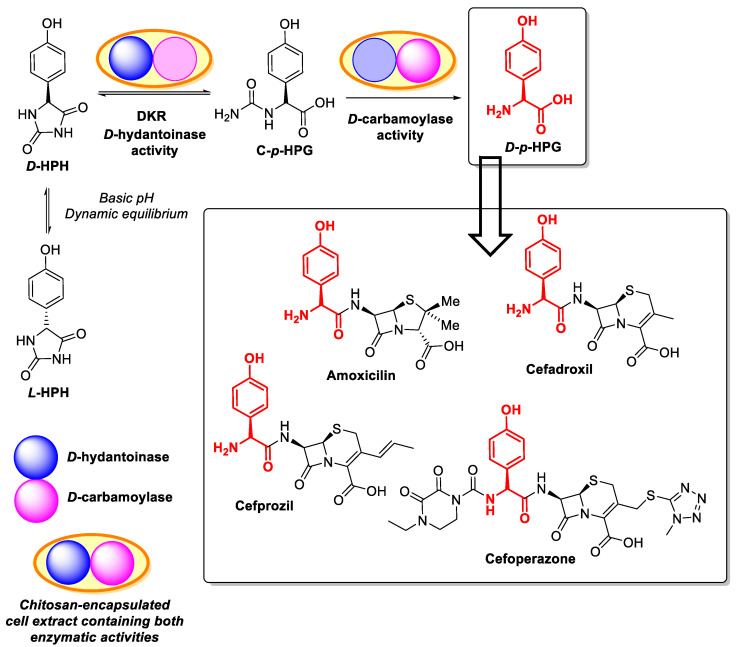
Schematic representation of the production of p-hydroxyphenylglycine (p-HPG) starting from a racemic mixture of p-hydroxyphenyl hydantoin (HPH) using a multi-enzyme system containing immobilized D-hydantoinase and D-carbamoylase.
Figure 7
Figure 7
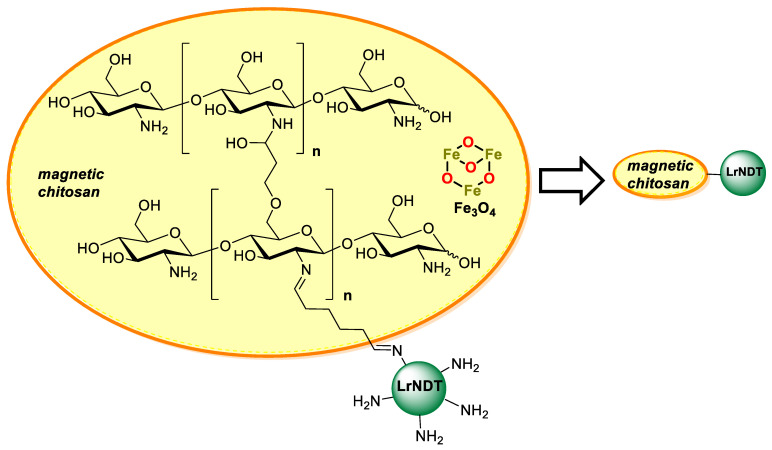
Schematic representation of the immobilization of a recombinant nucleoside 2′-deoxyribosyltransferase from Lactobacillus reuteri (LrNDT) on cross-linked magnetic chitosan beads. Adapted from Fernández-Lucas et al. [165].
Figure 8
Figure 8
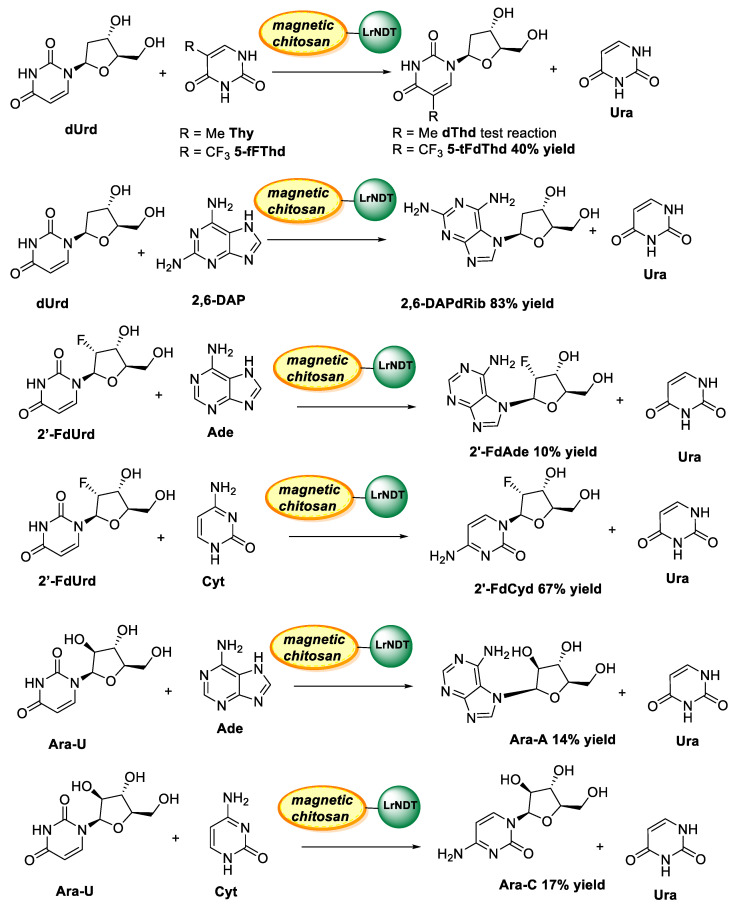
Synthesis of different natural and non-natural nucleosides using a recombinant nucleoside 2′-deoxyribosyltransferase from Lactobacillus reuteri (LrNDT) immobilized on cross-linked magnetic chitosan beads [165]. Commission on Biochemical Nomenclature: adenine (Ade), uracil (Ura), cytosine (Cyt), thymine (Thy), 2,6-diaminopurine (2,6-DAP), 5-trifluorothymine (5-tFThy), 2′-deoxyuridine (dUrd), 2′-deoxyadenosine (dAdo), 2′-deoxycytidine (dCyd), thymidine (dThd), 2,6-diaminopurine-2′-deoxyriboside (2,6-DAPdRib), 5-trifluorothymidine (5-tFdThd), 2′-fluoro-20-deoxyuridine (2′-FdUrd), 2′-fluoro-2′-deoxycitydine (2′-FdCyd), ara-uracil (ara-U), ara-adenine (ara-A).
Figure 9
Figure 9
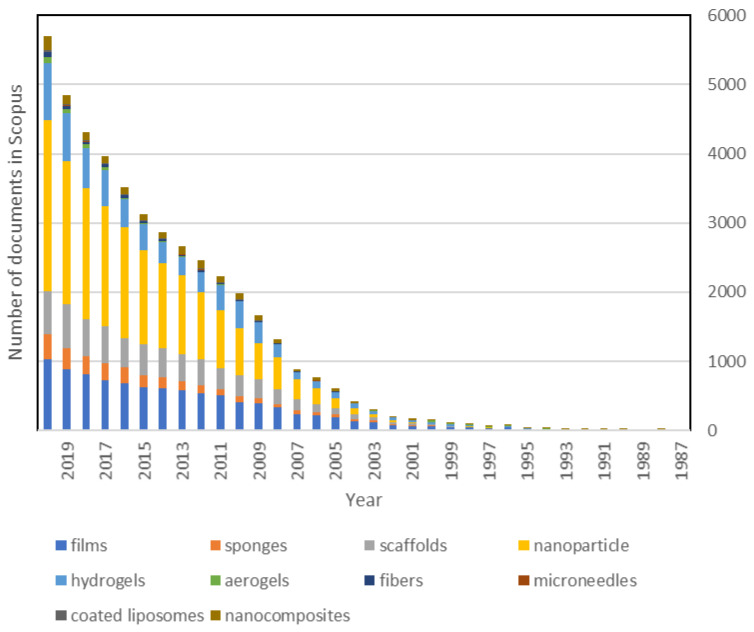
Publications about chitosan drug delivery in Scopus (1987–2020).
Figure 10
Figure 10
Publications about chitosan drug delivery in Scopus and patents in Lens (1987–2020).
Figure 11
Figure 11
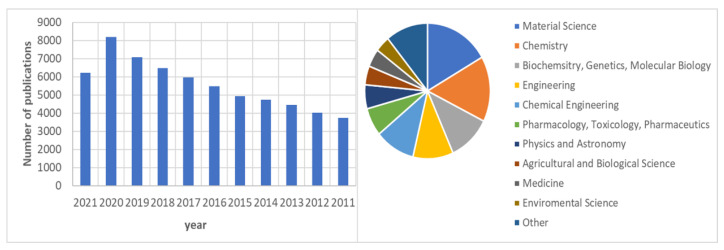
Number of publications and distribution by area in the period 2011–2021. Search of chitosan word in Scopus (abstract, title, keywords).

References

    1. Ghormade V., Pathan E.K., Deshpande M.V. Can fungi compete with marine sources for chitosan production? Int. J. Biol. Macromol. 2017;104:1415–1421. doi: 10.1016/j.ijbiomac.2017.01.112. - DOI - PubMed
    1. Aranaz I., Mengíbar M., Harris R., Paños I., Miralles B., Acosta N., Galed G., Heras A. Functional characterization of chitin and chitosan. Curr. Chem. Biol. 2009;3:203–230.
    1. Rinaudo M. Chitin and chitosan: Properties and applications. Prog. Polym. Sci. 2006;31:603–632. doi: 10.1016/j.progpolymsci.2006.06.001. - DOI
    1. Jiang Y., Fu C., Wu S., Liu G., Guo J., Su Z. Determination of the deacetylation degree of chitooligosaccharides. Mar. Drugs. 2017;15:332. doi: 10.3390/md15110332. - DOI - PMC - PubMed
    1. Ways T.M.M., Lau W.M., Khutoryanskiy V.V. Chitosan and its derivatives for application in mucoadhesive drug delivery systems. Polymers. 2018;10:267. doi: 10.3390/polym10030267. - DOI - PMC - PubMed

LinkOut - more resources