


Synthesis, Chemical-Physical Characterization, and Biomedical Applications of Functional Gold Nanoparticles: A Review
- PMID: 34641367
- PMCID: PMC8510367
- DOI: 10.3390/molecules26195823
Synthesis, Chemical-Physical Characterization, and Biomedical Applications of Functional Gold Nanoparticles: A Review
Abstract
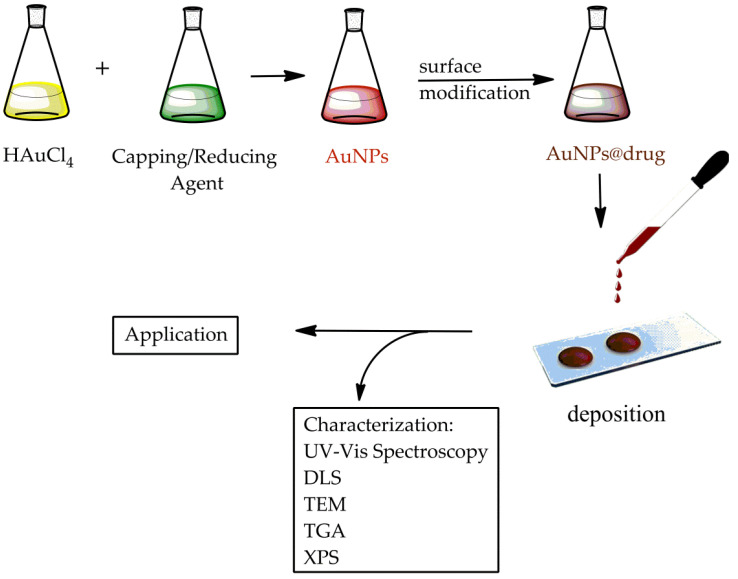
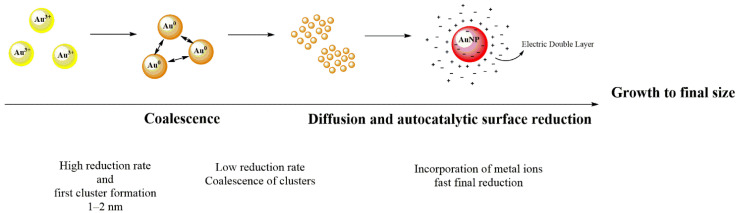
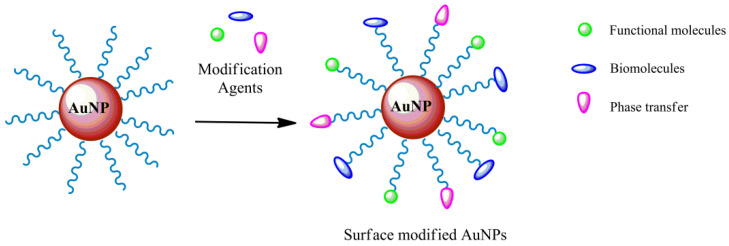
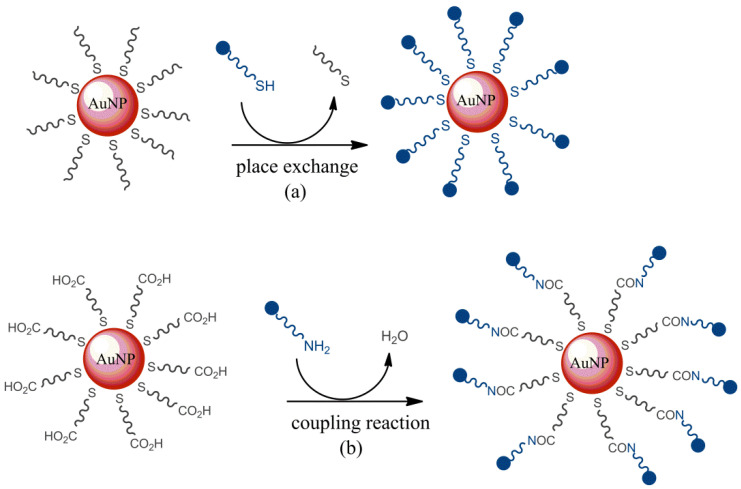
Relevant properties of gold nanoparticles, such as stability and biocompatibility, together with their peculiar optical and electronic behavior, make them excellent candidates for medical and biological applications. This review describes the different approaches to the synthesis, surface modification, and characterization of gold nanoparticles (AuNPs) related to increasing their stability and available features useful for employment as drug delivery systems or in hyperthermia and photothermal therapy. The synthetic methods reported span from the well-known Turkevich synthesis, reduction with NaBH4 with or without citrate, seeding growth, ascorbic acid-based, green synthesis, and Brust-Schiffrin methods. Furthermore, the nanosized functionalization of the AuNP surface brought about the formation of self-assembled monolayers through the employment of polymer coatings as capping agents covalently bonded to the nanoparticles. The most common chemical-physical characterization techniques to determine the size, shape and surface coverage of AuNPs are described underlining the structure-activity correlation in the frame of their applications in the biomedical and biotechnology sectors.
Keywords: drug delivery; gold nanoparticles; nanomaterials synthesis; photothermal activity.
Conflict of interest statement
The authors declare no conflict of interest.
Figures
References
-
- Daruich De Souza C., Ribeiro Nogueira B., Rostelato M.E.C.M. Review of the methodologies used in the synthesis gold nanoparticles by chemical reduction. J. Alloys Compd. 2019;798:714–740. doi: 10.1016/j.jallcom.2019.05.153. - DOI
-
- Čitaković N. Physical Properties of Nanomaterials. Vojnotehnički Glasnik. 2019;67:159–171. doi: 10.5937/vojtehg67-18251. - DOI
-
- Caballero-Calero O., D’Agosta R. Review—Towards the Next Generation of Thermoelectric Materials: Tailoring Electronic and Phononic Properties of Nanomaterials. ECS J. Solid State Sci. Technol. 2017;6:N3065–N3079. doi: 10.1149/2.0111703jss. - DOI
-
- Barattucci A., Plutino M.R., Faggi C., Bonaccorsi P., Monsù Scolaro L., Aversa M.C. Mono- and trinuclear tripodal platinum(II) chelated complexes containing a pyridine/sulfoxide based anchoring framework. Eur. J. Inorg. Chem. 2013;2013:3412–3420. doi: 10.1002/ejic.201300042. - DOI
Publication types
MeSH terms
Substances
LinkOut - more resources
Full Text Sources
