


A systematic review and meta-analysis evaluating the survival, the failure, and the complication rates of veneered and monolithic all-ceramic implant-supported single crowns
- PMID: 34642991
- PMCID: PMC9293296
- DOI: 10.1111/clr.13863
A systematic review and meta-analysis evaluating the survival, the failure, and the complication rates of veneered and monolithic all-ceramic implant-supported single crowns
Erratum in
-
.Clin Oral Implants Res. 2021 Dec;32(12):1507. doi: 10.1111/clr.13877. Clin Oral Implants Res. 2021. PMID: 34881821 Free PMC article. No abstract available.
Abstract
Objective: To assess the survival, failure, and complication rates of veneered and monolithic all-ceramic implant-supported single crowns (SCs).
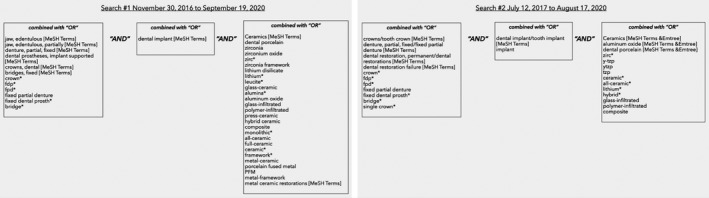
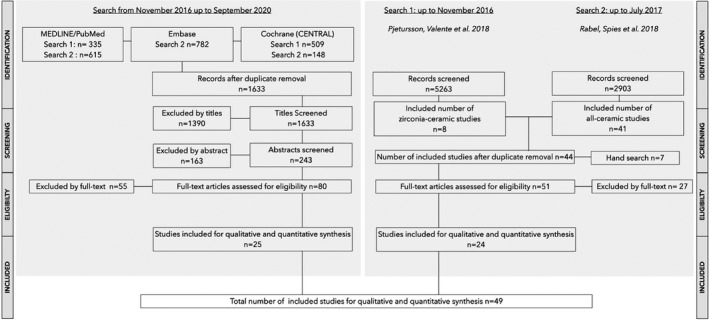
Methods: Literature search was conducted in Medline (PubMed), Embase, and Cochrane Central Register of Controlled Trials until September 2020 for randomized, prospective, and retrospective clinical trials with follow-up time of at least 1 year, evaluating the outcome of veneered and/or monolithic all-ceramic SCs supported by titanium dental implants. Survival and complication rates were analyzed using robust Poisson's regression models.
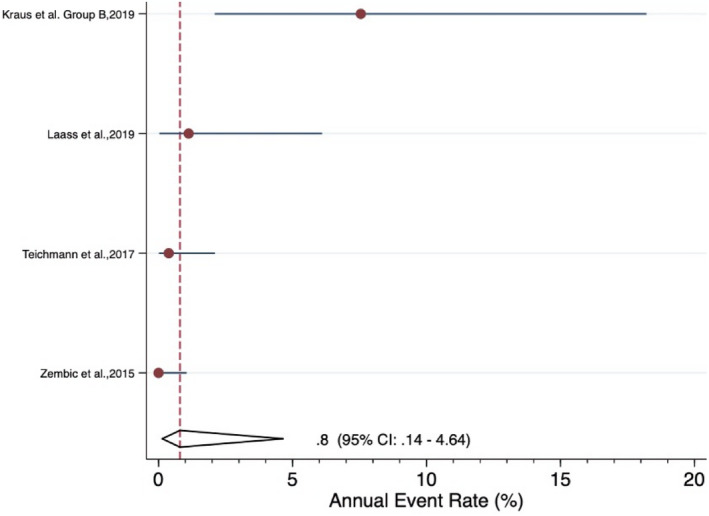
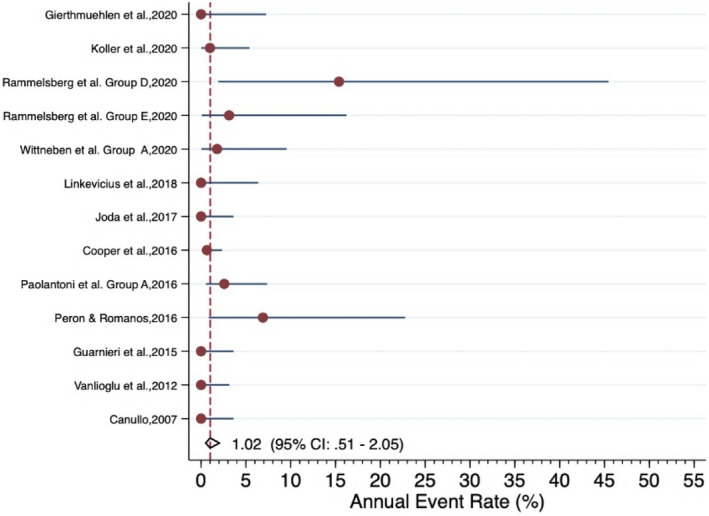
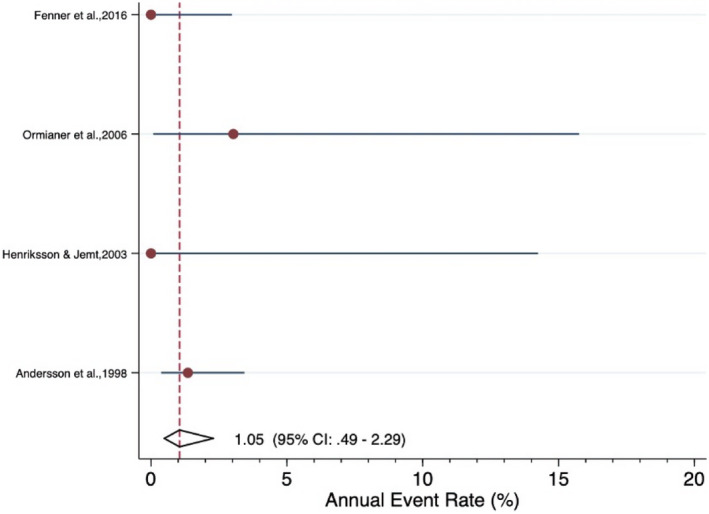
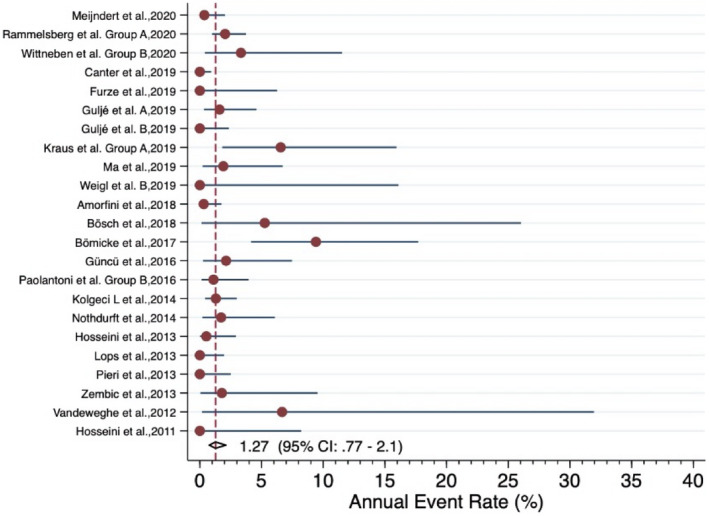
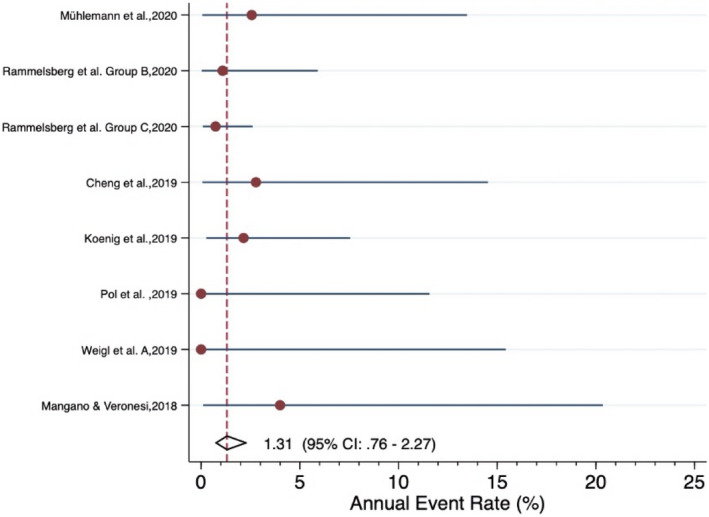
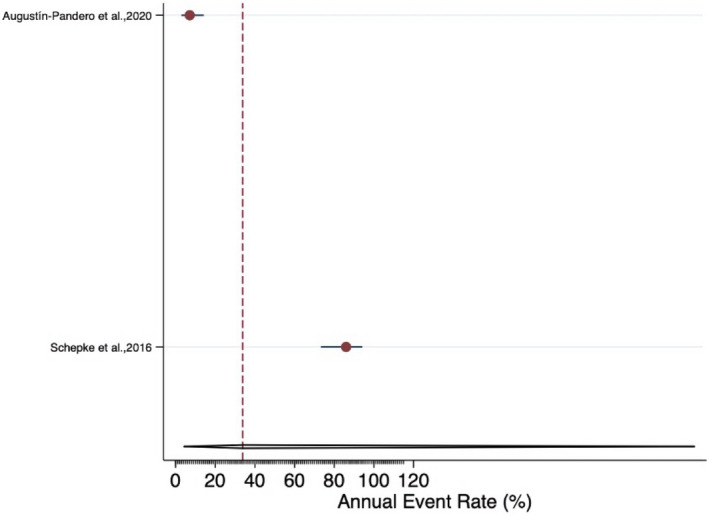
Results: Forty-nine RCTs and prospective studies reporting on 57 material cohorts were included. Meta-analysis of the included studies indicated an estimated 3-year survival rate of veneered-reinforced glass-ceramic implant-supported SCs of 97.6% (95% CI: 87.0%-99.6%). The estimated 3-year survival rates were 97.0% (95% CI: 94.0%-98.5%) for monolithic-reinforced glass-ceramic implant SCs, 96.9% (95% CI: 93.4%-98.6%) for veneered densely sintered alumina SCs, 96.3% (95% CI: 93.9%-97.7%) for veneered zirconia SCs, 96.1% (95% CI: 93.4%-97.8%) for monolithic zirconia SCs and only 36.3% (95% CI: 0.04%-87.7%) for resin-matrix-ceramic (RMC) SCs. With the exception of RMC SCs (p < 0.0001), the differences in survival rates between the materials did not reach statistical significance. Veneered SCs showed significantly (p = 0.017) higher annual ceramic chipping rates (1.65%) compared with monolithic SCs (0.39%). The location of the SCs, anterior vs. posterior, did not influence survival and chipping rates.
Conclusions: With the exception of RMC SCs, veneered and monolithic implant-supported ceramic SCs showed favorable short-term survival and complication rates. Significantly higher rates for ceramic chipping, however, were reported for veneered compared with monolithic ceramic SCs.
Keywords: biological; complications; fixed dental prostheses; implant crown; meta-analysis; monolithic; success; survival; systematic review; technical; veneered; zirconia framework.
© 2021 The Authors. Clinical Oral Implants Research published by John Wiley & Sons Ltd.
Conflict of interest statement
The authors have no specific conflict of interest related to the present systematic review.
Figures
References
-
- Agustín‐Panadero, R. , Soriano‐Valero, S. , Labaig‐Rueda, C. , Fernández‐Estevan, L. , & Solá‐Ruíz, M. F. (2020). Implant‐supported metal‐ceramic and resin‐modified ceramic crowns: A 5‐year prospective clinical study. Journal of Prosthetic Dentistry, 124(1), 46–52.e42. 10.1016/j.prosdent.2019.07.002. - DOI - PubMed
-
- Amorfini, L. , Storelli, S. , Mosca, D. , Scanferla, M. , & Romeo, E. (2018). Comparison of cemented vs screw‐retained, customized computer‐aided design/computer‐assisted manufacture zirconia abutments for esthetically located single‐tooth implants: A 10‐year randomized prospective study. International Journal of Prosthodontics, 31(4), 359–366. 10.11607/ijp.5305. - DOI - PubMed
-
- Andersson, B. , Odman, P. , Lindvall, A. M. , & Brånemark, P. I. (1998). Cemented single crowns on osseointegrated implants after 5 years: results from a prospective study on CeraOne. International Journal of Prosthodontics, 11(3), 212–218. - PubMed
-
- Bomicke, W. , Gabbert, O. , Koob, A. , Krisam, J. , & Rammelsberg, P. (2017). Comparison of immediately loaded flapless‐placed one‐piece implants and flapped‐placed conventionally loaded two‐piece implants, both fitted with all‐ceramic single crowns, in the posterior mandible: 3‐year results from a randomised controlled pilot trial. European Journal of Oral Implantology, 10(2), 179–195. 10.1002/central/CN-01418624/full. - DOI - PubMed
-
- Bösch, A. , Jung, R. E. , Sailer, I. , Goran, B. , Hämmerle, C. H. , & Thoma, D. S. (2018). Single‐tooth replacement using dental implants supporting all‐ceramic and metal‐based reconstructions: Results at 18 months of loading. International Journal of Periodontics & Restorative Dentistry, 38(2), 173–179. 10.11607/prd.2846. - DOI - PubMed
Further references
-
- Abou‐Ayash, S. , Strasding, M. , Rücker, G. , & Att, W. (2017). Impact of prosthetic material on mid‐ and long‐term outcome of dental implants supporting single crowns and fixed partial dentures: A systematic review and meta‐analysis. European Journal of Oral Implantology, 10(Suppl 1), 47–65. - PubMed
-
- Caramês, J. , Marques, D. , Malta Barbosa, J. , Moreira, A. , Crispim, P. , & Chen, A. (2019). Full‐arch implant‐supported rehabilitations: A prospective study comparing porcelain‐veneered zirconia frameworks to monolithic zirconia. Clinical Oral Implants Research, 30(1), 68–78. 10.1111/clr.13393. - DOI - PubMed
-
- Cappelleri, J. C. , Ioannidis, J. P. , Schmid, C. H. , de Ferranti, S. D. , Aubert, M. , Chalmers, T. C. , & Lau, J. (1996). Large trials vs meta‐analysis of smaller trials: How do their results compare? Journal of the American Medical Association, 276, 1332–1338. 10.1001/jama.1996.03540160054033. - DOI - PubMed
References of excluded studies
-
- Balmer, M. , Spies, B. C. , Kohal, R. J. , Hämmerle, C. H. , Vach, K. , & Jung, R. E. (2020). Zirconia implants restored with single crowns or fixed dental prostheses: 5‐year results of a prospective cohort investigation. Clinical Oral Implants Research, 31(5), 452–462. 10.1111/clr.13581. - DOI - PubMed
-
- Balmer, M. , Spies, B. C. , Vach, K. , Kohal, R. J. , Hämmerle, C. H. F. , & Jung, R. E. (2018). Three‐year analysis of zirconia implants used for single‐tooth replacement and three‐unit fixed dental prostheses: A prospective multicenter study. Clinical Oral Implants Research, 29(3), 290–299. 10.1111/clr.13115. - DOI - PubMed
Publication types
MeSH terms
Substances
LinkOut - more resources
Full Text Sources
