


Prevalence of complex post-traumatic stress disorder in refugees and asylum seekers: systematic review
- PMID: 34649634
- PMCID: PMC8570104
- DOI: 10.1192/bjo.2021.1013
Prevalence of complex post-traumatic stress disorder in refugees and asylum seekers: systematic review
Abstract
Background: Refugees and asylum seekers often report having experienced numerous complex traumas. It is important to understand the prevalence of complex post-traumatic stress disorder (CPTSD), which can follow complex traumas.
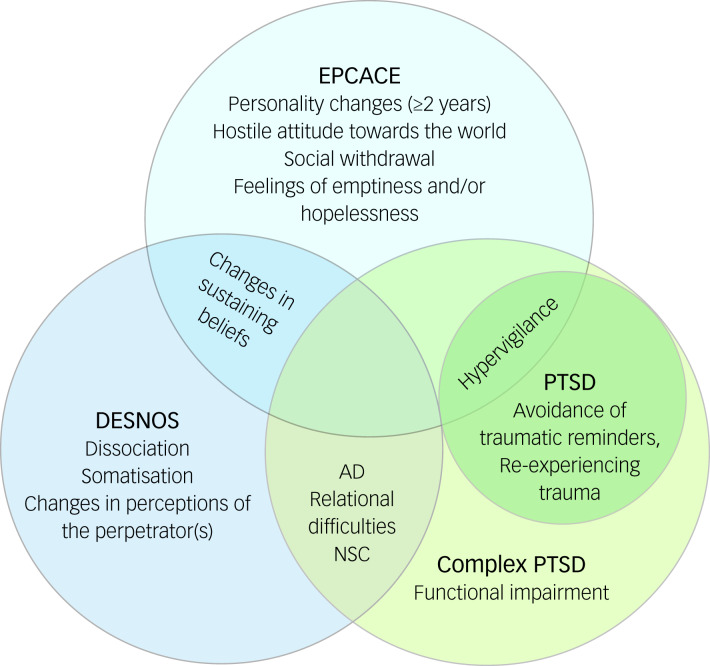
Aims: This systematic review aims to summarise the available literature reporting the prevalence in refugees and asylum seekers of three operationalised definitions of CPTSD: the ICD-11 diagnostic criteria, the ICD-10 criteria (for enduring personality change after catastrophic experience) and the DSM-IV criteria (for disorders of extreme stress not otherwise specified).
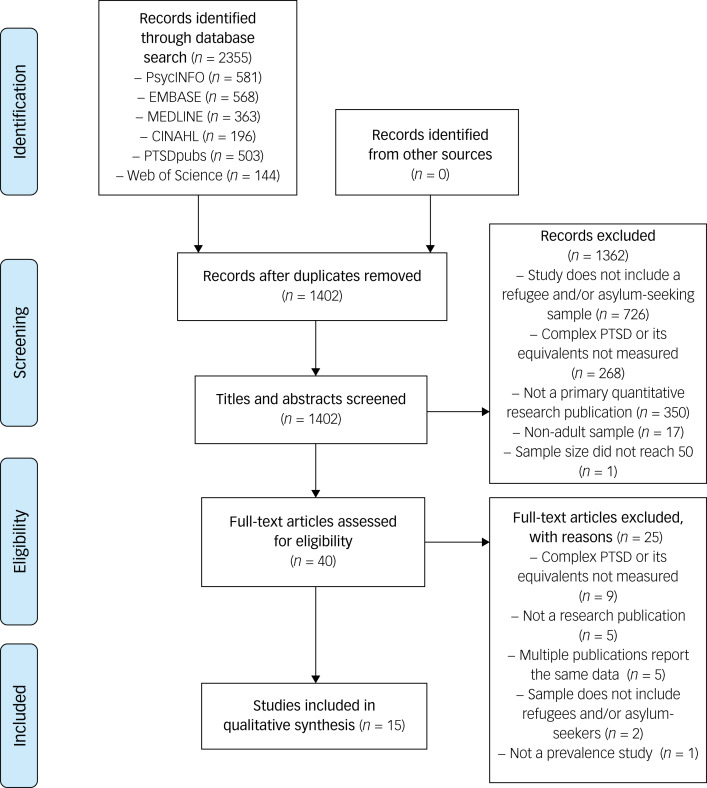
Method: Six electronic databases were searched for studies reporting the prevalence of CPTSD in adult refugee and/or asylum-seeking samples. Owing to heterogeneity between the studies, a narrative synthesis approach was used to summarise studies. Methodological quality was assessed using the Joanna Briggs Critical Appraisal Checklist for Prevalence Studies. This systematic review has been registered with PROSPERO (registration number CRD42020188422, https://www.crd.york.ac.uk/prospero/display_record.php?RecordID=188422).
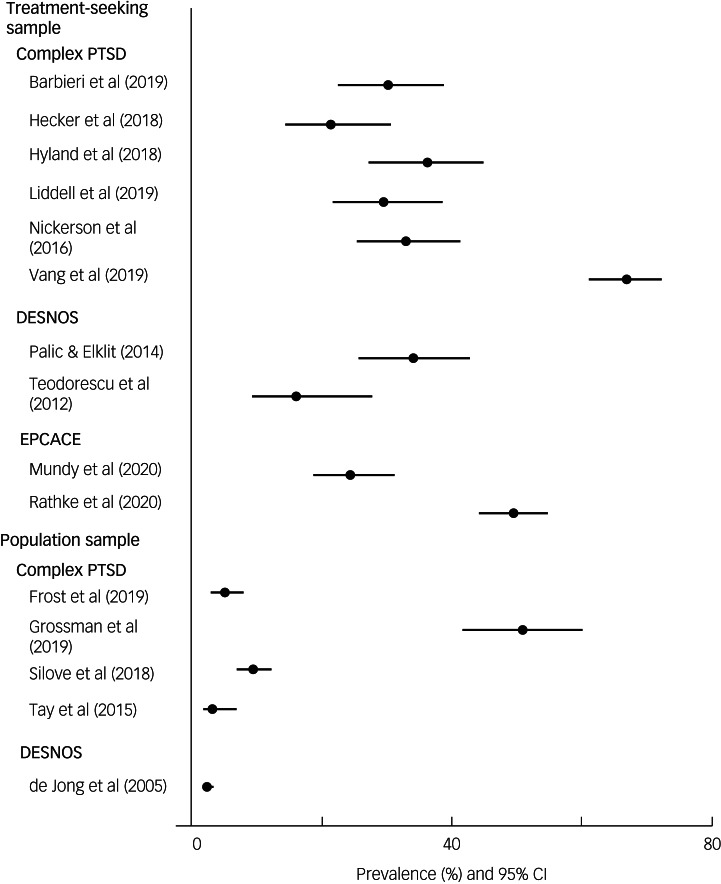
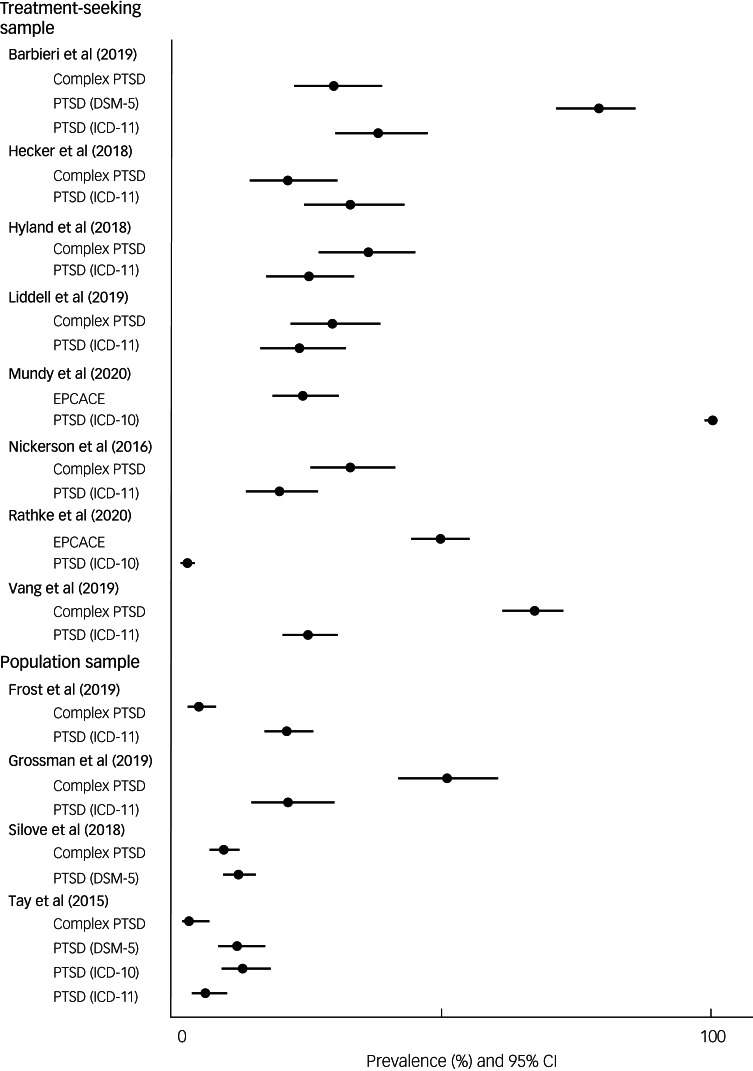
Results: Systematic searches identified 15 eligible studies, with 10 examining treatment-seeking samples and five using population samples. CPTSD prevalence in treatment-seeking samples was between 16 and 38%. Prevalence in population samples ranged from 2.2 to 9.3% in four studies, with the fifth reporting a much higher estimate (50.9%).
Conclusions: This review highlights both the high prevalence of CPTSD in treatment samples and the lack of research aiming to establish prevalence of CPTSD in refugee and asylum-seeking populations. Understanding the prevalence of these disabling disorders has implications for policy and healthcare services for the appropriate promotion, planning and provision of suitable treatment and interventions for this highly traumatised population.
Keywords: Complex post-traumatic stress disorder; complex trauma; forced displacement; refugees; systematic review.
Conflict of interest statement
C.K. is a member of the editorial board of
ICMJE forms are in the supplementary material, available online at
Figures
References
-
- United Nations High Commissioner for Refugees. Global Trends: Forced Displacement in 2019. UNHCR, 2020. (https://www.unhcr.org/uk/statistics/unhcrstats/5ee200e37/unhcr-global-tr....
-
- Herman JL. Complex PTSD: a syndrome in survivors of prolonged and repeated trauma. J Trauma Stress 1992; 5: 377–91.
-
- Teodorescu D-S, Heir T, Hauff E, Wentzel-Larsen T, Lien L. Mental health problems and post-migration stress among multi-traumatized refugees attending outpatient clinics upon resettlement to Norway. Scand J Psychol 2012; 53(4): 316–32. - PubMed
-
- Liddell BJ, Nickerson A, Felmingham KL, Malhi GS, Cheung J, Den M, et al. Complex posttraumatic stress disorder symptom profiles in traumatized refugees. J Trauma Stress 2019; 32(6): 822–32. - PubMed
-
- Beiser M. Longitudinal research to promote effective refugee resettlement. Transcult Psychiatry 2006; 43(1): 56–71. - PubMed
Publication types
LinkOut - more resources
Full Text Sources
