


Effects of Lipoic Acid on Ischemia-Reperfusion Injury
- PMID: 34650663
- PMCID: PMC8510805
- DOI: 10.1155/2021/5093216
Effects of Lipoic Acid on Ischemia-Reperfusion Injury
Abstract
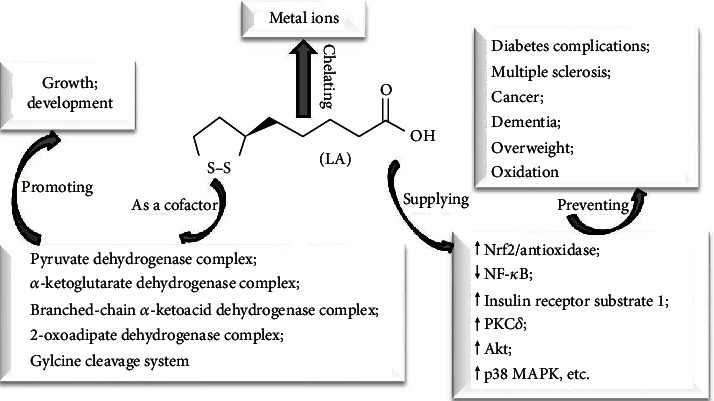
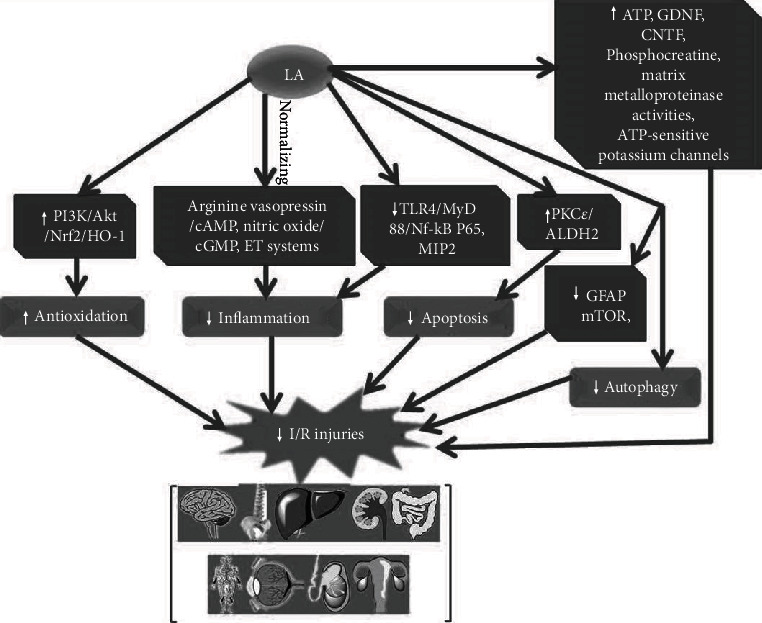
Ischemia-reperfusion (I/R) injury often occurred in some pathologies and surgeries. I/R injury not only harmed to physiological functions of corresponding organ and tissue but also induced multiple tissue or organ dysfunctions (even these in distant locations). Although the reperfusion of blood attenuated I/R injury to a certain degree, the risk of secondary damages was difficult to be controlled and it even caused failures of these tissues and organs. Lipoic acid (LA), as an endogenous active substance and a functional agent in food, owns better safety and effects in our body (e.g., enhancing antioxidant activity, improving cognition and dementia, controlling weight, and preventing multiple sclerosis, diabetes complication, and cancer). The literature searching was conducted in PubMed, Embase, Cochrane Library, Web of Science, and SCOPUS from inception to 20 May 2021. It had showed that endogenous LA was exhausted in the process of I/R, which further aggravated I/R injury. Thus, supplements with LA timely (especially pretreatments) may be the prospective way to prevent I/R injury. Recently, studies had demonstrated that LA supplements significantly attenuated I/R injuries of many organs, though clinic investigations were short at present. Hence, it was urgent to summarize these progresses about the effects of LA on different I/R organs as well as the potential mechanisms, which would enlighten further investigations and prepare for clinic applications in the future.
Copyright © 2021 Yueming Ding et al.
Conflict of interest statement
The authors declare that they have no conflict of interest.
Figures
References
-
- Gourgoutis G., Das G. Gastrointestinal manifestations of cocaine addiction. International Journal of Clinical Pharmacology and Therapeutics . 1994;32(3):136–141. - PubMed
Publication types
MeSH terms
Substances
LinkOut - more resources
Full Text Sources
Other Literature Sources
Medical
