Review
. 2022 Feb;34(2):e13047.
doi: 10.1111/jne.13047. Epub 2021 Oct 14.

Allopregnanolone and neuroHIV: Potential benefits of neuroendocrine modulation in the era of antiretroviral therapy

Affiliations
Review

Allopregnanolone and neuroHIV: Potential benefits of neuroendocrine modulation in the era of antiretroviral therapy

Mohammed F Salahuddin et al. J Neuroendocrinol. 2022 Feb.

Abstract

Forty years into the HIV pandemic, approximately 50% of infected individuals still suffer from a constellation of neurological disorders collectively known as 'neuroHIV.' Although combination antiretroviral therapy (cART) has been a tremendous success, in its present form, it cannot eradicate HIV. Reservoirs of virus reside within the central nervous system, serving as sources of HIV virotoxins that damage mitochondria and promote neurotoxicity. Although understudied, there is evidence that HIV or the HIV regulatory protein, trans-activator of transcription (Tat), can dysregulate neurosteroid formation potentially contributing to endocrine dysfunction. People living with HIV commonly suffer from endocrine disorders, including hypercortisolemia accompanied by paradoxical adrenal insufficiency upon stress. Age-related comorbidities often onset sooner and with greater magnitude among people living with HIV and are commonly accompanied by hypogonadism. In the post-cART era, these derangements of the hypothalamic-pituitary-adrenal and -gonadal axes are secondary (i.e., relegated to the brain) and indicative of neuroendocrine dysfunction. We review the clinical and preclinical evidence for neuroendocrine dysfunction in HIV, the capacity for hormone therapeutics to play an ameliorative role and the future steroid-based therapeutics that may have efficacy as novel adjunctives to cART.

Keywords: HIV-associated neurocognitive disorder; hypothalamic-pituitary-adrenal axis; hypothalamic-pituitary-gonadal axis; mitochondria; neurosteroids.


Conflict of interest statement

The authors declare that they have no conflicts of interest.

Figures
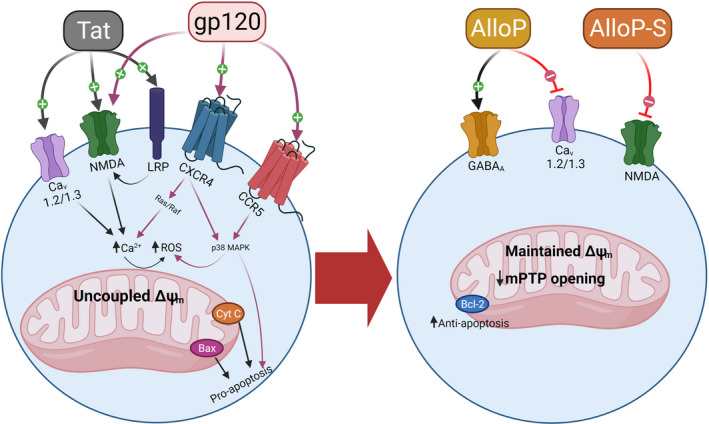
FIGURE 1
FIGURE 1
Mechanisms of direct neuronal damage for the HIV proteins, trans‐activator of transcription (Tat) and glycoprotein 120 (gp120). HIV proteins can directly drive intracellular Ca2+ (partly by activation of NMDA receptors, L‐type Ca2+ channels or activation of chemokine receptor‐mediated signaling) or can indirectly activate NMDA receptors via activation of low density lipoprotein receptor‐related protein (LRP). The downstream effects of HIV proteins dysregulate mitochondrial membrane potential, drive the formation of reactive oxygen species (ROS), and promote cell injury and death (left). Allopregnanolone is a potent positive allosteric modulator of GABAA receptors that can antagonize L‐type Ca2+ channels and restore mitochondrial homeostasis, potentially off‐setting the excitotoxic actions of HIV proteins. Allopregnanolone‐sulfate is an antagonist of NMDA receptors (right)
FIGURE 2
FIGURE 2
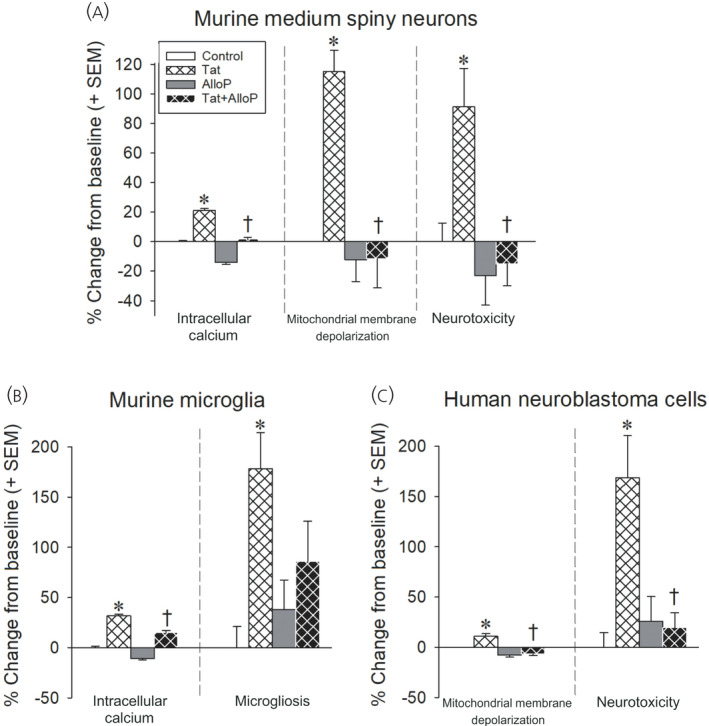
HIV Tat (50–100 nm) increases intracellular calcium, depolarizes mitochondria, and promotes microgliosis and/or neurotoxicity in murine striatal medium spiny neurons (A), murine microglia (B) or differentiated human SH‐SY5Y neuroblastoma cells (C). Pretreatment with allopregnanolone (AlloP; 100 nm) attenuates Tat‐mediated effects. *Significant increase from control following Tat exposure. †Significant AlloP‐mediated rescue from Tat exposure
FIGURE 3
FIGURE 3
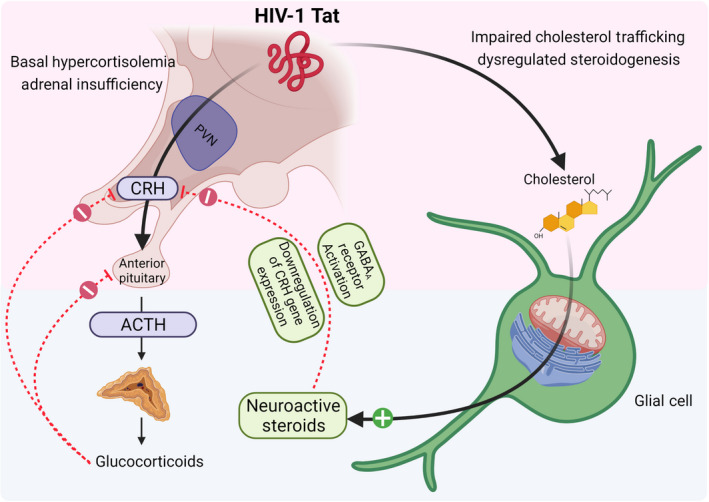
Expression of HIV Tat protein in mice increases basal corticotropin releasing hormone (CRH) and corticosterone. Upon stress, male (but not female) mice demonstrate adrenal insufficiency. The effects of Tat to dysregulate cholesterol homeostasis and alter steroidogenesis may contribute to the dysregulation of the hypothalamic–pituitary–adrenal (HPA) axis. In normative systems, neuroactive steroids such as allopregnanolone restore HPA axis homeostasis, downregulating CRH, adrenocorticotropic hormone (ACTH) and glucocorticoid production
FIGURE 4
FIGURE 4
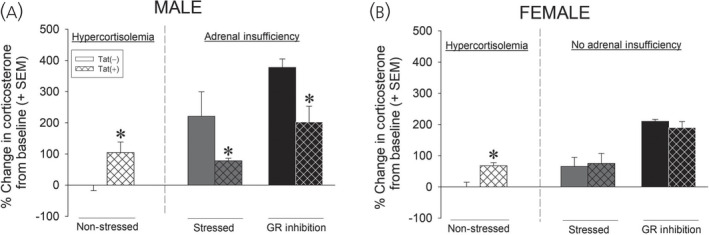
Compared to Tat(−) controls, male Tat(+) mice demonstrate greater corticosterone at baseline with paradoxical adrenal insufficiency in response to a stressor (15‐min forced swim) or pharmacological inhibition of the glucocorticoid receptor (GR) via RU‐486 (A). Compared to controls, female Tat(+) mice also demonstrate increased corticosterone at baseline; however, no differences are observed following a 15‐min forced swim stress or administration of RU‐486 (B). *Significant difference from Tat(−) control, ,
FIGURE 5
FIGURE 5
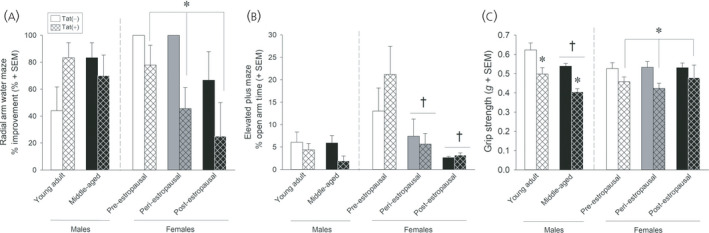
Middle‐aged (16–19 months old) female Tat(+) mice had greater learning deficits on a radial arm water maze than their Tat(−) counterparts, irrespective of estropausal status (A). Anxiety‐like behavior on an elevated plus maze was greater among peri‐ and post‐estropausal mice compared to those that were pre‐estropausal, irrespective of Tat exposure (B). Male or female Tat(+) mice had reduced grip strength compared to Tat(−) controls. Middle‐aged males (11–13 months old) had reduced grip strength compared to young adult males (6–8 months old) (C). *Significant difference from Tat(−) control. †Significant difference from young adult male or pre‐estropausal female group
FIGURE 6
FIGURE 6
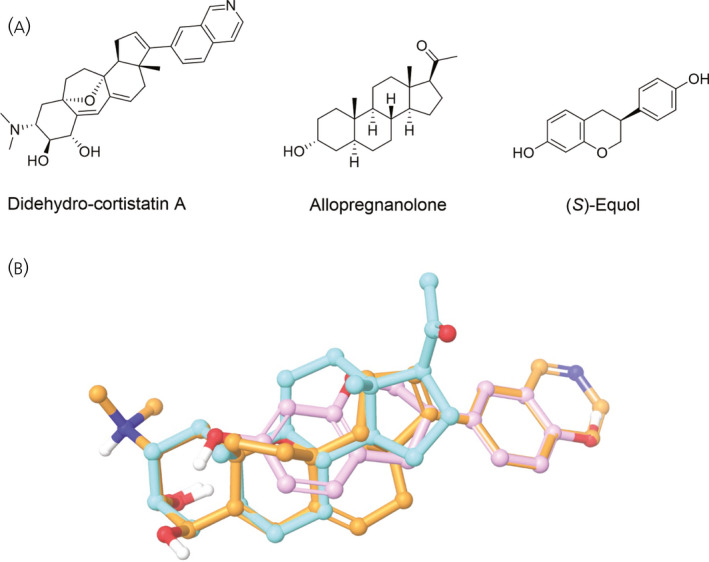
Didehydro‐cortistatin A (orange), allopregnanolone (cyan) and (S)‐equol (pink) demonstrate structural similarities (A) that are evidenced in a ligand‐structure alignment (B)
FIGURE 7
FIGURE 7
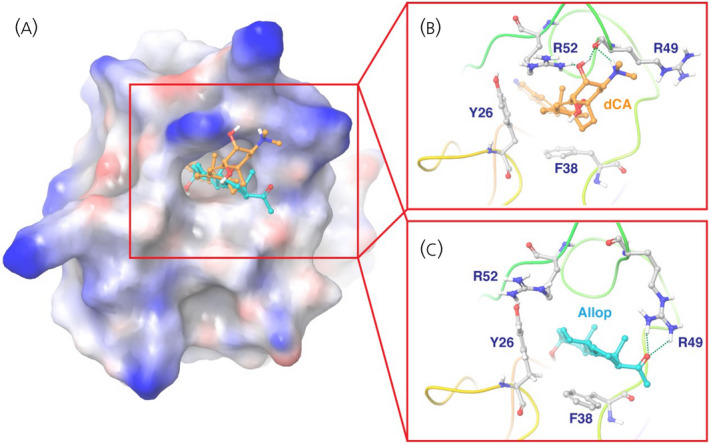
Molecular docking of didehydro‐cortistatin A (dCA) (orange) and allopregnanolone (cyan) in HIV Tat (Protein Data Bank: 1K5K). Tat is shown in a surface representation in the zoom‐out view (A) and in a ribbon representation in the zoom‐in view (B, C). Key residues of Tat for ligand binding are shown in stick representation

References

    1. Global HIV and AIDS Statistics‐Fact Sheet . Preliminary UNAIDS 2021 Epidemiological Estimates. https://www.unaids.org/en/resources/fact‐sheet. Accessed June 6, 2021.
    1. Gates TM, Cysique LA. The chronicity of HIV infection should drive the research strategy of neuroHIV treatment studies: a critical review. CNS Drugs. 2016;30(1):53‐69. - PMC - PubMed
    1. Saylor D, Dickens AM, Sacktor N, et al. HIV‐associated neurocognitive disorder ‐ pathogenesis and prospects for treatment. Nat Rev Neurol. 2016;12(5):309. - PMC - PubMed
    1. Zink WE, Zheng J, Persidsky Y, Poluektova L, Gendelman HE. The neuropathogenesis of HIV‐1 infection. FEMS Immunol Med Microbiol. 1999;26(3–4):233‐241. - PubMed
    1. Mbonye U, Karn J. Transcriptional control of HIV latency: cellular signaling pathways, epigenetics, happenstance and the hope for a cure. Virology. 2014;454–455:328‐339. - PMC - PubMed

Publication types

MeSH terms