. 2021 Oct 15;131(20):e143655.
doi: 10.1172/JCI143655.

Temporal manipulation of Cdkl5 reveals essential postdevelopmental functions and reversible CDKL5 deficiency disorder-related deficits

Affiliations

Temporal manipulation of Cdkl5 reveals essential postdevelopmental functions and reversible CDKL5 deficiency disorder-related deficits

Barbara Terzic et al. J Clin Invest. .

Abstract

CDKL5 deficiency disorder (CDD) is an early onset, neurodevelopmental syndrome associated with pathogenic variants in the X-linked gene encoding cyclin-dependent kinase-like 5 (CDKL5). CDKL5 has been implicated in neuronal synapse maturation, yet its postdevelopmental necessity and the reversibility of CDD-associated impairments remain unknown. We temporally manipulated endogenous Cdkl5 expression in male mice and found that postdevelopmental loss of CDKL5 disrupts numerous behavioral domains, hippocampal circuit communication, and dendritic spine morphology, demonstrating an indispensable role for CDKL5 in the adult brain. Accordingly, restoration of Cdkl5 after the early stages of brain development using a conditional rescue mouse model ameliorated CDD-related behavioral impairments and aberrant NMDA receptor signaling. These findings highlight the requirement of CDKL5 beyond early development, underscore the potential for disease reversal in CDD, and suggest that a broad therapeutic time window exists for potential treatment of CDD-related deficits.

Keywords: Development; Genetic diseases; Neurological disorders; Neuroscience; Synapses.


Conflict of interest statement

Conflict of interest: The authors have declared that no conflict of interest exists.

Figures

Figure 1
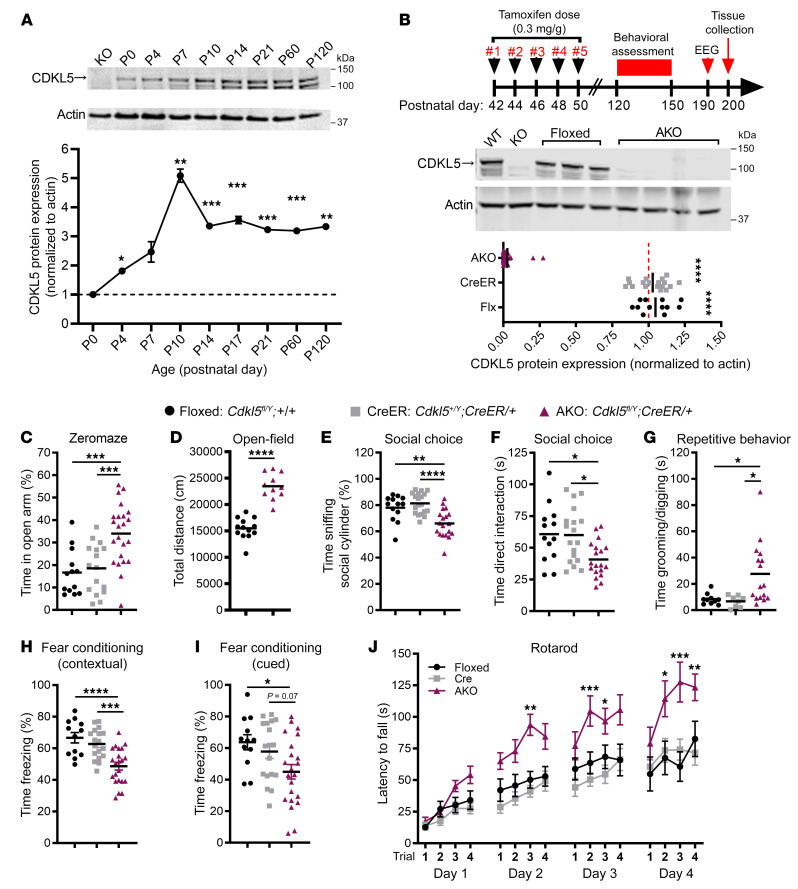
Figure 1. Postdevelopmental loss of CDKL5 disrupts multiple behavioral domains in mice.
(A) Top: representative Western blot showing CDKL5 and actin protein expression from forebrain tissues of WT mice across multiple ages, where knockout tissue was referenced for antibody specificity; bottom: quantification of CDKL5 protein, normalized to actin, and plotted relative to P0 levels (mixed effects analysis; n = 4). (B) Top: tamoxifen and experimental schedule; bottom: representative Western blot and quantification of CDKL5 protein expression in forebrain tissues of all experimental mice. Values were normalized to actin and plotted relative to CreER-only CDKL5 levels. (C) AKO mice spend significantly more time in the open arm of the elevated zero maze assay compared with floxed and CreER littermates. (D) AKO mice travel significantly more distance than floxed littermates in the open-field assay. (E) AKO mice spend significantly less time than floxed and CreER littermates sniffing and (F) directly interacting with a novel stimulus mouse during the 3-chambered social choice test. (G) AKO mice spend more time grooming or digging in a home cage–like environment than floxed and CreER littermates. (H) AKO mice spend significantly less time freezing compared with floxed and CreER littermates when returned to the fear-conditioning testing chamber (contextual) and (I) upon hearing the footshock-associated tone (cue). (J) AKO mice take significantly more time to fall from an accelerating, rotating rod than floxed and CreER littermates. For all panels, floxed, n = 13; CreER, n = 19; AKO, n = 23 where all genotypes received tamoxifen. One-way ANOVA test with Holm-Šidák post hoc test, except as follows: open field, unpaired, 2-tailed t test; 3-chambered social choice assay and repetitive behaviors, Kruskal-Wallis test with Dunn’s multiple-comparison test; rotarod, 2-way repeated measures ANOVA with Šidák’s multiple-comparison test. *P < 0.05, **P < 0.01, ***P < 0.001, ****P < 0.0001. Data are represented as mean ± SEM. Full-scan Western blots of all samples are available in the supplemental material.
Figure 2
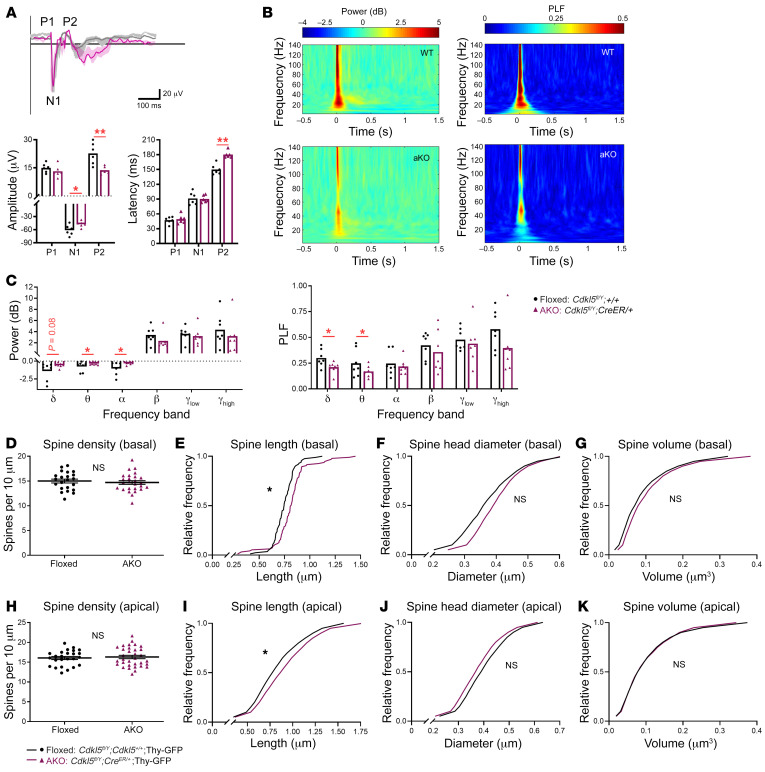
Figure 2. Postdevelopmental loss of Cdkl5 disrupts hippocampal ERPs and dendritic spine morphology.
(A) Top: grand-average hippocampal CA1 ERP wave form following presentation of auditory stimuli in Cdkl5fl/Y; +/+ (floxed; gray) and Cdkl5fl/Y:CreER/+ (AKO; purple) mice. Traces represent mean amplitude ± SEM. Characteristic polarity peaks P1, N1, and P2 in floxed control are labeled. Scale bars: 100 ms (horizontal); 20 mV (vertical). Bottom: quantification of the amplitude and latency of ERP P1, N1, and P2 peaks (unpaired, 2-tailed t test). (B) Time-frequency plots showing changes in event-related power (left) and PLF (right) following auditory stimulus with no alterations in baseline EEG power. Color represents mean power/PLF, where warmer colors correspond to increased power/PLF and cooler colors correspond to decreased power/PLF relative to prestimulus baseline. (C) Changes in event-related mean power (top) and PLF (bottom) averaged across δ (2–4 Hz), θ (4–8 Hz), α (8–12 Hz), β (12–30 Hz), γlow (30–50 Hz), and γhigh (70–140 Hz) oscillation frequencies demonstrate a selective disruption of power and phase locking in the low-frequency oscillations in AKO mice over floxed littermate controls (unpaired, 2-tailed t test). Data are represented as mean ± SEM. n = 7 floxed and n = 7 AKO for all ERP experiments. (D) Cdkl5fl/Y:CreER/+; Thy1-GFPm/+ (AKO) mice show no significant change in spine density on either basal or (H) apical dendritic arbors of CA1 pyramidal neurons compared with Cdkl5fl/Y; +/+; Thy1-GFPm/+ (floxed) littermate controls. AKO neurons have increased spine length compared with floxed littermate control neurons on both (E) basal and (I) apical dendritic arbors. Spine head diameter (F, basal; J, apical) and spine volume (G, basal; K, apical) were not significantly different between AKO and floxed neurons. For all spine analyses, basal, n = 22 cells/8 mice for floxed, n = 30 cells/7 mice for AKO; apical, n = 25 cells/8 mice for floxed, n = 36 cells/7 mice for AKO. Linear mixed effects analysis. *P < 0.05, **P < 0.01.
Figure 3
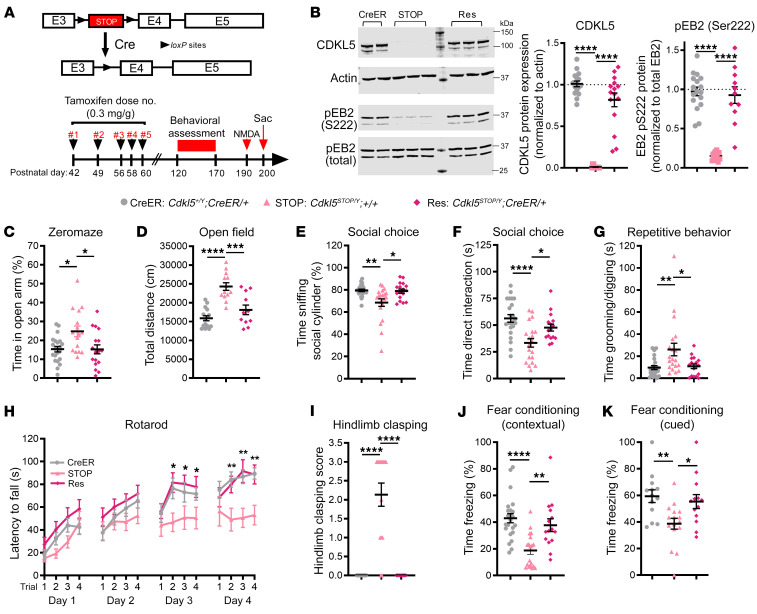
Figure 3. Adult restoration of Cdkl5 expression rescues CDD-associated behavioral deficits.
(A) Top: Cdkl5STOP mice carry a loxP-flanked transcriptional STOP cassette in the endogenous Cdkl5 that can be removed in the presence of CreER; bottom: tamoxifen and experimental schedule. (B) Left: representative Western blot of CDKL5, actin, pEB2(Ser222), and total EB2 protein levels in CreER, STOP, and Res forebrain tissues. Right: quantification of CDKL5 and pEB2(Ser222) protein levels for all genotypes normalized to actin and total EB2 levels, respectively. (C) STOP mice spend significantly more time than Res and CreER littermates in the open arm of the elevated zero maze assay. (D) STOP mice travel significantly more distance in the open-field assay than CreER and Res littermates. (E) STOP mice spend significantly less time sniffing and (F) directly interacting with a stimulus mouse during the 3-chambered social choice test compared with CreER and Res littermates. (G) STOP mice spend significantly more time grooming and digging in a home cage-like environment compared with CreER and Res littermates. (H) STOP mice take significantly less time to fall from an accelerating, rotating rod than CreER and Res littermate controls. (I) STOP mice, but not CreER or Res mice, present with hind limb clasping behaviors. (J) STOP mice freeze significantly less compared with CreER and Res littermates when returned to the fear-conditioning testing chamber (contextual) and (K) upon hearing the testing tone (cue). For all panels, CreER, n = 23; STOP, n = 20; Res, n = 17 where all genotypes received tamoxifen. One-way ANOVA test with Holm-Šidák post hoc test, except 3-chambered social choice assay and repetitive behaviors: Kruskal-Wallis test with Dunn’s multiple-comparison test; rotarod: 2-way repeated measures ANOVA with Šidák’s multiple-comparison test. *P < 0.05; **P < 0.01; ***P < 0.001; ****P < 0.0001. Data are represented as mean ± SEM. Full-scan Western blots of all samples are available in the supplemental material.
Figure 4
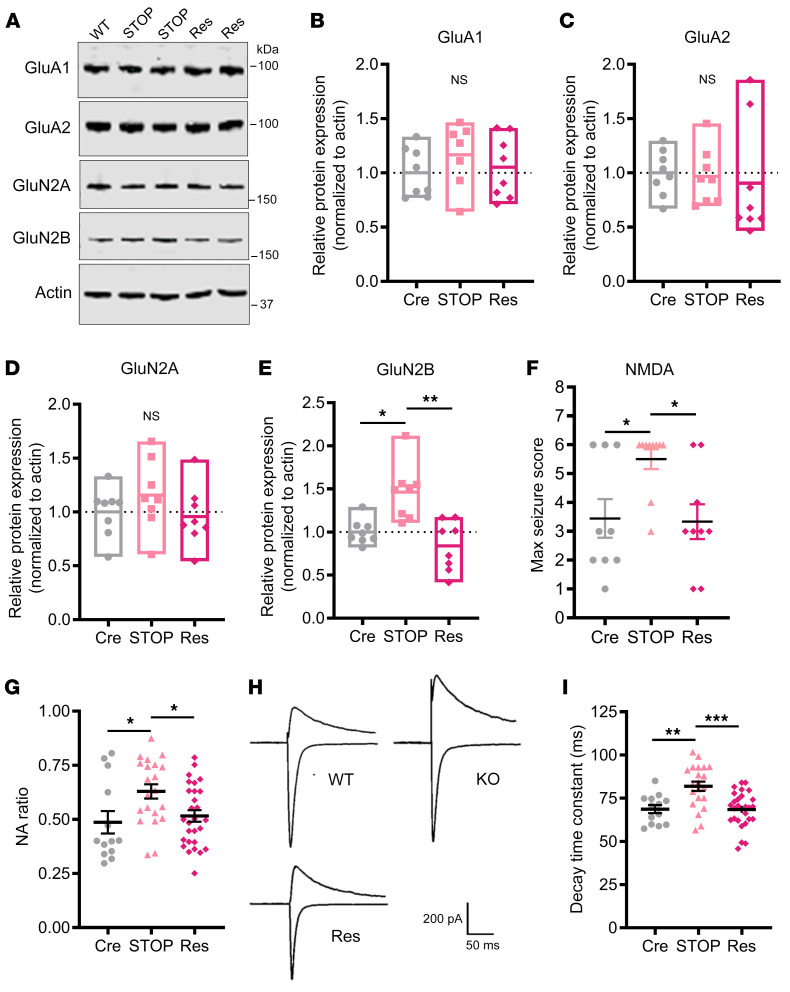
Figure 4. Adult restoration of CDKL5 abrogates aberrant NMDAR-mediated synaptic responses.
(A) Representative Western blots showing several major ionotropic glutamate receptor subunits from PSD membrane fractions in CreER, STOP, and Res mice. (BE) STOP, but not Res, mice show a selective increase in levels of GluN2B, a major subunit of the NMDAR, compared with CreER littermate controls (n = 8 per genotype). (F) STOP, but not Res, mice show a significantly increased susceptibility to NMDA-induced seizures compared with CreER littermate controls (CreER, n = 9; STOP, n = 10; Res, n = 9). (GI) STOP, but not Res, mice show an increased ratio of NMDA-mediated to AMPA-mediated synaptic responses (NA) in the hippocampal CA1 (G) concomitant with a significantly larger decay time constant of NMDAR-mediated EPSCs (I) when compared with CreER littermates. Representative traces are shown in H. This suggests a higher contribution of GluN2B-containing NMDARs in STOP mice and an attenuation of aberrant NMDAR signaling deficits in Res mice. For all panels, Kruskal-Wallis test with Dunn’s multiple-comparison test, except for G and I, which used 1-way ANOVA with Tukey’s multiple-comparison test. *P < 0.05; **P < 0.01; ***P < 0.001. Data are represented as mean ± SEM. Full-scan Western blots of all samples are available in the supplemental material.

Comment in

References

    1. Kalscheuer VM, et al. Disruption of the serine/threonine kinase 9 gene causes severe X-linked infantile spasms and mental retardation. Am J Hum Genet. 2003;72(6):1401–1411. doi: 10.1086/375538. - DOI - PMC - PubMed
    1. Tao J, et al. Mutations in the X-linked cyclin-dependent kinase-like 5 (CDKL5/STK9) gene are associated with severe neurodevelopmental retardation. Am J Hum Genet. 2004;75(6):1149–1154. doi: 10.1086/426460. - DOI - PMC - PubMed
    1. Weaving LS, et al. Mutations of CDKL5 cause a severe neurodevelopmental disorder with infantile spasms and mental retardation. Am J Hum Genet. 2004;75(6):1079–1093. doi: 10.1086/426462. - DOI - PMC - PubMed
    1. Fehr S, et al. The CDKL5 disorder is an independent clinical entity associated with early-onset encephalopathy. Eur J Hum Genet. 2013;21(3):266–273. doi: 10.1038/ejhg.2012.156. - DOI - PMC - PubMed
    1. Olson HE, et al. Cyclin-dependent kinase-like 5 deficiency disorder: clinical review. Pediatr Neurol. 2019;97:18–25. doi: 10.1016/j.pediatrneurol.2019.02.015. - DOI - PMC - PubMed

Publication types

MeSH terms

Substances

Supplementary concepts