


Active learning tools improve the learning outcomes, scientific attitude, and critical thinking in higher education: Experiences in an online course during the COVID-19 pandemic
- PMID: 34652877
- PMCID: PMC8653153
- DOI: 10.1002/bmb.21574
Active learning tools improve the learning outcomes, scientific attitude, and critical thinking in higher education: Experiences in an online course during the COVID-19 pandemic
Abstract
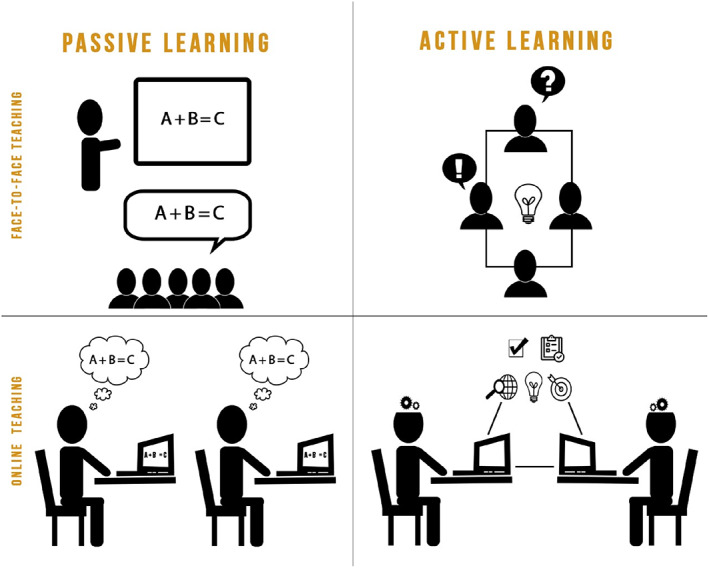
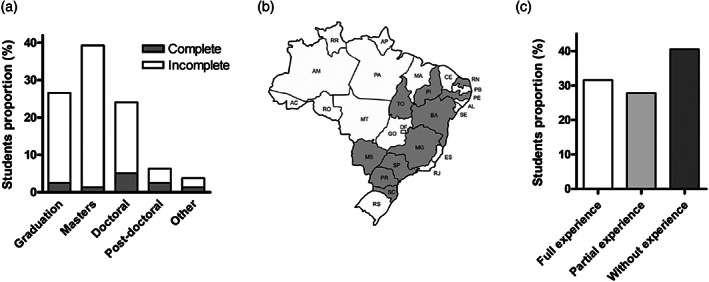
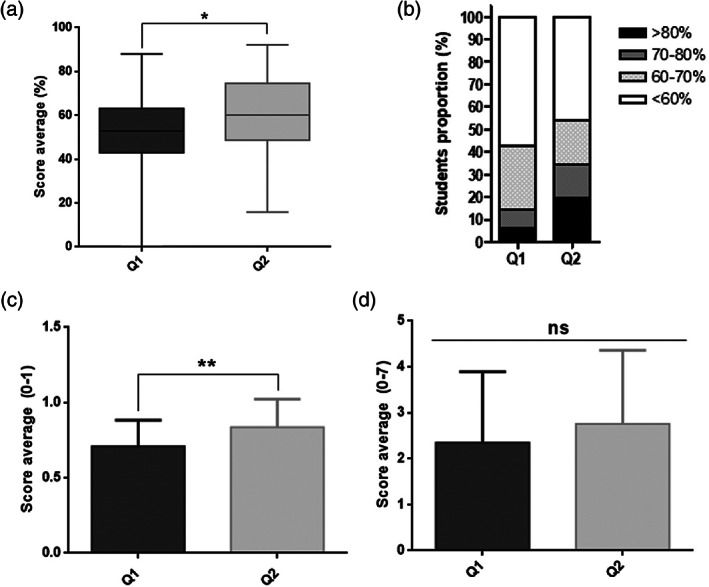
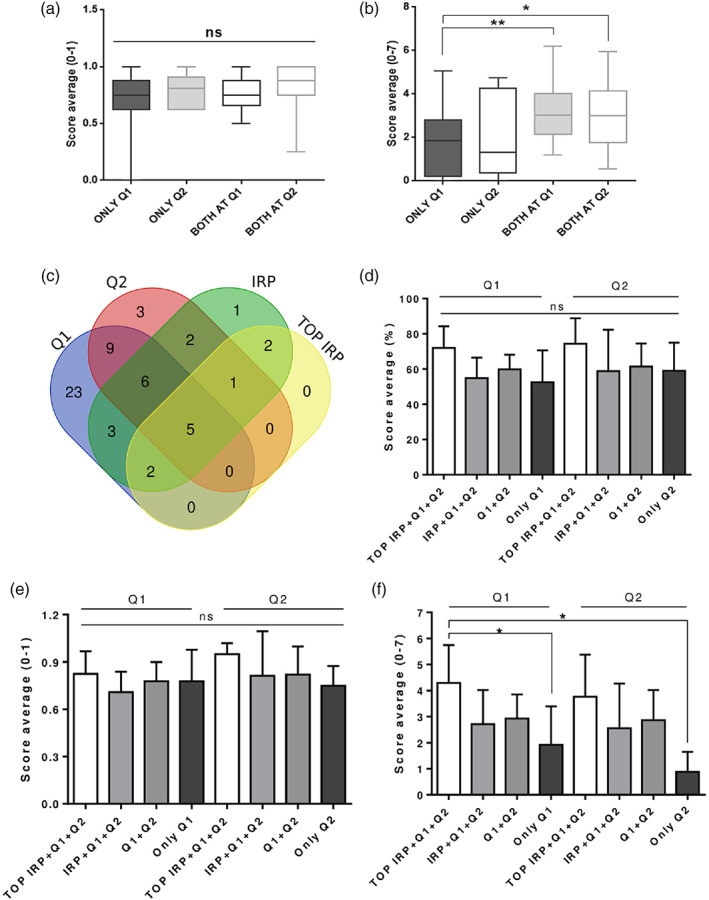
Active teaching methodologies have been placed as a hope for changing education at different levels, transiting from passive lecture-centered to student-centered learning. With the health measures of social distance, the COVID-19 pandemic forced a strong shift to remote education. With the challenge of delivering quality education through a computer screen, we validated and applied an online course model using active teaching tools for higher education. We incorporated published active-learning strategies into an online construct, with problem-based inquiry and design of inquiry research projects to serve as our core active learning tool. The gains related to students' science learning experiences and their attitudes toward science were assessed by applying questionnaires before, during, and after the course. The course counted on the participation of 83 students, most of them (60.8%) from postgraduate students. Our results show that engagement provided by active learning methods can improve performance both in hard and soft skills. Students' participation seems to be more relevant when activities require the interaction of information, prediction, and reasoning, such as open-ended questions and design of research projects. Therefore, our data show that, in pandemic, active learning tools benefit students and improve their critical thinking and their motivation and positive positioning in science.
Keywords: COVID-19 pandemic; active learning; biology course; critical thinking; e-learning; higher education.
© 2021 International Union of Biochemistry and Molecular Biology.
Conflict of interest statement
No competing interest has been declared. All authors have seen and approved the manuscript. The manuscript has not been accepted or published elsewhere.
Figures
References
-
- Aldenmyr SI, Wigg UJ, Olson M. Worries and possibilities in active citizenship: three Swedish educational contexts. Educ Citizsh Soc Justice. 2012;7:255–70. 10.1177/1746197912456341 - DOI
-
- Biesta G. What kind of citizenship for european higher education? Beyond the competent active citizen. Eur Educ Res J. 2009;8:146–58. 10.2304/eerj.2009.8.2.146 - DOI
-
- Janmaat JG, Piattoeva N. Citizenship education in Ukraine and Russia: reconciling nation‐building and active citizenship. Comp Educ. 2007;43:527–52. 10.1080/03050060701611920 - DOI
-
- Veugelers W. Creating critical‐democratic citizenship education: empowering humanity and democracy in Dutch education. Compare. 2007;37:105–19. 10.1080/03057920601061893 - DOI
-
- Nussbaum MC. Education and democratic citizenship: capabilities and quality education. J Hum Dev. 2006;7:385–95. 10.1080/14649880600815974 - DOI
Publication types
MeSH terms
LinkOut - more resources
Full Text Sources
Medical
