


Psychometric Evaluation of a Controlled Social Affiliation Paradigm: Findings From Anxiety, Depressive Disorder, and Healthy Samples
- PMID: 34656199
- PMCID: PMC8812488
- DOI: 10.1016/j.beth.2021.04.003
Psychometric Evaluation of a Controlled Social Affiliation Paradigm: Findings From Anxiety, Depressive Disorder, and Healthy Samples
Abstract
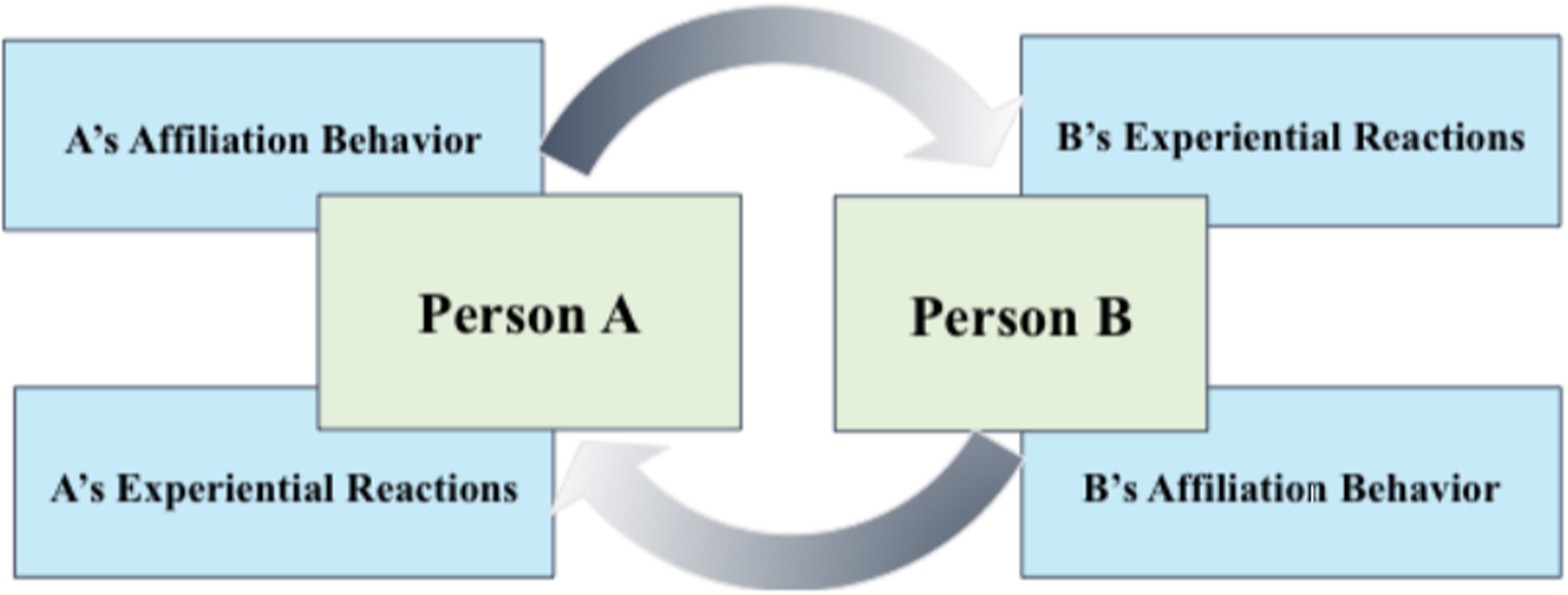
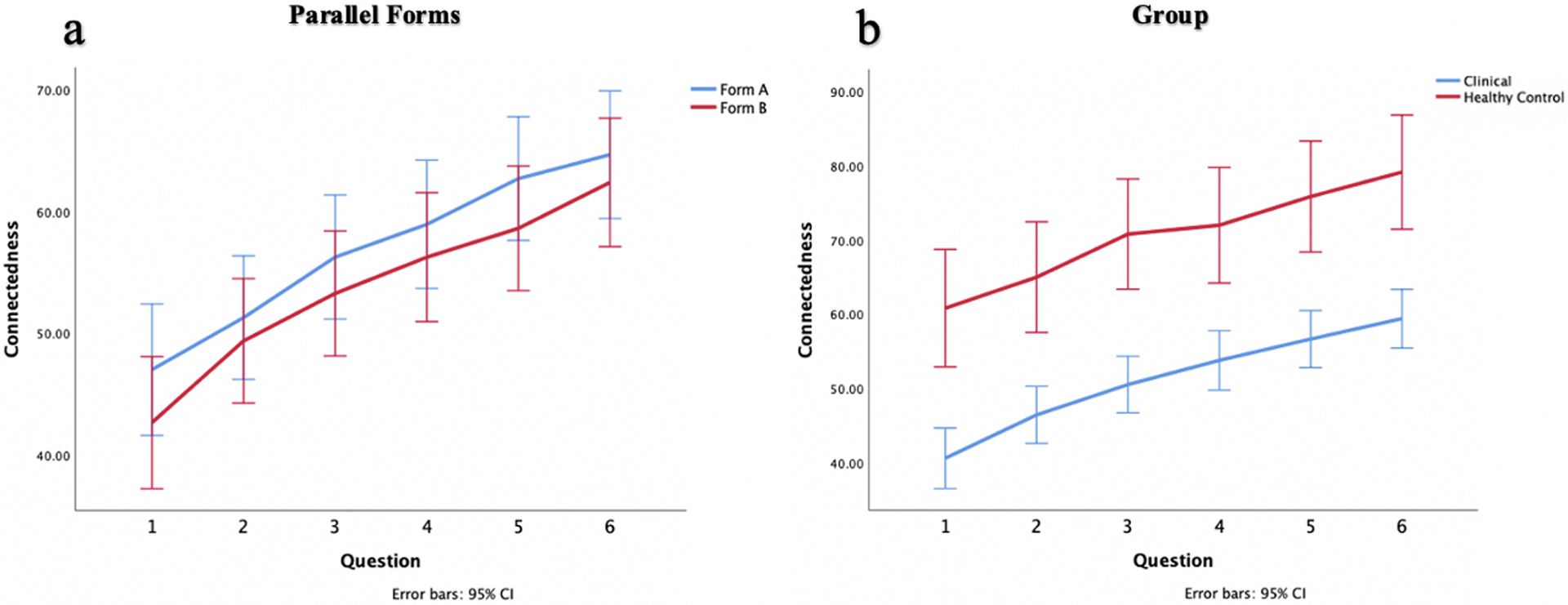
Social impairments are common across many psychiatric conditions. Standardized dyadic assessments intended to elicit social affiliation between unacquainted partners are used to elucidate mechanisms that disrupt relationship formation and inform possible treatment targets; however, the psychometric properties of such paradigms remain poorly understood. This study evaluated the psychometric properties of a controlled social affiliation paradigm intended to induce connectedness between a target participant and trained confederate. Individuals with an anxiety or depressive disorder diagnosis (clinical group; n = 132) and those without (control group; n = 35) interacted face-to-face with a trained confederate; partners took turns answering a series of increasingly intimate questions about themselves. Social connectedness, affect, and affiliative behavior measures were collected during the interaction. Participant symptom and social functioning measures were collected to examine validity. The paradigm elicited escalating social connectedness throughout the task for both participants and confederates. Parallel forms (i.e., different question sets) elicited similar affiliation outcomes. Self-reported (but not behavioral) affiliation differed across some demographic variables (e.g., participant gender, Hispanic ethnicity). Within-task affiliation measures were associated with one another and with global social connectedness and social anxiety symptom measures, but not with somatic anxiety measures. Clinical participants reported lower social affiliation and positive affect reactivity and higher negative affect reactivity than healthy participants. These findings provide initial psychometric support for a standardized and controlled dyadic affiliation paradigm that could be used to reliably probe social disconnection mechanisms across psychopathology.
Keywords: anxiety; behavioral; depression; psychometrics; reciprocal self-disclosure paradigm; relationship formation; reliability; social affiliation; social anxiety; validity.
Copyright © 2021. Published by Elsevier Ltd.
Conflict of interest statement
Conflict of Interest: Charles T. Taylor declares that in the past 3 years he has been a paid consultant for Homewood Health, and receives payment for editorial work for UpToDate. Murray B. Stein declares that in the past 3 years he has been a paid consultant for Actelion, Aptinyx, Bionomics, BioXcel, Clexio, GW Pharma, and Janssen, and receives payment for editorial work for UpToDate and the journals Biological Psychiatry and Depression and Anxiety. All other authors declare no conflict of interest.
Figures

References
-
- Aron A, Aron EN, & Smollan D (1992). Inclusion of other in the self scale and the structure of interpersonal closeness. Journal of Personality and Social Psychology, 63(4), 596–612. 10.1037/0022-3514.63.4.596 - DOI
-
- Aron A, Melinat E, Aron EN, Vallone RD, & Bator RJ (1997). The experimental generation of interpersonal closeness: A procedure and some preliminary findings. Personality and Social Psychology Bulletin, 23(4), 363–377. 10.1177/0146167297234003 - DOI
-
- Bates D, Mächler M, Bolker B, & Walker S (2015). Fitting Linear Mixed-Effects Models Using lme4. Journal of Statistical Software, 67(1), 1–48. 10.18637/jss.v067.i01. - DOI
