Review
. 2021 Dec:200:111587.
doi: 10.1016/j.mad.2021.111587. Epub 2021 Oct 14.

Recent advances in the discovery of senolytics

Affiliations
Review

Recent advances in the discovery of senolytics

Lei Zhang et al. Mech Ageing Dev. 2021 Dec.

Abstract

The demonstration in model organisms that cellular senescence drives aging and age-related diseases has led to widespread efforts to identify compounds able to selectively kill senescent cells, termed senolytics. Approaches used to identify senolytics include bioinformatic analysis of senescent cell anti-apoptotic pathways (SCAPs) for drug development and screening of drugs libraries on different senescent cell types in culture. Alternatively, cytotoxic compounds can be made specific to senescent cells through a prodrug strategy such as linking the compound to a galactose moiety where toxicity is activated by lysosomal β-galactosidase. Identified senolytics can then be optimized through medicinal chemistry or linking to E3 targeting moieties to facilitate proteolysis of their targets. This review will provide an overview of approaches to identify senolytics and an update of the classes of senolytics identified to date.

Keywords: Aging; Drug screening; PROTACs; Prodrugs; Senescence; Senolytics.


Figures

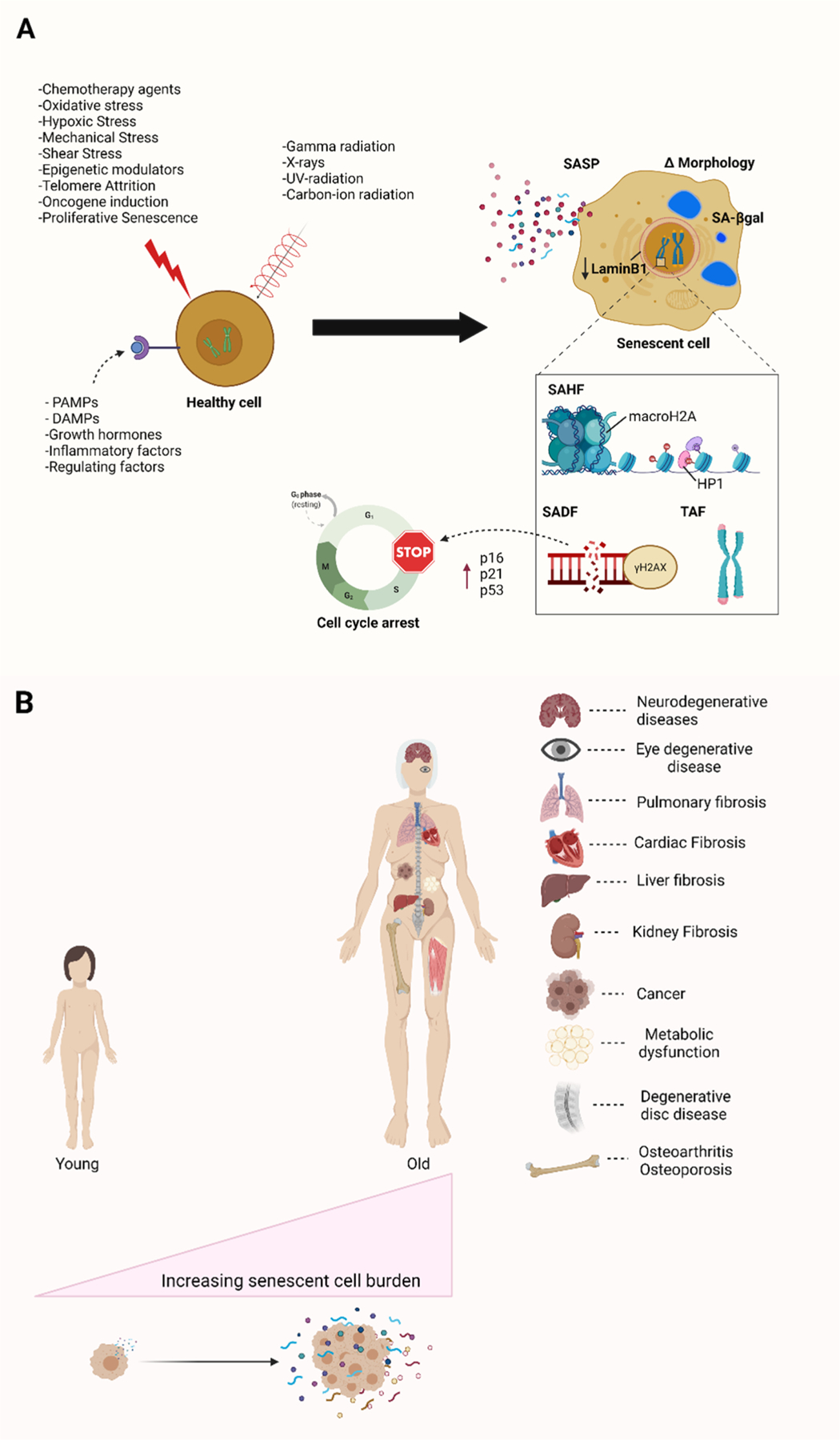
Fig. 1.
Fig. 1.
Inducers and biomarkers of cellular senescence as well as its impactions in aging and age-related diseases. (A) Diverse stimuli can induce cellular senescence, including replicative stress, genotoxic stress, oxidative stress, oncogene activation, and inflammatory factors. As a result, senescent cells enter a state of cell cycle arrest characterized by different biomarkers such as enlarged morphology, increased SA-β-galactosidase activity, release of a host of inflammatory SASPs, as well as the formation of different alteration associated with epigenetics and DNA damage such as SAHFs, SADFs, TAFs and γH2AX foci. (B) The accumulation of senescence cells drives and contributes to aging and age-related diseases in organisms. Abbreviations: SASP; senescence-associated secretory phenotype; SAHF, senescence-associated heterochromatin foci; SADF, senescence-associated DNA damage foci; TAF, telomere-associated foci. Created with BioRender.com.
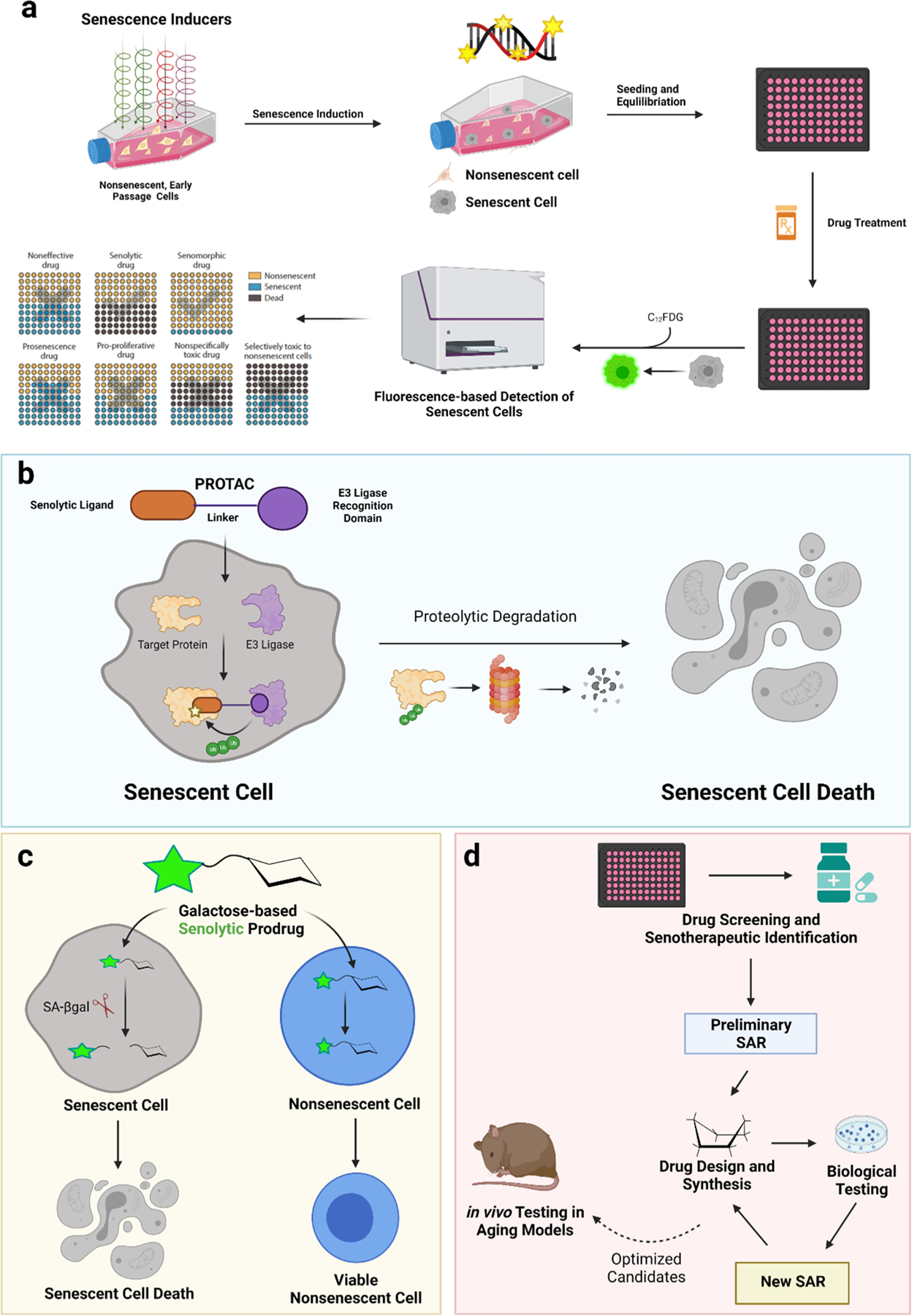
Fig. 2.
Fig. 2.
Approaches to identify and optimize senolytics. (A) Schematic diagram of a screening assay for the identification of senolytics. Non-senescent cells were induced to senescence through methods such as oxidative stress or irradiation. This results in a mixed culture of senescent cells (grey) and non-senescent cells (beige). Compounds are tested on these mixed cultures and then stained with fluorogenic C12FDG for the discovery of senolytics. (B) Mechanism of PROTAC senolytics. (C) Mechanism of galactose modified senolytic prodrugs. (D) Structural optimization and development of improved senolytics by medicinal chemistry and drug design. Created with BioRender.com.
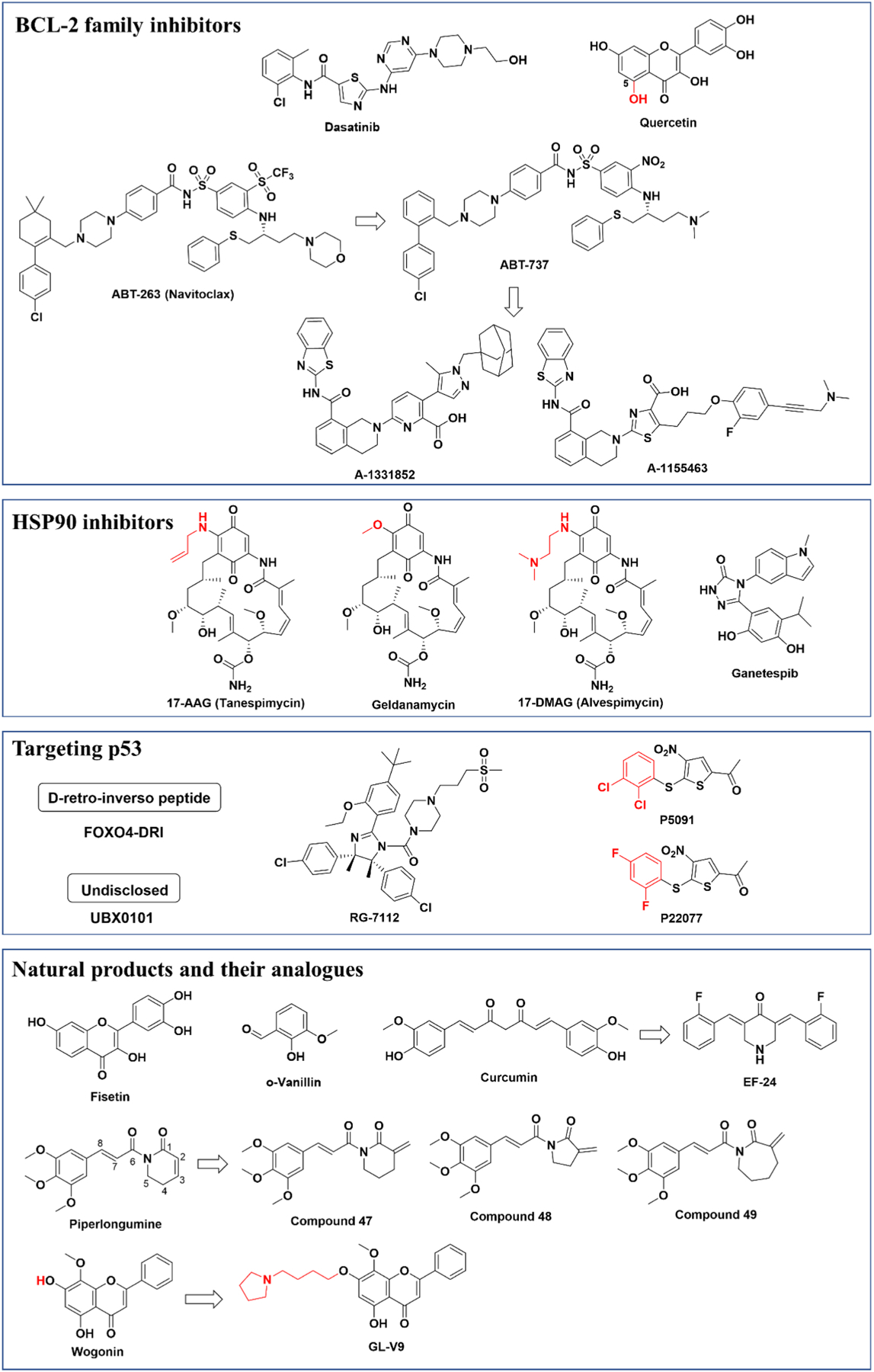
Fig. 3.
Fig. 3.
Chemical structures of current senolytics.
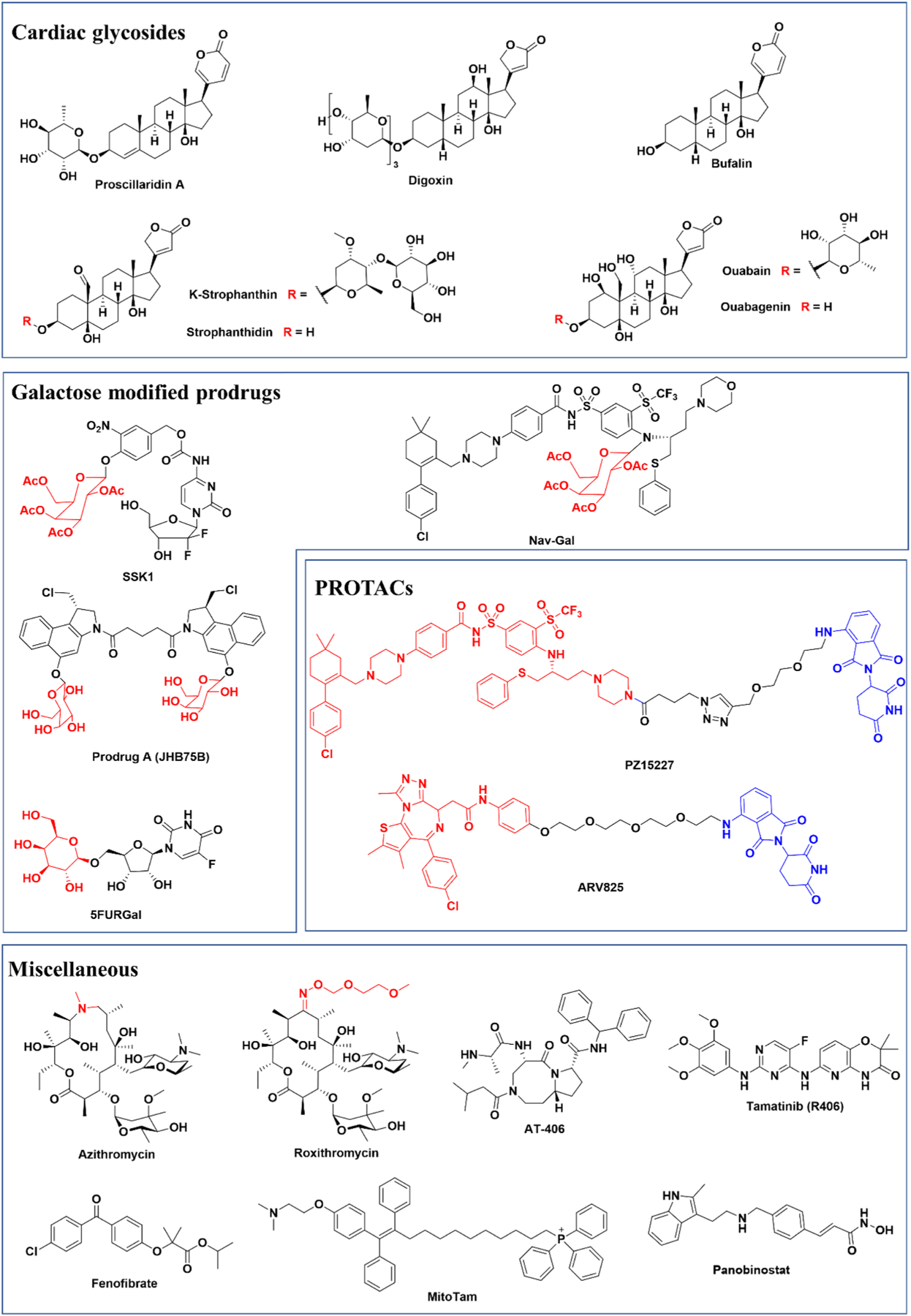
Fig. 4.
Fig. 4.
Chemical structures of current senolytics.

References

    1. Amor C, et al. , 2020. Senolytic CAR T cells reverse senescence-associated pathologies. Nature 583 (7814), 127–132. - PMC - PubMed
    1. Baar MP, et al. , 2017. Targeted apoptosis of senescent cells restores tissue homeostasis in response to Chemotoxicity and aging. Cell 169 (1), 132–147 e16. - PMC - PubMed
    1. Baker DJ, et al. , 2011. Clearance of p16Ink4a-positive senescent cells delays ageing-associated disorders. Nature 479 (7372), 232–236. - PMC - PubMed
    1. Baker DJ, et al. , 2016. Naturally occurring p16Ink4a-positive cells shorten healthy lifespan. Nature 530 (7589), 184–189. - PMC - PubMed
    1. Barnett K, et al. , 2012. Epidemiology of multimorbidity and implications for health care, research, and medical education: a cross-sectional study. Lancet 380 (9836), 37–43. - PubMed

Publication types

MeSH terms

Substances

LinkOut - more resources