


Perspective: Creatine, a Conditionally Essential Nutrient: Building the Case
- PMID: 34662902
- PMCID: PMC8803499
- DOI: 10.1093/advances/nmab111
Perspective: Creatine, a Conditionally Essential Nutrient: Building the Case
Abstract
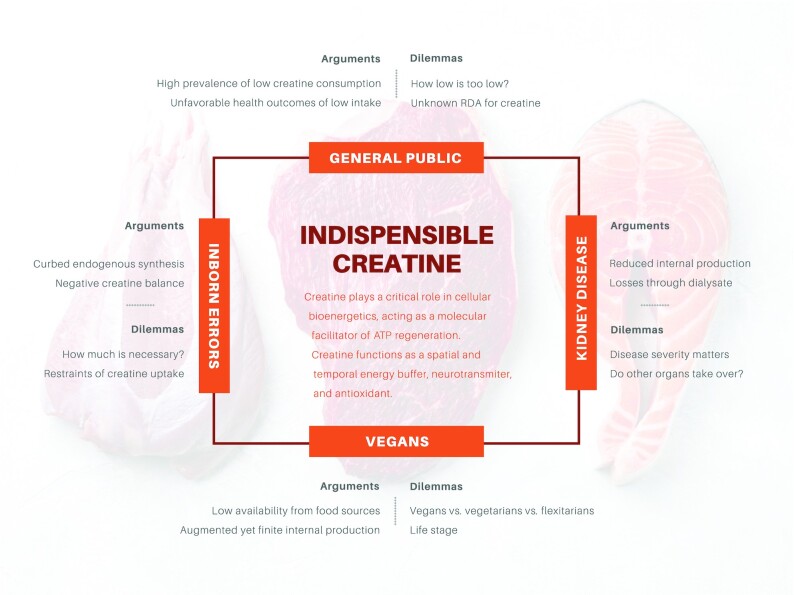
Creatine is a major component of energy metabolism that is abundant in human skeletal muscle, brain, and heart. Either synthesized internally or provided via an omnivorous diet, creatine is required for normal growth, development, and health. Recent advances in creatine nutrition and physiology suggest that the quantity of creatine the body naturally synthesizes is not sufficient to meet human needs. As a result, humans have to obtain enough creatine from the diet, which nominates creatine as an essential nutrient in certain circumstances. In this article, we summarize arguments that creatine should be considered a conditionally essential nutrient for humans and propose several questions that should be addressed in future research.
Keywords: creatine; deficiency; food; growth; meat; vegetarians.
© The Author(s) 2021. Published by Oxford University Press on behalf of the American Society for Nutrition.
Figures
References
-
- Institute of Medicine. Dietary Reference Intakes: The Essential Guide to Nutrient Requirements. Washington, DC: The National Academies Press; 2006.
-
- McCall W, Persky AM. Pharmacokinetics of creatine. Subcell Biochem. 2007;46:261–73. - PubMed
-
- Brosnan JT, da Silva RP, Brosnan ME. The metabolic burden of creatine synthesis. Amino Acids. 2011;40(5):1325–31. - PubMed
-
- Brosnan JT, Brosnan ME. Creatine: endogenous metabolite, dietary, and therapeutic supplement. Annu Rev Nutr. 2007;27:241–61. - PubMed
-
- Balsom PD, Söderlund K, Ekblom B. Creatine in humans with special reference to creatine supplementation. Sports Med. 1994;18(4):268–80. - PubMed
MeSH terms
Substances
LinkOut - more resources
Full Text Sources
Other Literature Sources
Research Materials
