


Malnutrition and other risk factors of geriatric depression: a community-based comparative cross-sectional study in older adults in rural Bangladesh
- PMID: 34663237
- PMCID: PMC8524994
- DOI: 10.1186/s12877-021-02535-w
Malnutrition and other risk factors of geriatric depression: a community-based comparative cross-sectional study in older adults in rural Bangladesh
Abstract
Background: Malnutrition and depression are highly prevalent in older adults and can lead to disparaging outcomes. Analytical studies on geriatric depression (GD) and its association with malnutrition are very scarce in Bangladesh, although the size of the older population is increasing fast in the country. The current study aimed to assess the association between malnutrition and depression and associated risk factors in rural older adults.
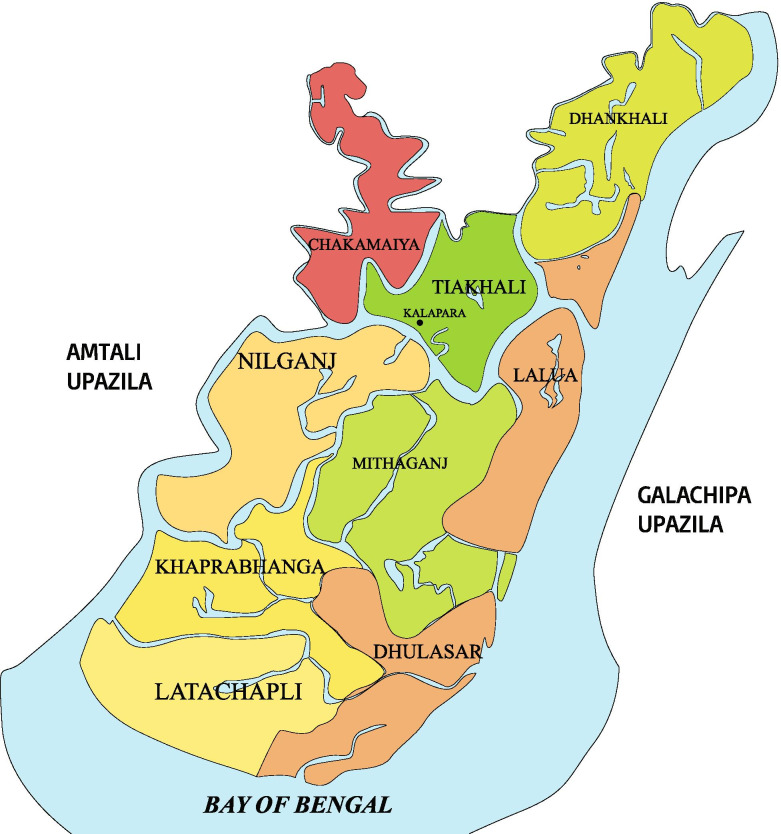
Methods: A community-based comparative cross-sectional study was conducted in 600 older adult residents (aged ≥60 years) of three rural communities of Bangladesh from January to October 2019. The study enrolled two groups of participants; 300 depressed as cases and another 300 non-depressed older adults as a comparison group matching their age and living area. We used a semi-structured questionnaire to collect data through a face-to-face interview. Geriatric Depression Scale-15 was used to determine depression, and a score of ≥5 was considered as depressed. We used the Bangla version of the Mini-Nutritional Assessment-Short Form to assess nutritional status, which comprised questions related to appetite, weight loss, mobility, recent illness/stress, dementia/depression, and BMI, and considered a score of 0-7 as the cutoff score for malnutrition. Measures included baseline and personal characteristics, malnutrition, GD, and its associated risk factors. A binary logistic regression model was fitted to identify variables associated with the risk of GD.
Results: The study found no significant difference in gender (male Vs. female) between depressed (44.0% Vs. 56.0%) and non-depressed (46.0% Vs. 54.0%) older individuals. The study revealed that malnutrition was significantly (p < 0.01) higher in depressed (56.0%) than in non-depressed (18.0%) rural older adults. The malnourished older adults had around three times (AOR = 3.155; 95% CI: 1.53-6.49, p = 0.002) more risk of having depression than the well-nourished older individuals. Older adults who were unemployed (AOR = 4.964; 95% CI: 2.361-10.440; p = 0.0001) and from lower and middle class (AOR = 3.654; 95% CI: 2.266-7.767; p = 0.001) were more likely to experience depression. Older adults having a 'poor diet' were more likely to experience depression (AOR = 3.384; 95% CI: 1.764-6.703; p = 0.0001). The rural older adults who were single (AOR = 2.368; 95% CI: 1.762-6.524; p = 0.001) and tobacco users (AOR = 2.332; 95% CI: 1.663-5.623; p = 0.003) were found more likely to experience depression.
Conclusions: A significant association between malnutrition and depression was evident by the current study in the rural older individuals of Bangladesh. It will be a prolific initiative if policymakers merge malnutrition and the risk factors associated with geriatric depression in providing universal health care for better health and well-being of the rural older populations.
Keywords: GDS; Geriatric depression; MNA-SF; Malnutrition; Older adults; Rural Bangladesh.
© 2021. The Author(s).
Conflict of interest statement
The authors declare that they have no competing interests.
Figures
References
-
- The World Bank. Bangladesh Poverty Assessment: Facing old and new frontiers in poverty reduction. 2019.
-
- World Health Organization. World report on ageing and health. WHO Library Cataloguing-in-Publication Data; 2015. https://www.who.int/ageing/publications/world-report-2015/en/. Accessed 20 Jan 2019.
-
- Khan AHU. Geriatric population and relevant contemplation. Bangladesh Med J. 2014;43(2):112–7.
MeSH terms
LinkOut - more resources
Full Text Sources
Medical
