


Front-of-pack (FOP) labelling systems to improve the quality of nutrition information to prevent obesity: NutrInform Battery vs Nutri-Score
- PMID: 34664216
- PMCID: PMC9123065
- DOI: 10.1007/s40519-021-01316-z
Front-of-pack (FOP) labelling systems to improve the quality of nutrition information to prevent obesity: NutrInform Battery vs Nutri-Score
Abstract
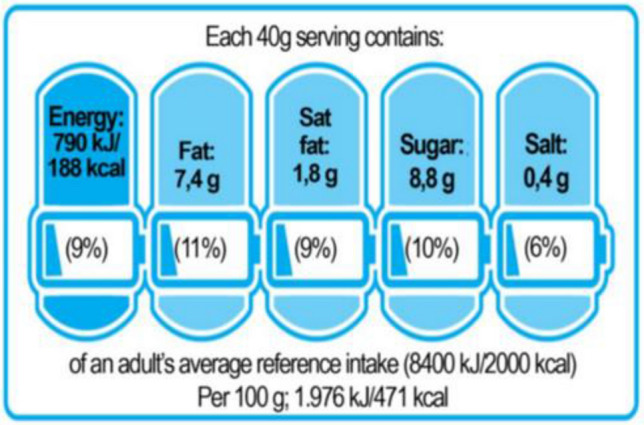
Many systems for classifying food products to adequately predict lower all-cause morbidity and mortality have been proposed as front-of-pack (FOP) nutritional labels. Although the efforts and advances that these systems represent for public health must be appreciated, as scientists involved in nutrition research and belonging to diverse Italian nutrition scientific societies, we would like to draw stakeholders' attention to the fact that some FOP labels risk being not correctly informative to consumers' awareness of nutritional food quality. The European Commission has explicitly called for such a nutrition information system to be part of the European "strategy on nutrition, overweight and obesity-related issues" to "facilitate consumer understanding of the contribution or importance of the food to the energy and nutrient content of a diet". Some European countries have adopted the popular French proposal Nutri-Score. However, many critical limits and inadequacies have been identified in this system. As an alternative, we endorse a new enriched informative label-the NutrInform Battery-promoted by the Italian Ministry of Health and deeply studied by the Center for Study and Research on Obesity, Milan University. Therefore, the present position paper limits comparing these two FOP nutritional labels, focusing on the evidence suggesting that the NutrInform Battery can help consumers better than the Nutri-Score system to understand nutritional information, potentially improving dietary choices. LEVEL OF EVIDENCE: II. Evidence was obtained from well-designed controlled trials without randomization.
Keywords: Dietary choice; Education; Food; Food portions; Nutrition; Obesity; Participation; Policy; Prevention; Public health.
© 2021. The Author(s).
Conflict of interest statement
The authors have no conflicts of interest to declare that are relevant to the content of this article.
Figures

Comment in
-
Nutri‑Score vs NutrInform Battery front‑of‑pack labelling systems: weight of scientific evidence matters.Eat Weight Disord. 2022 Aug;27(6):2267-2268. doi: 10.1007/s40519-021-01341-y. Epub 2021 Dec 2. Eat Weight Disord. 2022. PMID: 34855139 No abstract available.
-
Front-of-pack (FOP) labelling systems, nutrition education, and obesity prevention: nutri-score and nutrinform battery need more research.Eat Weight Disord. 2022 Aug;27(6):2265-2266. doi: 10.1007/s40519-021-01342-x. Epub 2021 Dec 2. Eat Weight Disord. 2022. PMID: 34855140 No abstract available.
References
-
- Asp N, Bryngelsson S. Health claims in the labelling and marketing of food products. Scand J Food Nutr. 2007;51:107–126. doi: 10.1080/17482970701652203. - DOI
Publication types
MeSH terms
LinkOut - more resources
Full Text Sources
Medical
Research Materials
