


Tests for central sensitization in general practice: a Delphi study
- PMID: 34666688
- PMCID: PMC8527602
- DOI: 10.1186/s12875-021-01539-0
Tests for central sensitization in general practice: a Delphi study
Abstract
Introduction: Central sensitization (CS) may explain the persistence of symptoms in patients with chronic pain and persistent physical symptoms (PPS). There is a need for assessing CS in the consultation room. In a recently published systematic review, we made an inventory of tests for CS. In this study we aimed to assess which tests might have added value, might be feasible and thus be suitable for use in general practice.
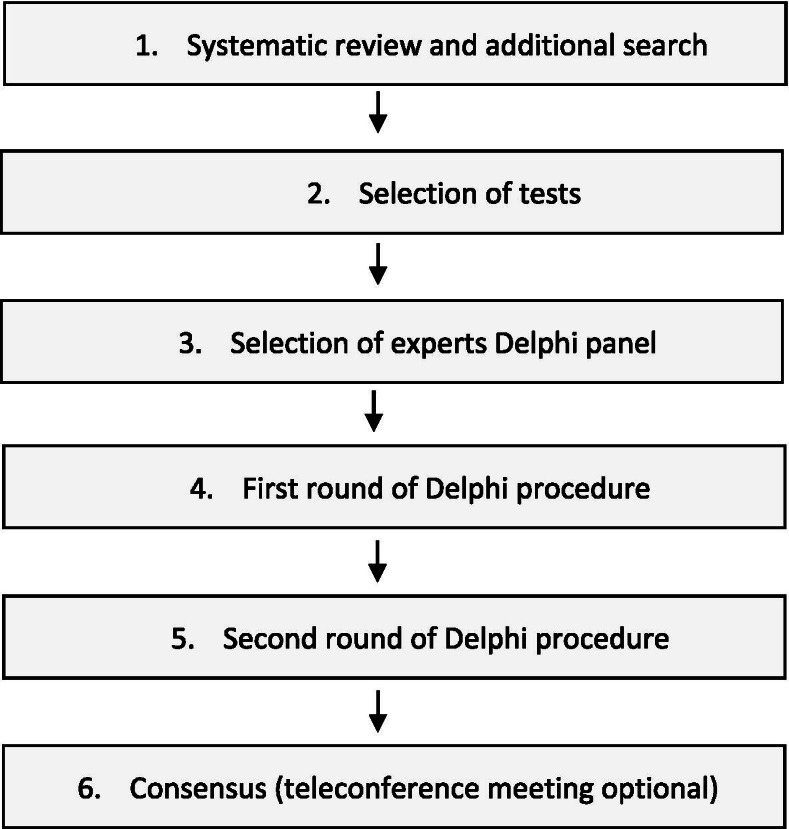
Methods: We conducted a Delphi study consisting of two e-mail rounds to reach consensus among experts in chronic pain and PPS. We invited 40 national and international experts on chronic pain and PPS, 27 agreed to participate. We selected 12 tests from our systematic review and additional searches; panellists added three more tests in the first round. We asked the panellists, both clinicians and researchers, to rate these 15 tests on technical feasibility for use in general practice, added value and to provide an overall judgement for suitability in general practice.
Results: In two rounds the panellists reached consensus on 14 of the 15 tests: three were included, eleven excluded. Included were the Central Sensitization Inventory (CSI), pressure pain thresholds (PPTs) and monofilaments. No consensus was reached on the Sensory Hypersensitivity Scale.
Conclusion: In a Delphi study among an international panel of experts, three tests for measuring CS were considered to be suitable for use in general practice: the Central Sensitization Inventory (CSI), pressure pain thresholds (PPTs) and monofilaments.
Keywords: Central sensitization; Chronic pain; Medically unexplained symptoms; Persistent physical symptoms; Tests.
© 2021. The Author(s).
Conflict of interest statement
None of the authors declared conflicts of interest
Figures

References
-
- den Boer C, Dries L, Terluin B, van der Wouden JC, Blankenstein AH, van Wilgen CP, Lucassen P, van der Horst HE. Central sensitization in chronic pain and medically unexplained symptom research: a systematic review of definitions, operationalizations and measurement instruments. J Psychosom Res. 2019;117(2 (2019)):32–40. doi: 10.1016/j.jpsychores.2018.12.010. - DOI - PubMed
-
- Sanchis NM, Lluch E, Nijs J, Struyf F, Kangasperko M. The role of central sensitization in shoulder pain: a systematic literature review. Semin Arthritis Rheum. 2015;44(6):710–6. - PubMed
-
- IASP taxonomy [https://www.iasp-pain.org/Taxonomy].
Publication types
MeSH terms
LinkOut - more resources
Full Text Sources
Medical
