. 2021 Nov 1;17(11):2283-2306.
doi: 10.5664/jcsm.9512.

Guiding principles for determining work shift duration and addressing the effects of work shift duration on performance, safety, and health: guidance from the American Academy of Sleep Medicine and the Sleep Research Society

Affiliations

Guiding principles for determining work shift duration and addressing the effects of work shift duration on performance, safety, and health: guidance from the American Academy of Sleep Medicine and the Sleep Research Society

Indira Gurubhagavatula et al. J Clin Sleep Med. .

Abstract

Risks associated with fatigue that accumulates during work shifts have historically been managed through working time arrangements that specify fixed maximum durations of work shifts and minimum durations of time off. By themselves, such arrangements are not sufficient to curb risks to performance, safety, and health caused by misalignment between work schedules and the biological regulation of waking alertness and sleep. Science-based approaches for determining shift duration and mitigating associated risks, while addressing operational needs, require: (1) a recognition of the factors contributing to fatigue and fatigue-related risks; (2) an understanding of evidence-based countermeasures that may reduce fatigue and/or fatigue-related risks; and (3) an informed approach to selecting workplace-specific strategies for managing work hours. We propose a series of guiding principles to assist stakeholders with designing a shift duration decision-making process that effectively balances the need to meet operational demands with the need to manage fatigue-related risks.

Keywords: alertness; circadian rhythms; mental fatigue; occupational medicine; policy making; productivity; shift scheduling; sleep homeostasis; sleepiness; working time arrangements.


Conflict of interest statement

Financial Disclosure: The development of this paper was supported by the American Academy of Sleep Medicine (AASM) and the Sleep Research Society. Mr. Carandang and Ms. Kazmi are employed by the AASM. Mr. Heald was employed by the AASM during his work on this paper through July 2020. Dr Gurubhagavatula is the course director of the AASM Sleep Medicine Essentials Course (September 2021). She received a research grant from the AASM Foundation to study sleep apnea in law enforcement officers. She received royalties from UptoDate, Inc. for writing the article, “Drowsy driving: Risks, evaluation, and management.” Dr Barger served as a consultant for Boston Children’s Hospital and the University of Helsinki. She received research funding from Delta Airlines. Dr Boivin is the Founder and CEO of Alpha Logik Consultants Inc., a privately-owned small company that provides conferences and consultations on sleep and fatigue related issues. She served as a consultant for the following: Sunovion, Valéro, Merck Pharmaceutical, Canadian Space Agency, Rio Tinto, Comité Patronal de Négociation du Secteur de la Santé et des Services Sociaux (CPNSSS), Laurentian Pilotage Authority, Bel-Air Aviation, Mines Canadian Malartic, Canadian National, Aéroport de Montréal, Ministère des Transports du Québec. She received research contracts from Transport Canada, Société de l’Assurance automobile du Québec, NAV Canada Innovation Maritime, and Air Canada. Dr Dawson served as a consultant for LITA, Treasury Wine Estate, Energy Queensland, North Power, AngloAmerican, Z Energy, Zeroharm, PTA, BMA, Napier Port, and Lyttelton Port Company, and for workshops on shift work/ fatigue. He received research funding from Svitzer. Dr Drake served as a consultant for Eisai Inc., Jazz Pharmaceuticals, and Harmony Biosciences. He served as a speaker and a member of the speaker’s bureau for Merck, Inc. and Harmony Biosciences. He received research funding from Eisai Inc., Suven Life Sciences, Takeda Pharmaceuticals, Jazz Pharmaceuticals, Merck, Inc., and Procter & Gamble. Dr Flynn-Evans has a financial interest in Baby Sleep Science, a parent coaching company. Dr Mysliwiec has been contracted to serve as a speaker for Springer Healthcare LLC and Jazz Pharmaceuticals. He served as a consultant for CPAP Medical, Bluegrass Oxygen, NOCTEM, Sleep Care Inc., Ebb Therapeutics, and Nightware. Dr Samuels is the President and CEO of the Center for Sleep & Human Performance, and the sole owner of an online fatigue management training program for law enforcement. He currently serves as a consultant for Red Bull International, The Royal Canadian Mounted Police, FitGMR Ltd., Eisai Inc., Sunovian Pharmaceuticals, and Jazz Pharmaceuticals. He received research equipment donated from Cerebra Health Ltd. Dr Van Dongen serves as a consultant for Jazz Pharmaceuticals. He received research funding from Federal Express Corporation, Jazz Pharmaceuticals, and Mars Wrigley Confectionary. Non-financial Disclosure: Dr Basner is the President of the International Commission of Biological Effects of Noise (ICBEN). Dr Boivin received non-financial support from PPRS SAS. She provides expert opinion on clinical cases involving patients with circadian rhythm disorders. Dr Patterson served on the Board of Directors of the National Association of EMS Physicians. He is currently serving on the Board of Directors of the Pittsburgh Emergency Medicine Foundation. Dr Samuels is the Past President of the Canadian Sleep Society. He serves on the Board of Directors/Advisors for Cerebra Health Ltd, FitGMR Ltd, Eisai Inc., Sunovion Pharmaceuticals, and Jazz Pharmaceuticals.

Figures

Figure 1
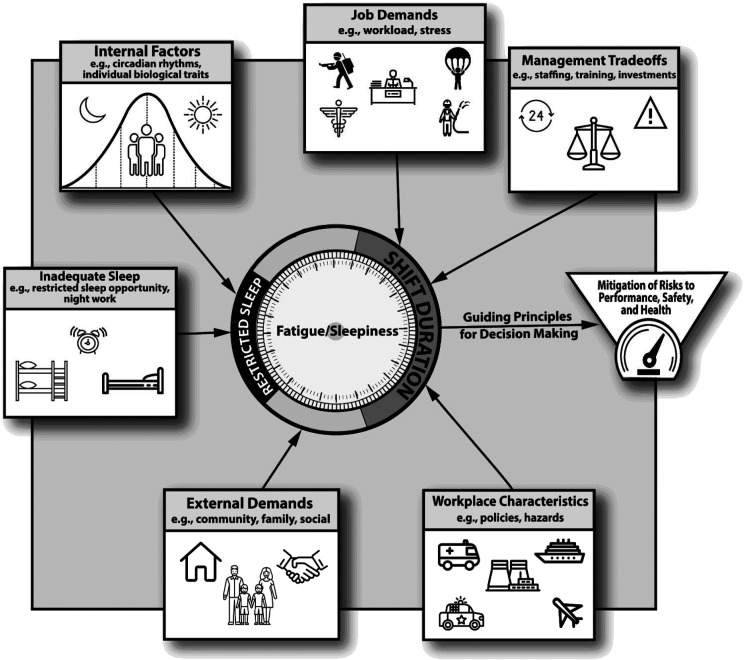
Figure 1. Factors influencing the performance, safety and health risks associated with shift duration.
This diagram illustrates the multiple factors to be considered in balancing the needs of an operational setting, the human resource requirements to meet those needs, and the pivotal and complex role of shift duration. Shift duration competes with other demands on people’s time—for example, for commuting, eating, personal hygiene, non-work-related commitments, and social activities—and restricts the time available for sleep.,, Fatigue/sleepiness associated with reduced and displaced sleep and with the timing of the biological clock (circadian rhythm), in conjunction with individual traits (e.g. vulnerability to sleep loss) and workplace characteristics and hazards determines overall risk levels., Evaluation of these interconnected factors is pertinent to decision making about shift duration.
Figure A1
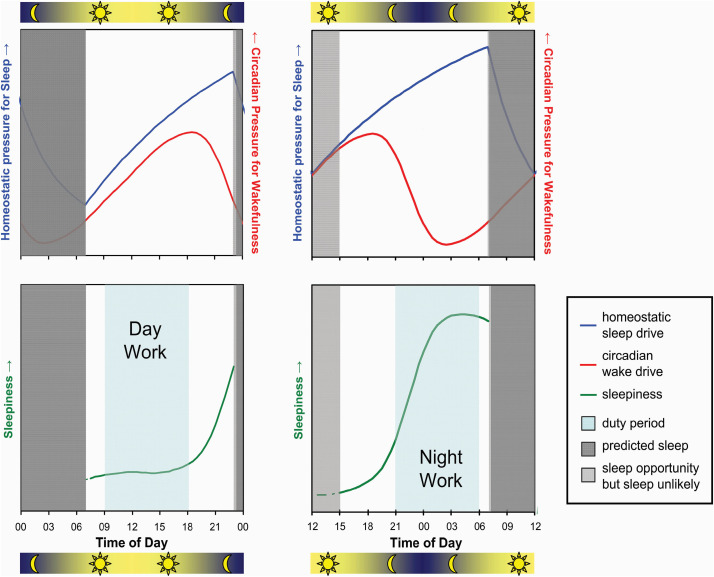
Figure A1. Regulation of sleepiness by two biological processes.
A circadian process (red) produces a rising pressure for wakefulness, which counteracts fatigue, during the day; and a withdrawal of that pressure for wakefulness, thereby promoting sleepiness, during the night. Simultaneously, a homeostatic process (blue) builds up a pressure for sleep, thereby promoting sleepiness, during periods of wakefulness; and dissipated that pressure for sleep (dark gray), thereby providing recovery, during periods of sleep (top panels). The combined effect of the circadian and homeostatic processes on sleepiness may be calculated as the net difference between the homeostatic pressure for sleep and the circadian pressure for wakefulness (bottom panels, green), as illustrated here for a scenario with a daytime duty period (light blue) and an 8-h nighttime sleep opportunity (left panels) and for a scenario with a nighttime duty period (light blue) with an 8-h daytime sleep opportunity (right panels). Note that in the day work scenario, the sleep opportunity is ended (e.g. through use of an alarm clock) somewhat prematurely, as there is still some homeostatic pressure for sleep left to be dissipated (top left). In the night work scenario, however, sleep is curtailed much more, with the rising circadian wake pressure causing awakening from daytime sleep well before the end of the sleep opportunity. The early awakening leaves a higher level of homeostatic sleep pressure at the end of the shortened sleep period (dark gray) and causes a portion of time available for sleep in this scenario (light gray) to remain unutilized (top right). The combined effect of the two processes—sleepiness calculated as the net difference between the homeostatic pressure for sleep and the circadian pressure for wakefulness—is that sleepiness is low and stable throughout the duty period in the daytime duty scenario (bottom left), whereas sleepiness increases and peaks toward the end of the duty period in the nighttime duty scenario (bottom right). Note that the transient cognitive impairment immediately after awakening known as sleep inertia is not depicted in this figure.

References

    1. Skeiky L, et al . Circadian rhythms in sleepiness, alertness, and performance . In: Kryger MH, Roth T, Dement WC , eds. Principles and Practice of Sleep Medicine. 7th ed. Philadelphia: : Elsevier; , in press. .
    1. Pigeon WR, et al . Distinguishing between excessive daytime sleepiness and fatigue: toward improved discovery and treatment . J Psychosom Res. 2003. ; 54 ( 1 ): 61 – 69 . - PubMed
    1. Shen J, et al . Distinguishing sleepiness and fatigue: focus on definition and measurement . Sleep Med Rev. 2006. ; 10 ( 1 ): 63 – 76 . - PubMed
    1. Åkerstedt T . Consensus statement: fatigue and accidents in transport operations . J Sleep Res. 2000. ; 9 ( 4 ): 395 . - PubMed
    1. Satterfield BC, et al . Occupational fatigue, underlying sleep and circadian mechanisms, and approaches to fatigue risk management . Fatigue Biomed Health Behav 2013. ; 1 : 118 – 136 .

Publication types