


IQOS marketing strategies in the USA before and after US FDA modified risk tobacco product authorisation
- PMID: 34667105
- PMCID: PMC9016087
- DOI: 10.1136/tobaccocontrol-2021-056819
IQOS marketing strategies in the USA before and after US FDA modified risk tobacco product authorisation
Abstract
Introduction: Given that the US Food and Drug Administration (FDA) authorised reduced exposure messaging to be used in IQOS marketing, we examined: (1) IQOS ad content; (2) advertising media channels and (3) changes in advertising efforts over time.
Methods: We conducted a mixed-methods study regarding IQOS ad content (headlines, themes, images), ad occurrence characteristics (including content, media channels and adspend) in the USA from August 2019 to April 2021 using Numerator advertising/marketing data.
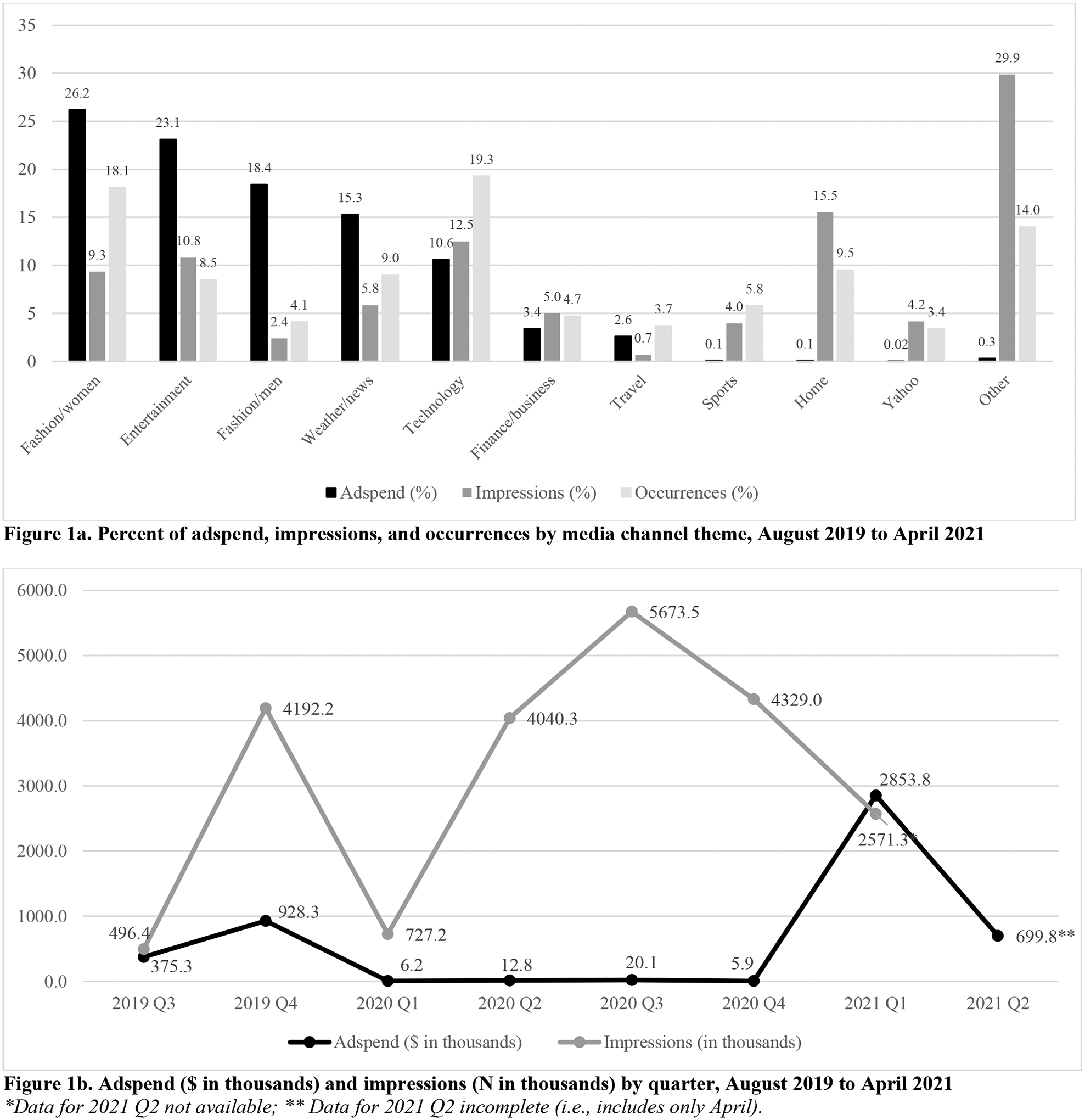
Results: Across 24 unique ads and 591 occurrences (84.6% online, 8.0% print, 7.4% mobile), there was $4 902 110 total adspend (98.9% allocated to print). Across unique ads, occurrences and adspend, prominent themes included 'real tobacco' (45.8%, 47.4%, 30.1%, respectively), less odour/ash (29.2%, 21.0%, 29.9%) and switching from cigarettes (25.0%, 19.5%, 69.4%), and images mainly featured the product alone (58.2%, 61.4%, 99.5%) or with women (25.0%, 19.1%, 0.3%). Per occurrences and adspend, the most prominent media channel themes (eg, magazine/website topics) were technology (19.3%, 10.6%), women's fashion (18.1%, 26.2%), weather/news (9.0%, 15.3%) and entertainment/pop culture/gaming (8.5%, 23.1%). Ad themes appearing only post-FDA authorisation included switching from traditional cigarettes, same-day/home-delivery, convenience (eg, use indoors), reduced exposure to some dangerous substances, science/research and distinction from e-cigarettes. Overall adspend per occurrence increased postauthorisation (p=0.016); the highest adspend per unique ad (69.3% of total) focused on ads featuring reduced exposure.
Conclusions: Regulatory efforts must be informed by ongoing surveillance of IQOS marketing efforts and its impacts, particularly how specific consumer subgroups (eg, tobacco non-users, women, young people) are impacted by marketing exposure.
Keywords: advertising and promotion; non-cigarette tobacco products; packaging and labelling; public policy; tobacco industry.
© Author(s) (or their employer(s)) 2023. No commercial re-use. See rights and permissions. Published by BMJ.
Conflict of interest statement
Competing interests: YB-Z has received fees for lectures from Pfizer Ltd, Novartis NCH and GSK Consumer Health (distributors of smoking cessation pharmacotherapy in Israel) in the past (2012 to July 2019). HL had received fees for lectures from Pfizer Israel Ltd (distributor of a smoking cessation pharmacotherapy in Israel) in 2017. LA receives royalties for the sale of Text2Quit and is a shareholder in Welltok, Inc.
Figures
References
-
- Robertson L, Cameron C, McGee R, Marsh L, Hoek J. Point-of-sale tobacco promotion and youth smoking: a meta-analysis. Tob Control. 2016;25(e2):e83–e89. - PubMed
-
- Liu X, Lugo A, Spizzichino L, Tabuchi T, Pacifici R, Gallus S. Heat-not-burn tobacco products: concerns from the Italian experience. Tobacco Control. 2019;28(1):113. - PubMed
Publication types
MeSH terms
Grants and funding
LinkOut - more resources
Full Text Sources
Medical
Research Materials
Miscellaneous
