


Profile of Autism Spectrum Disorder in Tuberous Sclerosis Complex: Results from a Longitudinal, Prospective, Multisite Study
- PMID: 34668231
- PMCID: PMC8639652
- DOI: 10.1002/ana.26249
Profile of Autism Spectrum Disorder in Tuberous Sclerosis Complex: Results from a Longitudinal, Prospective, Multisite Study
Abstract
Objective: Tuberous sclerosis complex (TSC) is highly associated with autism spectrum disorder (ASD). Objectives of the study were to characterize autistic features in young children with TSC.
Methods: Participants included 138 children followed from ages 3 to 36 months with TSC from the Tuberous Sclerosis Complex Autism Center of Excellence Research Network (TACERN), a multicenter, prospective observational study aimed at understanding the underlying mechanisms of ASD in TSC. Developmental and autism-specific assessments were administered, and a clinical diagnosis of ASD was determined for all participants at 36 months. Further analyses were performed on 117 participants with valid autism assessments based on nonverbal mental age greater than 15 months.
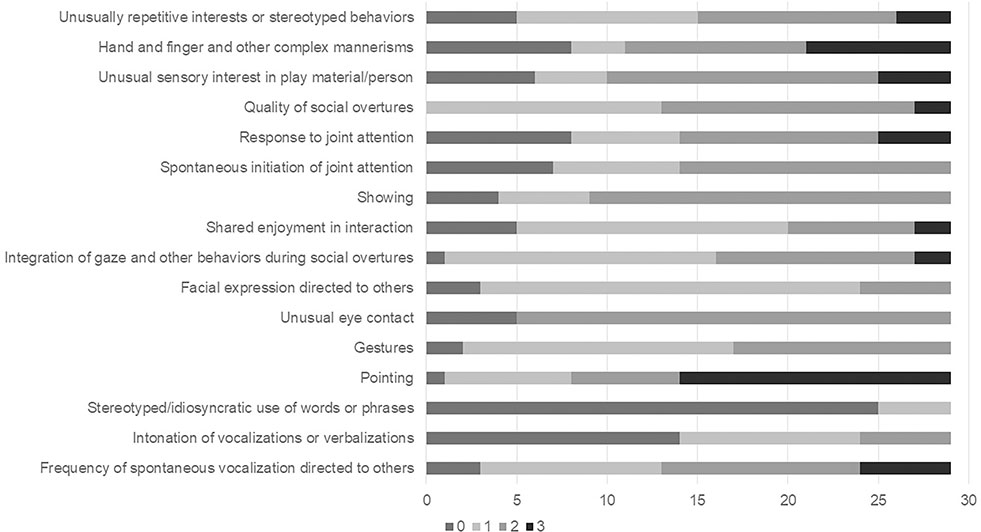
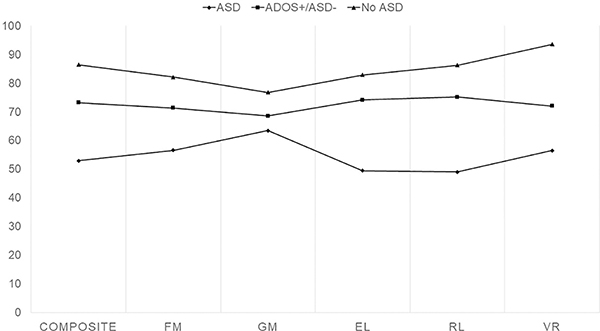
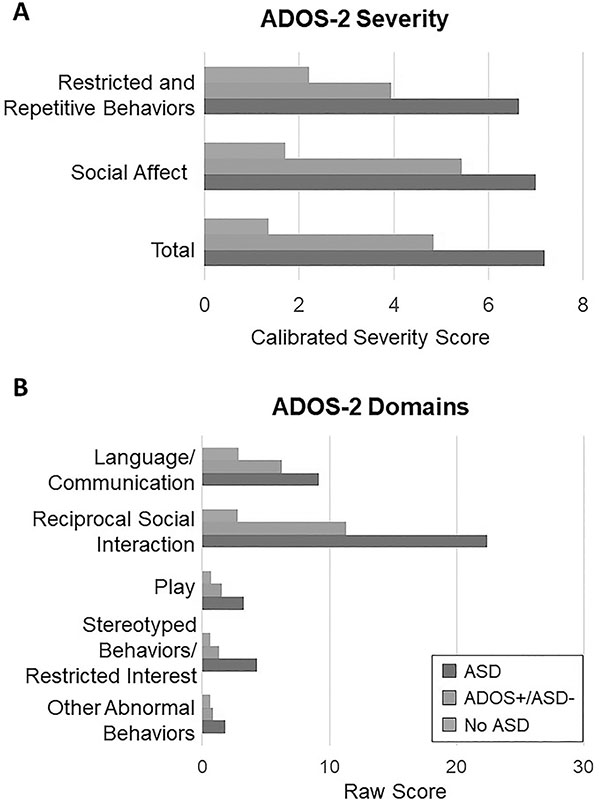
Results: Prevalence of clinical diagnosis of ASD at 36 months was 25%. Nearly all autistic behaviors on the Autism Diagnostic Observation Schedule-2 (ADOS-2) and Autism Diagnostic Interview-Revised (ADI-R) were more prevalent in children diagnosed with ASD; however, autism-specific behaviors were also observed in children without ASD. Overall quality of social overtures, facial expressions, and abnormal repetitive interests and behaviors were characteristics most likely to distinguish children with ASD from those without an ASD diagnosis. Participants meeting ADOS-2 criteria but not a clinical ASD diagnosis exhibited intermediate developmental and ADOS-2 scores compared to individuals with and without ASD.
Interpretation: ASD is highly prevalent in TSC, and many additional individuals with TSC exhibit a broad range of subthreshold autistic behaviors. Our findings reveal a broader autism phenotype that can be identified in young children with TSC, which provides opportunity for early targeted treatments. ANN NEUROL 2021;90:874-886.
© 2021 American Neurological Association.
Conflict of interest statement
POTENTIAL CONFLICTS OF INTEREST
The authors declared no conflict of interest.
Figures
References
-
- Curatolo P, Moavero R, de Vries PJ. Neurological and neuropsychiatric aspects of tuberous sclerosis complex. Lancet Neurol. 2015;14(7):733–45. - PubMed
-
- De Vries P, Humphrey A, McCartney D, Prather P, Bolton P, Hunt A, et al. Consensus clinical guidelines for the assessment of cognitive and behavioural problems in Tuberous Sclerosis. European Child and Adolescent Psychiatry. 2005;14(4):183–90. - PubMed
-
- de Vries PJ, Hunt A, Bolton PF. The psychopathologies of children and adolescents with tuberous sclerosis complex (TSC): a postal survey of UK families. European child & adolescent psychiatry. 2007;16(1):16–24. - PubMed
