


A Systematic Scoping Review on Pedagogical Strategies of Interprofessional Communication for Physicians in Emergency Medicine
- PMID: 34671703
- PMCID: PMC8521417
- DOI: 10.1177/23821205211041794
A Systematic Scoping Review on Pedagogical Strategies of Interprofessional Communication for Physicians in Emergency Medicine
Abstract
Background: Interprofessional communication (IPC) is integral to interprofessional teams working in the emergency medicine (EM) setting. Yet, the coronavirus disease 2019 pandemic has laid bare gaps in IPC knowledge, skills and attitudes. These experiences underscore the need to review how IPC is taught in EM.
Purpose: A systematic scoping review is proposed to scrutinize accounts of IPC programs in EM.
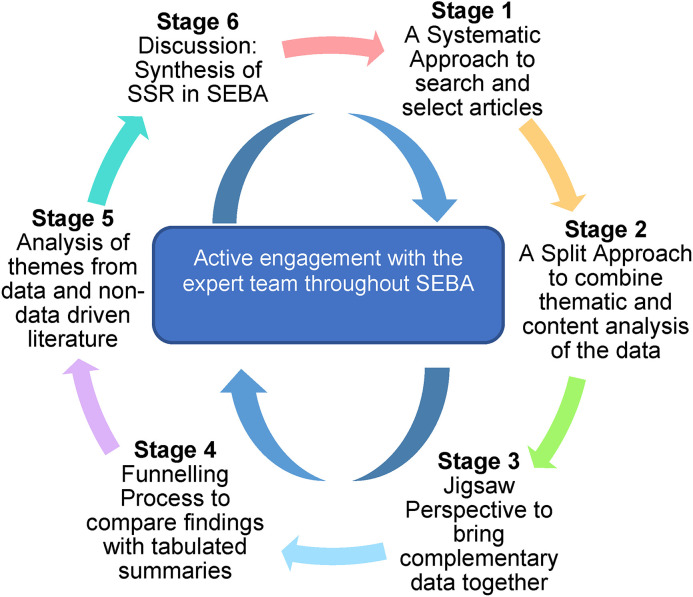
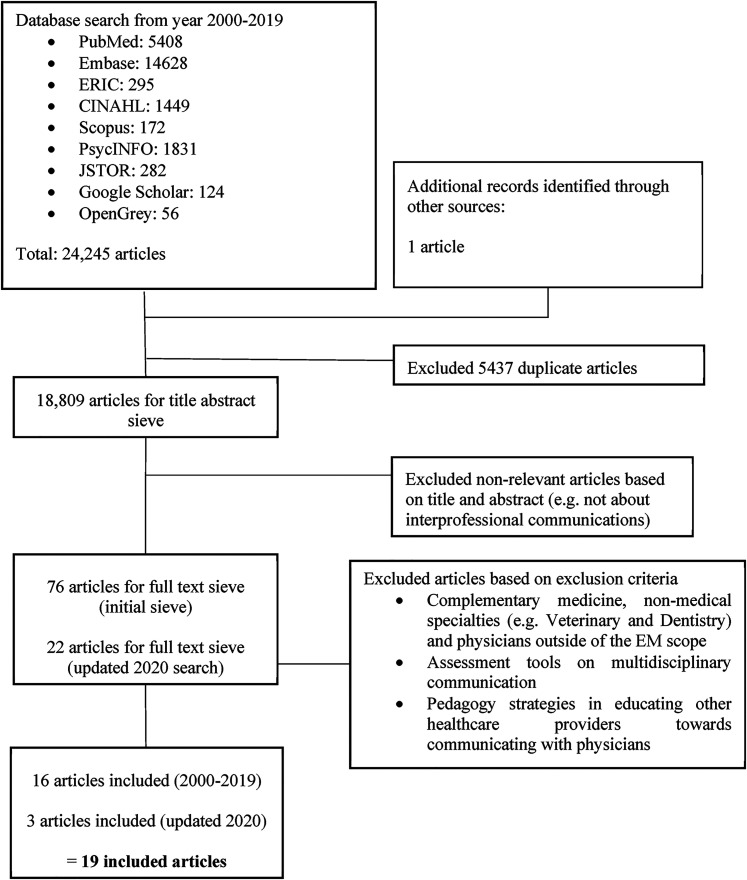
Methods: Krishna's Systematic Evidence-Based Approach (SEBA) is adopted to guide this systematic scoping review. Independent searches of ninedatabases (PubMed, Embase, CINAHL, Scopus, PsycINFO, ERIC, JSTOR, Google Scholar and OpenGrey) and "negotiated consensual validation" were used to identify articles published between January 1, 2000 and December 31, 2020. Three research teams reviewed the data using concurrent content and thematic analysis and independently summarized the included articles. The findings were scrutinized using SEBA's jigsaw perspective and funneling approach to provide a more holistic picture of the data.
In total: 18,809 titles and abstracts were identified after removal of duplicates, 76 full-text articles reviewed, and 19 full-text articles were analyzed. In total, four themes and categories were identified, namely: (a) indications and outcomes, (2) curriculum and assessment methods, (3) barriers, and (4) enablers.
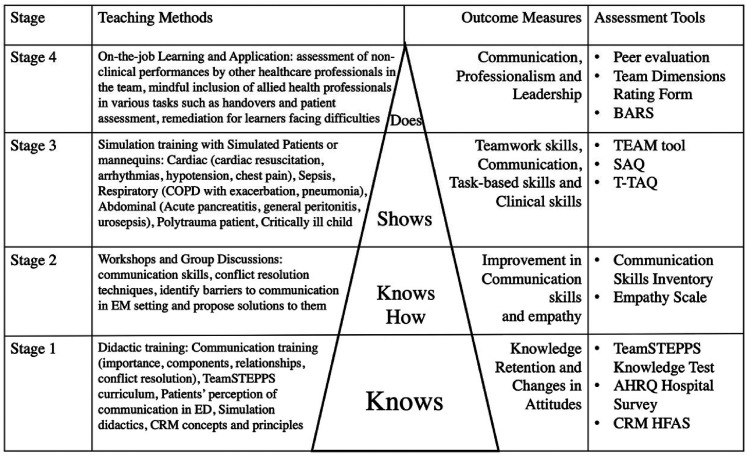
Conclusion: IPC training in EM should be longitudinal, competency- and stage-based, underlining the need for effective oversight by the host organization. It also suggests a role for portfolios and the importance of continuing support for physicians in EM as they hone their IPC skills.
Highlights: • IPC training in EM is competency-based and organized around stages.• IPC competencies build on prevailing knowledge and skills.• Longitudinal support and holistic oversight necessitates a central role for the host organization.• Longitudinal, robust, and adaptable assessment tools in the EM setting are necessary and may be supplemented by portfolio use.
Keywords: communication; emergency medicine; interprofessional; medical education.
© The Author(s) 2021.
Conflict of interest statement
Declaration of Conflicting Interests: The authors declared no potential conflicts of interest with respect to the research, authorship, and/or publication of this article.
Figures
References
-
- Kilner E, Sheppard LA. The role of teamwork and communication in the emergency department: a systematic review. Int Emerg Nurs. 2010;18(3):127-137. - PubMed
-
- Grudzen CR, Emlet LL, Kuntz J, et al. EM Talk: communication skills training for emergency medicine patients with serious illness. BMJ Support Palliat Care. 2016;6(2):219-224. - PubMed
-
- MacLeod RD. On reflection: doctors learning to care for people who are dying. Soc Sci Med. 2001;52(11):1719-1727. - PubMed
-
- Stewart M, Brown JB, Boon H, Galajda J, Meredith L, Sangster M. Evidence on patient-doctor communication. Cancer. 1999;25(1999):30. - PubMed
Publication types
LinkOut - more resources
Full Text Sources
