


Avoidance of bottles during the establishment of breastfeeds in preterm infants
- PMID: 34671969
- PMCID: PMC8529385
- DOI: 10.1002/14651858.CD005252.pub5
Avoidance of bottles during the establishment of breastfeeds in preterm infants
Abstract
Background: Preterm infants often start milk feeds by gavage tube. As they mature, sucking feeds are gradually introduced. Women with preterm infants may not always be in hospital to breastfeed their baby and need an alternative approach to feeding. Most commonly, milk (expressed breast milk or formula) is given by bottle. Whether using bottles during establishment of breastfeeds is detrimental to breastfeeding success is a topic of ongoing debate.
Objectives: To identify the effects of avoidance of bottle feeds during establishment of breastfeeding on the likelihood of successful breastfeeding, and to assess the safety of alternatives to bottle feeds.
Search methods: A new search strategy was developed for this update. Searches were conducted without date or language limits in September 2021 in: MEDLINE, CENTRAL, and CINAHL. We also searched the ISRCTN trial registry and the reference lists of retrieved articles for randomised controlled trials (RCTs) and quasi-RCTs. SELECTION CRITERIA: We included RCTs and quasi-RCTs comparing avoidance of bottles with use of bottles for preterm infants where their mothers planned to breastfeed.
Data collection and analysis: Two review authors independently assessed trial quality and extracted data. When appropriate, we contacted study authors for additional information. We used the GRADE approach to assess the certainty of evidence. Outcomes included full breastfeeding and any breastfeeding on discharge home and at three and six months after discharge, as well as length of hospital stay and episodes of infant infection. We synthesised data using risk ratios (RR), risk differences (RD) and mean differences (MD), with 95% confidence intervals (CI). We used the GRADE approach to assess the certainty of the evidence.
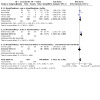
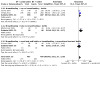
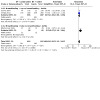
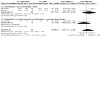
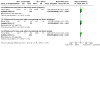
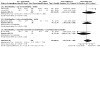
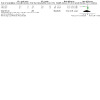
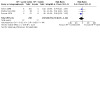
Main results: We included seven trials with 1152 preterm infants in this updated review. There are three studies awaiting classification. Five included studies used a cup feeding strategy, one used a tube feeding strategy and one used a novel teat when supplements to breastfeeds were needed. We included the novel teat study in this review as the teat was designed to closely mimic the sucking action of breastfeeding. The trials were of small to moderate size, and two had high risk of attrition bias. Adherence with cup feeding was poor in one of the studies, indicating dissatisfaction with this method by staff or parents (or both); the remaining four cup feeding studies provided no such reports of dissatisfaction or low adherence. Avoiding bottles may increase the extent of full breastfeeding on discharge home (RR 1.47, 95% CI 1.19 to 1.80; 6 studies, 1074 infants; low-certainty evidence), and probably increases any breastfeeding (full and partial combined) on discharge (RR 1.11, 95% CI 1.06 to 1.16; studies, 1138 infants; moderate-certainty evidence). Avoiding bottles probably increases the occurrence of full breastfeeding three months after discharge (RR 1.56, 95% CI 1.37 to 1.78; 4 studies, 986 infants; moderate-certainty evidence), and may also increase full breastfeeding six months after discharge (RR 1.64, 95% CI 1.14 to 2.36; 3 studies, 887 infants; low-certainty evidence). Avoiding bottles may increase the occurrence of any breastfeeding (full and partial combined) three months after discharge (RR 1.31, 95% CI 1.01 to 1.71; 5 studies, 1063 infants; low-certainty evidence), and six months after discharge (RR 1.25, 95% CI 1.10 to 1.41; 3 studies, 886 infants; low-certainty evidence). The effects on breastfeeding outcomes were evident at all time points for the tube alone strategy and for all except any breastfeeding three months after discharge for cup feeding, but were not present for the novel teat. There were no other benefits or harms including for length of hospital stay (MD 2.25 days, 95% CI -3.36 to 7.86; 4 studies, 1004 infants; low-certainty evidence) or episodes of infection per infant (RR 0.70, 95% CI 0.35 to 1.42; 3 studies, 500 infants; low-certainty evidence).
Authors' conclusions: Avoiding the use of bottles when preterm infants need supplementary feeds probably increases the extent of any breastfeeding at discharge, and may improve any and full breastfeeding (exclusive) up to six months postdischarge. Most of the evidence demonstrating benefit was for cup feeding. Only one study used a tube feeding strategy. We are uncertain whether a tube alone approach to supplementing breastfeeds improves breastfeeding outcomes; further studies of high certainty are needed to determine this.
Copyright © 2021 The Cochrane Collaboration. Published by John Wiley & Sons, Ltd.
Conflict of interest statement
EA: none.
AR: none.
AK: none.
CC was an investigator responsible for one of the studies included in this review (Collins 2004). The study was funded by Women's & Children's Hospital Foundation Midwifery Fellowship; Mercy Hospital for Women Melbourne, Nurses's Research Fund, Australia.
JG: none. She performed data extraction for Collins 2004.
HS: none.
Core editorial and administrative support for this review has been provided by a grant from The Gerber Foundation. The Gerber Foundation is a separately endowed, private foundation, independent from the Gerber Products Company. The grantor has no input on the content of the review or the editorial process (Sources of support).
Figures
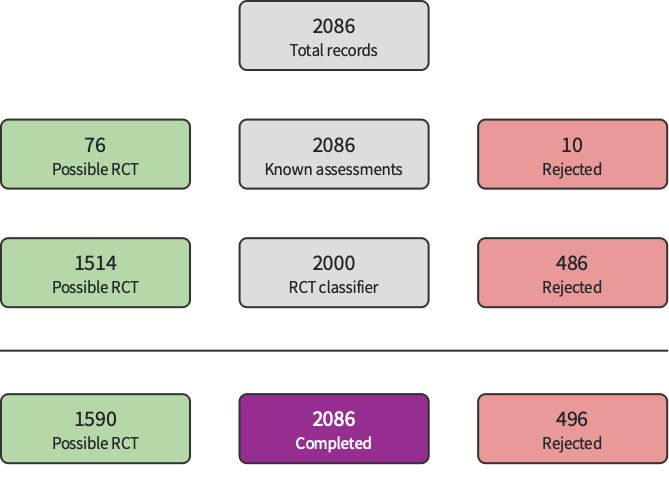
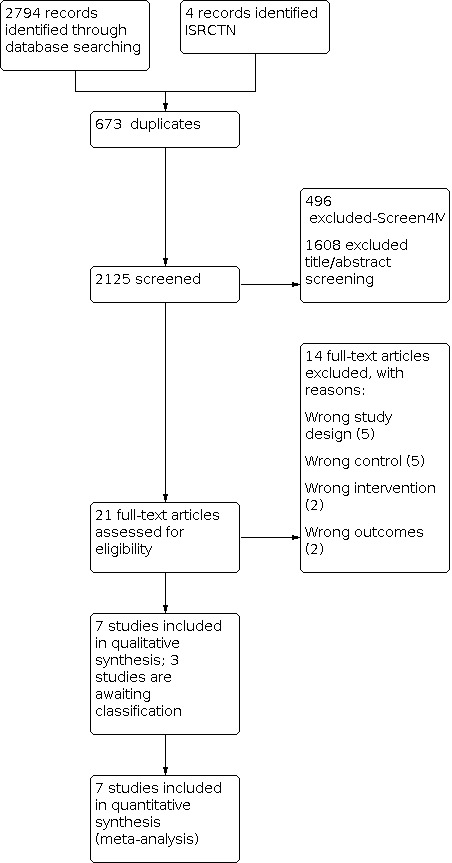
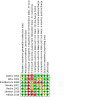
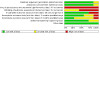


Update of
-
Avoidance of bottles during the establishment of breast feeds in preterm infants.Cochrane Database Syst Rev. 2016 Oct 19;10(10):CD005252. doi: 10.1002/14651858.CD005252.pub4. Cochrane Database Syst Rev. 2016. Update in: Cochrane Database Syst Rev. 2021 Oct 21;10:CD005252. doi: 10.1002/14651858.CD005252.pub5. PMID: 27756113 Free PMC article. Updated.
References
References to studies included in this review
Collins 2004 {published data only}
-
- Collins CT. Does the Use of Artificial Teats (Dummy or Bottle) Affect Breast Feeding Success in Preterm Infants? A Randomised Controlled Trial and Systematic Review [PhD thesis]. Adelaide (Australia): University of Adelaide, 2004.
Gilks 2004 {published and unpublished data}
-
- Gilks J, Watkinson M. Improving breast feeding rates in preterm babies: cup feeding versus bottle feeding. Journal of Neonatal Nursing 2004;10:118-20. [CENTRAL: CN-00838590]
Kliethermes 1999 {published and unpublished data}
-
- Kliethermes PA, Cross ML, Lanese MG, Johnson KM, Simon SD. Transitioning preterm infants with nasogastric tube supplementation: increased likelihood of breastfeeding. Journal of Obstetric, Gynecologic, and Neonatal Nursing 1999;28(3):264-73. [DOI: 10.1111/j.1552-6909.1999.tb01991.x] [PMID: ] - DOI - PubMed
Mosley 2001 {published data only}
Rocha 2002 {published data only}
Simmer 2016 {published data only}
-
- Simmer K, Kok C, Nancarrow K, Hepworth AR. Improving transition time from tube to sucking feeds in breastfeeding preterm infants – novel teat study. Journal of Paediatrics and Child Health 2013;S2:71.
References to studies excluded from this review
Abouelfettoh 2008 {published data only}
Aloysius 2007 {published data only}
Aytekin 2014 {published data only (unpublished sought but not used)}
Capdevila 2016 {published and unpublished data}
-
- Capdevila E, Porta R, Rios J, Riba M, Sorolla V, Viles G, et al. Bottle or spoon? Which method is best to preserve breastfeeding in moderate prematures after discharge? Journal of Maternal-Fetal and Neonatal Medicine 2016;29:286.
De Alencar Nunes 2019 {published data only}
De Aquino 2009 {published data only}
Harding 2014 {published data only}
IRCT2015090518561N4 {published data only}
-
- IRCT2015090518561N4. Effect of palady and cup feeding on premature neonates' weight gain and reaching full oral feeding time interval. en.irct.ir/trial/16801 (first received 21 February 2016). - PMC - PubMed
Kumar 2010 {published data only}
Lau 2012 {published data only}
López 2014 {published data only}
-
- López CP, Chiari BM, Goulart AL, Furkim AM, Guedes ZC. Assessment of swallowing in preterm newborns fed by bottle and cup [Avaliação da deglutição em prematuroscom mamadeira e copo]. CoDAS 2014;26(1):81-6. [PMID: ] - PubMed
Marofi 2016 {published data only}
Rahmani 2018 {published data only}
-
- Rahmani S, Armanian AM, Namnabati M. Effects of feeding nozzle and cup feeding on reaching the time of full oral feeding in the premature infants in the neonatal intensive care unit. Iranian Journal of Neonatology 2018;9(1):65-70. [DOI: 10.22038/IJN.2018.26771.1357] - DOI
Ronan 2013 {published data only}
-
- Ronan CB. Making STARs: reaching successful transition to at-breast feeds in the premature infant. Journal of Neonatal Nursing 2013;19(4):206-12. [DOI: 10.1016/j.jnn.2013.01.004] - DOI
References to studies awaiting assessment
Calikusu Incekar 2021 {published data only}
Cresi 2020 {published data only}
-
- Cresi F. Effects of a Valved Feeding System in Late-preterm Newborns: the Safe Oral Feeding Trial (SOFT). https://clinicaltrials.gov/show/NCT04400175 2020.
Garpiel 2012 {published data only}
-
- Garpiel SJ. Premature infant transition to effective breastfeeding: a comparison of four supplemental feeding methods. Journal of Obstetric, Gynecologic, and Neonatal Nursing 2012;41(s1):S143. [DOI: 10.1111/j.1552-6909.2012.01362_35.x] - DOI
Additional references
Bier 1993
Blaymore Bier 1997
Bu'Lock 1990
Chen 2000
Dowling 2002
Flint 2016
Freer 1999
-
- Freer Y. A comparison of breast and cup feeding in preterm infants: effect on physiological parameters. Journal of Neonatal Nursing 1999;5(1):16-21.
Geddes 2012
-
- Geddes DT, Sakalidis VS, Hepworth AR, McClellan HL, Kent JC, Lai CT, et al. Tongue movement and intra-oral vacuum of term infants during breastfeeding and feeding from an experimental teat that released milk under vacuum only. Early Human Development 2012;88(6):443-9. [DOI: 10.1016/j.earlhumdev.2011.10.012] [PMID: ] - DOI - PubMed
GRADEpro GDT [Computer program]
-
- GRADEpro GDT. Hamilton (ON): McMaster University (developed by Evidence Prime), accessed 1 March 2016. Available at gradepro.org.
Gupta 1999
Healow 1995
-
- Healow LK. Finger-feeding a preemie. Midwifery Today and Childbirth Education 1995;33:9. [PMID: ] - PubMed
Higgins 2011
-
- Higgins JP, Altman DG, Sterne JA: on behalf of the Cochrane Statistical Methods Group and the Cochrane Bias Methods Group. Chapter 8: Assessing risk of bias in included studies. In: Higgins JP, Green S, editor(s). Cochrane Handbook for Systematic Reviews of Interventions Version 5.1.0 (updated March 2011). The Cochrane Collaboration, 2011. Available from training.cochrane.org/handbook/archive/v5.1/.
Higgins 2020
-
- Higgins JP, Thomas J, Chandler J, Cumpston M, Li T, Page MJ, et al, editor(s). Cochrane Handbook for Systematic Reviews of Interventions version 6.1 (updated September 2020). Cochrane, 2020. Available from training.cochrane.org/handbook/archive/v6.1.
Kuehl 1997
Kurokawa 1994
-
- Kurokawa J. Finger-feeding a preemie. Midwifery Today and Childbirth Education 1994;29:39. - PubMed
Labbok 1990
-
- Labbok M, Krasovec K. Toward consistency in breastfeeding definitions. Studies in Family Planning 1990;21(4):226-30. [PMID: ] - PubMed
Lang 1994a
Lang 1994b
-
- Lang S. Cup-feeding: an alternative method. Midwives Chronicle 1994;107(1276):171-6. [PMID: ] - PubMed
Lang 1997
-
- Lang S. Alternative methods of feeding and breastfeeding. In: Breastfeeding Special Care Babies. London: Bailliere Tindall, 1997:41.
Lemons 1996
Malhotra 1999
Marshall 2018
Neifert 1995
Noel‐Storr 2020
-
- Noel-Storr AH, Dooley G, Wisniewski S, Glanville J, Thomas J, Cox S, et al. Cochrane Centralised Search Service showed high sensitivity identifying randomised controlled trials: a retrospective analysis. Journal of Clinical Epidemiology 2020;127:142-50. [DOI: 10.1016/j.jclinepi.2020.08.008] [PMID: ] - DOI - PubMed
Noel‐Storr 2021
-
- Noel-Storr AH, Dooley G, Elliott J, Steele E, Shemilt I, Mavergames C, et al. An evaluation of Cochrane Crowd found that crowdsourcing produced accurate results in identifying randomised trials. Journal of Clinical Epidemiology 2021;4356(21):00008-1. [DOI: 10.1016/j.jclinepi.2021.01.006] [PMID: ] - DOI - PubMed
Noel‐Storr 2021a
-
- Noel-Storr A, Dooley G, Affengruber L, Gartlehner G. Citation screening using crowdsourcing and machine learning produced accurate results: Evaluation of Cochrane's modified Screen4Me service [https://pubmed.ncbi.nlm.nih.gov/33007457/]. J Clin Epidemiol 2021;130:23-31. - PubMed
Noel‐Storr 2021b
-
- Noel-Storr A, Dooley G, Elliott J, Steele E, Shemilt I, Mavergames C, Wisniewski S, McDonald S, Murano M, Glanville J, Foxlee R, Beecher D, Ware J, Thomas J. An evaluation of Cochrane Crowd found that crowdsourcing produced accurate results in identifying randomized trials [https://pubmed.ncbi.nlm.nih.gov/33476769/]. J Clin Epidemiol 2021;133:130-139. - PubMed
Review Manager 2020 [Computer program]
-
- Review Manager 5 (RevMan 5). Version 5.4. Copenhagen: The Cochrane Collaboration, 2020.
Schünemann 2013
-
- Schünemann H, Brożek J, Guyatt G, Oxman A, editor(s). Handbook for grading the quality of evidence and the strength of recommendations using the GRADE approach (updated October 2013). GRADE Working Group, 2013. Available from gdt.guidelinedevelopment.org/app/handbook/handbook.html.
Screen4Me
-
- Screen4Me. Screen4Me: Frequently asked questions [web site]. https://community.cochrane.org/sites/default/files/uploads/S4M_Users_FAQ... 2021;Accessed September 2021.
Stine 1990
Thomas 2020
-
- Thomas J, McDonald S, Noel-Storr AH, Shemilt I, Elliott J, Mavergames C, et al. Machine learning reduces workload with minimal risk of missing studies: development and evaluation of an RCT classifier for Cochrane Reviews. Journal of Clinical Epidemiology 2020;S0895-4356(20):31172-0. [DOI: 10.1016/j.jclinepi.2020.11.003] [PMID: ] - DOI - PMC - PubMed
Young 1995
-
- Young S. The effect of feeding method on the oxygen saturation of the premature infant. Neonatal Network Journal of Neonatal Nursing 1995;14(4):59. [PMID: ] - PubMed
References to other published versions of this review
Collins 2005
Collins 2008
Collins 2016a
Publication types
MeSH terms
LinkOut - more resources
Full Text Sources
Medical
Research Materials
Miscellaneous
