


Increase in rear-end collision risk by acute stress-induced fatigue in on-road truck driving
- PMID: 34673839
- PMCID: PMC8530353
- DOI: 10.1371/journal.pone.0258892
Increase in rear-end collision risk by acute stress-induced fatigue in on-road truck driving
Abstract
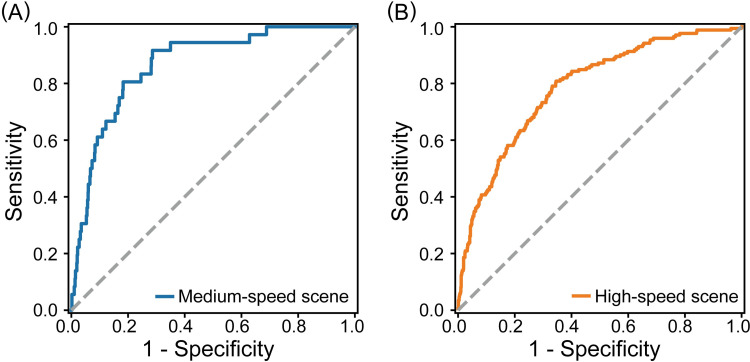
Increasing road crashes related to occupational drivers' deteriorating health has become a social problem. To prevent road crashes, warnings and predictions of increased crash risk based on drivers' conditions are important. However, in on-road driving, the relationship between drivers' physiological condition and crash risk remains unclear due to difficulties in the simultaneous measurement of both. This study aimed to elucidate the relationship between drivers' physiological condition assessed by autonomic nerve function (ANF) and an indicator of rear-end collision risk in on-road driving. Data from 20 male truck drivers (mean ± SD, 49.0±8.2 years; range, 35-63 years) were analyzed. Over a period of approximately three months, drivers' working behavior data, such as automotive sensor data, and their ANF data were collected during their working shift. Using the gradient boosting decision tree method, a rear-end collision risk index was developed based on the working behavior data, which enabled continuous risk quantification. Using the developed risk index and drivers' ANF data, effects of their physiological condition on risk were analyzed employing a logistic quantile regression method, which provides wider information on the effects of the explanatory variables, after hierarchical model selection. Our results revealed that in on-road driving, activation of sympathetic nerve activity and inhibition of parasympathetic nerve activity increased each quantile of the rear-end collision risk index. The findings suggest that acute stress-induced drivers' fatigue increases rear-end collision risk. Hence, in on-road driving, drivers' physiological condition monitoring and ANF-based stress warning and relief system can contribute to promoting the prevention of rear-end truck collisions.
Conflict of interest statement
Shunsuke Minusa, Daichi Ojiro, Takeshi Tanaka, and Hiroyuki Kuriyama are current employees of Research & Development Group, Hitachi, Ltd. Kei Mizuno, Emi Yamano, and Yasuyoshi Watanabe declare no competing interests. Hirohiko Kuratsune is a current employee of FMCC Co. Ltd. The authors (D.O, T.T, S.M, and H.K) have pending JP patents—P2020-100060 and P2020-157573—belonging to Hitachi, Ltd., which are relevant to this study. Hitachi Transport System, Ltd. provided technical support in managing the participant truck drivers, but did not have any additional role in the study design, data collection and analysis, decision to publish, and preparation of the manuscript. All authors declare that these do not alter our adherence to PLOS ONE policies on sharing data and materials, and that no other relationships/conditions/ circumstances presenting potential competing interests exist.
Figures



References
-
- Goldenbeld C, Nikolaou D. Driver fatigue. ESRA2 Thematic report Nr. 4. ESRA project (E-Survey of Road users’ Attitudes). 2019. Available: https://www.narcis.nl/publication/RecordID/oai:library.swov.nl:344883
-
- Japan Trucking Association. Current status and tasks of the trucking industry in Japan [in Japanese]. 2018. Available: http://www.jta.or.jp/coho/yuso_genjyo/yuso_genjo2018.pdf
-
- Oyama H, Suzuki K, Sakai K. Working Conditions, Fatigue, and Sleep of Truck Drivers (2nd report): An Analysis of Cases of Fatigue and Related Factors in Long-haul Truck Drivers. J Sci Labour. 2011. May 6; 87: 121–135. doi: 10.11355/isljsl.87.121 - DOI
-
- Ministry of Land, Infrastructure, Transport, and Tourism. Annual report on accidents of automobiles for motor truck transportation business [in Japanese]. 2018. Available: http://www.mlit.go.jp/jidosha/anzen/subcontents/data/statistics57.pdf
-
- Mtoi E, Moses R, Sando T. Modeling Fatigue-Induced Collision Relative Risk: Implications of Service Hours and Fatigue Management Policies on Transit Bus Operators in Florida. J Transp Res Forum. 2013; 52: 69–81. doi: 10.5399/osu/jtrf.52.1.4145 - DOI
Publication types
MeSH terms
LinkOut - more resources
Full Text Sources
Medical
