Review
. 2022 Apr;19(2):205-219.
doi: 10.1007/s13770-021-00403-7. Epub 2021 Oct 21.

Tumor Microenvironment Modulating Functional Nanoparticles for Effective Cancer Treatments

Affiliations
Review

Tumor Microenvironment Modulating Functional Nanoparticles for Effective Cancer Treatments

Seungyong Shin et al. Tissue Eng Regen Med. 2022 Apr.

Abstract

Cancer is one of the major diseases that threaten human life worldwide. Despite advances in cancer treatment techniques, such as radiation therapy, chemotherapy, targeted therapy, and immunotherapy, it is still difficult to cure cancer because of the resistance mechanism of cancer cells. Current understanding of tumor biology has revealed that resistance to these anticancer therapies is due to the tumor microenvironment (TME) represented by hypoxia, acidity, dense extracellular matrix, and immunosuppression. This review demonstrates the latest strategies for effective cancer treatment using functional nanoparticles that can modulate the TME. Indeed, preclinical studies have shown that functional nanoparticles can effectively modulate the TME to treat refractory cancer. This strategy of using TMEs with controllable functional nanoparticles is expected to maximize cancer treatment efficiency in the future by combining it with various modern cancer therapeutics.

Keywords: Biomaterials; Cancer treatments; Drug delivery; Nanoparticles; Tumor microenvironment.


Conflict of interest statement

The authors declare no conflict of interest.

Figures
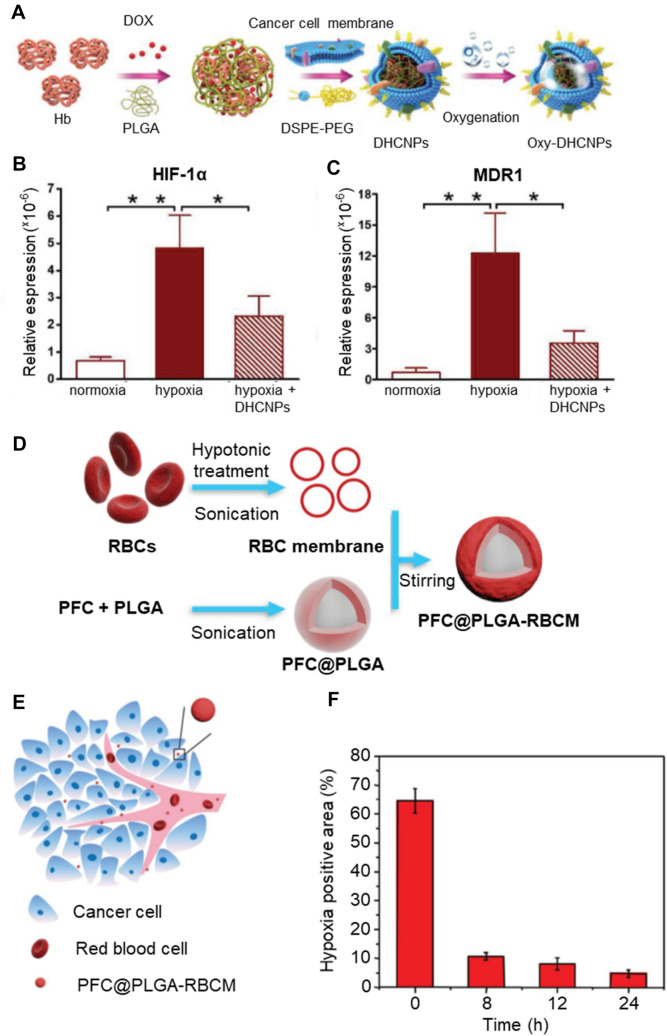
Fig. 1
Fig. 1
Modulation of the hypoxic tumor microenvironment through oxygen delivery using functional nanoparticles. A Synthetic process of DHCNP containing hemoglobin (oxygen transporter) and doxorubicin (anticancer agent). B, C Changes in the expression levels of HIF-1α, MDR1 in cancer cells (MCF-7) after DHCNP treatment. D The engineering process of nanoparticles (PFC@PLGA-RBCM) encapsulated with perfluorocarbon and coated with cell membranes of red blood cells. E Schematic illustration of PFC@PLGA-RBCM nanoparticles: PFC@PLGA-RBCM nanoparticles are smaller than RBC in size can quickly diffuse into the tumor and effectively deliver oxygen. F Changes in hypoxia-positive area over time, as confirmed through immunofluorescence staining after nanoparticle treatment. Reproduced from [23, 24] with permission from Wiley–VCH
Fig. 2
Fig. 2
Modulating the hypoxic TME through oxygen generation using MnO2 encapsulated nanoparticles and improved cancer treatment effect. A Schematic illustration of cellular uptake of Ce6@MnO2-PEG nanoparticles and O2 generation within cells. B Representative immunofluorescence images of tumor after hypoxia staining. The blood vessels, nuclei, and hypoxic areas were stained by anti-CD31 antibody (red), DAPI (blue), and anti-pimonidazole antibody (green), respectively. C The relative hypoxia positive area. D Tumor growth curve in various groups: when hypoxia was modulated using nanoparticles (Ce6@MnO2-PEG), photodynamic therapy (L +) showed a much superior tumor growth inhibitory effect compared to the comparative group (Ce6) that did not. Reproduced from [25] with permission from Wiley–VCH
Fig. 3
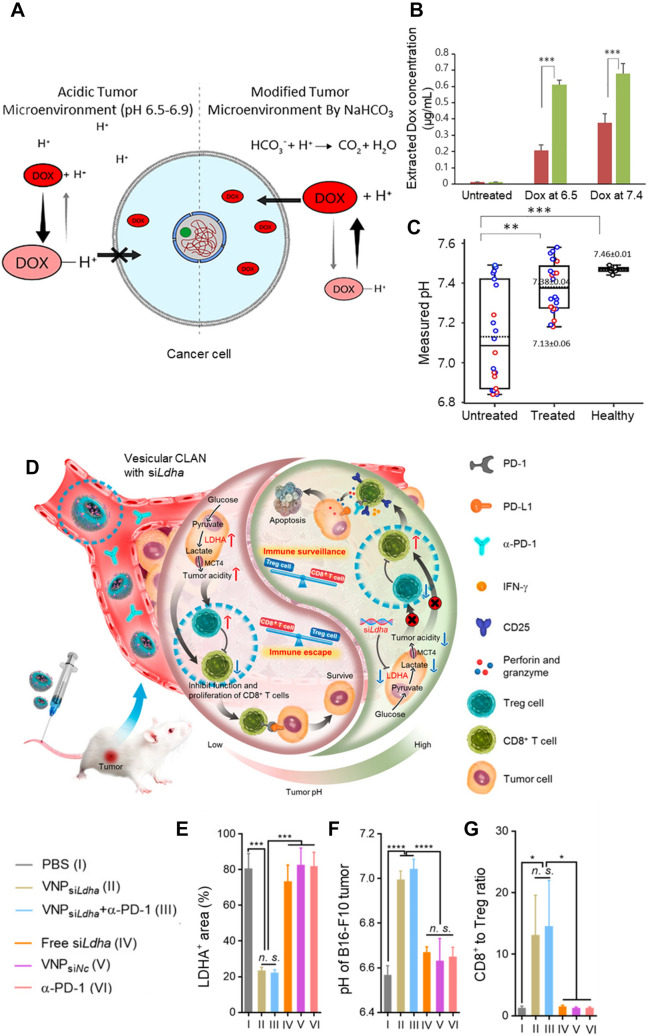
Fig. 3
Modulation of the acidic TME and improved cancer treatment effect using functional nanoparticles. A Mechanism of increasing the uptake of doxorubicin into the acidic TME modulated by bicarbonate. B Graph of doxorubicin absorption concentration of cancer cells according to pH around tumor cells and bicarbonate treatment: The bicarbonate-treated group (green) showed more doxorubicin absorption than did not (red). C In the in vivo mouse model, the results of measuring the pH of the tumor tissue with the group treated with the liposome containing bicarbonate (the red dot measured the center of the tumor, and the blue circle measured the surrounding tissue of the tumor). D Schematic illustration of siRNA-encapsulated nanoparticle mediated acidic TME modulation and activation of T cell immune response: Nanoparticle-mediated knockdown of LDHA reversed tumor acidic TME, reducing the number of immunosuppressive cells, increasing CD8+ T cell infiltration, and restoring antitumor function. E Quantitative expression of LDHA in tumor tissue through immunohistochemical staining. F pH values of B16-F10 tumor tissues measured on day 19 after treatment. pH values were measured in vivo using pH microneedle probe. G Ratios of CD8+ T cells to Treg (Foxp3+) cells through immunohistochemical quantitative analysis. Reproduced from [26, 28] with permission from Elsevier, American Chemical Society
Fig. 4
Fig. 4
Modulation of extracellular matrix through enzymatic degradation using functional nanoparticles. A Drug penetration is restricted by the dense extracellular matrix layer of the tumor tissue, resulting in drug resistance of the tumor (left). In contrast, modulating the extracellular matrix layer through collagozome treatment can increase the effectiveness of chemotherapy by increasing the drug tumor penetration (right). B The ratio of the fibrosis area according to each treated group in the mouse model. As collagenase decomposes collagen fibers, the fibrosis area is decreased, and the group treated with collagozome showed the least fibrosis area. C Comparison of tumor weight when treated with anticancer drug (paclitaxel) nanoparticles after treatment of each group. D Synthesis of DEX-HAase and proposed mechanism. DEX-HAase linked by a pH-responsive linker (MMfu) showed specific decomposition of HA in TME through pH-triggered free HAase release in acidic TME. E Relative enzymatic activity of free HAase and DEX-HAase against protease digestion. F Hypoxia relief and downregulation of HIF-1α positive areas by ECM degradation after DEX-HAase treatment. G Increased intratumor penetration of Ce6-Liposome by ECM degradation after DEX-HAase treatment. Reproduced from [29, 30] with permission from American Chemical Society, Wiley–VCH
Fig. 5
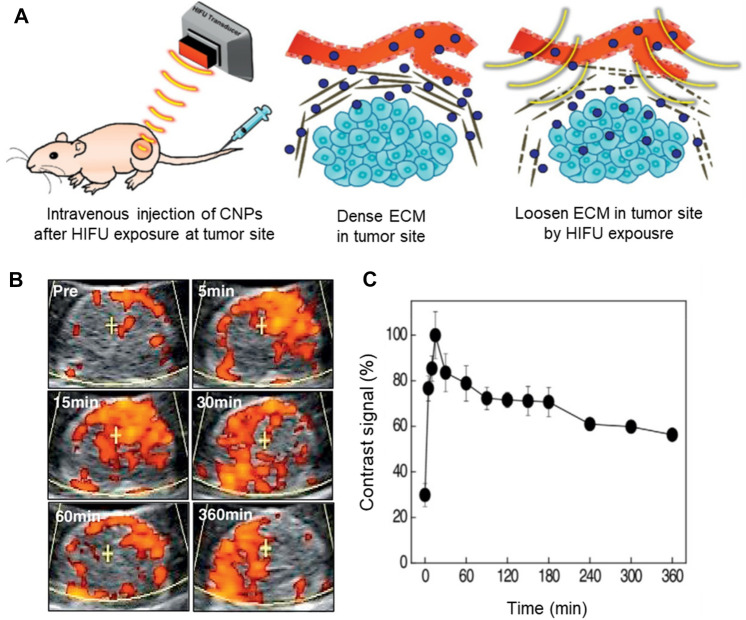
Fig. 5
Modulation of extracellular matrix through High intensity focused ultrasound (Pulsed-HIFU) technology using nanoparticles. A Schematic illustration of ECM remodeling strategy using HIFU for deep penetration of nanoparticles. B Time-dependent blood flow images of tumor blood vessels in ECM-rich A549 tumor-bearing mice after Pulsed-HIFU exposure (orange: blood flow of blood vessels, gray: tumor region). C Quantitative contrast signals of time-dependent blood flow. Reproduced from [31] with permission from Elsevier
Fig. 6
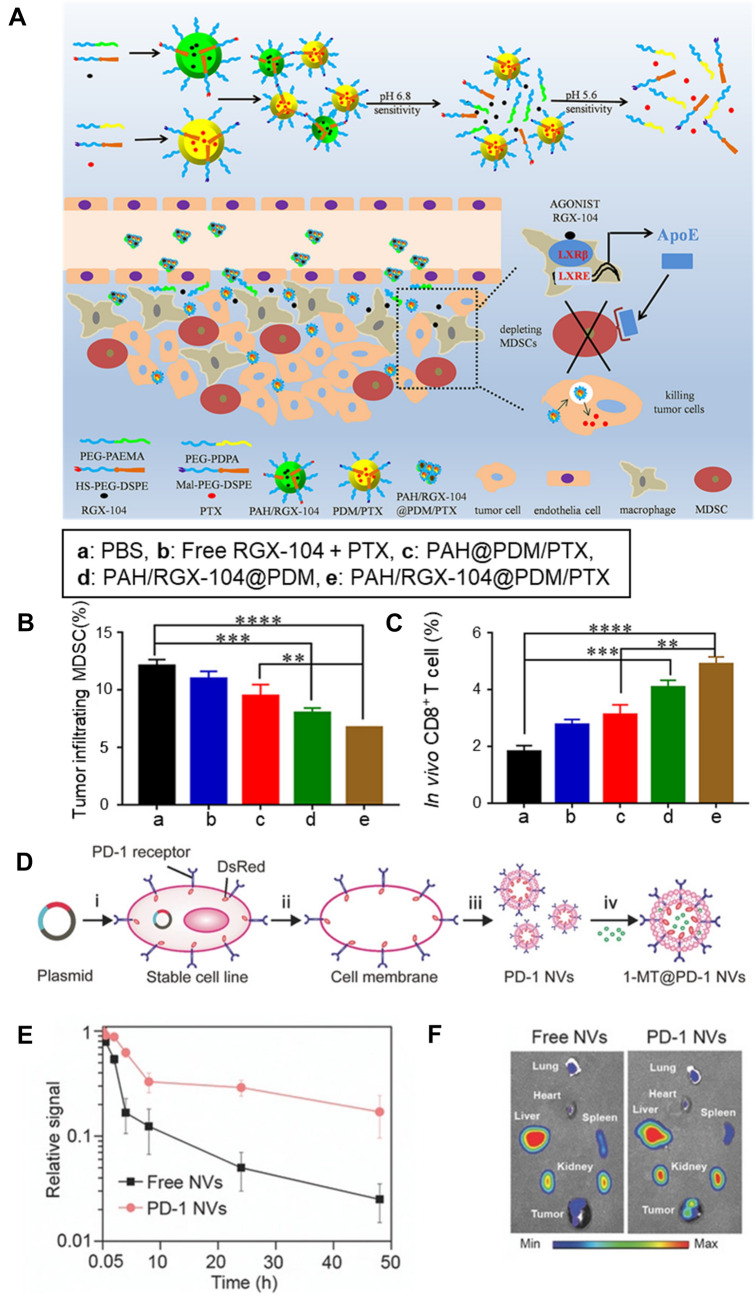
Fig. 6
Immunosuppressive TME modulation through MDSC depletion and Treg inhibition using functional nanovesicles. A Schematic illustration of the structure of the conjugated micelles system and the construction and transformation of PAH/RGX-104 @ PDM/PTX. B The level of MDSC in tumor tissues after treatment with different formulations. C The amount of CD8+ T cells in tumor tissues after treatment with different formulations. D Schematic illustration of PD-1 blockade cellular NVs for cancer immunotherapy. E Fluorescence of Cy5.5 labeled free NV and PD-1 NV after intravenous injection. F In vivo distribution of PD-1 NV and free NV as indicated by the in vivo imaging system (IVIS). Reproduced from [33, 34] with permission from Elsevier, Wiley–VCH

References

    1. Siegel RL, Miller KD, Jemal A. Cancer statistics, 2019. CA Cancer J Clin. 2019;69:7–34. - PubMed
    1. Jung KW, Won YJ, Kong HJ, Lee ES. Cancer statistics in Korea: incidence, mortality, survival, and prevalence in 2016. Cancer Res Treat. 2019;51:417–430. - PMC - PubMed
    1. Holohan C, Van Schaeybroeck S, Longley DB, Johnston PG. Cancer drug resistance: an evolving paradigm. Nat Rev Cancer. 2013;13:714–726. - PubMed
    1. Brown JM, Wilson WR. Exploiting tumour hypoxia in cancer treatment. Nat Rev Cancer. 2004;4:437–447. - PubMed
    1. Sharma P, Hu-Lieskovan S, Wargo JA, Ribas A. Primary, adaptive, and acquired resistance to cancer immunotherapy. Cell. 2017;168:707–723. - PMC - PubMed

Publication types

LinkOut - more resources