


Disentangling associations between vegetation greenness and dengue in a Latin American city: Findings and challenges
- PMID: 34675450
- PMCID: PMC8519391
- DOI: 10.1016/j.landurbplan.2021.104255
Disentangling associations between vegetation greenness and dengue in a Latin American city: Findings and challenges
Abstract
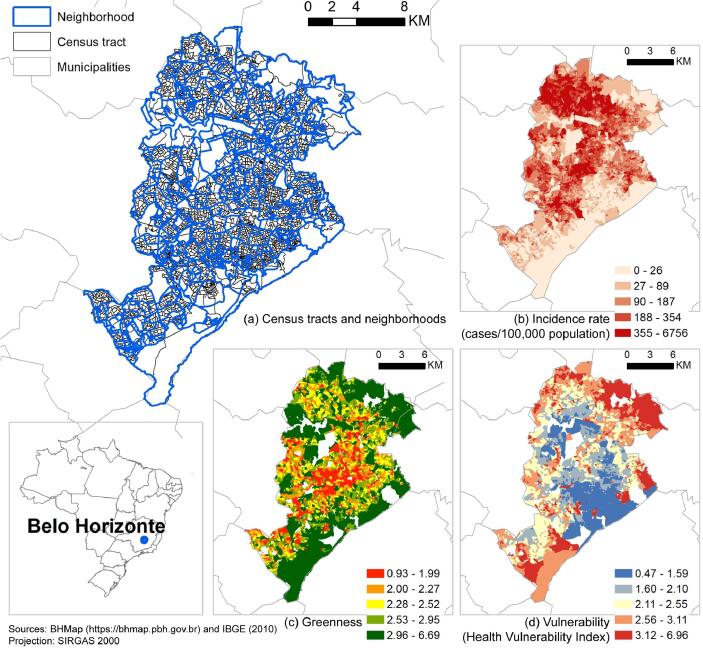
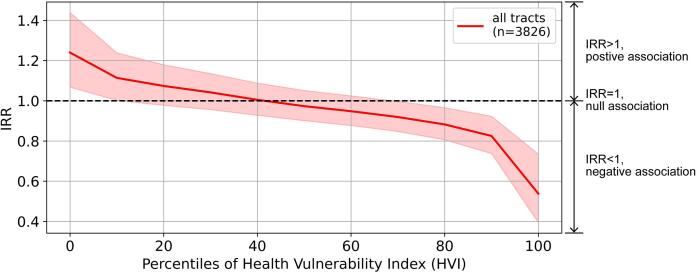
Being a Re-Emerging Infectious Disease, dengue causes 390 million cases globally and is prevalent in many urban areas in South America. Understanding the fine-scale relationships between dengue incidence and environmental and socioeconomic factors can guide improved disease prevention strategies. This ecological study examines the association between dengue incidence and satellite-based vegetation greenness in 3826 census tracts nested in 474 neighborhoods in Belo Horizonte, Brazil, during the 2010 dengue epidemic. To reduce potential bias in the estimated dengue-greenness association, we adjusted for socioeconomic vulnerability, population density, building height and density, land cover composition, elevation, weather patterns, and neighborhood random effects. We found that vegetation greenness was negatively associated with dengue incidence in a univariate model, and this association attenuated after controlling for additional covariates. The dengue-greenness association was modified by socioeconomic vulnerability: while a positive association was observed in the least vulnerable census tracts, the association was negative in the most vulnerable areas. Using greenness as a proxy for vegetation quality, our results show the potential of vegetation management in reducing dengue incidence, particularly in socioeconomically vulnerable areas. We also discuss the role of water infrastructure, sanitation services, and tree cover in lowering dengue risk.
Keywords: Dengue; Greenness; Planning and policy implications; Reemerging infectious disease; Socioeconomic vulnerability.
© 2021 The Authors.
Figures
References
-
- Araujo R.V., Albertini M.R., Costa-da-Silva A.L., Suesdek L., Franceschi N.C.S., Bastos N.M., Katz G., Cardoso V.A., Castro B.C., Capurro M.L., Allegro V.L.A.C. São Paulo urban heat islands have a higher incidence of dengue than other urban areas. The Brazilian Journal of Infectious Diseases. 2015;19(2):146–155. doi: 10.1016/j.bjid.2014.10.004. - DOI - PMC - PubMed
-
- Bairros de BH. (2009). What is a neighborhood? : Belo Horizonte neighborhoods. https://bairrosdebelohorizonte.webnode.com.br/o-que-e-um-bairro-/.
-
- Barbosa J.R., Barrado J.C.dos.S., Zara A.L.de.S.Amâncio., Siqueira João.B. Avaliação da qualidade dos dados, valor preditivo positivo, oportunidade e representatividade do sistema de vigilância epidemiológica da dengue no Brasil, 2005 a 2009. Epidemiologia e Serviços de Saúde. 2015;24(1):49–58. doi: 10.5123/S1679-49742015000100006. - DOI
-
- Barrera R., Amador M., Clark G.G. Use of the pupal survey technique for measuring Aedes aegypti (Diptera: Culicidae) productivity in Puerto Rico. The American Journal of Tropical Medicine and Hygiene. 2006;74(2):290–302. - PubMed
Grants and funding
LinkOut - more resources
Full Text Sources
