


Omega-3 Polyunsaturated Fatty Acids (PUFAs): Emerging Plant and Microbial Sources, Oxidative Stability, Bioavailability, and Health Benefits-A Review
- PMID: 34679761
- PMCID: PMC8533147
- DOI: 10.3390/antiox10101627
Omega-3 Polyunsaturated Fatty Acids (PUFAs): Emerging Plant and Microbial Sources, Oxidative Stability, Bioavailability, and Health Benefits-A Review
Abstract
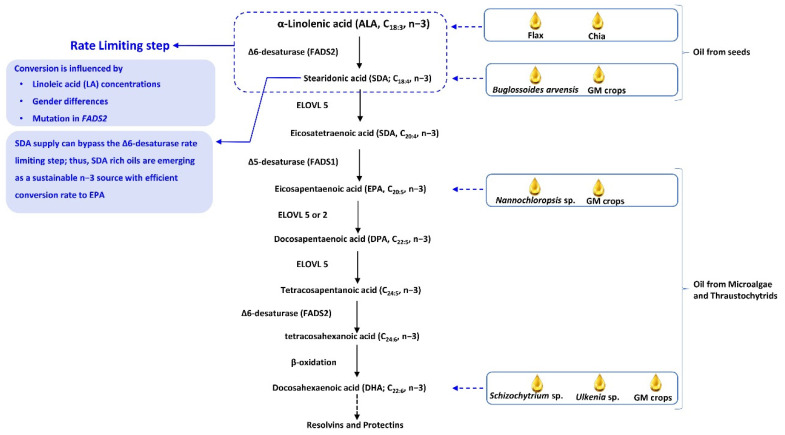
The omega-3 (n-3) polyunsaturated fatty acids (PUFAs) eicosapentaenoic acid (EPA) and docosahexaenoic (DHA) acid are well known to protect against numerous metabolic disorders. In view of the alarming increase in the incidence of chronic diseases, consumer interest and demand are rapidly increasing for natural dietary sources of n-3 PUFAs. Among the plant sources, seed oils from chia (Salvia hispanica), flax (Linum usitatissimum), and garden cress (Lepidium sativum) are now widely considered to increase α-linolenic acid (ALA) in the diet. Moreover, seed oil of Echium plantagineum, Buglossoides arvensis, and Ribes sp. are widely explored as a source of stearidonic acid (SDA), a more effective source than is ALA for increasing the EPA and DHA status in the body. Further, the oil from microalgae and thraustochytrids can also directly supply EPA and DHA. Thus, these microbial sources are currently used for the commercial production of vegan EPA and DHA. Considering the nutritional and commercial importance of n-3 PUFAs, this review critically discusses the nutritional aspects of commercially exploited sources of n-3 PUFAs from plants, microalgae, macroalgae, and thraustochytrids. Moreover, we discuss issues related to oxidative stability and bioavailability of n-3 PUFAs and future prospects in these areas.
Keywords: Buglossoides arvensis; Echium plantagineum; Schizochytrium sp.; chia (Salvia hispanica); docosahexaenoic acid (DHA); eicosapentaenoic acid (EPA); microalgae; thraustochytrids.
Conflict of interest statement
The authors declare no conflict of interest.
Figures
References
Publication types
Grants and funding
LinkOut - more resources
Full Text Sources
Research Materials
