


Type 2 Diabetes Mellitus and Cancer: Epidemiology, Physiopathology and Prevention
- PMID: 34680546
- PMCID: PMC8533606
- DOI: 10.3390/biomedicines9101429
Type 2 Diabetes Mellitus and Cancer: Epidemiology, Physiopathology and Prevention
Abstract
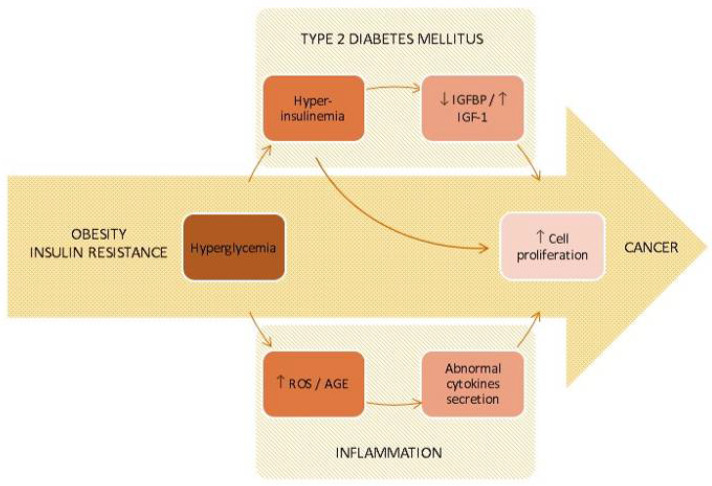
Individuals with type 2 diabetes mellitus are at greater risk of developing cancer and of dying from it. Both diseases are age-related, contributing to the impact of population aging on the long-term sustainability of health care systems in European Union countries. The purpose of this narrative review was to describe, from epidemiological, pathophysiological and preventive perspectives, the links between type 2 diabetes mellitus and the most prevalent cancers in these patients. Multiple metabolic abnormalities that may occur in type 2 diabetes mellitus, particularly obesity, could explain the increased cancer risk. In addition, the effectiveness of drugs commonly used to treat type 2 diabetes mellitus (e.g., metformin and thiazolidinediones) has been broadly evaluated in cancer prevention. Thus, a better understanding of the links between type 2 diabetes mellitus and cancer will help to identify the contributing factors and the pathophysiological pathways and to design personalized preventive strategies. The final goal is to facilitate healthy aging and the prevention of cancer and other diseases related with type 2 diabetes mellitus, which are among the main sources of disability and death in the European Union and worldwide.
Keywords: disease prevention; epidemiology; metformin; neoplasms; obesity; thiazolidinediones; type 2 diabetes mellitus.
Conflict of interest statement
The authors declare no conflict of interest.
Figures
References
-
- Home-Eurostat. [(accessed on 16 August 2021)]. Available online: https://ec.europa.eu/eurostat/
-
- UN Report of the Second World Assembly on Ageing. Madrid, 8–12 April 2002. [(accessed on 13 April 2021)]. Available online: https://www.bmfsfj.de/blob/122586/3d7ad05f599ea9984107fe40057f50a7/secon...
