


Epigenetic Regulatory Dynamics in Models of Methamphetamine-Use Disorder
- PMID: 34681009
- PMCID: PMC8535492
- DOI: 10.3390/genes12101614
Epigenetic Regulatory Dynamics in Models of Methamphetamine-Use Disorder
Abstract
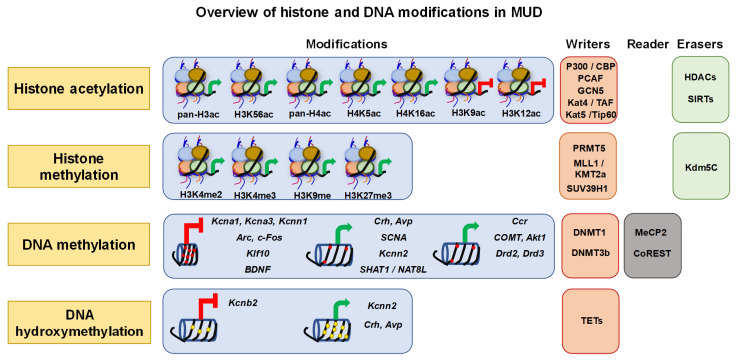
Methamphetamine (METH)-use disorder (MUD) is a very serious, potentially lethal, biopsychosocial disease. Exposure to METH causes long-term changes to brain regions involved in reward processing and motivation, leading vulnerable individuals to engage in pathological drug-seeking and drug-taking behavior that can remain a lifelong struggle. It is crucial to elucidate underlying mechanisms by which exposure to METH leads to molecular neuroadaptive changes at transcriptional and translational levels. Changes in gene expression are controlled by post-translational modifications via chromatin remodeling. This review article focuses on the brain-region specific combinatorial or distinct epigenetic modifications that lead to METH-induced changes in gene expression.
Keywords: DNA methylation; HDAC inhibitors; addiction; epigenetics; histone acetylation; histone methylation; methamphetamine.
Conflict of interest statement
All authors have no financial or conflict interests.
Figures
References
-
- Tsujikawa K., Okada Y., Segawa H., Yamamuro T., Kuwayama K., Kanamori T., Iwata Y.T. Degradation of 1-phenyl-2-propanone during long-term storage: Useful information for methamphetamine impurity profiling. Forensic. Toxicol. 2021;39:405–416. doi: 10.1007/s11419-021-00572-z. - DOI
Publication types
MeSH terms
Substances
LinkOut - more resources
Full Text Sources
Medical
