Meta-Analysis
. 2021 Oct 10;18(20):10604.
doi: 10.3390/ijerph182010604.

Mental Health during the COVID-19 Crisis in Africa: A Systematic Review and Meta-Analysis

Affiliations
Meta-Analysis

Mental Health during the COVID-19 Crisis in Africa: A Systematic Review and Meta-Analysis

Jiyao Chen et al. Int J Environ Res Public Health. .

Abstract

We aim to provide a systematic review and meta-analysis of the prevalence rates of mental health symptoms among major African populations during the COVID-19 pandemic. We include articles from PubMed, Embase, Web of Science, PsycINFO, and medRxiv between 1 February 2020 and 6 February 2021, and pooled data using random-effects meta-analyses. We identify 28 studies and 32 independent samples from 12 African countries with a total of 15,071 participants. The pooled prevalence of anxiety was 37% in 27 studies, of depression was 45% in 24 studies, and of insomnia was 28% in 9 studies. The pooled prevalence rates of anxiety, depression, and insomnia in North Africa (44%, 55%, and 31%, respectively) are higher than those in Sub-Saharan Africa (31%, 30%, and 24%, respectively). We find (a) a scarcity of studies in several African countries with a high number of COVID-19 cases; (b) high heterogeneity among the studies; (c) the extent and pattern of prevalence of mental health symptoms in Africa is high and differs from elsewhere-more African adults suffer from depression rather than anxiety and insomnia during COVID 19 compared to adult populations in other countries/regions. Hence, our findings carry crucial implications and impact future research to enable evidence-based medicine in Africa.

Keywords: Insomnia; anxiety; depression; general population; healthcare workers; mental health; pandemic; prevalence.


Conflict of interest statement

The authors declare no conflict of interest.

Figures
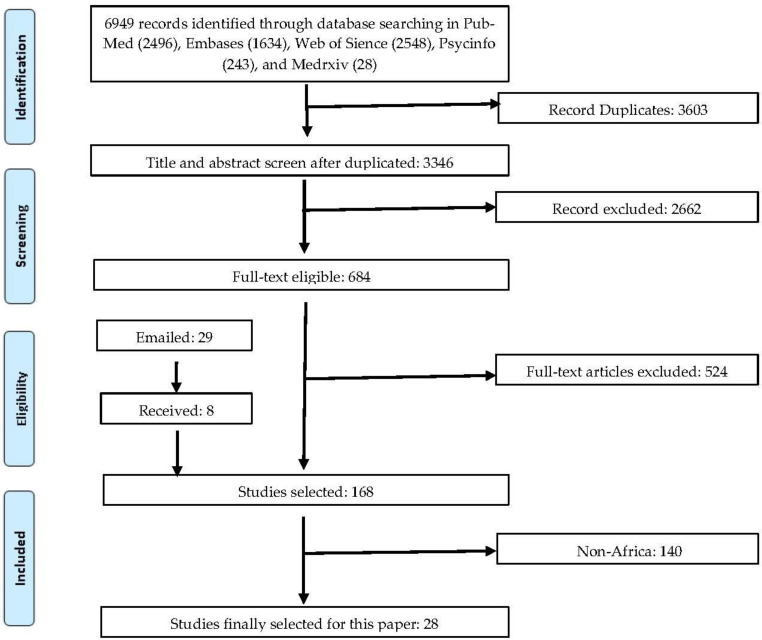
Figure 1
Figure 1
A PRISMA flow diagram.
Figure 2
Figure 2
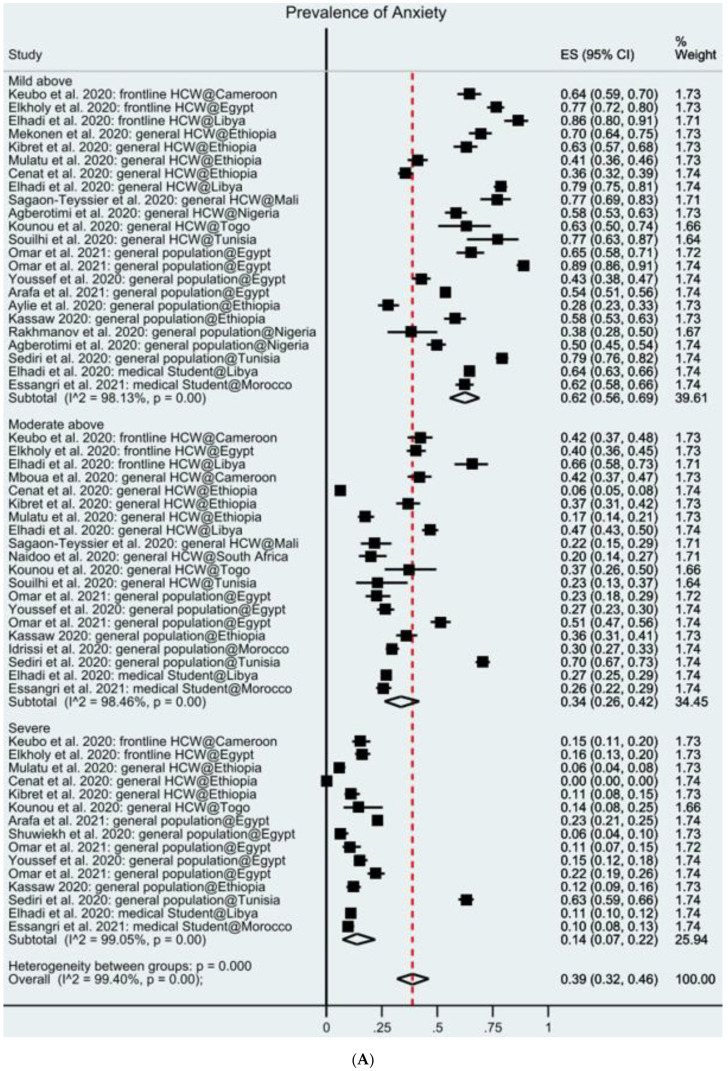
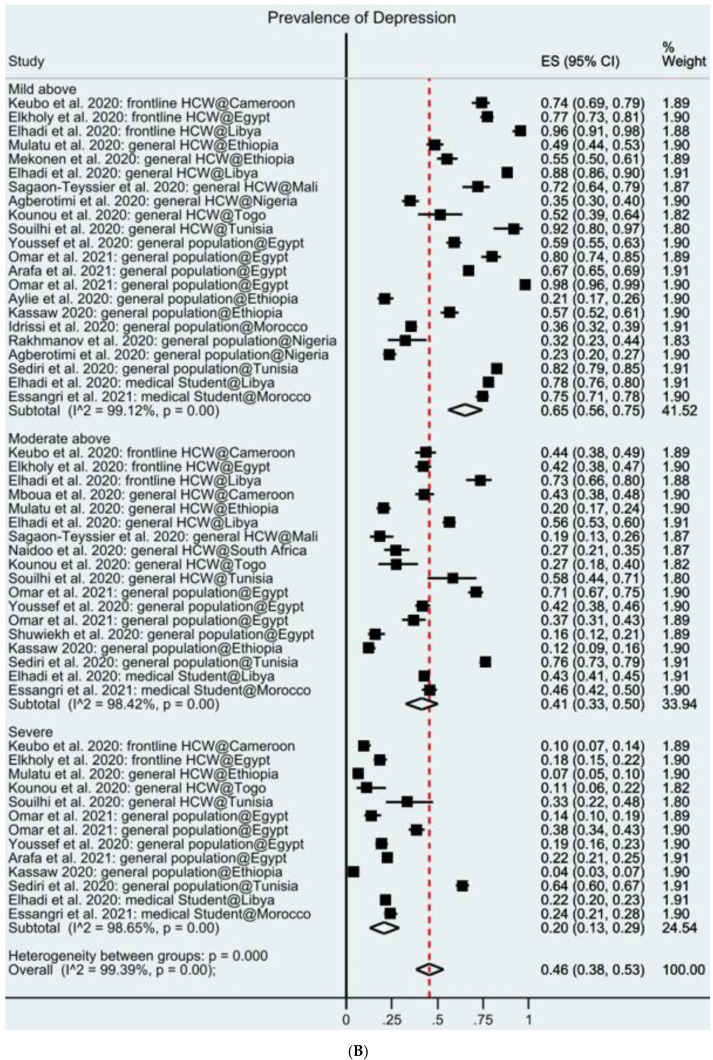
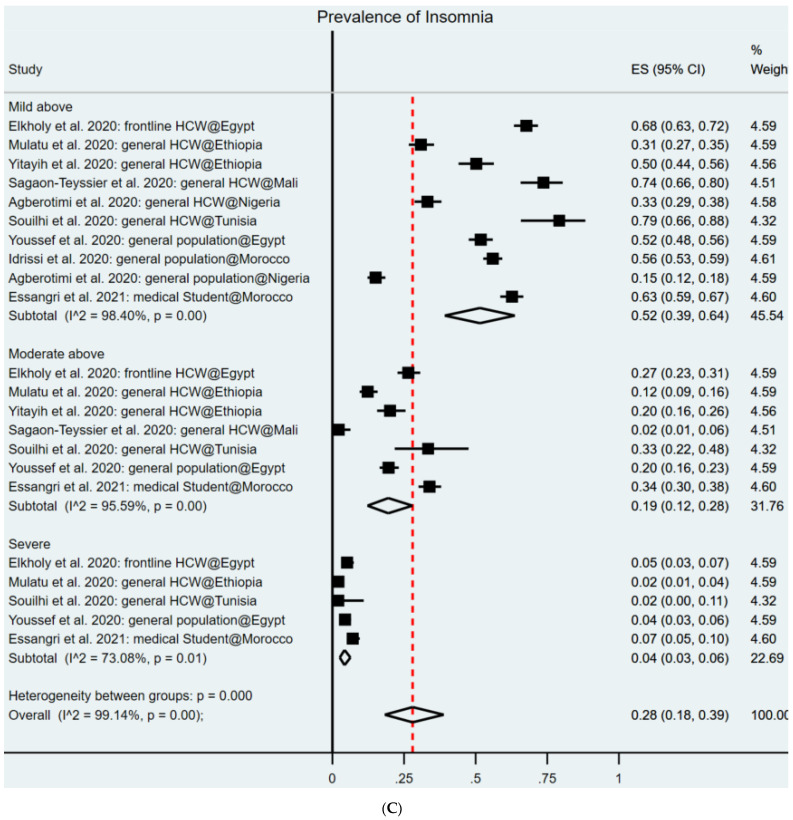
(A) Forest plot of the prevalence of anxiety. (B) Forest plot of the prevalence of depression. (C) Forest plot of the prevalence of insomnia. Figure legend: the square markers indicate the prevalence of insomnia at the different levels for different populations. The size of the marker correlates to the inverse variance of the effect estimates and indicates the weight of the study. The diamond data markers indicate the pooled prevalence.
Figure 2
Figure 2
(A) Forest plot of the prevalence of anxiety. (B) Forest plot of the prevalence of depression. (C) Forest plot of the prevalence of insomnia. Figure legend: the square markers indicate the prevalence of insomnia at the different levels for different populations. The size of the marker correlates to the inverse variance of the effect estimates and indicates the weight of the study. The diamond data markers indicate the pooled prevalence.
Figure 2
Figure 2
(A) Forest plot of the prevalence of anxiety. (B) Forest plot of the prevalence of depression. (C) Forest plot of the prevalence of insomnia. Figure legend: the square markers indicate the prevalence of insomnia at the different levels for different populations. The size of the marker correlates to the inverse variance of the effect estimates and indicates the weight of the study. The diamond data markers indicate the pooled prevalence.
Figure 3
Figure 3
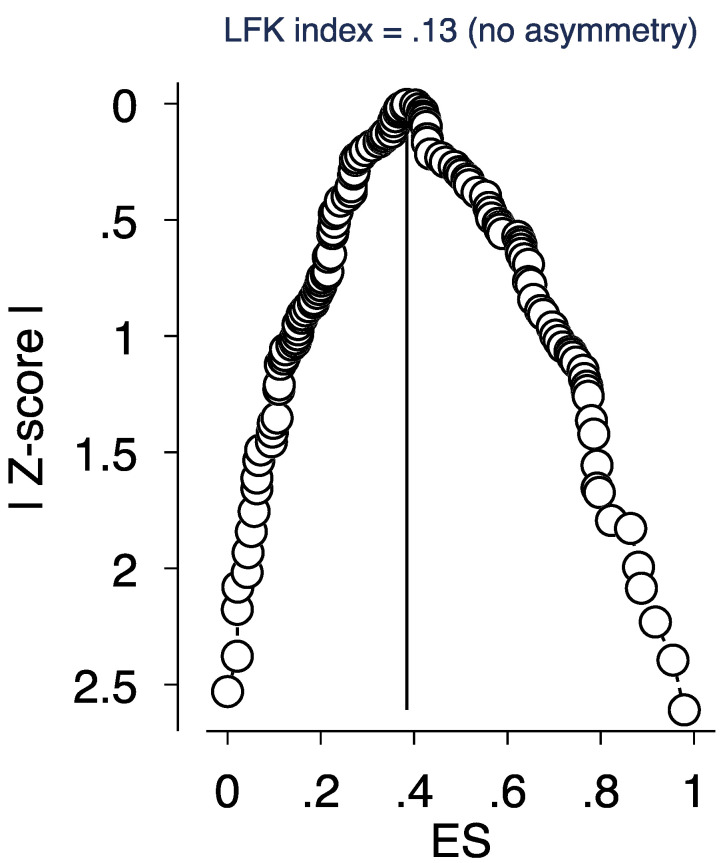
DOI plot and the Luis Furuya–Kanamori (LFK) index. Figure legend: depiction of publication bias in the baseline meta-analysis of proportion studies based on a DOI plot and the Luis Furuya–Kanamori (LFK) index—a score that is within ±1 indicates no asymmetry.

References

    1. Lone S.A., Ahmad A. COVID-19 pandemic—An African perspective. Emerg. Microbes Infect. 2020;9:1300–1308. doi: 10.1080/22221751.2020.1775132. - DOI - PMC - PubMed
    1. Moore M., Gelfeld B., Adeyemi Okunogbe C.P. Identifying future disease hot spots: Infectious disease vulnerability index. Rand Health Q. 2017;6:5. - PMC - PubMed
    1. El-Sadr W.M., Justman J. Africa in the Path of Covid-19. N. Engl. J. Med. 2020;383:e11. doi: 10.1056/NEJMp2008193. - DOI - PubMed
    1. Dare L., Buch E. The future of health care in Africa. BMJ. 2005;331:1–2. doi: 10.1136/bmj.331.7507.1. - DOI - PMC - PubMed
    1. WHO . World Report on Ageing and Health. World Health Organization; Geneva, Switzerland: 2015.

Publication types