


Tuberculosis Treatment Outcome and Predictors in Africa: A Systematic Review and Meta-Analysis
- PMID: 34682420
- PMCID: PMC8536006
- DOI: 10.3390/ijerph182010678
Tuberculosis Treatment Outcome and Predictors in Africa: A Systematic Review and Meta-Analysis
Abstract
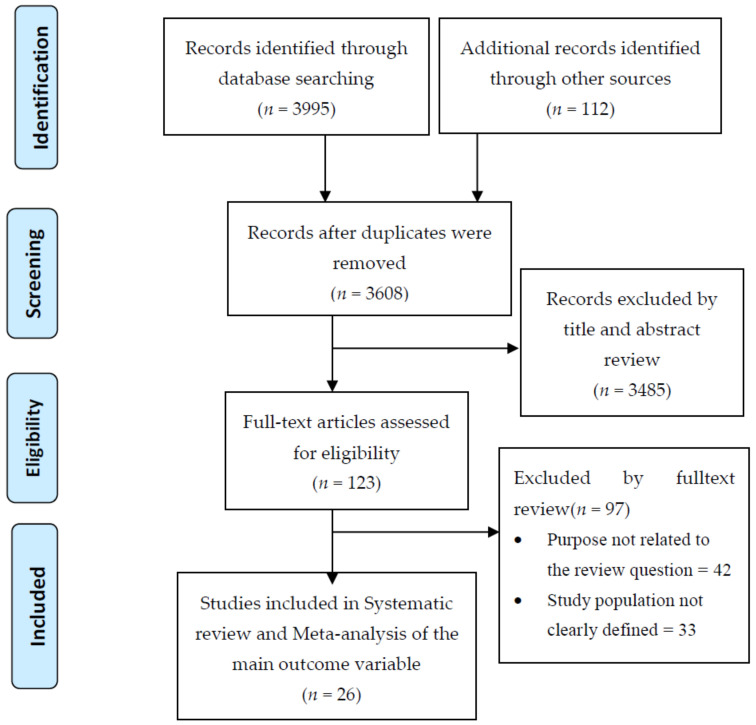
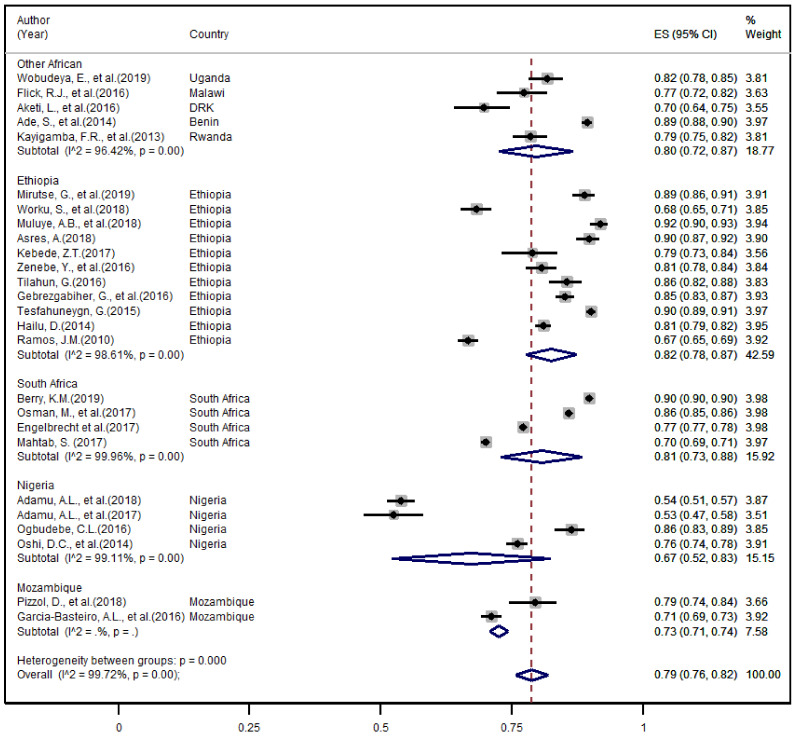
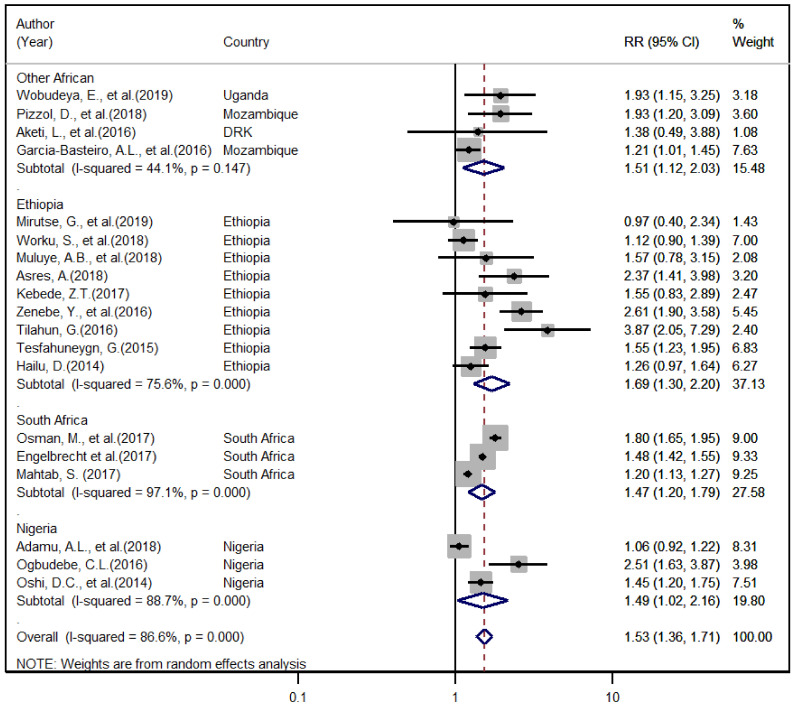
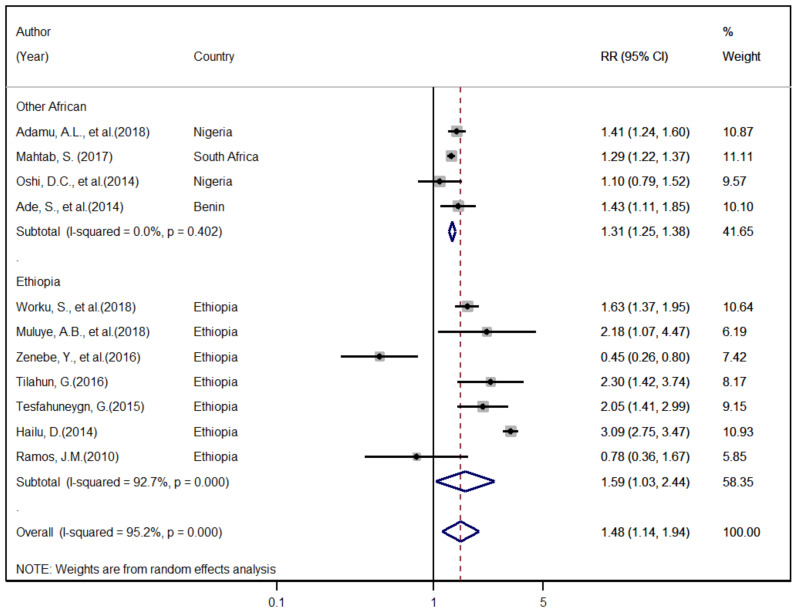
This review aimed to summarize and estimate the TB treatment success rate and factors associated with unsuccessful TB treatment outcomes in Africa. Potentially eligible primary studies were retrieved from PubMed and Google Scholar. The risk of bias and quality of studies was assessed using The Joanna Briggs Institute's (JBI) appraisal criteria, while heterogeneity across studies was assessed using Cochran's Q test and I2 statistic. Publication bias was checked using the funnel plot and egger's test. The protocol was registered in PROSPERO, numbered CRD42019136986. A total of 26 eligible studies were considered. The overall pooled estimate of TB treatment success rate was found to be 79.0% (95% CI: 76-82%), ranging from 53% (95% CI: 47-58%) in Nigeria to 92% (95% CI: 90-93%) in Ethiopia. The majority of unsuccessful outcomes were attributed to 48% (95% CI: 40-57%) death and 47% (95% CI: 39-55%) of defaulter rate. HIV co-infection and retreatment were significantly associated with an increased risk of unsuccessful treatment outcomes compared to HIV negative and newly diagnosed TB patients with RR of 1.53 (95% CI: 1.36-1.71) and 1.48 (95% CI: 1.14-1.94), respectively. TB treatment success rate was 79% below the WHO defined threshold of 85% with significant variation across countries. Countries need to explore contextual underlining factors and more effort is required in providing TB preventive treatment, improve case screening and linkage for TB treatment among HIV high-risk groups and use confirmatory TB diagnostic modality. Countries in Africa need to strengthen counseling and follow-up, socio-economic support for patients at high risk of loss to follow-up and poor treatment success is also crucial for successful TB control programs.
Keywords: meta-analysis; resource-limited settings; systematic review; treatment outcomes; tuberculosis.
Conflict of interest statement
The authors declare no conflict of interest.
Figures
References
-
- World Health Organization . Global Tuberculosis Report 2019. World Health Organization; Geneva, Switzerland: 2019.
-
- World Health Organisation . Global Tuberculosis Report 2020: Executive Summary. World Health Organisation; Geneva, Switzerland: 2020.
-
- Murray C.J.L., Ortblad K.F., Guinovart C., Lim S.S., Wolock T.M., Roberts D.A., A Dansereau E., Graetz N., Barber R.M., Brown J.C., et al. Global, regional, and national incidence and mortality for HIV, tuberculosis, and malaria during 1990–2013: A systematic analysis for the Global Burden of Disease Study 2013. Lancet. 2014;384:1005–1070. doi: 10.1016/S0140-6736(14)60844-8. - DOI - PMC - PubMed
-
- Soares E.C., Vollmer W.M., Cavalcante S.C., Pacheco A.G., Saraceni V., Silva J.S., Neves G.R., Golub J.E., Efron A.R., Durovni B., et al. Tuberculosis control in a socially vulnerable area: A community intervention beyond DOT in a Brazilian favela. Int. J. Tuberc. Lung Dis. 2013;17:1581–1586. doi: 10.5588/ijtld.13.0152. - DOI - PubMed
Publication types
MeSH terms
Grants and funding
LinkOut - more resources
Full Text Sources
Medical
