


Recent Advances in the Treatment of Spasticity: Extracorporeal Shock Wave Therapy
- PMID: 34682846
- PMCID: PMC8539559
- DOI: 10.3390/jcm10204723
Recent Advances in the Treatment of Spasticity: Extracorporeal Shock Wave Therapy
Abstract
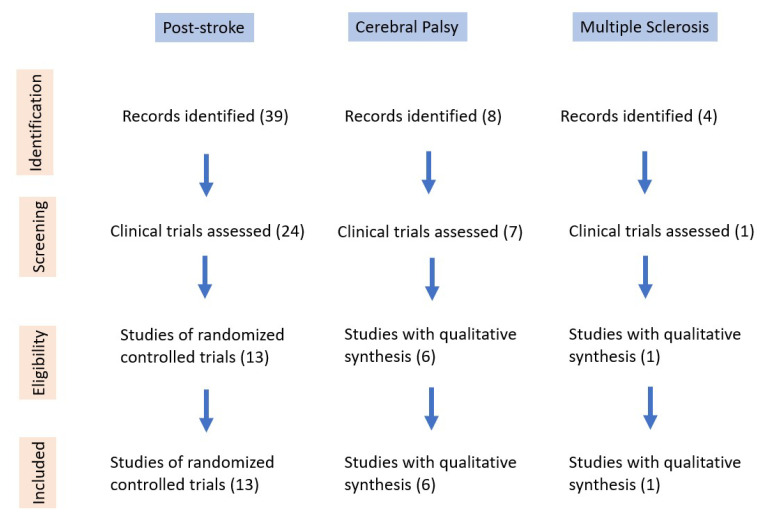
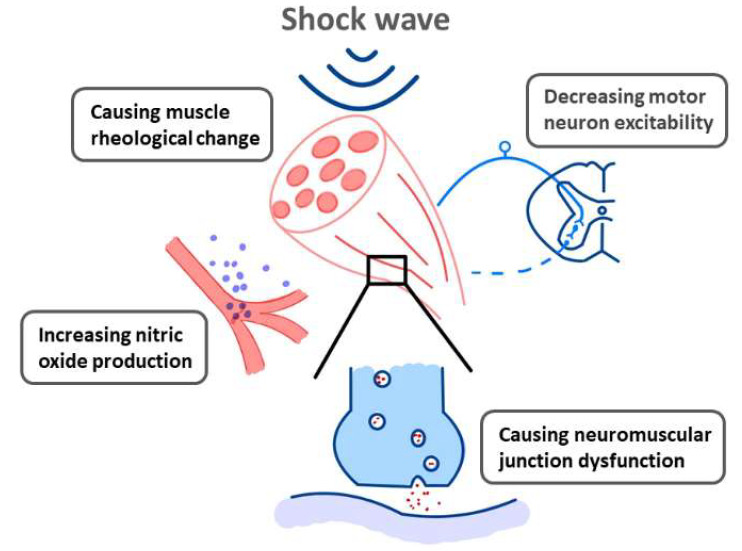
Spasticity is a common sequala of the upper motor neuron lesions. For instance, it often occurs in the first 4 weeks after stroke and is seen in more than one-third of stroke survivors after 12 months. In recent years, extracorporeal shock wave therapy (ESWT) has been recognized as a safe and effective method for reducing muscle spasticity. Possible/relevant mechanisms include nitric oxide production, motor neuron excitability reduction, induction of neuromuscular transmission dysfunction, and direct effects on rheological properties. There are two types of ESWT, focused and radial, with the radial type more commonly applied for treating muscle spasticity. Concerning the optimal location for applying ESWT, the belly muscles and myotendinous junction seem to produce comparable results. The effects of ESWT on spasticity are known to last at least four to six weeks, while some studies report durations of up to 12 weeks. In this review, the authors will focus on the current evidence regarding the effectiveness of ESWT in spasticity, as well as certain technical parameters of ESWT, e.g., the intensity, frequency, location, and number of sessions. The pertinent literature has been reviewed, with an emphasis on post-stroke upper limbs, post-stroke lower limbs, cerebral palsy, and multiple sclerosis. In short, while ESWT has positive effects on parameters such as the modified Ashworth scale, mixed results have been reported regarding functional recovery. Of note, as botulinum toxin injection is one of the most popular and effective pharmacological methods for treating spasticity, studies comparing the effects of ESWT and botulinum toxin injections, and studies reporting the results of their combination, are also reviewed in this paper.
Keywords: extracorporeal shock wave therapy; muscle spasticity; rehabilitation; review.
Conflict of interest statement
The authors declare no conflict of interest.
Figures
References
-
- Bensmail D., Wissel J., Laffont I., Simon O., Scheschonka A., Flatau-Baqué B., Dressler D., Simpson D.M. Efficacy of incobotulinumtoxinA for the treatment of adult lower-limb post-stroke spasticity, including pes equinovarus. Ann. Phys. Rehabil. Med. 2021;64:101376. doi: 10.1016/j.rehab.2020.03.005. - DOI - PubMed
Publication types
LinkOut - more resources
Full Text Sources
Medical
