Review
. 2021 Oct 11;14(20):5978.
doi: 10.3390/ma14205978.

Biomedical Applications of Carbon Nanomaterials: Fullerenes, Quantum Dots, Nanotubes, Nanofibers, and Graphene

Affiliations
Review

Biomedical Applications of Carbon Nanomaterials: Fullerenes, Quantum Dots, Nanotubes, Nanofibers, and Graphene

Manish Gaur et al. Materials (Basel). .

Abstract

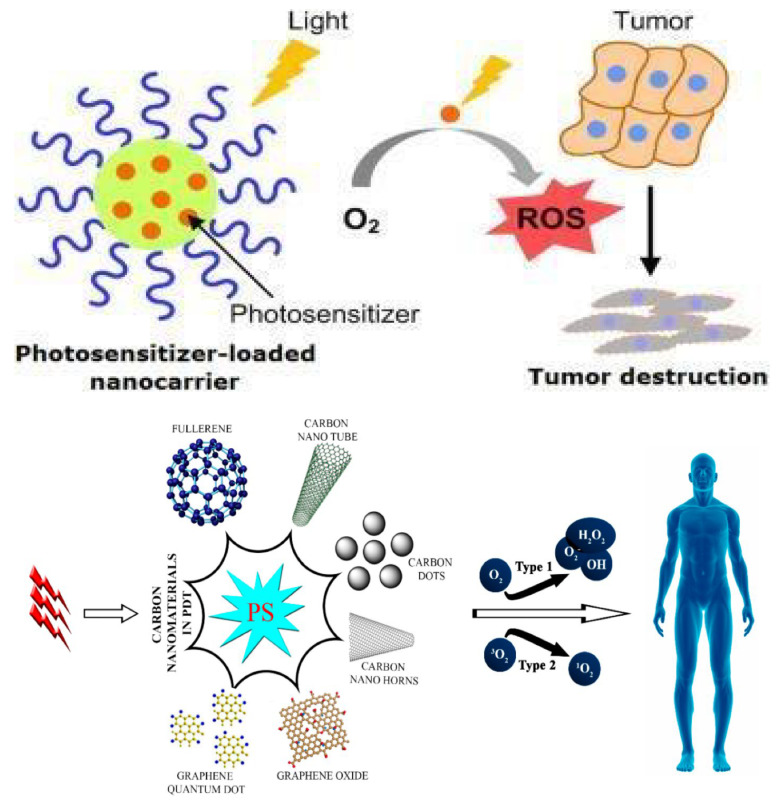
Carbon nanomaterials (CNMs) have received tremendous interest in the area of nanotechnology due to their unique properties and flexible dimensional structure. CNMs have excellent electrical, thermal, and optical properties that make them promising materials for drug delivery, bioimaging, biosensing, and tissue engineering applications. Currently, there are many types of CNMs, such as quantum dots, nanotubes, nanosheets, and nanoribbons; and there are many others in development that promise exciting applications in the future. The surface functionalization of CNMs modifies their chemical and physical properties, which enhances their drug loading/release capacity, their ability to target drug delivery to specific sites, and their dispersibility and suitability in biological systems. Thus, CNMs have been effectively used in different biomedical systems. This review explores the unique physical, chemical, and biological properties that allow CNMs to improve on the state of the art materials currently used in different biomedical applications. The discussion also embraces the emerging biomedical applications of CNMs, including targeted drug delivery, medical implants, tissue engineering, wound healing, biosensing, bioimaging, vaccination, and photodynamic therapy.

Keywords: bioavailability; bioimaging; biomedical scaffold; biosensing; cytotoxicity; drug delivery; photodynamic therapy; tissue engineering; vaccination; wound healing.


Conflict of interest statement

The authors declare no conflict of interest.

Figures
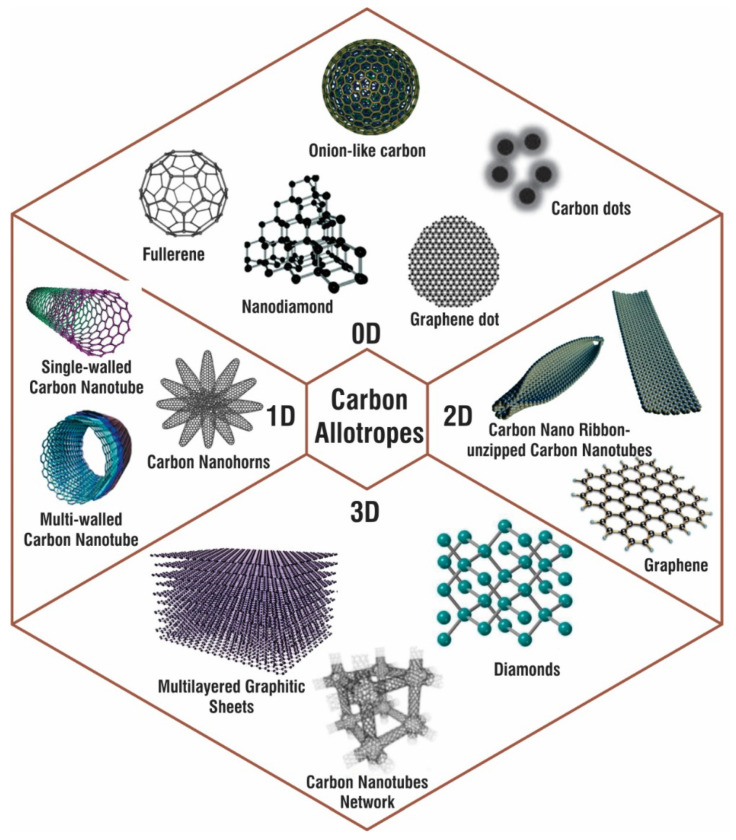
Figure 1
Figure 1
Various nanoforms of carbon allotropes with examples for 0D, 1D, 2D, and 3D carbon nanostructures.
Figure 2
Figure 2
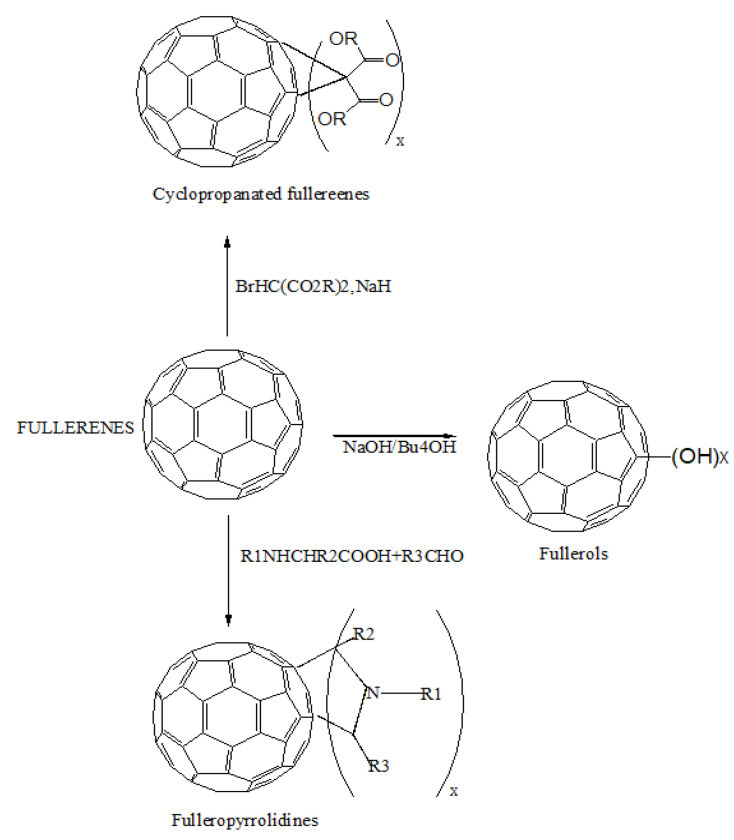
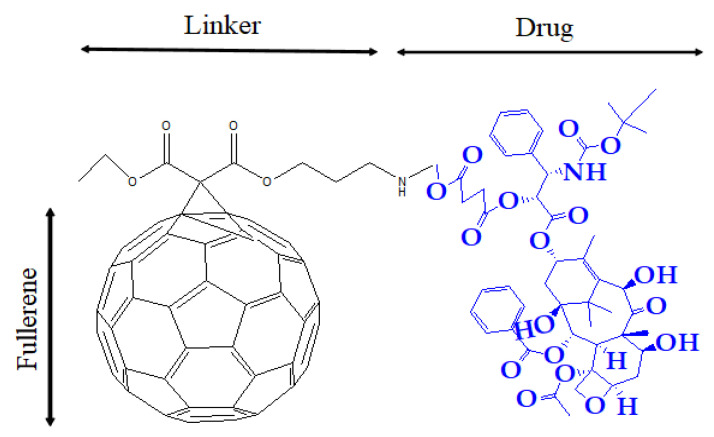
The functionalization of fullerenes and their conjugation with a drug using a linker.
Figure 2
Figure 2
The functionalization of fullerenes and their conjugation with a drug using a linker.
Figure 3
Figure 3
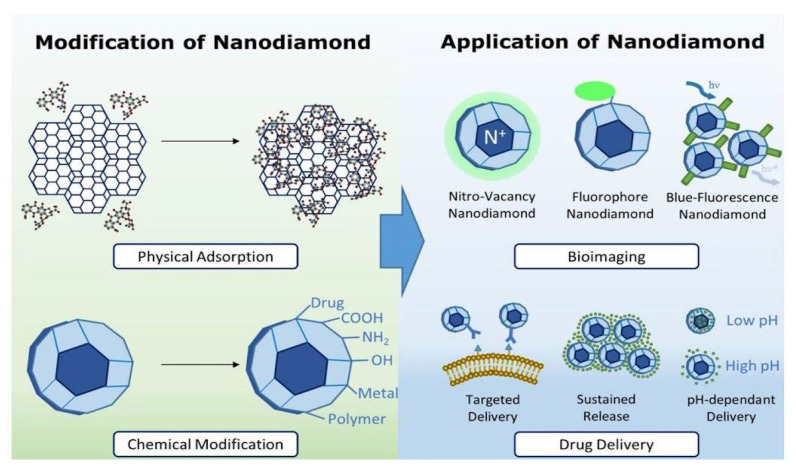
Schematic representation showing the use of combinatorial nanodiamonds in pharmaceutical and biomedical applications [42]. Copyright 2016, Elsevier.
Figure 4
Figure 4
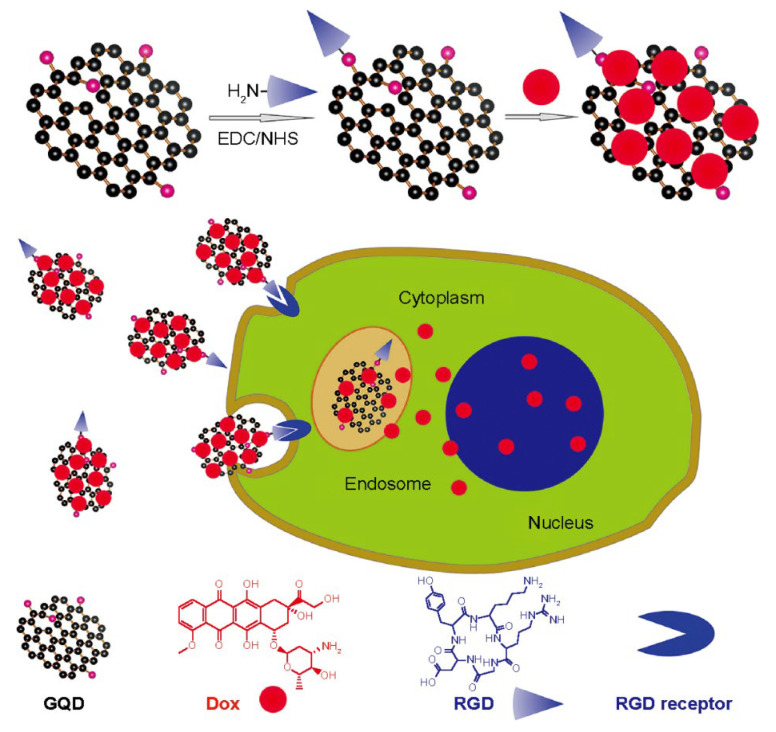
Schematic presentation of cancer cells being treated by multifunctional GDQs [51]. Abbreviations: eDc/Nhs, 1-(3-(dimethylamino) propyl)-3-ethyl carbodiimide and N-hydroxysuccinimide; GQD graphene quantum dot, Dox, doxorubicin; RGD, arginine glycine-aspartic acid. Copyright Dove Press, open access to scientific and medical research.
Figure 5
Figure 5
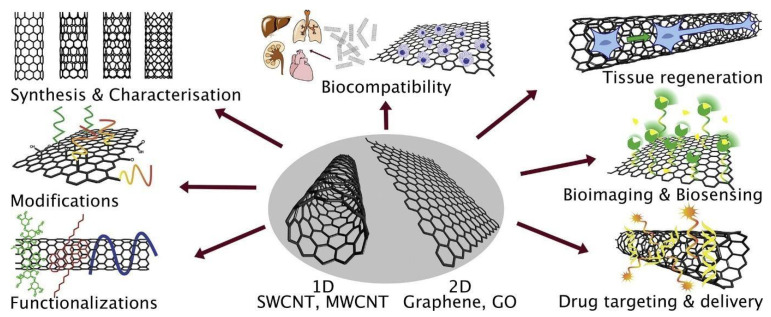
Schematic presentation showing carbon nanotubes alongside their precursor, graphene, and their uses in the biomedical field [63]. Copyright 2018, Elsevier.
Figure 6
Figure 6
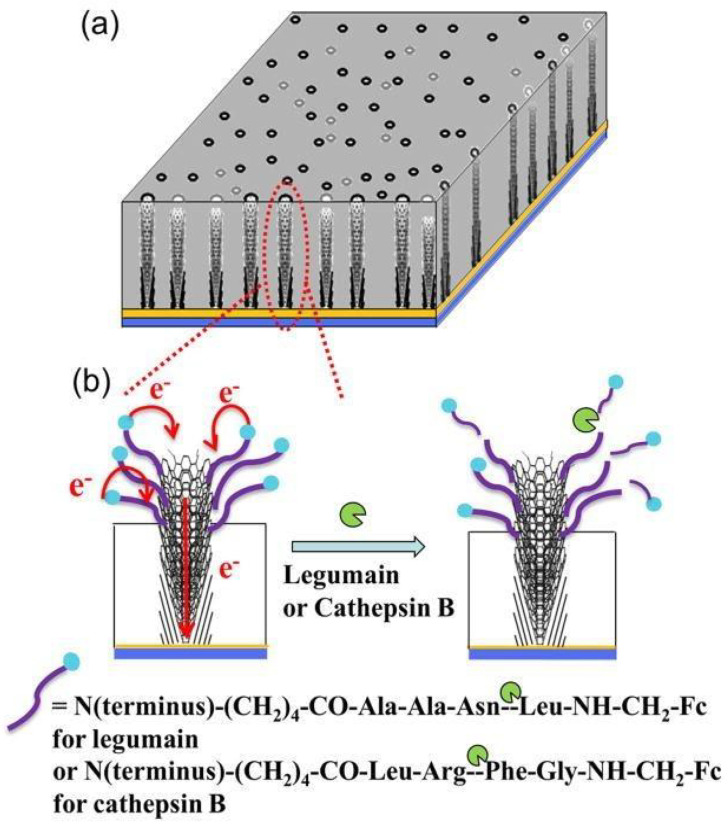
Biosensors formed using carbon nanofibers showing distinct properties. (a); represent CNFs vertically aligned in SiO2 matrix. (b); shows electrons transfer and loss of electrochemical signal from ferrocene attached at the distal end of peptide. This loss of signal is due to the cleavage of peptide at a specific site [70]. Copyright 2013, American Chemical Society.
Figure 7
Figure 7
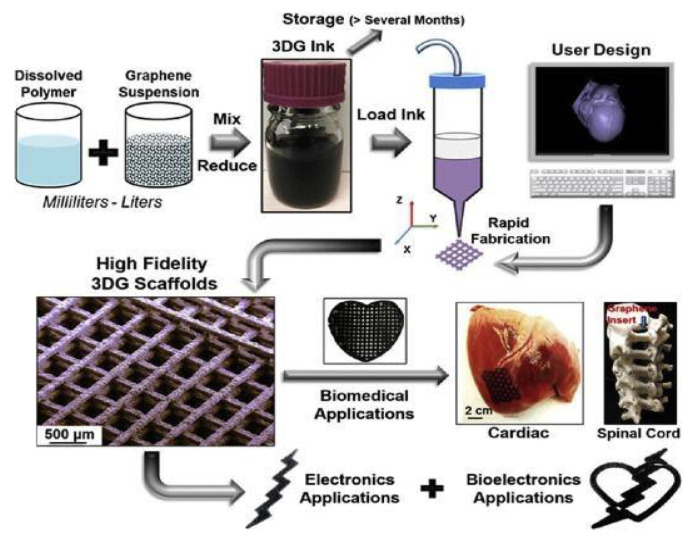
Production of a 3D printable graphene composite scaffold for biomedical application [78]. Copyright 2015, American Chemical Society.
Figure 8
Figure 8
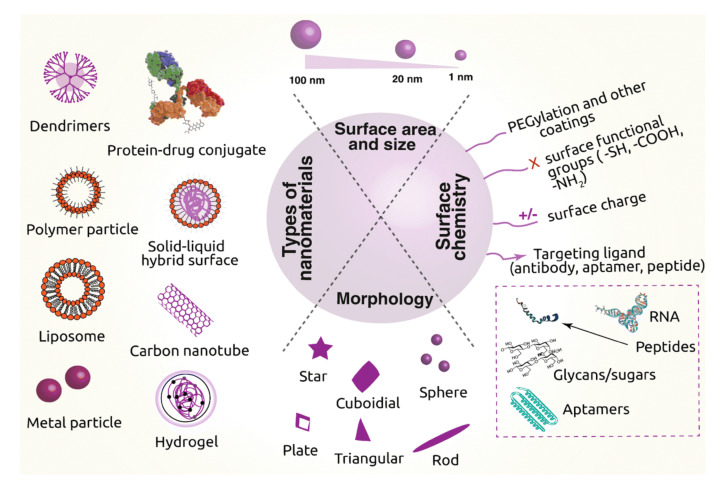
Current trends in drug delivery systems employing nanomaterials as drug carriers [84]. Copyright Springer Nature, 2019. Open access.
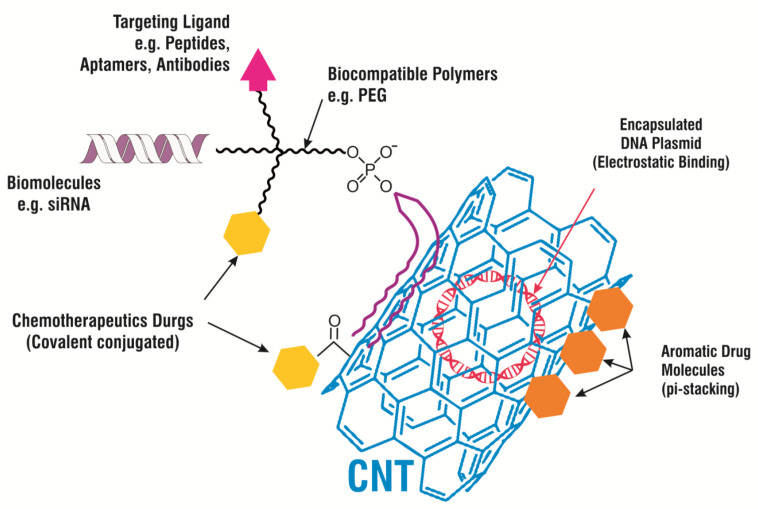
Figure 9
Figure 9
A schematic diagram presenting several strategies for CNT-based drug delivery and cancer therapies.
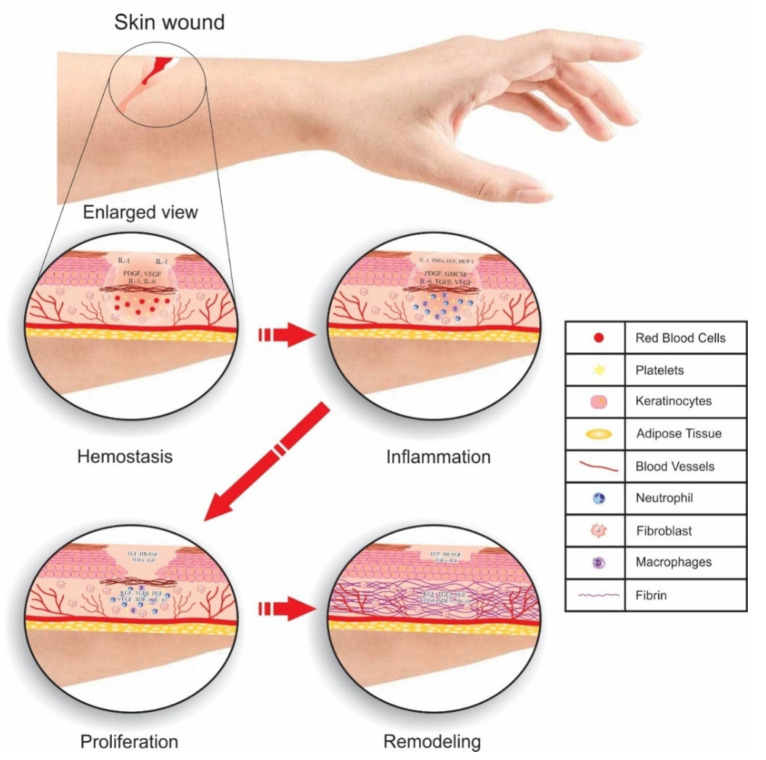
Figure 10
Figure 10
Distinct phases of wound healing in skin illustrate cells and molecules in the tightly controlled process of recovering a healthy barrier.
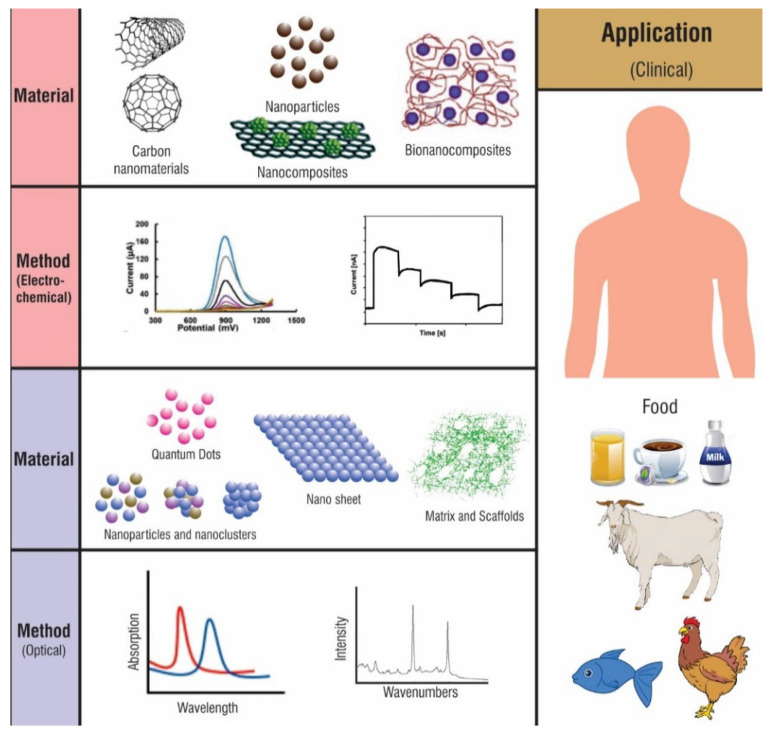
Figure 11
Figure 11
Schematic representation of the possible application of CNMs implemented in biosensing applications.
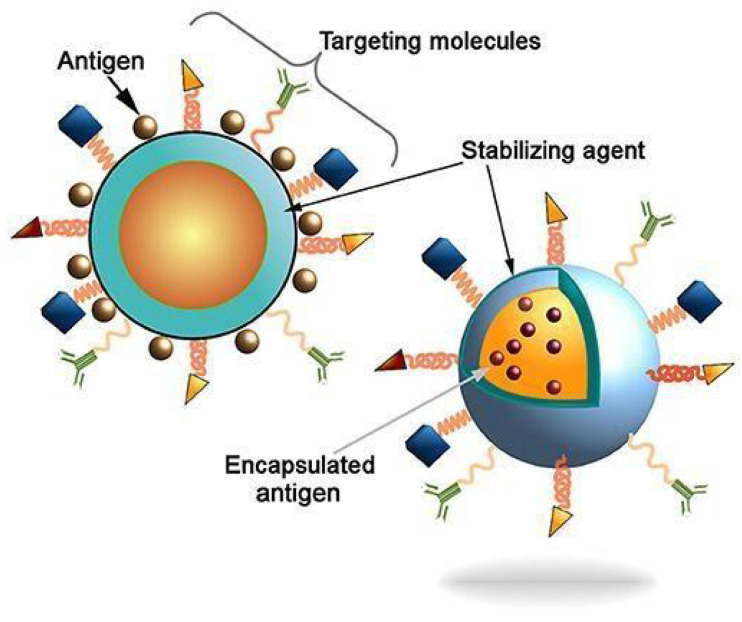
Figure 12
Figure 12
Schematic depiction of antigen delivery through nanocarriers with surface modification to enhance efficacy of vaccine against specific diseases [207]. Copyright © 2021 Pati, Shevtsov and Sonawane. This is an open-access article distributed under the terms of the Creative Commons Attribution License (CC BY).
Figure 13
Figure 13
Schematic illustration of the theranostic of disease photo-triggered by carbon-based CNMs, which are targeted and effective in PDT for cancer [223]. Copyright 2016, MDPI, Open Access.

References

    1. Kowalski P.S., Bhattacharya C., Afewerki S., Langer R.S. Smart Biomaterials: Recent Advances and Future Directions. ACS Biomater. Sci. Eng. 2018;4:3809–3817. doi: 10.1021/acsbiomaterials.8b00889. - DOI - PubMed
    1. Gajdosechova Z., Mester Z. Recent trends in analysis of nanoparticles in biological matrices. Anal. Bioanal. Chem. 2019;411:4277–4292. doi: 10.1007/s00216-019-01620-9. - DOI - PubMed
    1. Mamidi N., Delgadillo R.M.V., Ortiz A.G., Barrera E.V. Carbon Nano-Onions Reinforced Multilayered Thin Film System for Stimuli-Responsive Drug Release. Pharmaceutics. 2020;12:1208. doi: 10.3390/pharmaceutics12121208. - DOI - PMC - PubMed
    1. Kumar N., Kumbhat S. Essentials in Nanoscience and Nanotechnology. Wiley; Hoboken, NJ, USA: 2016. Carbon-Based Nanomaterials; pp. 189–236.
    1. Das S., Mitra S., Khurana S.M.P., Debnath N. Nanomaterials for biomedical applications. Front. Life Sci. 2013;7:90–98. doi: 10.1080/21553769.2013.869510. - DOI

LinkOut - more resources