


Coping Strategies and Health-Related Quality of Life in Pregnant Women with SARS-CoV-2 Infection
- PMID: 34684150
- PMCID: PMC8539137
- DOI: 10.3390/medicina57101113
Coping Strategies and Health-Related Quality of Life in Pregnant Women with SARS-CoV-2 Infection
Abstract
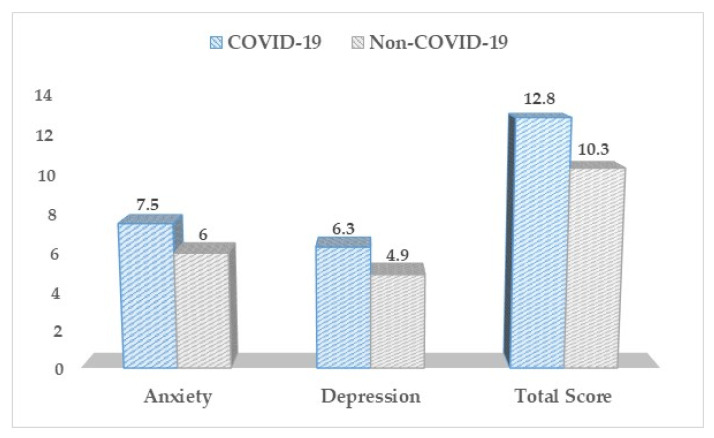
Background and Objectives: As maternal deaths associated with the SARS-CoV-2 infection remain at several times greater than the general population, significant factors that might contribute to the higher mortality and morbidity rate are the psychological impact of the disease and pregnancy itself. Therefore, the current study's main objective was to assess how pregnant women react and cope with the stress of COVID-19 disease and how it influences their overall health and quality of life in healthcare facilities. Materials and Methods: In this cross-sectional study, we included 304 pregnant women who successfully completed standardized forms to assess our topics of interest, comprising of the Hospital Anxiety and Depression Scale, the Short Form Health Survey-12, the Coping Orientation to Problems Experienced Inventory scale, the CORE-Outcome Measure Questionnaire, and the Quality from the Patient's Perspective questionnaire. Results: Unemployed, pregnant women living in poverty in the rural areas had higher SARS-CoV-2 infection rates during pregnancy. They faced higher anxiety levels and depression rates, with associated increased physical burden and exhaustion. However, these findings are not influenced by hospital care since it remained unchanged among COVID-19 and non-COVID-19 maternity units, excepting significantly lower technical competence scores of COVID-19 facilities. Conclusions: As the pandemic's consequences emerge and additional outbreaks occur, care must prioritize the additional physical burden experienced by pregnant women who have contracted COVID-19, as well as psychological, emotional, and mental health support.
Keywords: COPE; CORE-OM; COVID-19; HADS; QPP; SARS-CoV-2; SF-12; pregnancy.
Conflict of interest statement
The authors declare no conflict of interest.
Figures



References
-
- Raisi-Estabragh Z., McCracken C., Bethell M.S., Cooper J., Cooper C., Caulfield M.J., Munroe P.B., Harvey N.C., Petersen S.E. Greater risk of severe COVID-19 in Black, Asian and Minority Ethnic populations is not explained by cardiometabolic, socioeconomic or behavioural factors, or by 25(OH)-vitamin D status: Study of 1326 cases from the UK Biobank. J. Public Health. 2020;42:451–460. doi: 10.1093/pubmed/fdaa095. - DOI - PMC - PubMed
-
- Sinaci S., Ocal D.F., Seven B., Anuk A.T., Besimoglu B., Keven M.C., Goncu Ayhan S., Akin M.S., Tayman C., Keskin H.L., et al. Vertical transmission of SARS-CoV-2: A prospective cross-sectional study from a tertiary center. J. Med. Virol. 2021;93:5864–5872. doi: 10.1002/jmv.27128. - DOI - PMC - PubMed
MeSH terms
LinkOut - more resources
Full Text Sources
Medical
Research Materials
Miscellaneous
