


Ramadan Fasting during Pregnancy and Health Outcomes in Offspring: A Systematic Review
- PMID: 34684451
- PMCID: PMC8540108
- DOI: 10.3390/nu13103450
Ramadan Fasting during Pregnancy and Health Outcomes in Offspring: A Systematic Review
Abstract
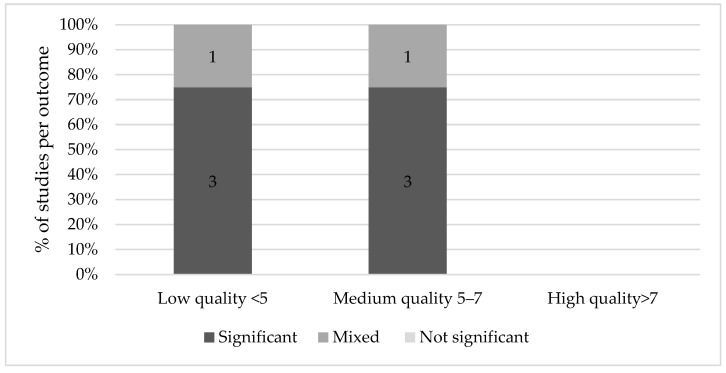
Ramadan is one of the five pillars of Islam, during which fasting is obligatory for all healthy individuals. Although pregnant women are exempt from this Islamic law, the majority nevertheless choose to fast. This review aims to identify the effects of Ramadan fasting on the offspring of Muslim mothers, particularly on fetal growth, birth indices, cognitive effects and long-term effects. A systematic literature search was conducted until March 2020 in Web of Science, Pubmed, Cochrane Library, Embase and Google Scholar. Studies were evaluated based on a pre-defined quality score ranging from 0 (low quality) to 10 (high quality), and 43 articles were included. The study quality ranged from 2 to 9 with a mean quality score of 5.4. Only 3 studies had a high quality score (>7), of which one found a lower birth weight among fasting women. Few medium quality studies found a significant negative effect on fetal growth or birth indices. The quality of articles that investigated cognitive and long-term effects was poor. The association between Ramadan fasting and health outcomes of offspring is not supported by strong evidence. To further elucidate the effects of Ramadan fasting, larger prospective and retrospective studies with novel designs are needed.
Keywords: Islam; fasting; fetal development; humans; infant; newborn; pregnancy; pregnancy outcome.
Conflict of interest statement
The authors declare no conflict of interest.
Figures


References
-
- Mirsane S.A., Shafagh S. A Narrative Review on Fasting of Pregnant Women in the Holy Month of Ramadan. J. Fasting Health. 2016;4:53–56.
-
- Almond D., Mazumder B. Health Capital and the Prenatal Environment: The Effect of Ramadan Observance During Pregnancy. Am. Econ. J. Appl. Econ. 2011;3:56–85. doi: 10.1257/app.3.4.56. - DOI
Publication types
MeSH terms
Substances
LinkOut - more resources
Full Text Sources
Medical
