


The Optimal Strategy of Vitamin D for Sarcopenia: A Network Meta-Analysis of Randomized Controlled Trials
- PMID: 34684590
- PMCID: PMC8541573
- DOI: 10.3390/nu13103589
The Optimal Strategy of Vitamin D for Sarcopenia: A Network Meta-Analysis of Randomized Controlled Trials
Abstract
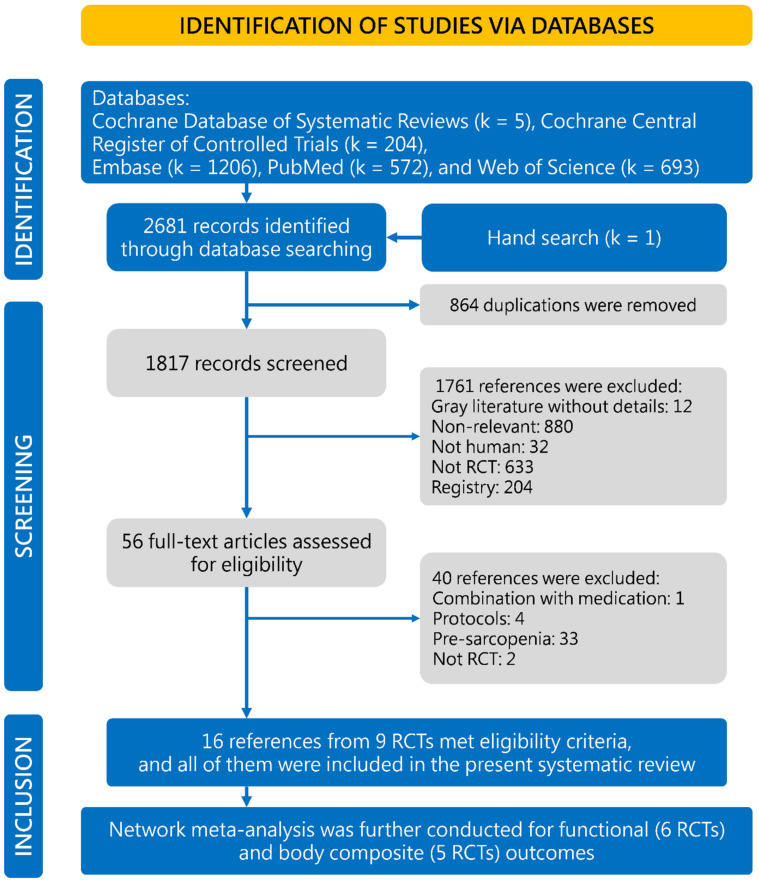
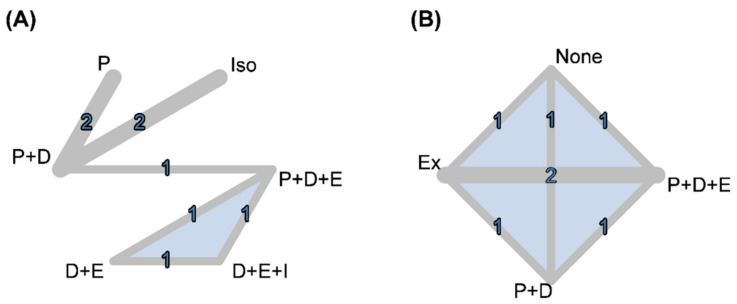
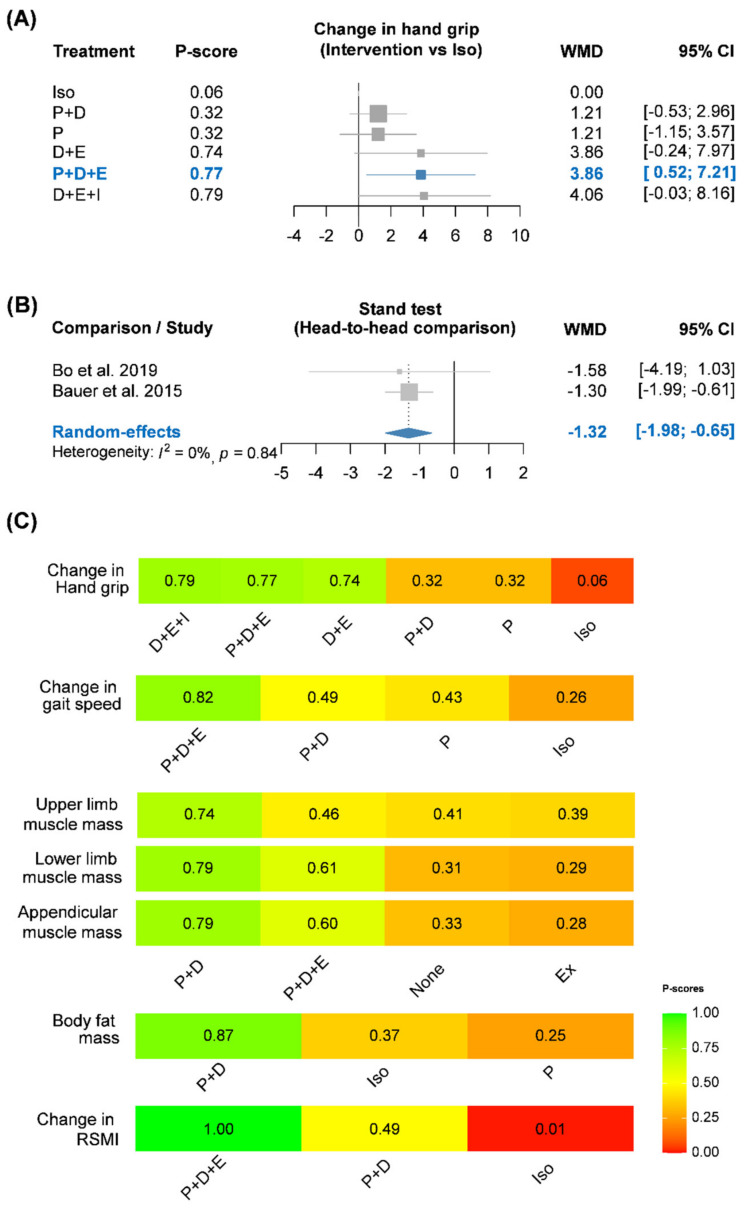
Sarcopenia is a disease of gradual loss of muscle mass in elderly people, and the most common treatment options include nutritional supplementation and exercise. Vitamin D has potential beneficial effects for skeletal muscle tissue and has often been included in nutritional therapy formulations. However, the therapeutic effect of vitamin D for the treatment of sarcopenia has not yet been determine and there is a lack of high-quality supporting evidence. We searched three databases for randomized controlled trials (RCTs) on this topic. Changes in hand grip strength, gait speed, chair-stand test, fat mass, relative skeletal muscle index, and muscle mass were assessed for analysis. Network meta-analysis was further employed, based on the frequentist approach. Outcomes were reported as weighted mean differences (WMD) with 95% confidence intervals (CIs). A total of 9 RCTs (n = 1420) met our eligibility criteria, which treated patients with vitamin D (D), protein (P, n = 165), exercise (E, n = 124), iso-caloric product (I, n = 226), usual care without nutritional supplement (n = 65), P + D (n = 467), D + E (n = 72), P + E (n = 69), D + E + I (n = 73), and P + D + E (n = 159). The pooled estimate showed that the P + D + E intervention induced a greater improvement in hand grip strength than iso-caloric product intervention (WMD = 3.86; 95%CI, 0.52-7.21). Vitamin D intervention could lead to shorter chair-stand time (WMD = -1.32; 95%CI, -1.98 to -0.65), but no significant findings could be found for gait speed and muscle mass outcomes. Our synthesis found that combining vitamin D supplementation with protein supplementation and exercise can significantly increase grip strength and also showed a trend toward increasing muscle mass. This result implies that adding vitamin D to a standard treatment protocol for sarcopenia may be helpful for regaining function.
Keywords: gait speed; grip strength; muscle mass; sarcopenia; vitamin D.
Conflict of interest statement
S.-H.C., K.-H.C., C.C., W.-C.C., Y.-N.K. declare that they have nothing to disclose regarding financial or non-financial conflicts of interest with respect to this manuscript.
Figures
References
-
- Cruz-Jentoft A.J., Baeyens J.P., Bauer J.M., Boirie Y., Cederholm T., Landi F., Martin F.C., Michel J.P., Rolland Y., Schneider S.M., et al. Sarcopenia: European consensus on definition and diagnosis: Report of the european working group on sarcopenia in older people. Age Ageing. 2010;39:412–423. doi: 10.1093/ageing/afq034. - DOI - PMC - PubMed
Publication types
MeSH terms
Substances
LinkOut - more resources
Full Text Sources
Medical
Miscellaneous
