Review
. 2021 Oct 13;26(20):6164.
doi: 10.3390/molecules26206164.

Ligands as Stabilizers of G-Quadruplexes in Non-Coding RNAs

Affiliations
Review

Ligands as Stabilizers of G-Quadruplexes in Non-Coding RNAs

Joana Figueiredo et al. Molecules. .

Abstract

The non-coding RNAs (ncRNA) are RNA transcripts with different sizes, structures and biological functions that do not encode functional proteins. RNA G-quadruplexes (rG4s) have been found in small and long ncRNAs. The existence of an equilibrium between rG4 and stem-loop structures in ncRNAs and its effect on biological processes remains unexplored. For example, deviation from the stem-loop leads to deregulated mature miRNA levels, demonstrating that miRNA biogenesis can be modulated by ions or small molecules. In light of this, we report several examples of rG4s in certain types of ncRNAs, and the implications of G4 stabilization using small molecules, also known as G4 ligands, in the regulation of gene expression, miRNA biogenesis, and miRNA-mRNA interactions. Until now, different G4 ligands scaffolds were synthesized for these targets. The regulatory role of the above-mentioned rG4s in ncRNAs can be used as novel therapeutic approaches for adjusting miRNA levels.

Keywords: RNA G-quadruplex; ligands; miRNA biogenesis; non-coding RNAs.


Conflict of interest statement

The authors declare no conflict of interest.

Figures
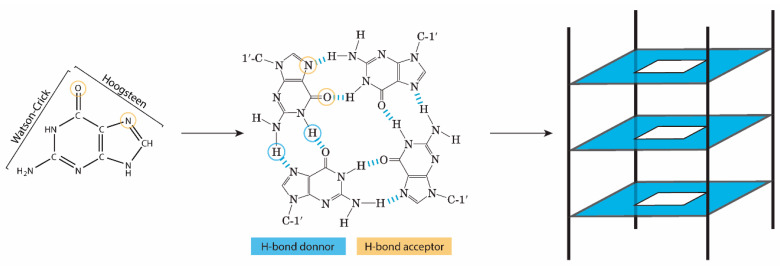
Figure 1
Figure 1
Illustration of G-tetrad formation through Hoogsteen bonds and G-tetrads stacking.
Figure 2
Figure 2
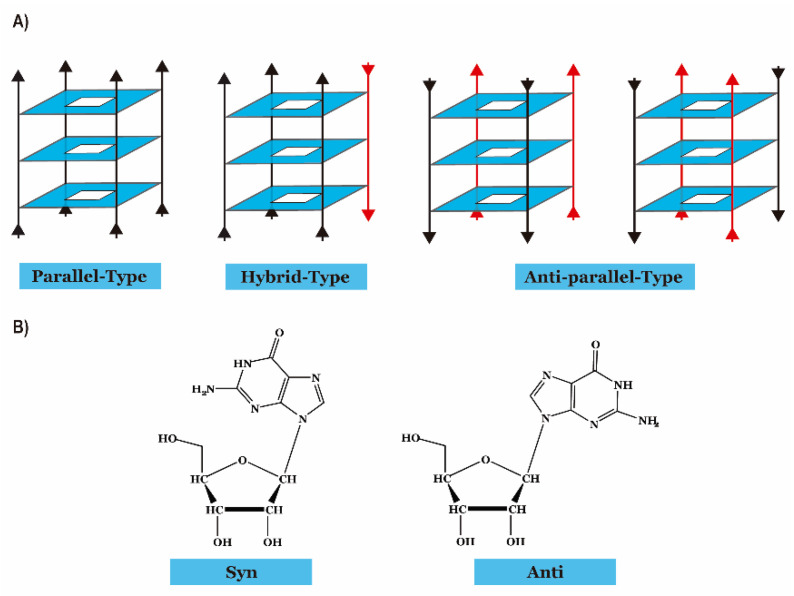
(A) Schematic representation of different G4 topologies (parallel, hybrid and anti-parallel). (B) Conformations of G4s according to strands polarity when polarity differences are associated with an angle between the G-bases and the pentose, namely to 2’ hydroxyl group.
Figure 3
Figure 3
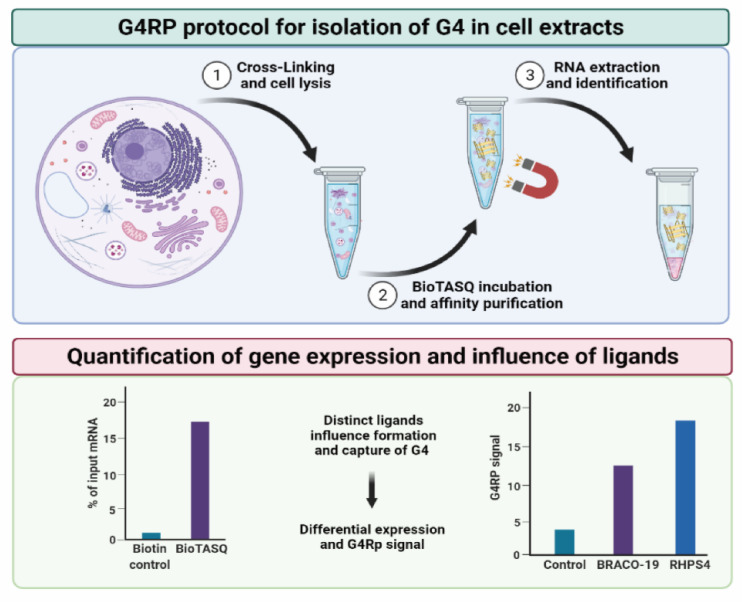
Illustration of G4RP method protocol for isolation of G4 targets from human cell extracts and the influence of the ligands in gene expression. Adapted from ref. [25]. Copyright (2018), with permission from Springer Nature.
Scheme 1
Scheme 1
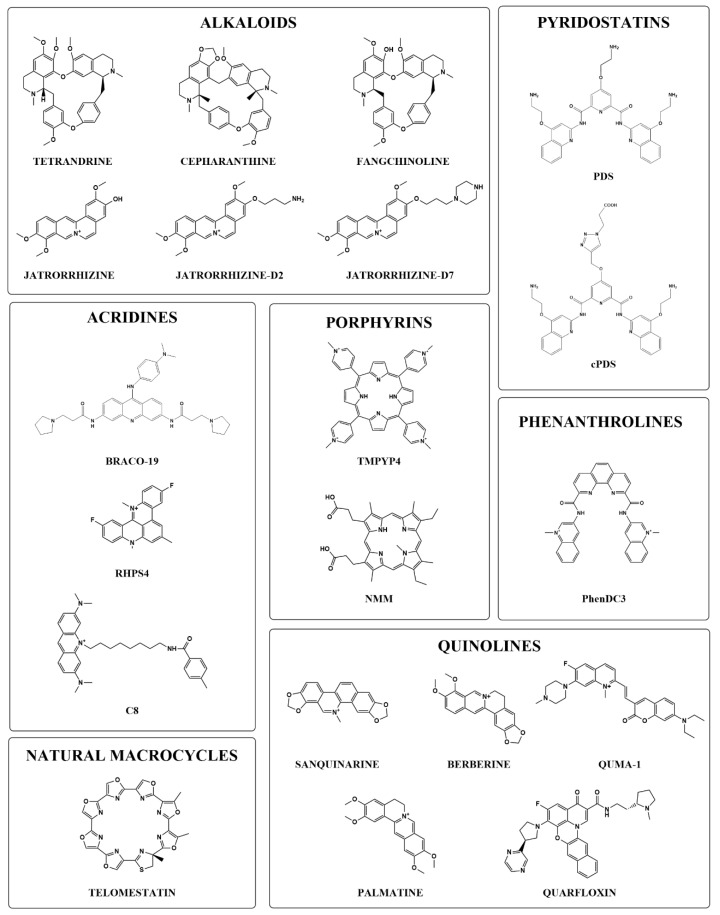
Chemical structures of the G4 ligands presented in this review. Small molecules are divided according to the chemical families. Structures were designed with ChemDraw 20.0 ®—PerkinElmer.
Figure 4
Figure 4
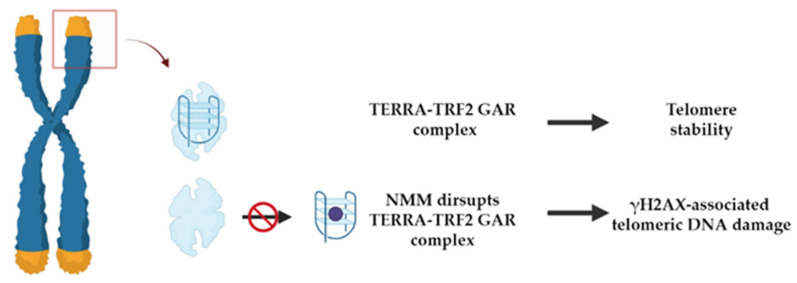
Schematic representation of TERRA rG4 interaction with TRF2 GAR domain that is required for telomere stability and integrity. Treatment of human melanoma cells with mesoporphyrin IX (NMM) leads to disruption of TERRA and the induction of γH2AX-associated telomeric DNA damage.
Figure 5
Figure 5
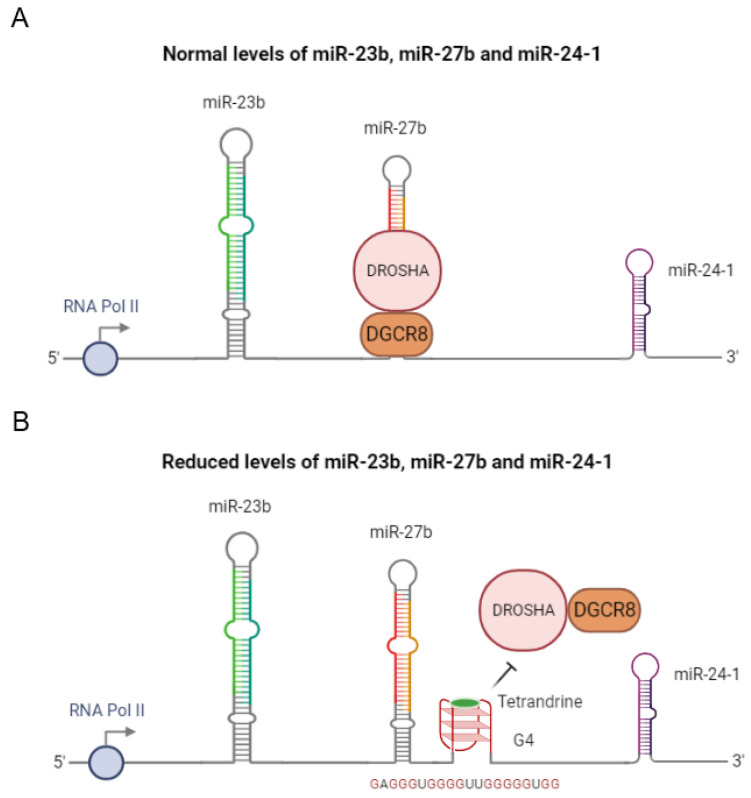
Representation of the influence of G-rich sequence in normal (A) and reduced (B) levels of miR-23b, miR 27b and miR-24-1. Adapted from ref. [42]. Copyright (2021), with permission from Oxford University Press.
Figure 6
Figure 6
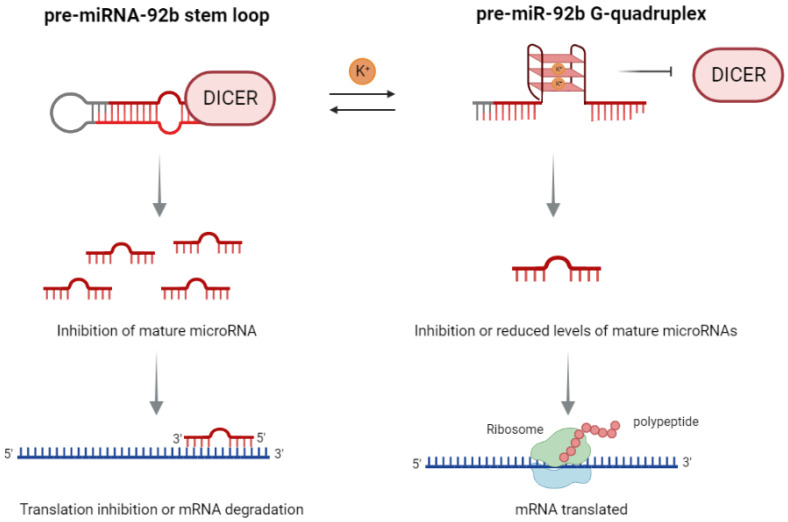
Representation of the ionic profiling to induce G4 formation by unwinding the stem−loop of pre-miR-92b Adapted from [44] copyright (2015), with permission from Elsevier.
Figure 7
Figure 7
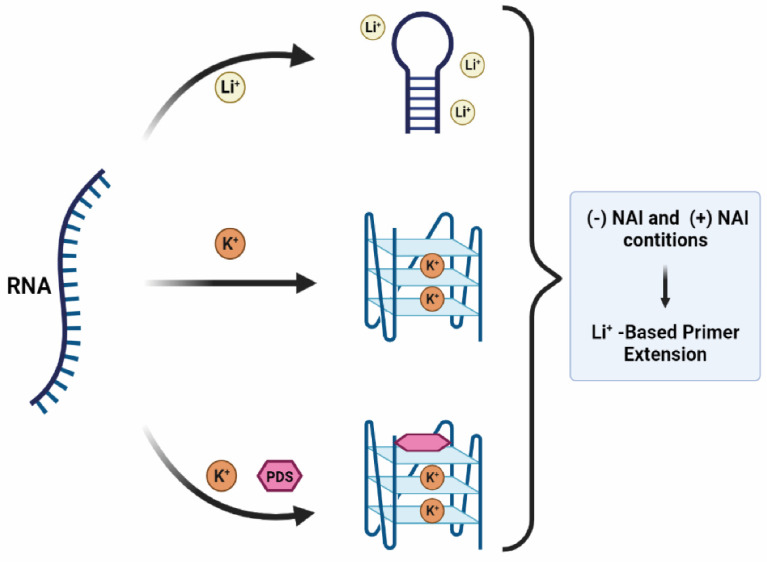
Representation of SHALiPE method [57]. Copyright (2016), with permission from Wiley.
Figure 8
Figure 8
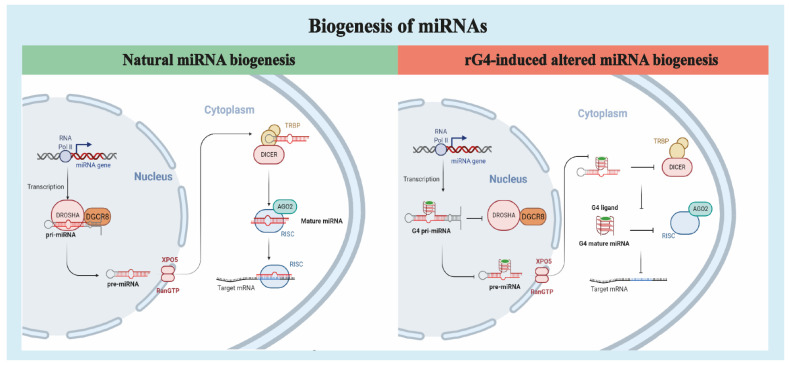
Biogenesis of miRNAs. Comparison of natural biogenesis versus interference of the rG4s in the biogenesis and function of miRNAs.
Figure 9
Figure 9
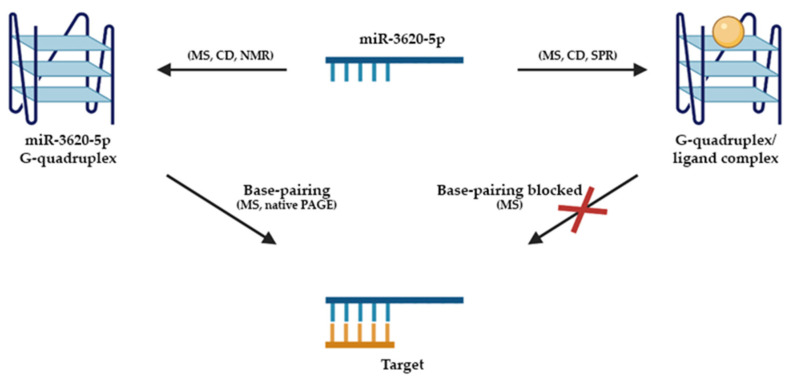
Representation of G4 formation in miR-3620-5p and the inhibition effect of sanguinarine on the base pair formation of miR-3620-5p with its target sequence. Adapted from ref. [73]. Copyright (2016), with permission from Elsevier.

References

    1. Baptista B., Riscado M., Queiroz J.A., Pichon C., Sousa F. Non-coding RNAs: Emerging from the discovery to therapeutic applications. Biochem. Pharmacol. 2021;189:114469. doi: 10.1016/j.bcp.2021.114469. - DOI - PubMed
    1. Zampetaki A., Albrecht A., Steinhofel K. Long Non-coding RNA Structure and Function: Is There a Link? Front. Physiol. 2018;9:1201. doi: 10.3389/fphys.2018.01201. - DOI - PMC - PubMed
    1. Anastasiadou E., Jacob L.S., Slack F.J. Non-coding RNA networks in cancer. Nat. Rev. Cancer. 2018;18:5–18. doi: 10.1038/nrc.2017.99. - DOI - PMC - PubMed
    1. Peng Y., Li J., Zhu L. Nutritional Epigenomics. Academic Press; Salt Lake City, UT, USA: 2019. Chapter 8—Cancer and non-coding RNAs; pp. 119–132. - DOI
    1. Tassinari M., Richter S.N., Gandellini P. Biological relevance and therapeutic potential of G-quadruplex structures in the human noncoding transcriptome. Nucleic Acids Res. 2021;49:3617–3633. doi: 10.1093/nar/gkab127. - DOI - PMC - PubMed

LinkOut - more resources