Review
. 2021 Oct 17;11(10):1102.
doi: 10.3390/life11101102.

Hearing Loss and Cognitive Impairment: Epidemiology, Common Pathophysiological Findings, and Treatment Considerations

Affiliations
Review

Hearing Loss and Cognitive Impairment: Epidemiology, Common Pathophysiological Findings, and Treatment Considerations

Antonella Bisogno et al. Life (Basel). .

Abstract

In recent years, there has been increasing research interest in the correlation between hearing impairment and cognitive decline, two conditions that have demonstrated a strong association. Hearing loss appears as a risk factor for cognitive impairment, especially among certain populations, notably nursing home residents. Furthermore, hearing loss has been identified as a modifiable age-related condition linked to dementia, and it has been estimated that midlife hearing loss, if eliminated, might decrease the risk of dementia in the general population. Several mechanisms have been suggested to explain the pathologic connections between hearing loss and dementia; however, clear evidence is missing, and the common pathophysiological basis is still unclear. In this review, we discussed current knowledge about the relationship between hearing loss and dementia, and future perspectives in terms of the effects of hearing rehabilitation for early prevention of cognitive decline.

Keywords: Alzheimer’s disease; cognitive impairment; dementia; epidemiology; hearing aid; hearing loss; pathophysiology; risk factors.


Conflict of interest statement

The authors declare no conflict of interest.

Figures
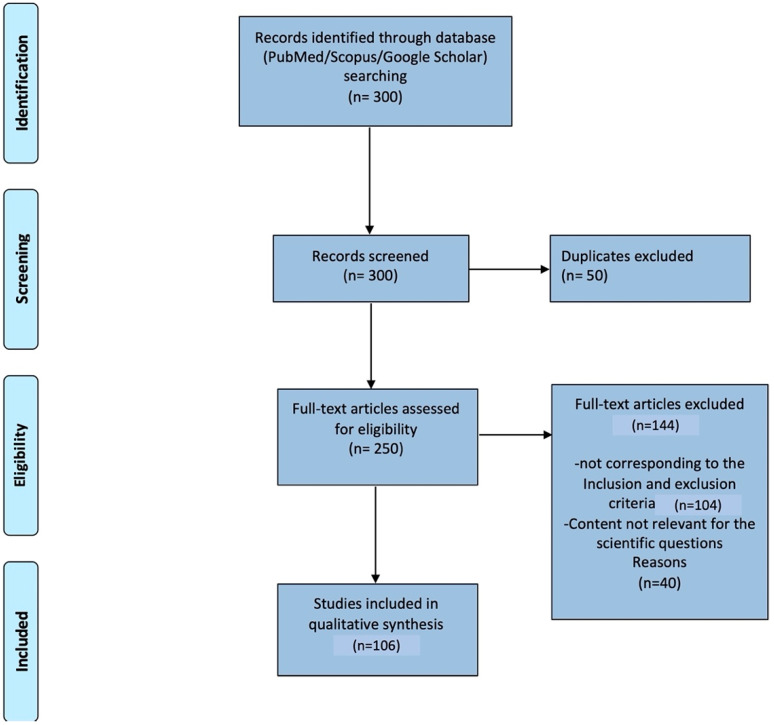
Figure 1
Figure 1
Prisma Flow shows how we selected and extracted the articles.
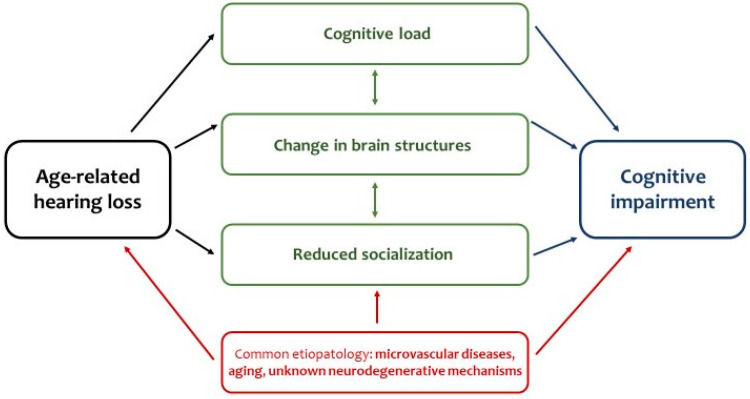
Figure 2
Figure 2
Causal connections between hearing loss and cognitive impairment.
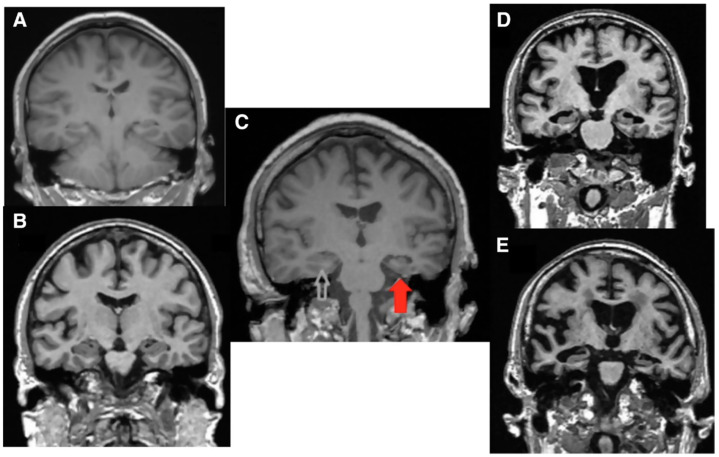
Figure 3
Figure 3
Magnetic resonance imaging, coronal view. (A) Normal brain in a young subject; (B) Normal brain in an elderly subject; (C) Temporal brain atrophy in a 68-year-old patient with asymmetric severe hearing loss (red arrow). The white arrow shows the normal temporal lobe; (D) Diffused brain atrophy in a 72-year-old patient affected by cognitive decline; (E) Diffused brain atrophy in a 65-year-old patient with Alzheimer’s Disease [5].

References

    1. Zheng Y., Fan S., Liao W., Fang W., Xiao S., Liu J. Hearing impairment and risk of Alzheimer’s disease: A meta-analysis of prospective cohort studies. Neurol. Sci. 2017;38:233–239. doi: 10.1007/s10072-016-2779-3. - DOI - PubMed
    1. Lin F.R., Yaffe K., Xia J., Xue Q.L., Harris T.B., Purchase-Helzner E., Satterfield S., Ayonayon H.N., Ferrucci L., Simonsick E.M., et al. Hearing loss and cognitive decline in older adults. JAMA Intern. Med. 2013;173:293–299. doi: 10.1001/jamainternmed.2013.1868. - DOI - PMC - PubMed
    1. Ralli M., Gilardi A., Stadio A.D., Severini C., Salzano F.A., Greco A., Vincentiis M. Hearing loss and Alzheimer’s disease: A Review. Int. Tinnitus J. 2019;23:79–85. doi: 10.5935/0946-5448.20190014. - DOI - PubMed
    1. Golub J.S. Brain changes associated with age-related hearing loss. Curr. Opin. Otolaryngol. Head Neck Surg. 2017;25:347–352. doi: 10.1097/MOO.0000000000000387. - DOI - PubMed
    1. Lin F.R., Ferrucci L., An Y., Goh J.O., Doshi J., Metter E.J., Davatzikos C., Kraut M.A., Resnick S.M. Association of hearing impairment with brain volume changes in older adults. Neuroimage. 2014;90:84–92. doi: 10.1016/j.neuroimage.2013.12.059. - DOI - PMC - PubMed

LinkOut - more resources