


Improved methods to characterize the length and quantity of highly unstable PolySialic acids subject category: (Carbohydrates, chromatographic techniques)
- PMID: 34687617
- PMCID: PMC9121810
- DOI: 10.1016/j.ab.2021.114426
Improved methods to characterize the length and quantity of highly unstable PolySialic acids subject category: (Carbohydrates, chromatographic techniques)
Abstract
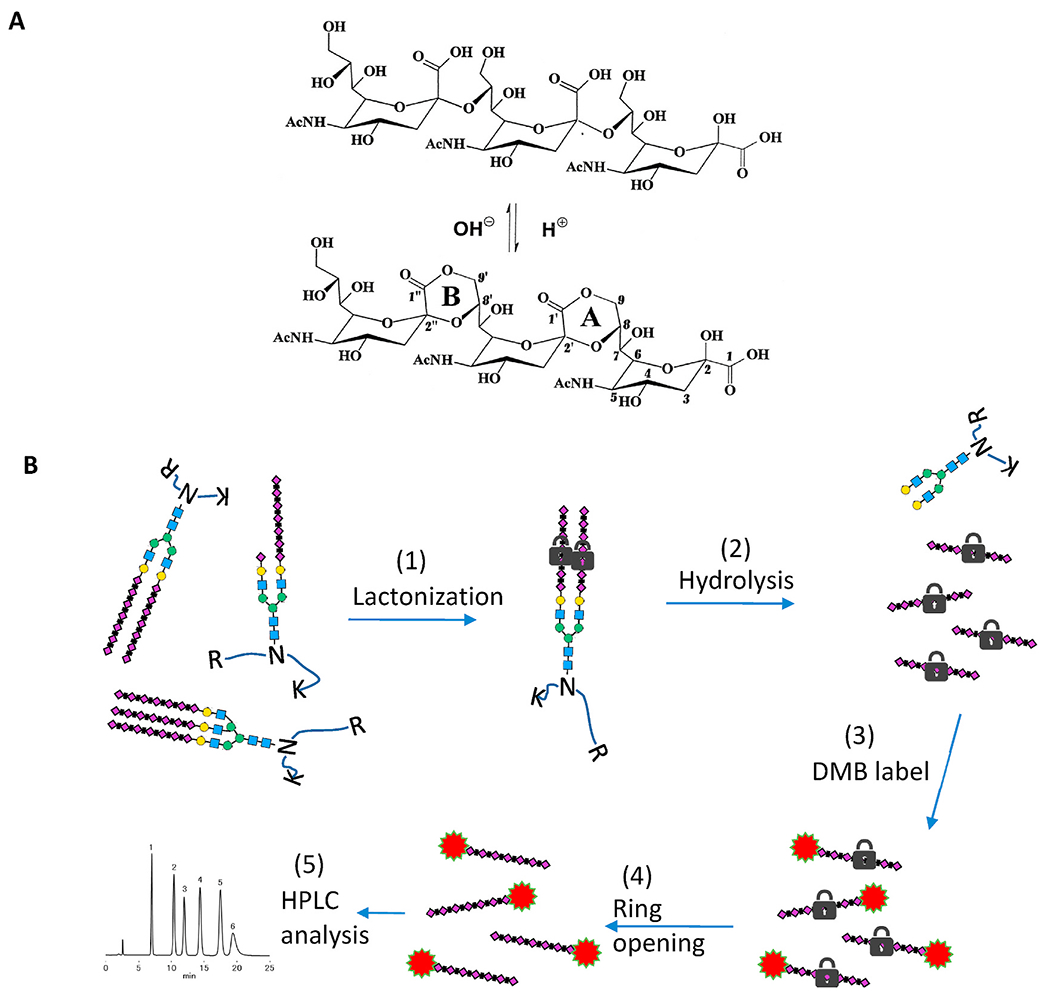
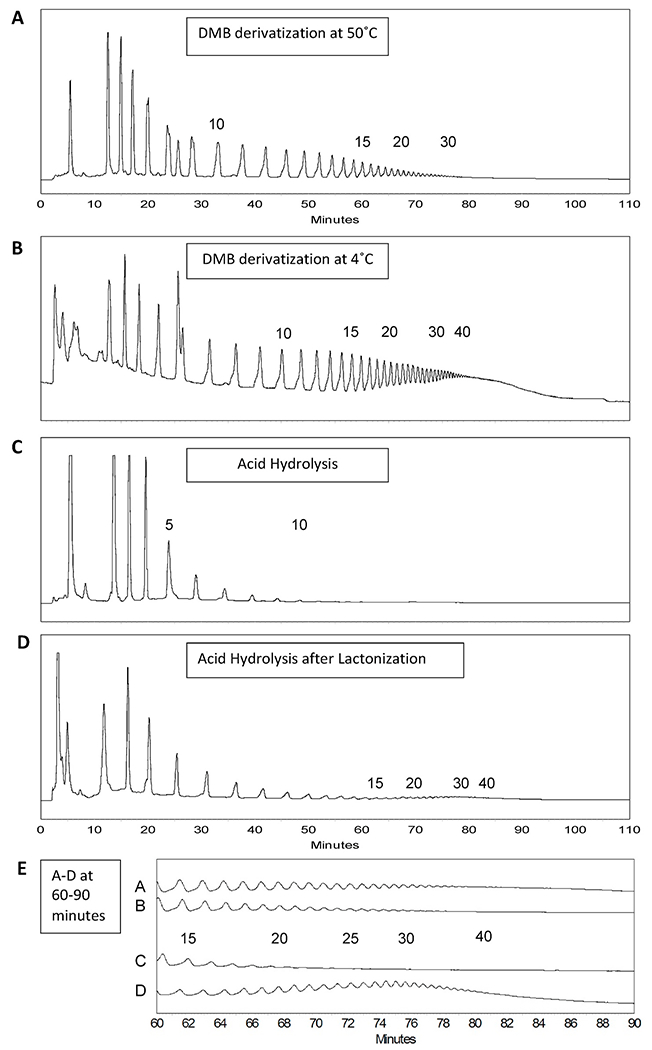
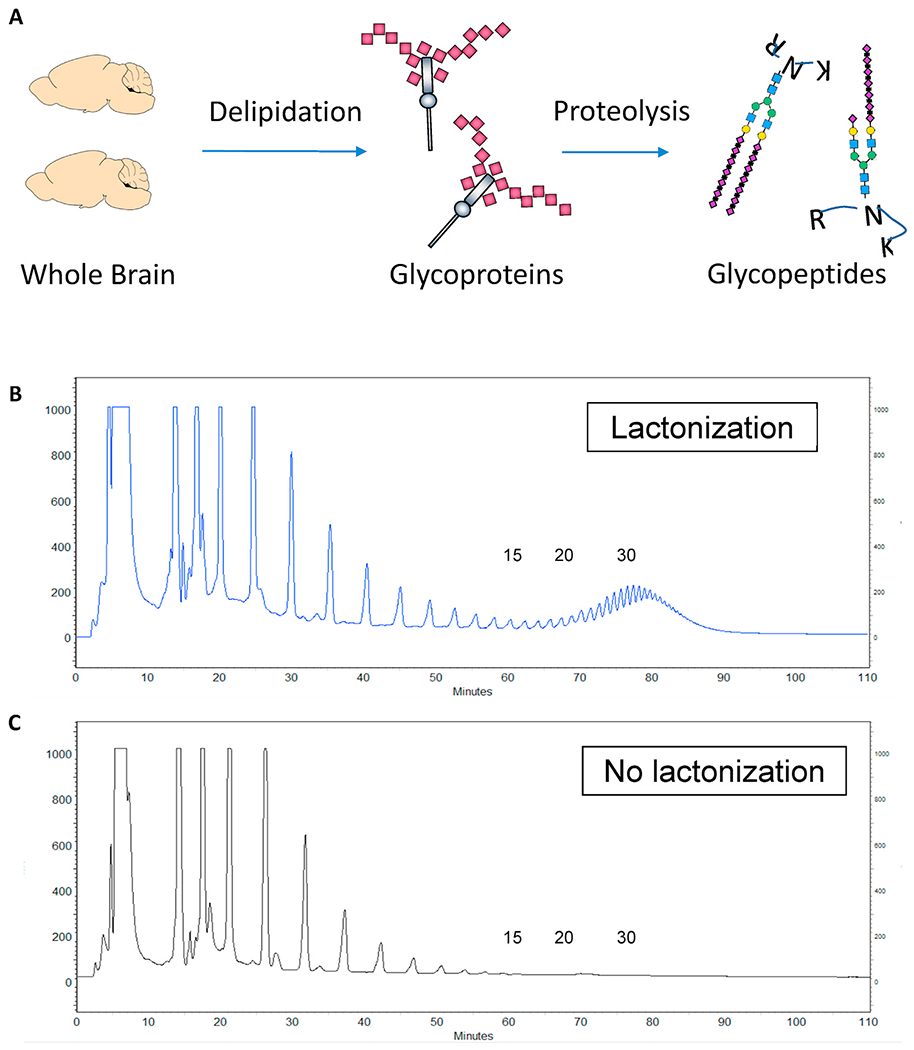
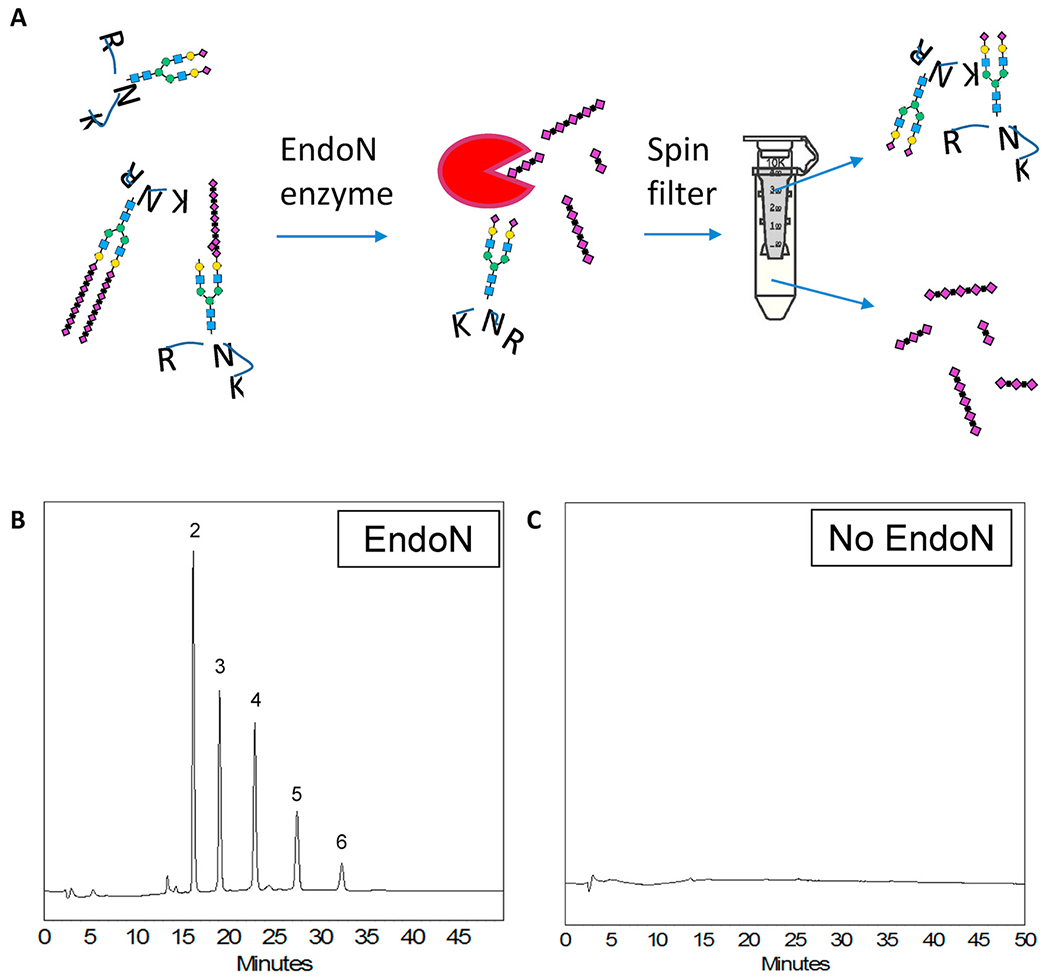
Polysialic acid (polySia) is a linear homopolymer of α2-8-linked sialic acids that is highly expressed during early stages of mammalian brain development and modulates a multitude of cellular functions. While degree of polymerization (DP) can affect such functions, currently available methods do not accurately characterize this parameter, because of the instability of the polymer. We developed two improved methods to characterize the DP and total polySia content in biological samples. PolySia chains with exposed reducing termini can be derivatized with DMB for subsequent HPLC analysis. However, application to biological samples of polySia-glycoproteins requires release of polySia chains from the underlying glycan, which is difficult to achieve without concurrent partial hydrolysis of the α2-8-linkages of the polySia chain, affecting its accurate characterization. We report an approach to protect internal α2-8sia linkages of long polySia chains, using previously known esterification conditions that generate stable polylactone structures. Such polylactonized molecules are more stable during acid hydrolysis release and acidic DMB derivatization. Additionally, we used the highly specific Endoneuraminidase-NF enzyme to discriminate polysialic acid and other sialic acid and developed an approach to precisely measure the total content of polySia in a biological sample. These two methods provide improved quantification and characterization of polySia.
Keywords: DMB derivatization; Degree of polymerization; Lactonization; Polysialic acid.
Copyright © 2021. Published by Elsevier Inc.
Figures
References
Publication types
MeSH terms
Substances
Grants and funding
LinkOut - more resources
Full Text Sources
