


Comparative genome analysis of colistin-resistant OXA-48-producing Klebsiella pneumoniae clinical strains isolated from two Iranian hospitals
- PMID: 34688302
- PMCID: PMC8542297
- DOI: 10.1186/s12941-021-00479-y
Comparative genome analysis of colistin-resistant OXA-48-producing Klebsiella pneumoniae clinical strains isolated from two Iranian hospitals
Abstract
Background: Carbapenemase-producing Klebsiella pneumoniae (CP-KP) is becoming extensively disseminated in Iranian medical centers. Colistin is among the few agents that retains its activity against CP-KP. However, the administration of colistin for treatment of carbapenem-resistant infections has increased resistance against this antibiotic. Therefore, the identification of genetic background of co-carbapenem, colistin-resistance K. pneumoniae (Co-CCRKp) is urgent for implementation of serious infection control strategies.
Methods: Fourteen Co-CCRKp strains obtained from routine microbiological examinations were subjected to molecular analysis of antimicrobial resistance (AMR) using whole genome sequencing (WGS).
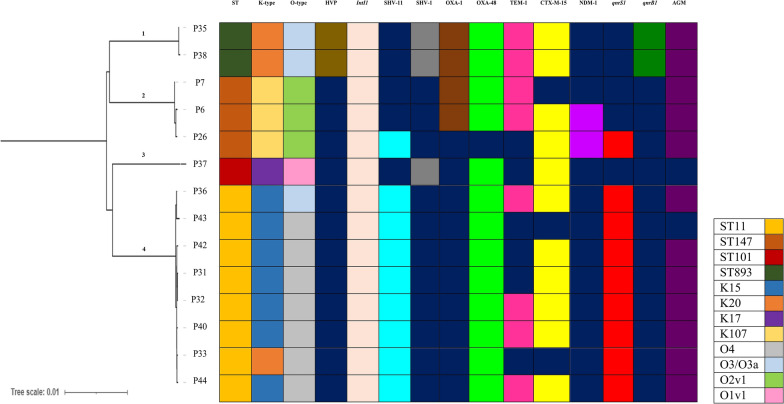
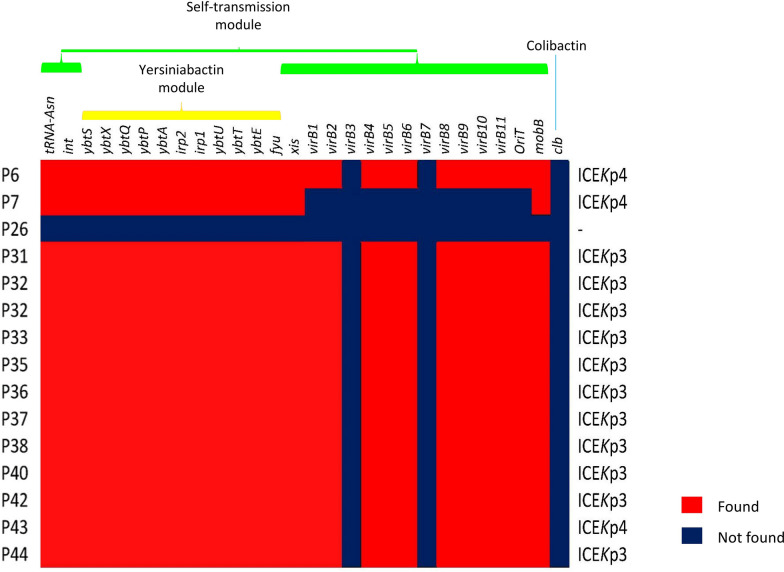
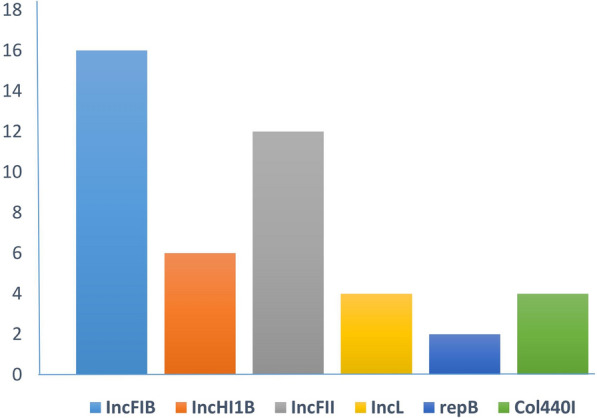
Results: Nine of 14 K. pneumoniae strains belonged to sequence type (ST)-11 and 50% of the isolates had K-locus type 15. All strains carried blaOXA-48 except for P26. blaNDM-1 was detected in only two plasmids associated with P6 and P26 strains belonging to incompatibility (Inc) groups; IncFIB, IncHI1B and IncFII. No blaKPC, blaVIM and blaIMP were identified. Multi-drug resistant (MDR) conjugative plasmids were identified in strains P6, P31, P35, P38 and P40. MICcolistin of K. pneumoniae strains ranged from 4 to 32 µg/ml. Modification of PmrA, PmrB, PhoQ, RamA and CrrB regulators as well as MgrB was identified as the mechanism of colistin resistance in our isolates. Single amino acid polymorphysims (SAPs) in PhoQ (D150G) and PmrB (R256G) were identified in all strains except for P35 and P38. CrrB was absent in P37 and modified in P7 (A200E). Insertion of ISKpn72 (P32), establishment of stop codon (Q30*) (P35 and P38), nucleotides deletion (P37), and amino acid substitution at position 28 were identified in MgrB (P33 and P42). None of the isolates were positive for plasmid-mediated colistin resistance (mcr) genes. P35 and P38 strains carried iutA, iucD, iucC, iucB and iucA genes and are considered as MDR-hypervirulent strains. P6, P7 and P43 had ICEKp4 variant and ICEKp3 was identified in 78% of the strains with specific carriage in ST11.
Conclusion: In our study, different genetic modifications in chromosomal coding regions of some regulator genes resulted in phenotypic resistance to colistin. However, the extra-chromosomal colistin resistance through mcr genes was not detected. Continuous genomic investigations need to be conducted to accurately depict the status of colistin resistance in clinical settings.
Keywords: Carbapenemases producing strains; Colistin-resistant Klebsiella pneumoniae; Hypervirulent plasmids.
© 2021. The Author(s).
Conflict of interest statement
Authors declare that they had no commercial, personal and political conflicting of interests.
Figures
References
-
- Mairi A, Pantel A, Sotto A, Lavigne JP, Touati A. OXA-48-like carbapenemases producing Enterobacteriaceae in different niches. Eur J Clin Microbiol Infect Dis. 2018;37(4):587–604. - PubMed
Publication types
MeSH terms
Substances
LinkOut - more resources
Full Text Sources
Medical
Research Materials
Miscellaneous
