


Tenascin-C induction exacerbates post-stroke brain damage
- PMID: 34689646
- PMCID: PMC9122520
- DOI: 10.1177/0271678X211056392
Tenascin-C induction exacerbates post-stroke brain damage
Abstract
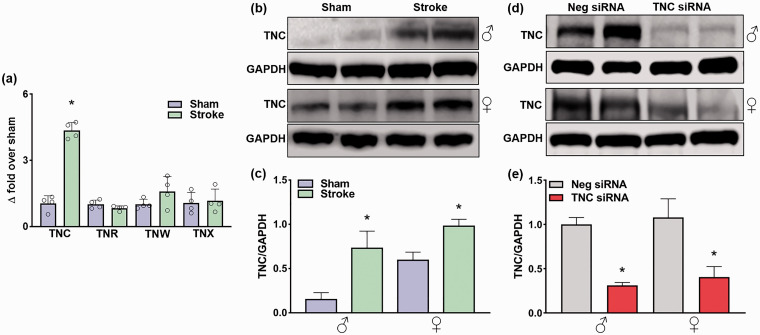
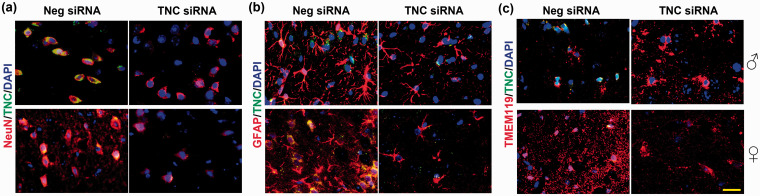
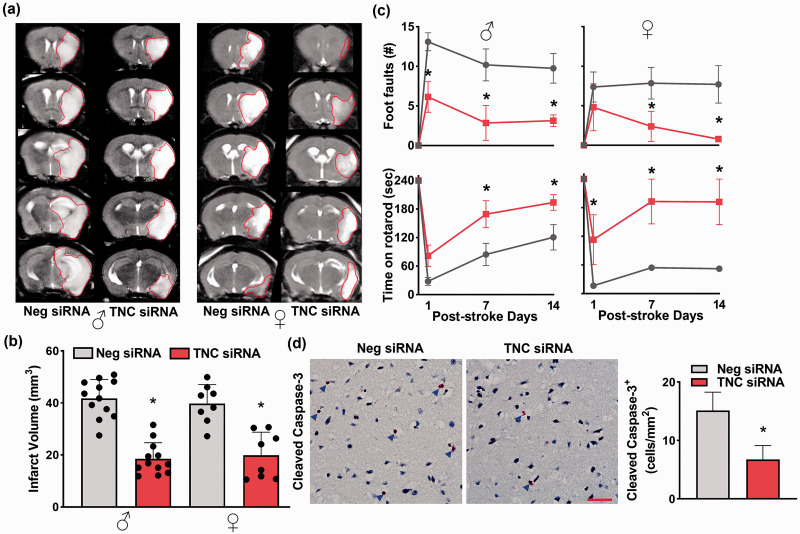
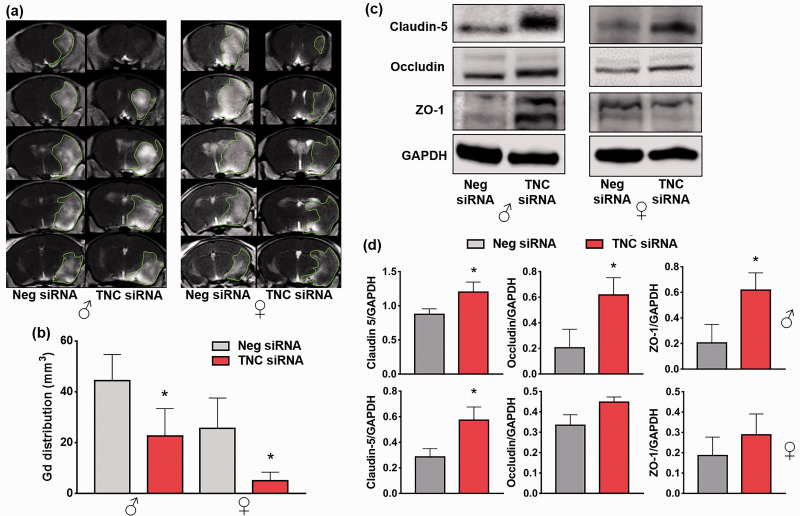
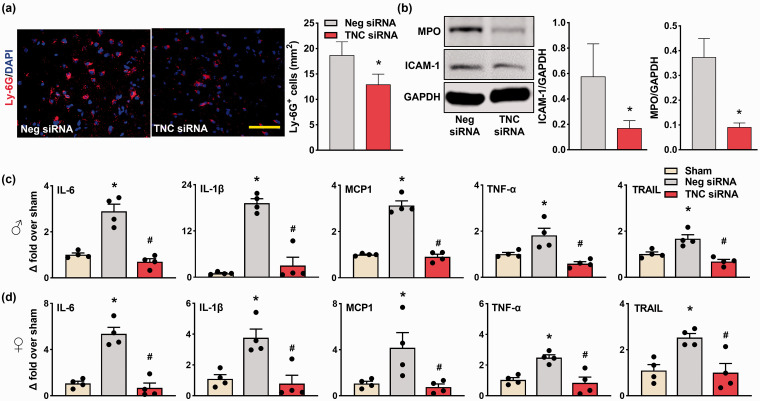
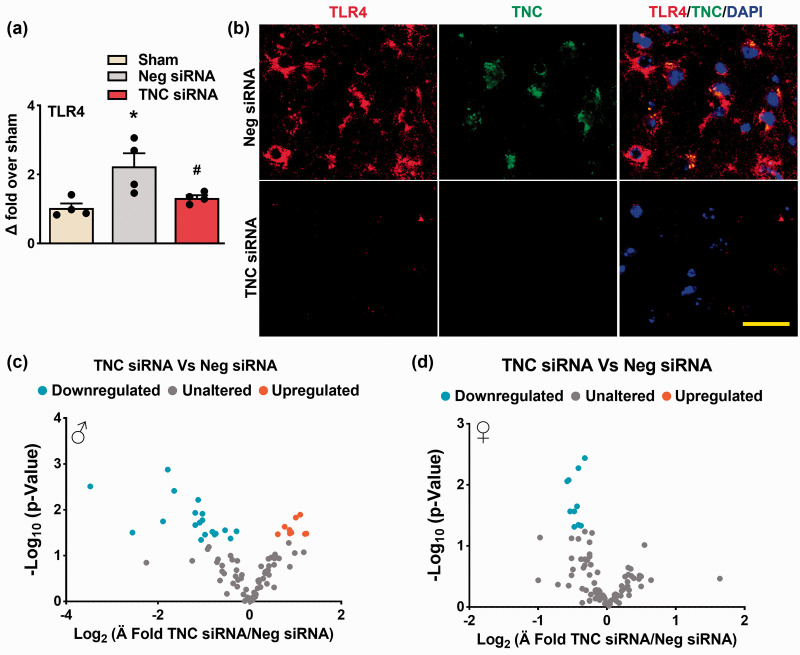
The role of tenascin-C (TNC) in ischemic stroke pathology is not known despite its prognostic association with cerebrovascular diseases. Here, we investigated the effect of TNC knockdown on post-stroke brain damage and its putative mechanism of action in adult mice of both sexes. Male and female C57BL/6 mice were subjected to transient middle cerebral artery occlusion and injected (i.v.) with either TNC siRNA or a negative (non-targeting) siRNA at 5 min after reperfusion. Motor function (beam walk and rotarod tests) was assessed between days 1 and 14 of reperfusion. Infarct volume (T2-MRI), BBB damage (T1-MRI with contrast), and inflammatory markers were measured at 3 days of reperfusion. The TNC siRNA treated cohort showed significantly curtailed post-stroke TNC protein expression, motor dysfunction, infarction, BBB damage, and inflammation compared to the sex-matched negative siRNA treated cohort. These results demonstrate that the induction of TNC during the acute period after stroke might be a mediator of post-ischemic inflammation and secondary brain damage independent of sex.
Keywords: Matricellular protein; blood-brain barrier; inflammation; ischemia-reperfusion; neuroprotection.
Conflict of interest statement
Figures
References
-
- Midwood KS, Chiquet M, Tucker RP, et al.. Tenascin-C at a glance. J Cell Sci 2016; 129: 4321–4327. - PubMed
-
- Clancy P, Lincz LF, Maguire J, et al.. Tenascin-C is increased in atherothrombotic stroke patients and has an anti-inflammatory effect in the human carotid artery. Biofactors 2014; 40: 448–457. - PubMed
Publication types
MeSH terms
Substances
Grants and funding
LinkOut - more resources
Full Text Sources
Medical
Miscellaneous
