Review
. 2022 Jan;32(1):21-31.
doi: 10.1016/j.numecd.2021.09.007. Epub 2021 Sep 16.

Arterial hypertension - Clinical trials update 2021

Affiliations
Review

Arterial hypertension - Clinical trials update 2021

Hussam Al Ghorani et al. Nutr Metab Cardiovasc Dis. 2022 Jan.

Abstract

Aim: This review aims to summarize and discuss some of the most relevant clinical trials in epidemiology, diagnostics, and treatment of hypertension published in 2020 and 2021.

Data synthesis: The trials included in this review are related to hypertension onset age and risk for future cardiovascular disease, reliability of different blood pressure monitoring methods, role of exercise-induced hypertension, treatment of hypertension in patients with SARS-CoV-2 infection, management of hypertension high-risk patient groups, e.g., in the elderly (≥80 years) and patients with atrial fibrillation, and the interplay between nutrition and hypertension, as well as recent insights into renal denervation for treatment of hypertension.

Conclusions: Hypertension onset age, nighttime blood pressure levels and a riser pattern are relevant for the prognosis of future cardiovascular diseases. The risk of coronary heart disease appears to increase linearly with increasing exercise systolic blood pressure. Renin-angiotensin system blockers are not associated with an increased risk for a severe course of COVID-19. In elderly patients, a risk-benefit assessment of intensified blood pressure control should be individually evaluated. A J-shaped association between cardiovascular disease and achieved blood pressure could also be demonstrated in patients with atrial fibrillation on anticoagulation. Salt restriction and lifestyle modification remain effective options in treating hypertensive patients at low cardiovascular risk. Sodium glucose co-transporter 2 inhibitors and Glucagon-like peptide-1 receptor agonists show BP-lowering effects. Renal denervation should be considered as an additional or alternative treatment option in selected patients with uncontrolled hypertension.

Keywords: Arterial hypertension; COVID-19; Cardiovascular risk; Exercise-induced hypertension; Renal denervation.


Figures

Figure 1
Figure 1
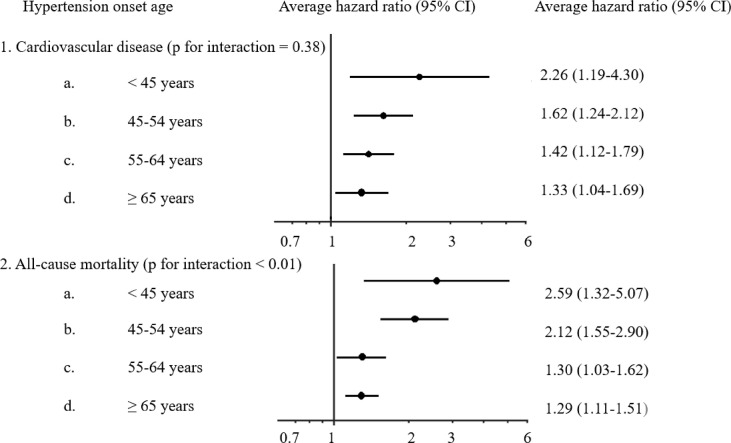
The association of hypertension onset age and risk for future cardiovascular disease. The average hazard ratios (95% confidence interval) of incident cardiovascular disease (myocardial infarction, ischemic stroke, and hemorrhagic stroke) and all-cause mortality of new-onset hypertensive participants across age groups in 39,744 Chinese participants [3].
Figure 2
Figure 2
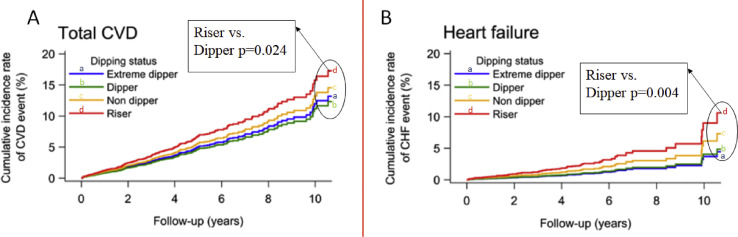
Cardiovascular disease risk by dipping status. Cumulative incidence rate of A-total cardiovascular events and B- heart failure events by different dipping patterns (extreme dipper, dipper, non-dipper, and riser). Riser pattern is associated with higher risk of cardiovascular risk, in particular heart failure [9]. CVD: cardiovascular disease, CHF: chronic heart failure.
Figure 3
Figure 3
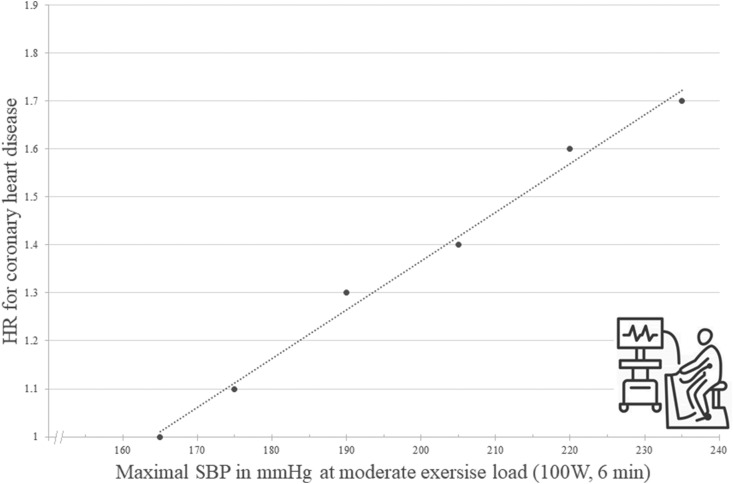
Risk of future coronary events depending on exercise blood pressure. There is an increasing risk of coronary heart disease with increasing exercise systolic blood pressure at moderate exercise workload (100 W for 6 minutes) independent of systolic blood pressure value at rest. The association appears to be linear [11]. HR: hazard ratio, SBP systolic blood pressure, W: Watt.
Figure 4
Figure 4
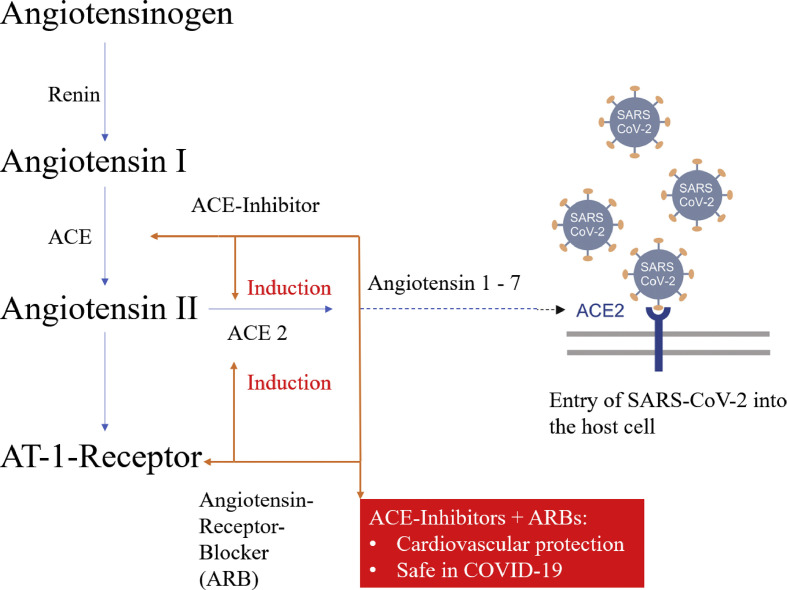
The interaction of the renin-angiotensin-system-blockers with SARS-CoV-2. Angiotensin-converting enzyme-2 facilitates SARS-CoV-2 entry into cells. Its expression can be increased by angiotensin-converting enzyme inhibitors and angiotensin receptor blockers. ARB: angiotensin receptor blocker, AT: angiotensin, SARS-CoV-2: severe acute respiratory syndrome coronavirus type 2, ACE: angiotensin-converting enzyme.
Figure 5
Figure 5
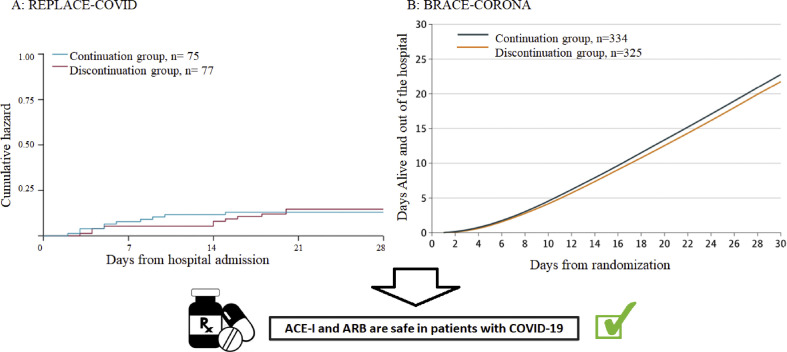
Primary outcomes of REPLACE-COVID [25] BRACE-CORONA [26] trials. A shows the cumulative hazard for all-cause death of the REPLACE-COVID trial [25]. B demonstrate the mean number of days alive and out of the hospital of the BRACE-CORONA [26] trail. In both trials, no significant difference between the groups was observed. ACE-I: angiotensin-converting enzyme inhibitors, ARB: angiotensin receptor blocker.
Figure 6
Figure 6
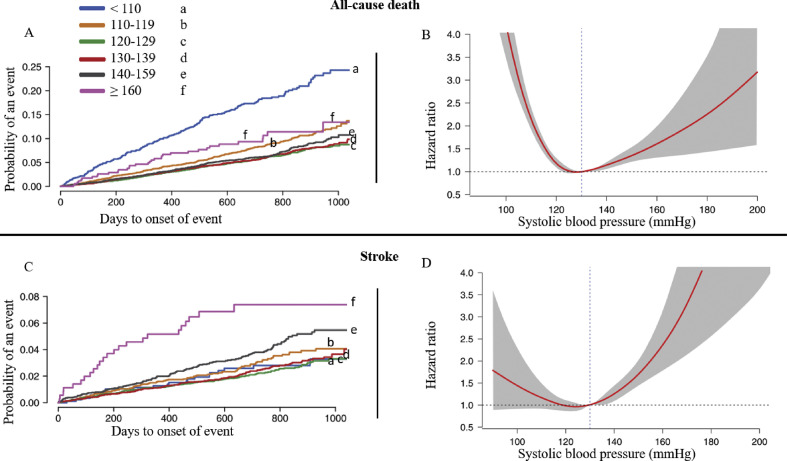
Blood pressure and complications in patients on therapeutic anticoagulation. A and C show the Kaplan–Meier event curves according to mean-achieved systolic blood pressure for all-cause death and stroke, respectively. B and D illustrate a J-shape associations between the mean-achieved systolic blood pressure and all-cause death and stroke, respectively [32].
Figure 7
Figure 7
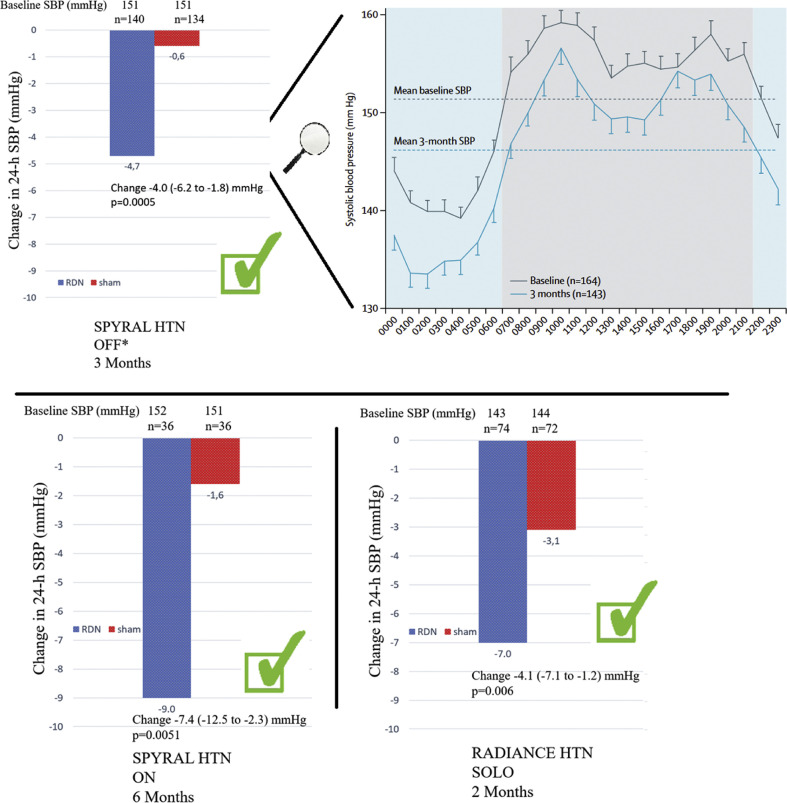
Change in 24-h systolic blood pressure after renal denervation. Three randomized, sham-controlled trials demonstrating that radiofrequency- (SPYRAL HTN OFF and SPYRAL HTN ON) [[41], [42], [43]] and ultrasound-based (RADIANCE-HTN) [43] renal denervation can significantly reduce systolic blood pressure. ∗ including the pilot trial, SBP: systolic blood pressure, 24-h SBP: 24-h systolic blood pressure.

References

    1. Stanaway J.D., Afshin A., Gakidou E., Lim S.S., Abate D., Abate K.H., et al. Global, regional, and national comparative risk assessment of 84 behavioural, environmental and occupational, and metabolic risks or clusters of risks for 195 countries and territories, 1990-2017: a systematic analysis for the Global Burden of Disease Stu. Lancet. 2018;392:1923–1994. doi: 10.1016/S0140-6736(18)32225-6. - DOI - PMC - PubMed
    1. Williams B., Mancia G., De Backer G., Dominiczak A., Cifkova R., Fagard R., et al. ESC/ESH guidelines for the management of arterial hypertension: the task force for the management of arterial hypertension of the European society of hypertension (ESH) and of the European society of Cardiology (ESC) Eur Heart J. 2018;39:3021–3104. doi: 10.1093/eurheartj/ehy339. 2018. - DOI - PubMed
    1. Wang C., Yuan Y., Zheng M., Pan A., Wang M., Zhao M., et al. Association of age of onset of hypertension with cardiovascular diseases and mortality. J Am Coll Cardiol. 2020;75:2921–2930. doi: 10.1016/j.jacc.2020.04.038. - DOI - PubMed
    1. Schwartz J.E., Muntner P., Kronish I.M., Burg M.M., Pickering T.G., Bigger J.T., et al. Reliability of office, home, and ambulatory blood pressure measurements and correlation with left ventricular mass. J Am Coll Cardiol. 2020;76:2911–2922. doi: 10.1016/j.jacc.2020.10.039. - DOI - PMC - PubMed
    1. Mancia G., Facchetti R., Cuspidi C., Bombelli M., Corrao Giovanni, Grassi G. Limited reproducibility of MUCH and WUCH : evidence from the ELSA study. Eur Heart J. 2020;41:1565–1571. doi: 10.1093/eurheartj/ehz651. - DOI - PubMed

Publication types