


Coupling the fermentation and membrane separation process for polyamides monomer cadaverine production from feedstock lysine
- PMID: 34690633
- PMCID: PMC8518567
- DOI: 10.1002/elsc.202000099
Coupling the fermentation and membrane separation process for polyamides monomer cadaverine production from feedstock lysine
Abstract
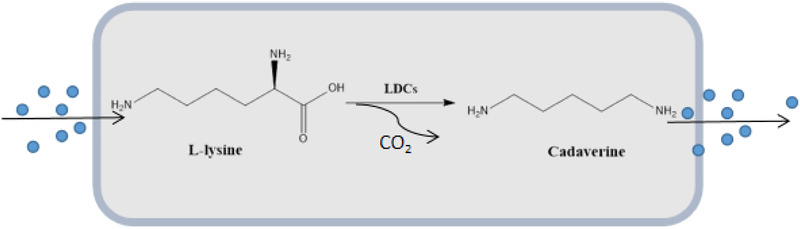
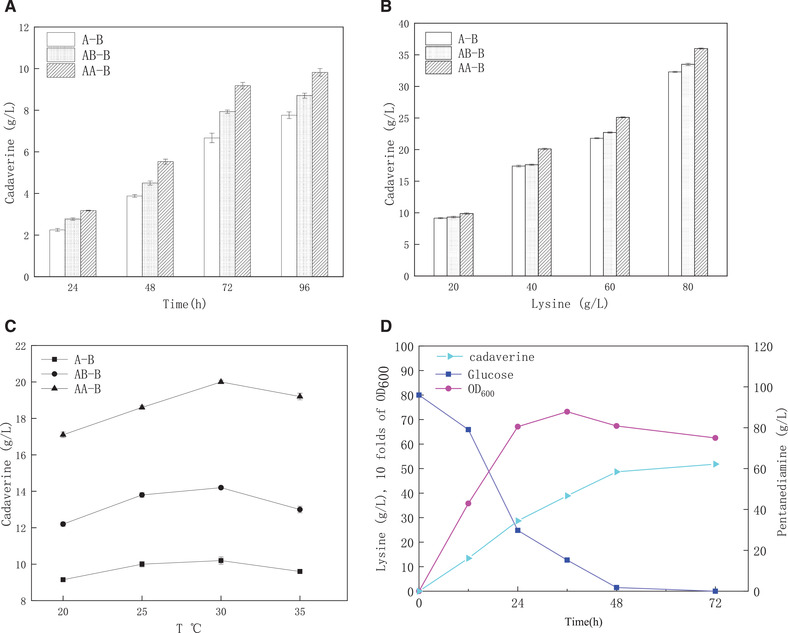
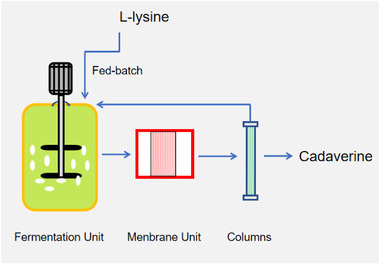
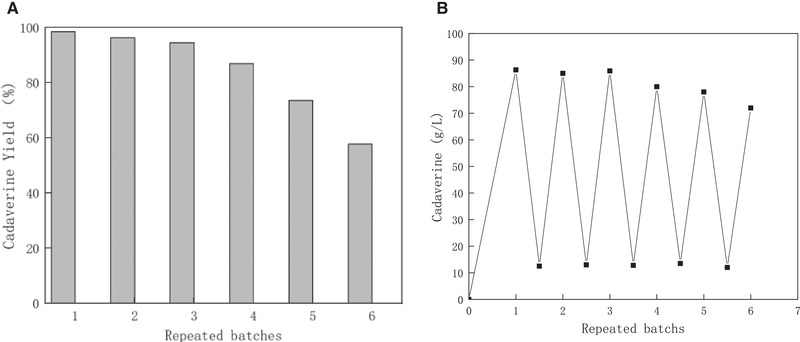
Nylon is a polyamide material with excellent performance used widely in the aviation and automobile industries, and other fields. Nylon monomers such as hexamethylene diamine and other monomers are in huge demand. Therefore, in order to expand the methods of nylon production, we tried to develop alternative bio-manufacturing processes which would make a positive contribution to the nylon industry. In this study, the engineered E. coli-overexpressing Lysine decarboxylases (LDCs) were used for the bioconversion of l-lysine to cadaverine. An integrated fermentation and microfiltration (MF) process for high-level cadaverine production by E. coli was established. Concentration was increased from 87 to 263.6 g/L cadaverine after six batch coupling with a productivity of 3.65 g/L-h. The cadaverine concentration was also increased significantly from 0.43 g cadaverine/g l-lysine to 0.88 g cadaverine/g l-lysine by repeated batch fermentation. These experimental results indicate that coupling the fermentation and membrane separation process could benefit the continuous production of cadaverine at high levels.
Keywords: batch fermentation, cadaverine; lysine decarboxylases, membrane separation, polyamides monomer.
© 2021 The Authors. Engineering in Life Sciences published by Wiley‐VCH GmbH.
Conflict of interest statement
The authors have declared no conflicts of interest.
Figures
References
-
- Weichao M, Kequan C, Yan L, Ning H, et al. Advances in cadaverine bacterial production and its applications. Engineering, 2017, 3, 308‐317.
-
- Kind S., Wittmann C. Bio‐based production of the platform chemical 1,5‐diaminopentane. Appl. Microbiol. Biotechnol. 2011, 91, 1287‐96. - PubMed
-
- Qian ZG, Xia XX, Lee SY. Metabolic engineering of Escherichia coli for the production of cadaverine: a five carbon diamine. Biotechnol. Bioeng. 2011, 108, 93‐103. - PubMed
-
- Okino, S . et al. An efficient succinic acid production process in a metabolically engineered Corynebacterium glutamicum strain. Appl. Microbiol. Biotechnol. 2008, 81, 459‐464. - PubMed
-
- Tielen, M . Bio‐polyamides for automotive applications. Bioplastics Mag. 2010, 5, 10‐11.
LinkOut - more resources
Full Text Sources