


Hepatitis A: Epidemiology, High-Risk Groups, Prevention and Research on Antiviral Treatment
- PMID: 34696330
- PMCID: PMC8540458
- DOI: 10.3390/v13101900
Hepatitis A: Epidemiology, High-Risk Groups, Prevention and Research on Antiviral Treatment
Abstract
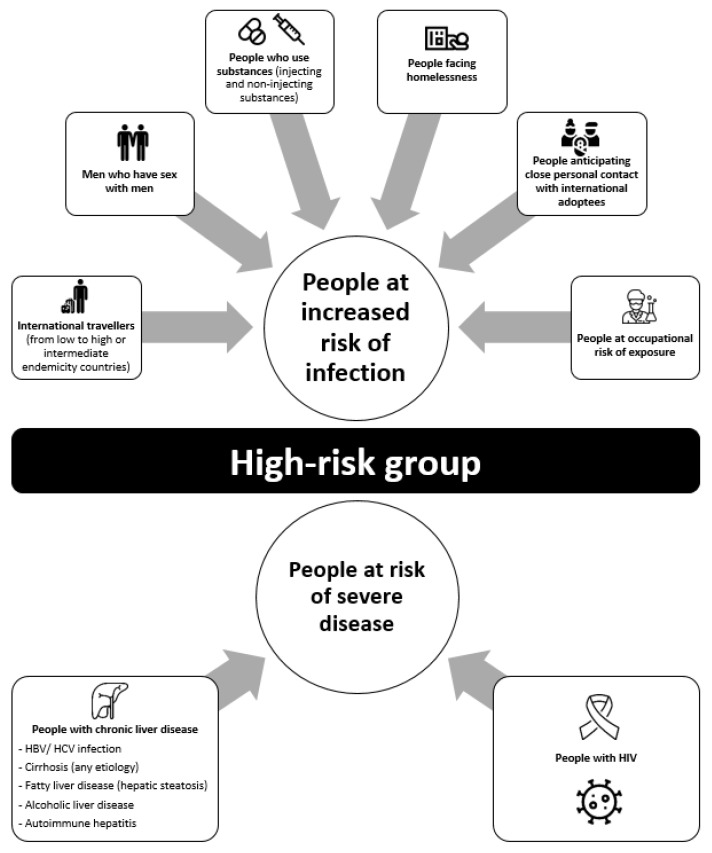
The hepatitis A virus (HAV) is a leading cause of acute viral hepatitis worldwide. It is transmitted mainly by direct contact with patients who have been infected or by ingesting contaminated water or food. The virus is endemic in low-income countries where sanitary and sociodemographic conditions are poor. Paradoxically, improving sanitary conditions in these countries, which reduces the incidence of HAV infections, can lead to more severe disease in susceptible adults. The populations of developed countries are highly susceptible to HAV, and large outbreaks can occur when the virus is spread by globalization and by increased travel and movement of foodstuffs. Most of these outbreaks occur among high-risk groups: travellers, men who have sex with men, people who use substances, and people facing homelessness. Hepatitis A infections can be prevented by vaccination; safe and effective vaccines have been available for decades. Several countries have successfully introduced universal mass vaccination for children, but high-risk groups in high-income countries remain insufficiently protected. The development of HAV antivirals may be important to control HAV outbreaks in developed countries where a universal vaccination programme is not recommended.
Keywords: epidemiology; hepatitis A; high-risk groups; homelessness; men who have sex with men; people who use substances; vaccination.
Conflict of interest statement
The authors declare no conflict of interest.
Figures
References
Publication types
MeSH terms
Substances
LinkOut - more resources
Full Text Sources
Medical
