Review
. 2021 Sep 23;13(10):1908.
doi: 10.3390/v13101908.

Evolutionary Dynamics and Epidemiology of Endemic and Emerging Coronaviruses in Humans, Domestic Animals, and Wildlife

Affiliations
Review

Evolutionary Dynamics and Epidemiology of Endemic and Emerging Coronaviruses in Humans, Domestic Animals, and Wildlife

Ariful Islam et al. Viruses. .

Abstract

Diverse coronavirus (CoV) strains can infect both humans and animals and produce various diseases. CoVs have caused three epidemics and pandemics in the last two decades, and caused a severe impact on public health and the global economy. Therefore, it is of utmost importance to understand the emergence and evolution of endemic and emerging CoV diversity in humans and animals. For diverse bird species, the Infectious Bronchitis Virus is a significant one, whereas feline enteric and canine coronavirus, recombined to produce feline infectious peritonitis virus, infects wild cats. Bovine and canine CoVs have ancestral relationships, while porcine CoVs, especially SADS-CoV, can cross species barriers. Bats are considered as the natural host of diverse strains of alpha and beta coronaviruses. Though MERS-CoV is significant for both camels and humans, humans are nonetheless affected more severely. MERS-CoV cases have been reported mainly in the Arabic peninsula since 2012. To date, seven CoV strains have infected humans, all descended from animals. The severe acute respiratory syndrome coronaviruses (SARS-CoV and SARS-CoV-2) are presumed to be originated in Rhinolopoid bats that severely infect humans with spillover to multiple domestic and wild animals. Emerging alpha and delta variants of SARS-CoV-2 were detected in pets and wild animals. Still, the intermediate hosts and all susceptible animal species remain unknown. SARS-CoV-2 might not be the last CoV to cross the species barrier. Hence, we recommend developing a universal CoV vaccine for humans so that any future outbreak can be prevented effectively. Furthermore, a One Health approach coronavirus surveillance should be implemented at human-animal interfaces to detect novel coronaviruses before emerging to humans and to prevent future epidemics and pandemics.

Keywords: MERS-CoV; Rhinolopoid; SARS-CoV; SARS-CoV-2; bats; surveillance; zoonotic.


Conflict of interest statement

The authors declare no conflict of interest.

Figures
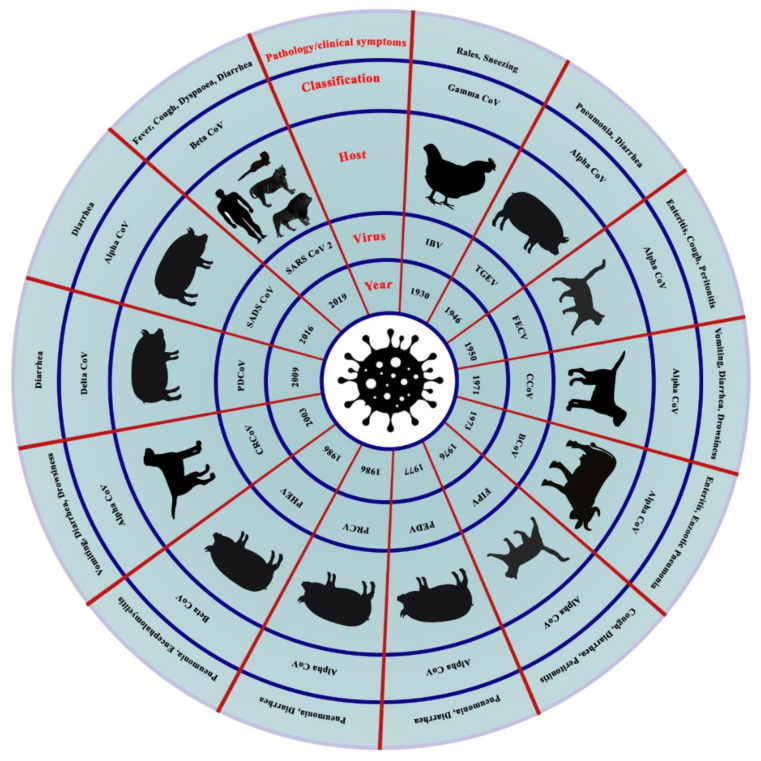
Figure 1
Figure 1
The emergence of animal coronaviruses in the world. The circles (inner to outer) indicate- the year of emergence, virus’s name, host species, the genus of coronavirus, and primary clinical signs. IBV: Infectious Bronchitis Virus; TGEV: porcine transmissible gastroenteritis coronavirus; FECV: Feline Enteric Coronavirus; CCoV: Canine Coronavirus; BCoV: Bovine Coronavirus; FIPV: Feline Infectious Peritonitis Virus; PEDV: Porcine Epidemic Diarrhea Virus; PRCV: Porcine Respiratory Coronavirus; PHEV: Porcine Hemagglutinating Encephalomyelitis Virus; CRCoV: Canine Respiratory Coronavirus; PDCoV: Porcine Delta Coronavirus; SADS: Swine Acute Diarrhea Syndrome Virus; and SARS: Severe Acute Respiratory Syndrome Coronavirus.
Figure 2
Figure 2
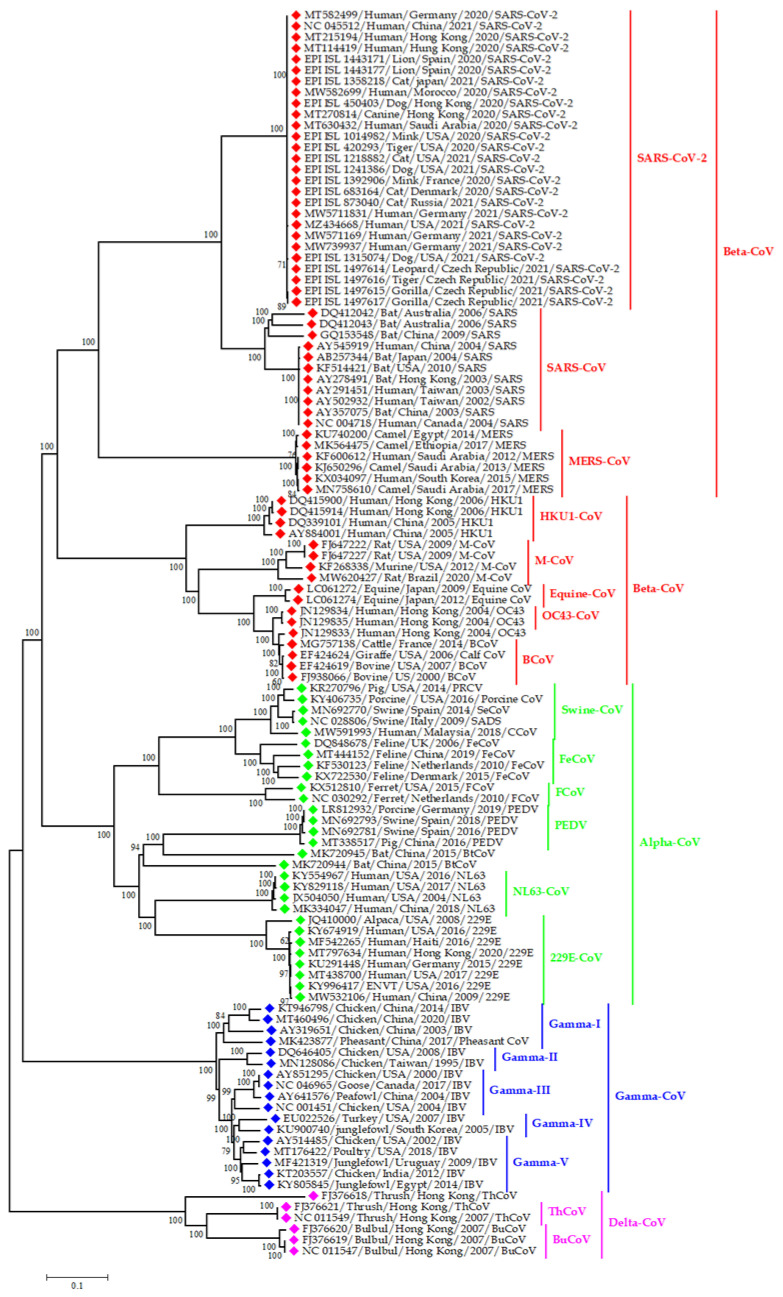
Phylogenetic analysis of CoV sequences from both animals and humans; green, red, blue, and pink color denotes alpha, beta, gamma, and delta coronaviruses, respectively. We constructed the phylogenetic tree representing the evolutionary relationship between all types of reported CoV in domestic animals, wildlife and human. This coronavirus family tree covering all four CoV genera; Alpha, beta, gamma and delta CoV. Both alpha and beta CoV genera segregated in various coronavirus strain like SARS-CoV, SARS-CoV-2, NL63, MERS-CoV, HKU1-CoV, OC43 etc. From this point of view, we have taken the various representative animals and human originated CoV sequences based on time and space for understanding the evolutionary relationship among all of the genera.
Figure 3
Figure 3
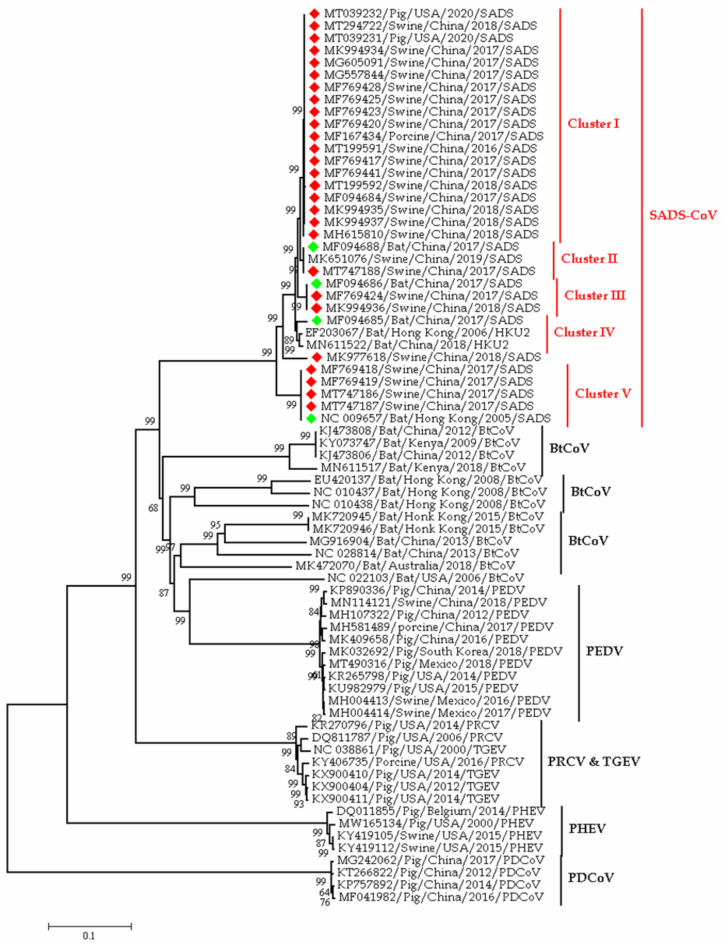
Phylogeny of swine coronaviruses detected to date in the world; the red blocks denote sequences from pigs, whereas green blocks denote sequences from bats. This phylogenetic tree representing the evolutionary relationship between representatives Alpha CoV originated from Swine host. The main purpose was to explain the evolutionally origin of SADS-CoV from Pig and Rhinolopoid bats. From this point of view, we have taken various representative- Bat and Pig originated SADS-CoV sequences on the basis of time and space. Besides, we also know that pig is infecting multiple types of alpha and beta coronaviruses like PEDV, PRCV, TGEV, PHEV and PDCoV. So, we selected representative sequences of swine infecting different types of coronaviruses based on different time and space to understand the phylogenetic relatedness of diverse swine coronaviruses.
Figure 4
Figure 4
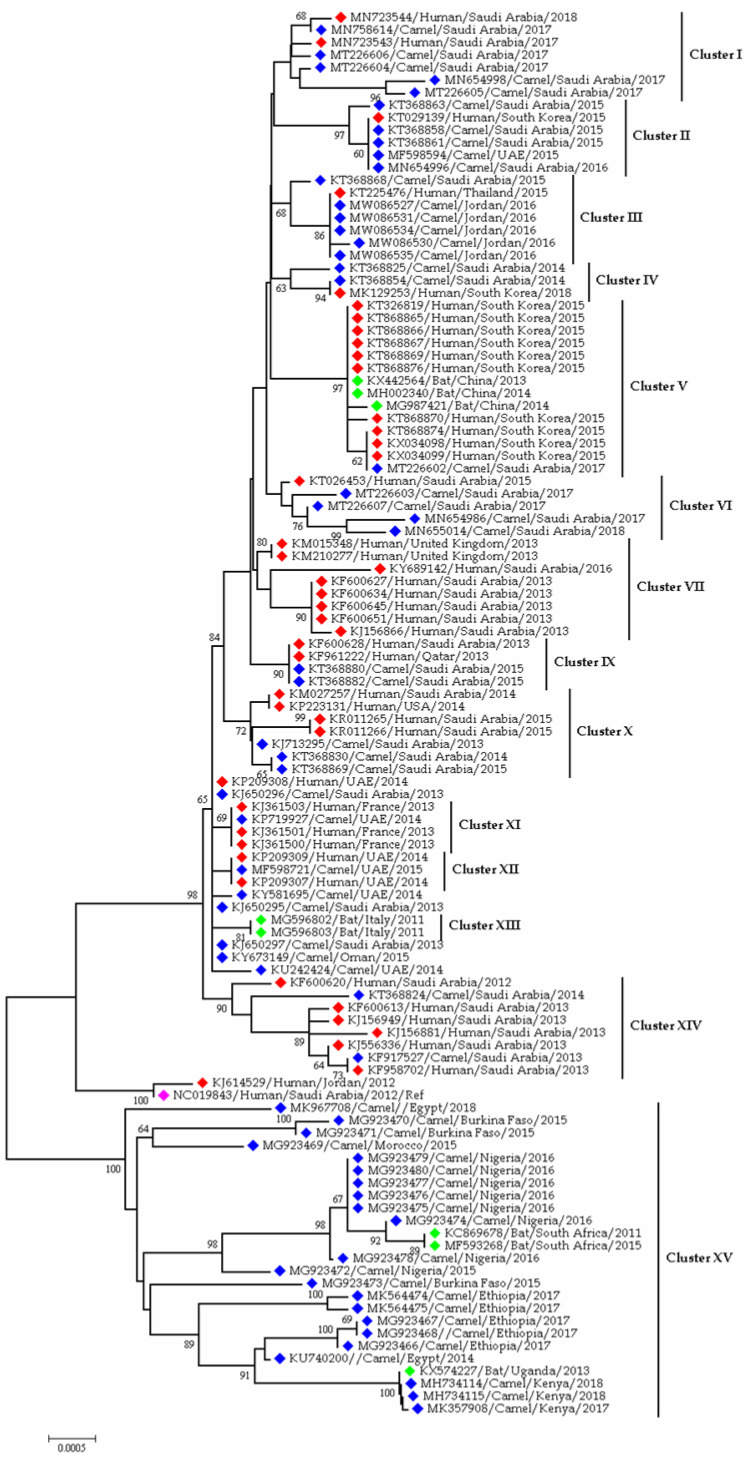
Phylogenetic analysis of MERS CoV sequences from human and camel; the red blocks denote human sequences, whereas blue blocks denote camel sequences; the green blocks denote bat virus sequences; and the magenta block refers to the reference sequence from humans of Saudi Arabia. This phylogenetic tree representing the evolutionary relationship of MERS-CoV sequences in human, camel and bat beta coronaviruses. Previous studies reported the evidence of camel to camel; camel to human and human to human spreading nature of the MERS-CoV. Therefore, we selected Gene bank deposited bat coronavirus sequences and MERS-CoV sequences from human and camels to understand the phylogenetic relatedness of MERS-CoV in human, camels and bats. From this point of view, we have picturized the bat- dromedary camel-human interfacial evolutionary relationship of MERS-CoV based on time and space.
Figure 5
Figure 5
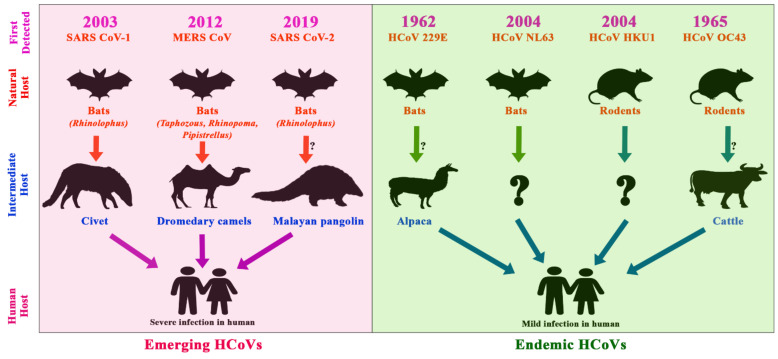
Timeline of the emergence of human CoVs, their reservoirs, and intermediate hosts; the pink shaded area depicts emerging coronaviruses, whereas the green shaded area depicts the endemic coronaviruses. The arrows show the transmission route of the viruses from animal to human through intermediate hosts.
Figure 6
Figure 6
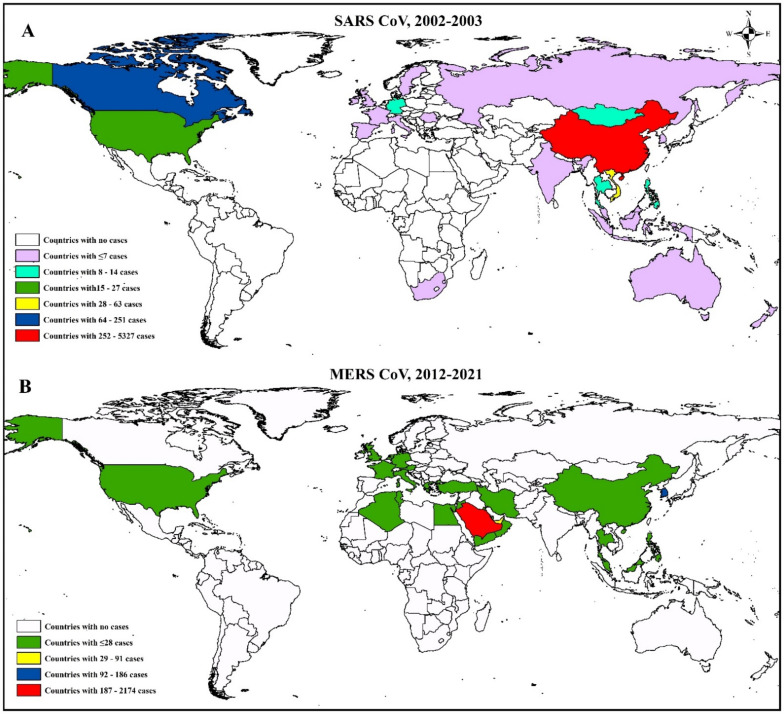
Geospatial distribution of SARS-CoV and MERS-CoV globally; A. SARS-CoV and B. MERS-CoV case distribution globally; the marked red areas have the highest number of cases.
Figure 7
Figure 7
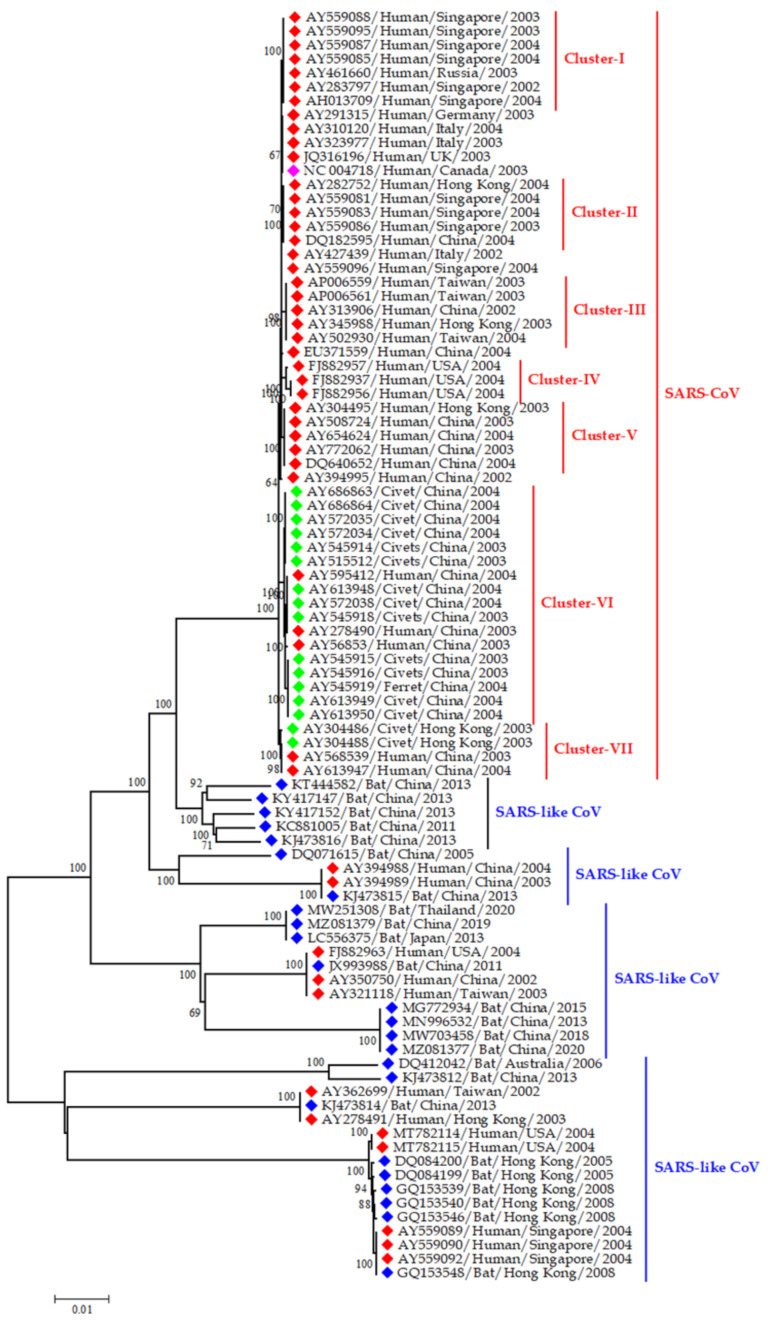
Phylogenetic analysis of SARS-CoVs from humans and SARS-like CoVs from animals; the red blocks indicate human strains; the blue blocks indicate bat strains, and the green blocks indicate sequences from civet and ferret. The pink block denotes the reference SARS sequence (NC004718) from the human. This phylogenetic tree representing the evolutionary relationship of representatives both SARS-CoV and SARS-CoV like viruses from human and animals like civet, and horse shoe bats. On the basis of time and space we selected the representative sequence of SARS-CoV and SARS-CoV like viruses in our phylogenetic analysis. The main purpose was to explain the evolutionally origin SARS-CoV and SARS-CoV like virus from human, civet and or bat.
Figure 8
Figure 8
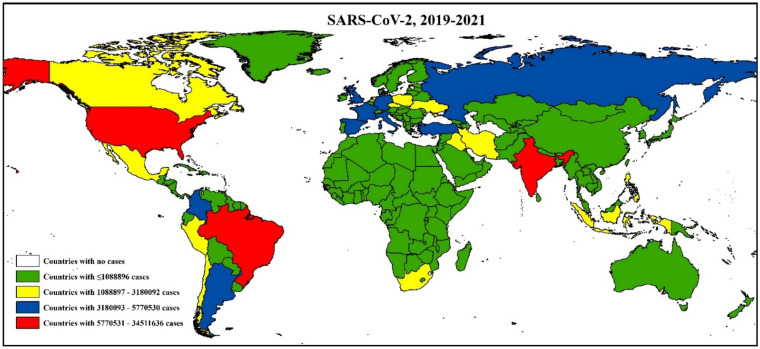
Distribution of SARS-CoV-2 cases around the world. The white areas have no cases, whereas the red marked regions have the highest number of cases.

References

    1. Islam A., Sayeed M.A., Rahman M.K., Ferdous J., Shano S., Choudhury S.D., Hassan M.M. Spatiotemporal patterns and trends of community transmission of the pandemic COVID-19 in South Asia: Bangladesh as a case study. Biosaf. Health. 2020;3:39–49. doi: 10.1016/j.bsheal.2020.09.006. - DOI - PMC - PubMed
    1. WHO Virtual Press Conference on COVID-19—11 March 2020. 2020. [(accessed on 8 August 2021)]. Available online: https://www.who.int/docs/default-source/coronaviruse/transcripts/who-aud....
    1. Arora P., Jafferany M., Lotti T., Sadoughifar R., Goldust M. Learning from history: Coronavirus outbreaks in the past. Dermatol. Ther. 2020;33:e13343. doi: 10.1111/dth.13343. - DOI - PubMed
    1. Fehr A.R., Perlman S. Coronaviruses. Springer; Berlin/Heidelberg, Germany: 2015. Coronaviruses: An overview of their replication and pathogenesis; pp. 1–23. - PMC - PubMed
    1. Woo P.C., Lau S.K., Lam C.S., Lau C.C., Tsang A.K., Lau J.H., Bai R., Teng J.L., Tsang C.C., Wang M. Discovery of seven novel Mammalian and avian coronaviruses in the genus deltacoronavirus supports bat coronaviruses as the gene source of alphacoronavirus and betacoronavirus and avian coronaviruses as the gene source of gammacoronavirus and deltacoronavirus. J. Virol. 2012;86:3995–4008. - PMC - PubMed

Publication types

MeSH terms

LinkOut - more resources