. 2021 Oct 26;19(10):e3001417.
doi: 10.1371/journal.pbio.3001417. eCollection 2021 Oct.

The microbiome impacts host hybridization and speciation

Affiliations

The microbiome impacts host hybridization and speciation

Asia K Miller et al. PLoS Biol. .

Abstract

Microbial symbiosis and speciation profoundly shape the composition of life's biodiversity. Despite the enormous contributions of these two fields to the foundations of modern biology, there is a vast and exciting frontier ahead for research, literature, and conferences to address the neglected prospects of merging their study. Here, we survey and synthesize exemplar cases of how endosymbionts and microbial communities affect animal hybridization and vice versa. We conclude that though the number of case studies remain nascent, the wide-ranging types of animals, microbes, and isolation barriers impacted by hybridization will likely prove general and a major new phase of study that includes the microbiome as part of the functional whole contributing to reproductive isolation. Though microorganisms were proposed to impact animal speciation a century ago, the weight of the evidence supporting this view has now reached a tipping point.


Conflict of interest statement

The authors have declared that no competing interests exist.

Figures
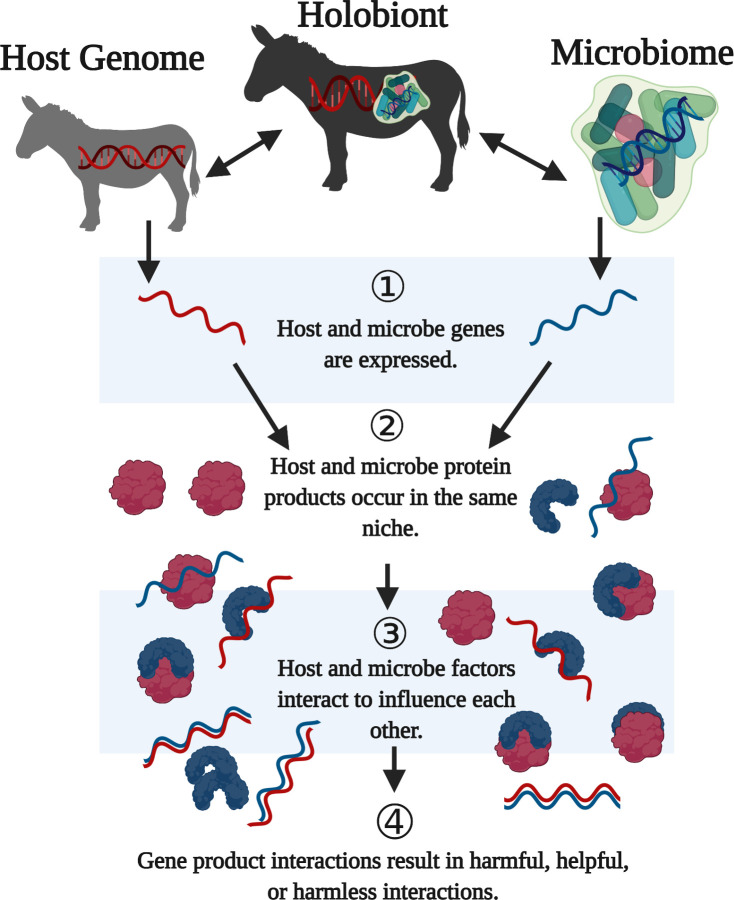
Fig 1
Fig 1. Host of interactions.
Diagram depicts the two main parts of the holobiont—the host and associated microbial community. (1) Each of these components encode transcripts (2) and proteins (3) that, in turn, can function alone or together either intragenomically or intergenomically. (4) Helpful, harmful, and harmless phenotypes may occur, and the net outcome of these interactions varies with the hologenotype of the host background and presence of other microbes. Created with BioRender.com.
Fig 2
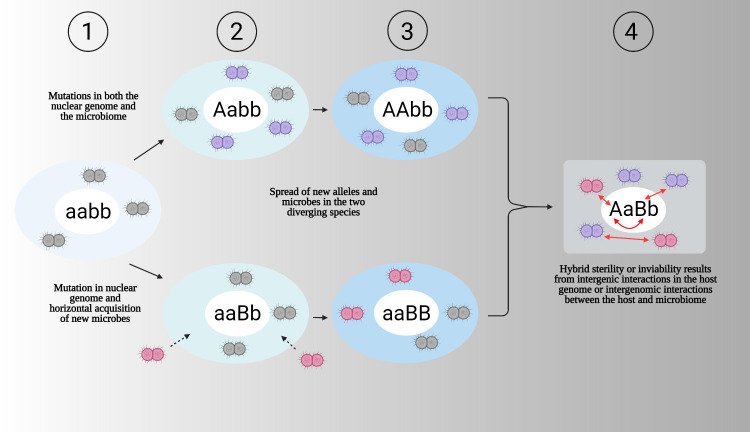
Fig 2. The consequences of changes in the host genome and microbiome on hybrid inferiority.
(1) The ancestral species nuclear genome (inner white circle) and microbiome (outer blue circle) can change by descent with mutation in both or horizontal transfer and loss of microbes over time. (2) After splitting into 2 populations, independent, nuclear mutations accrue in hosts under a standard genetic model of hybrid incompatibility in which separate loci aa and bb mutate and diverge in the 2 populations to AA and BB. Additionally, changes in the microbiome occur due to mutations and horizontal transfer of new microbes. (3) The microbiome can be further influenced by loss of microbial members. (4) Over evolutionary time, the 2 new holobiont species sufficiently diverged so that they produce sterile or inviable hybrids because of either negative intragenomic (A nuclear locus negatively interacts with B nuclear locus) and intergenomic interactions between different microbes or between members of the microbiome and the host. Created with BioRender.com.
Fig 3
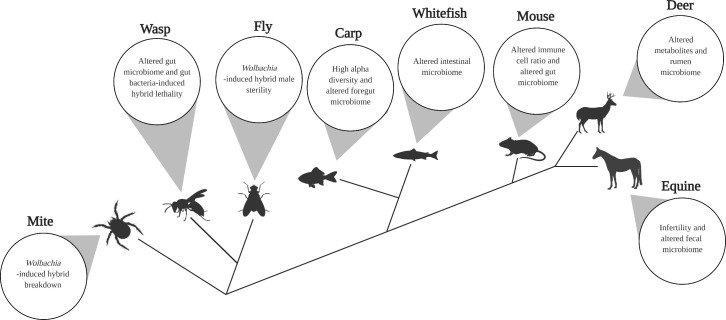
Fig 3. Microbiome alterations occur in diverse hybridizations across animals.
Illustrative evolutionary tree depicting examples in which microbial community changes occur in animal hybrids and sometimes impact postmating reproductive isolation. Created with BioRender.com.

References

    1. Reyes A, Haynes M, Hanson N, Angly FE, Heath AC, Rohwer F, et al. Viruses in the faecal microbiota of monozygotic twins and their mothers. Nature. 2010;466:334–8. doi: 10.1038/nature09199 - DOI - PMC - PubMed
    1. Eckburg PB, Bik EM, Bernstein CN, Purdom E, Dethlefsen L, Sargent M, et al. Microbiology: Diversity of the human intestinal microbial flora. Science. 2005;308:1635–8. doi: 10.1126/science.1110591 - DOI - PMC - PubMed
    1. Nash AK, Auchtung TA, Wong MC, Smith DP, Gesell JR, Ross MC, et al. The gut mycobiome of the Human Microbiome Project healthy cohort. Microbiome. 2017;5:153. doi: 10.1186/s40168-017-0373-4 - DOI - PMC - PubMed
    1. Hoffmann C, Dollive S, Grunberg S, Chen J, Li H, Wu GD, et al. Archaea and fungi of the human gut microbiome: correlations with diet and bacterial residents. Pan C, editor. PLoS ONE. 2013;8:e66019. doi: 10.1371/journal.pone.0066019 - DOI - PMC - PubMed
    1. Ursell LK, Clemente JC, Rideout JR, Gevers D, Caporaso JG, Knight R. The interpersonal and intrapersonal diversity of human-associated microbiota in key body sites. J Allergy Clin Immunol. 2012;129:1204–8. doi: 10.1016/j.jaci.2012.03.010 - DOI - PMC - PubMed

Publication types