


Epidemic versus economic performances of the COVID-19 lockdown: A big data driven analysis
- PMID: 34703071
- PMCID: PMC8531026
- DOI: 10.1016/j.cities.2021.103502
Epidemic versus economic performances of the COVID-19 lockdown: A big data driven analysis
Abstract
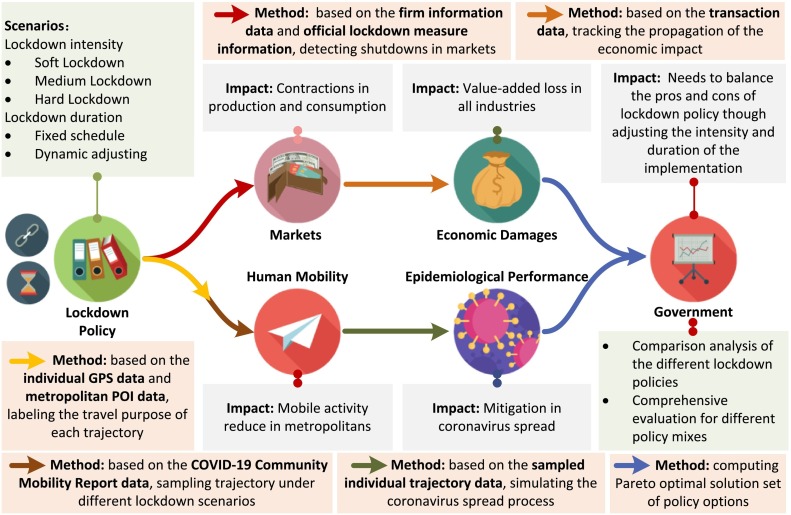
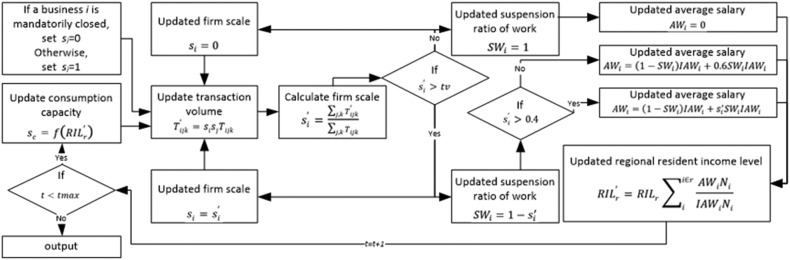
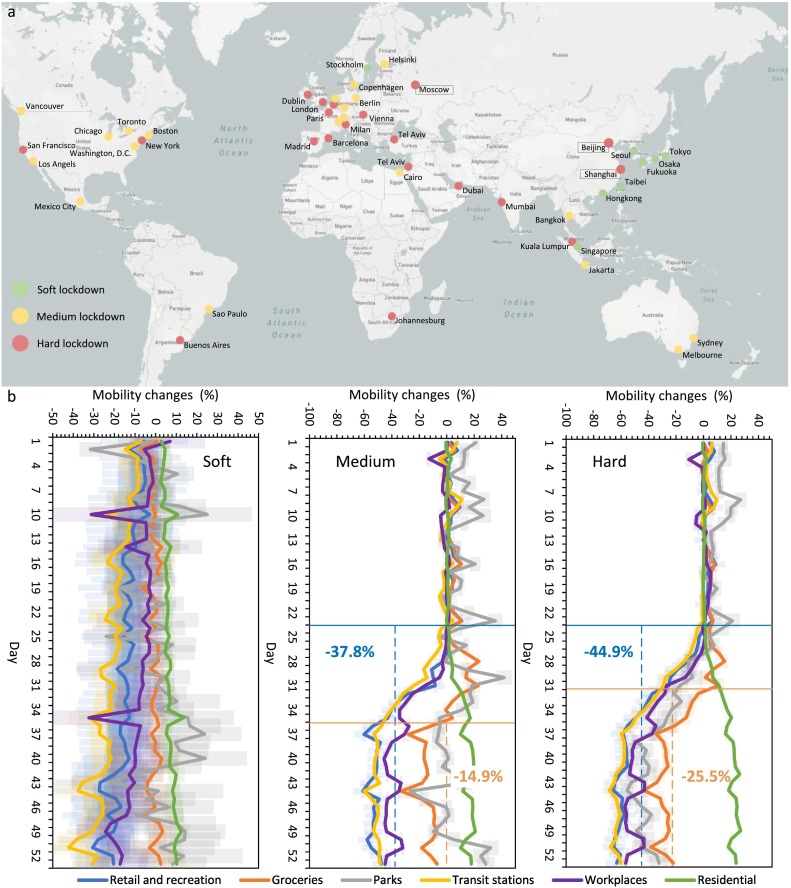
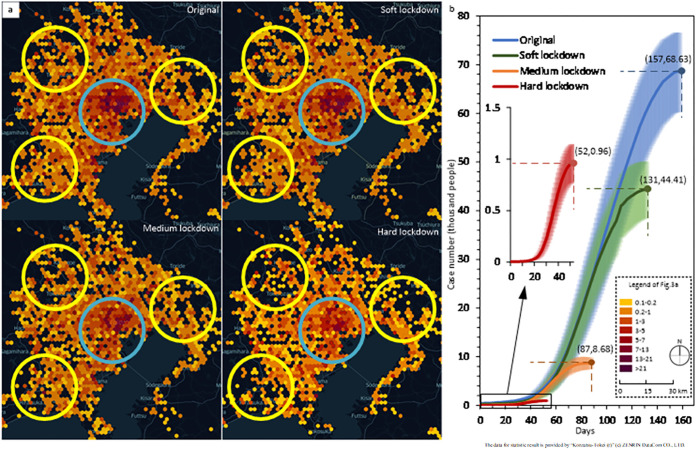
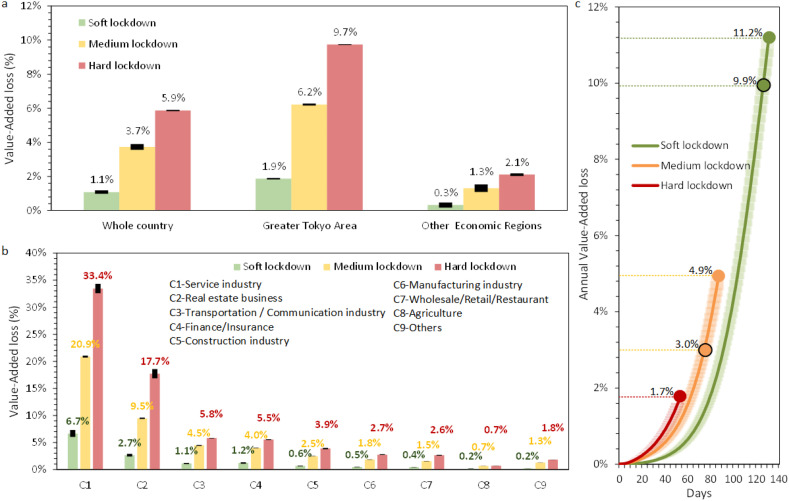
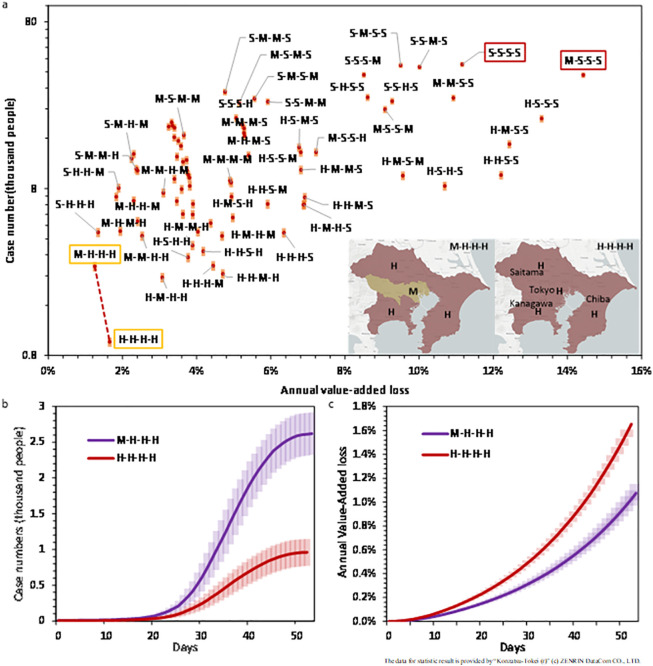
Lockdown measures have been a "panacea" for pandemic control but also a violent "poison" for economies. Lockdown policies strongly restrict human mobility but mobility reduce does harm to economics. Governments meet a thorny problem in balancing the pros and cons of lockdown policies, but lack comprehensive and quantified guides. Based on millions of financial transaction records, and billions of mobility data, we tracked spatio-temporal business networks and human daily mobility, then proposed a high-resolution two-sided framework to assess the epidemiological performance and economic damage of different lockdown policies. We found that the pandemic duration under the strictest lockdown is less about two months than that under the lightest lockdown, which makes the strictest lockdown characterize both epidemiologically and economically efficient. Moreover, based on the two-sided model, we explored the spatial lockdown strategy. We argue that cutting off intercity commuting is significant in both epidemiological and economical aspects, and finally helped governments figure out the Pareto optimal solution set of lockdown strategy.
Keywords: COVID-19; Economic damage; Epidemiological performance; Metropolitan lockdown.
© 2021 Published by Elsevier Ltd.
Conflict of interest statement
The authors declare that they have no known competing financial interests or personal relationships that could have appeared to influence the work reported in this paper.
Figures
References
-
- Alvarez F. 2020. A simple planning problem for COVID-19 lockdown a simple planning problem for.
-
- Barro R.J., Ursúa J.F., Weng J. National Bureau of Economic Research; 2020. The coronavirus and the great influenza pandemic: Lessons from the "spanish flu" for the coronavirus's potential effects on mortality and economic activity.
-
- Barton C.M., Alberti M., Ames D., Atkinson J.-A., Bales J., Burke E., Chen M., Diallo S.Y., Earn D.J.D., Fath B. Call for transparency of COVID-19 models. Science. 2020;368(6490):482–483. - PubMed
-
- Bonaccorsi G., Pierri F., Cinelli M., Flori A., Galeazzi A., Porcelli F., Schmidt A.L., Valensise C.M., Scala A., Quattrociocchi W., Pammolli F. Economic and social consequences of human mobility restrictions under COVID-19. Proc. Natl. Acad. Sci. U. S. A. 2020;117(27):15530–15535. doi: 10.1073/pnas.2007658117. - DOI - PMC - PubMed
-
- Bonato P., Cintia P., Fabbri F., Fadda D., Giannotti F., Lopalco P.L., Mazzilli S., Nanni M., Pappalardo L., Pedreschi D. Mobile phone data analytics against the COVID-19 epidemics in Italy: Flow diversity and local job markets during the national lockdown. ArXiv Preprint. 2020 ArXiv:2004.11278.
LinkOut - more resources
Full Text Sources
Miscellaneous