


Structural and compositional diversity in the kainate receptor family
- PMID: 34706237
- PMCID: PMC8581553
- DOI: 10.1016/j.celrep.2021.109891
Structural and compositional diversity in the kainate receptor family
Abstract
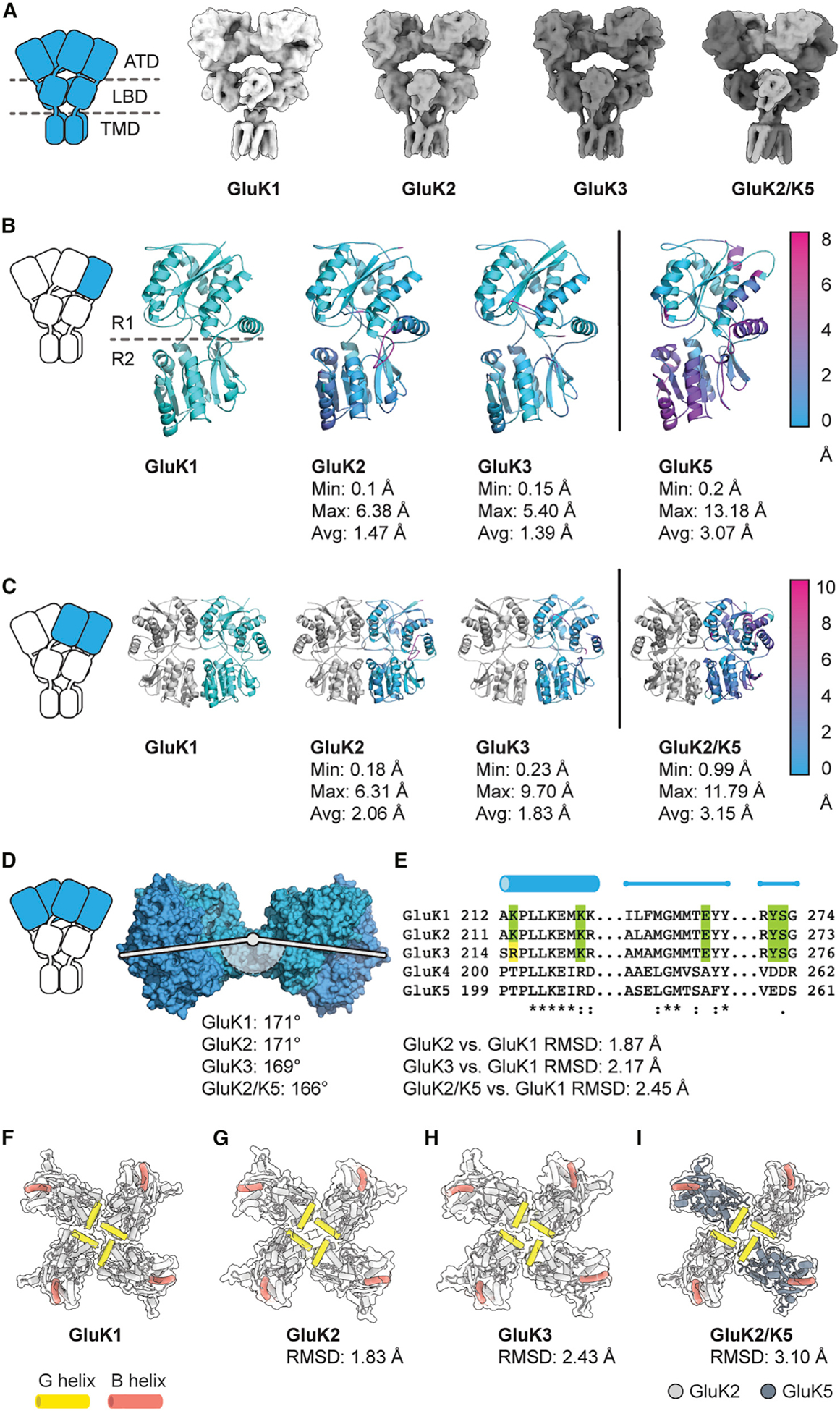
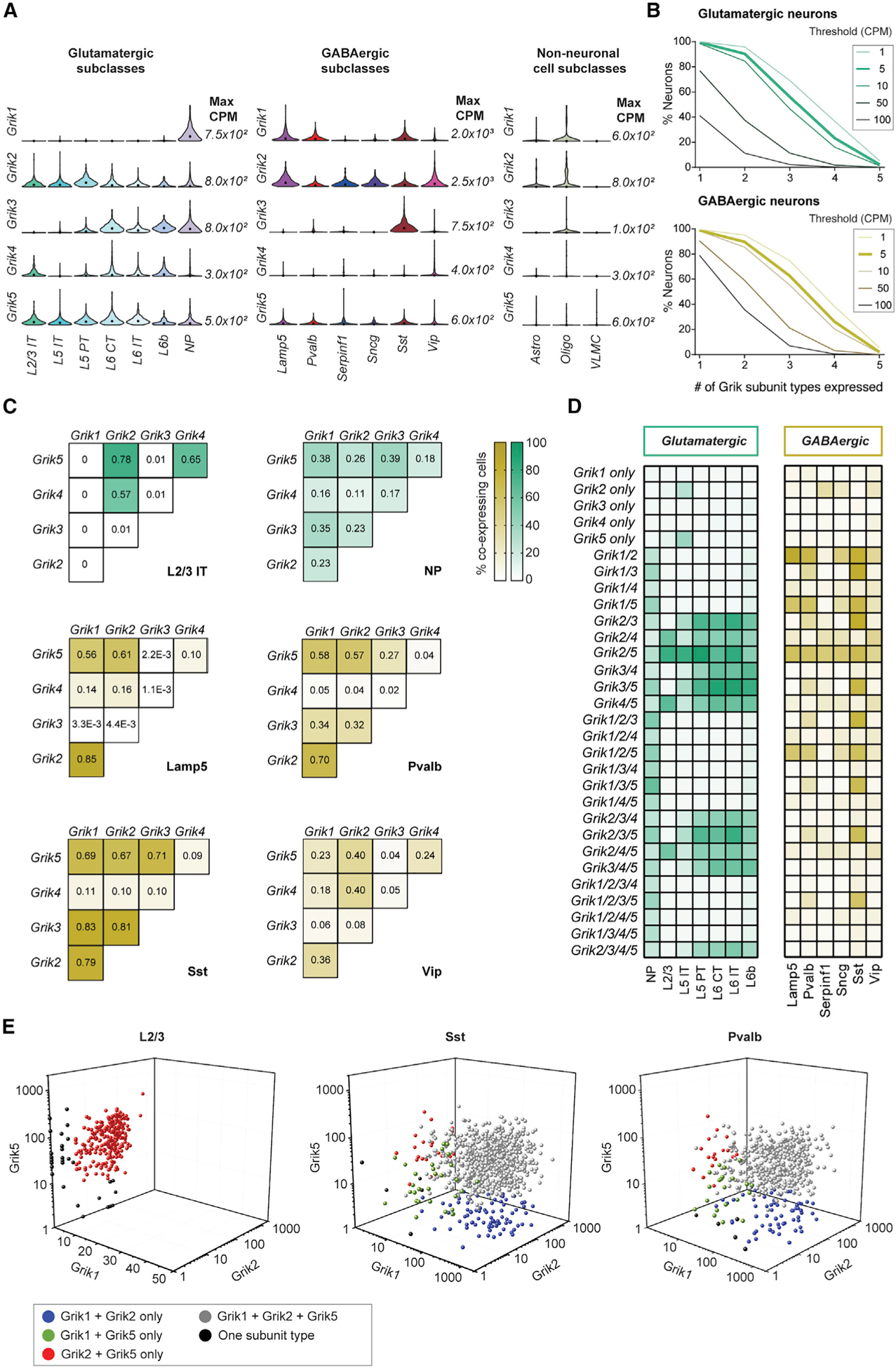
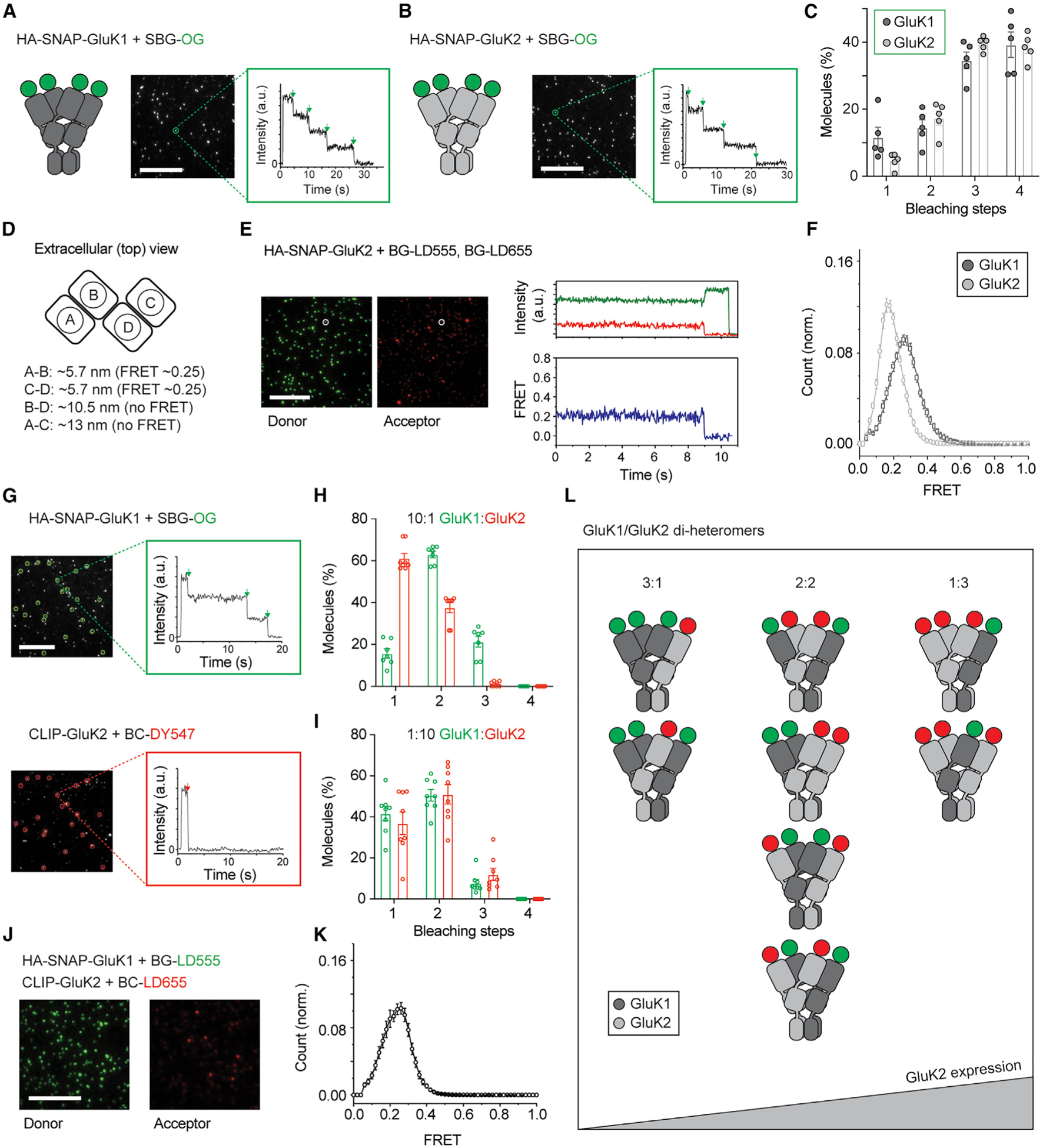
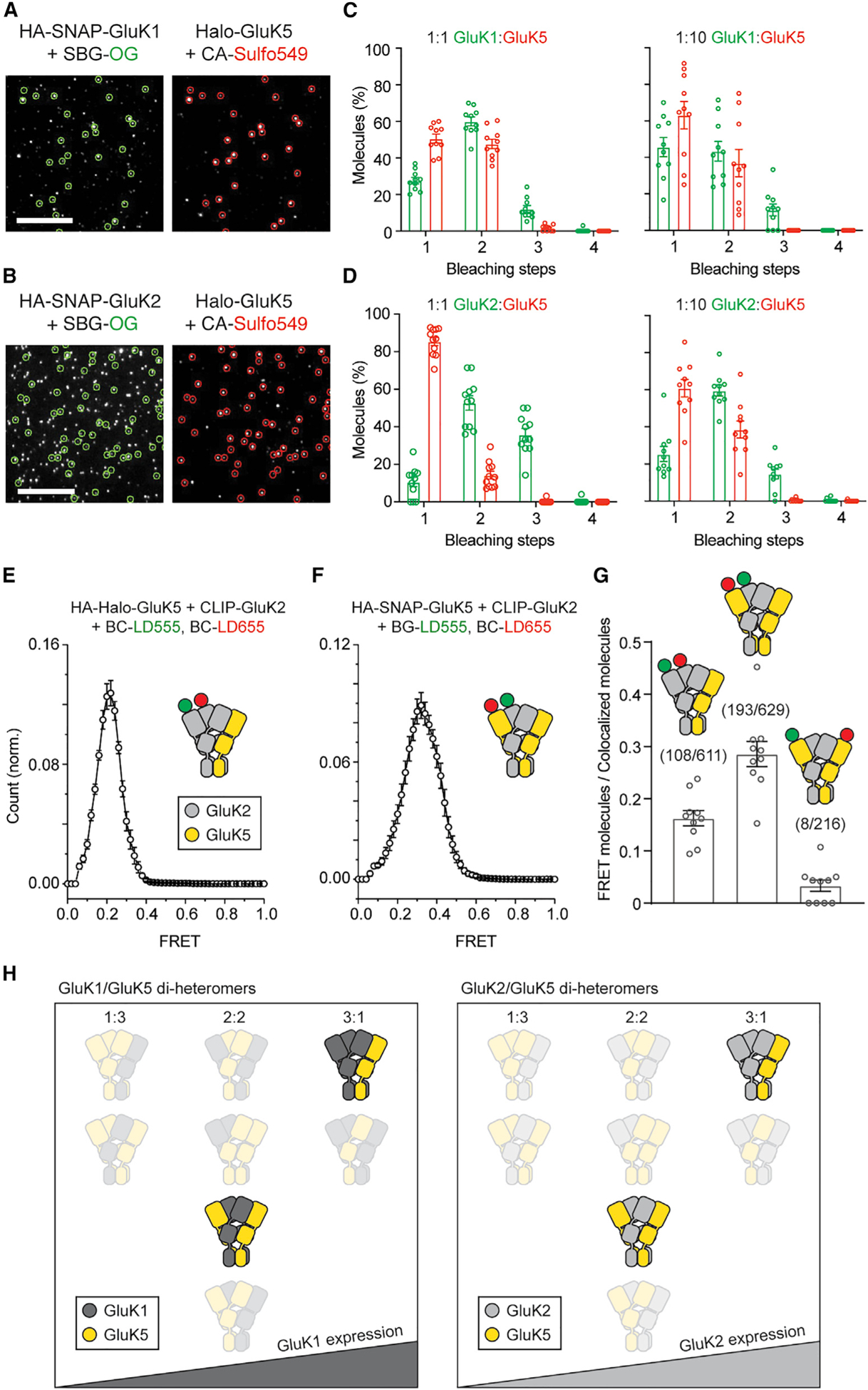
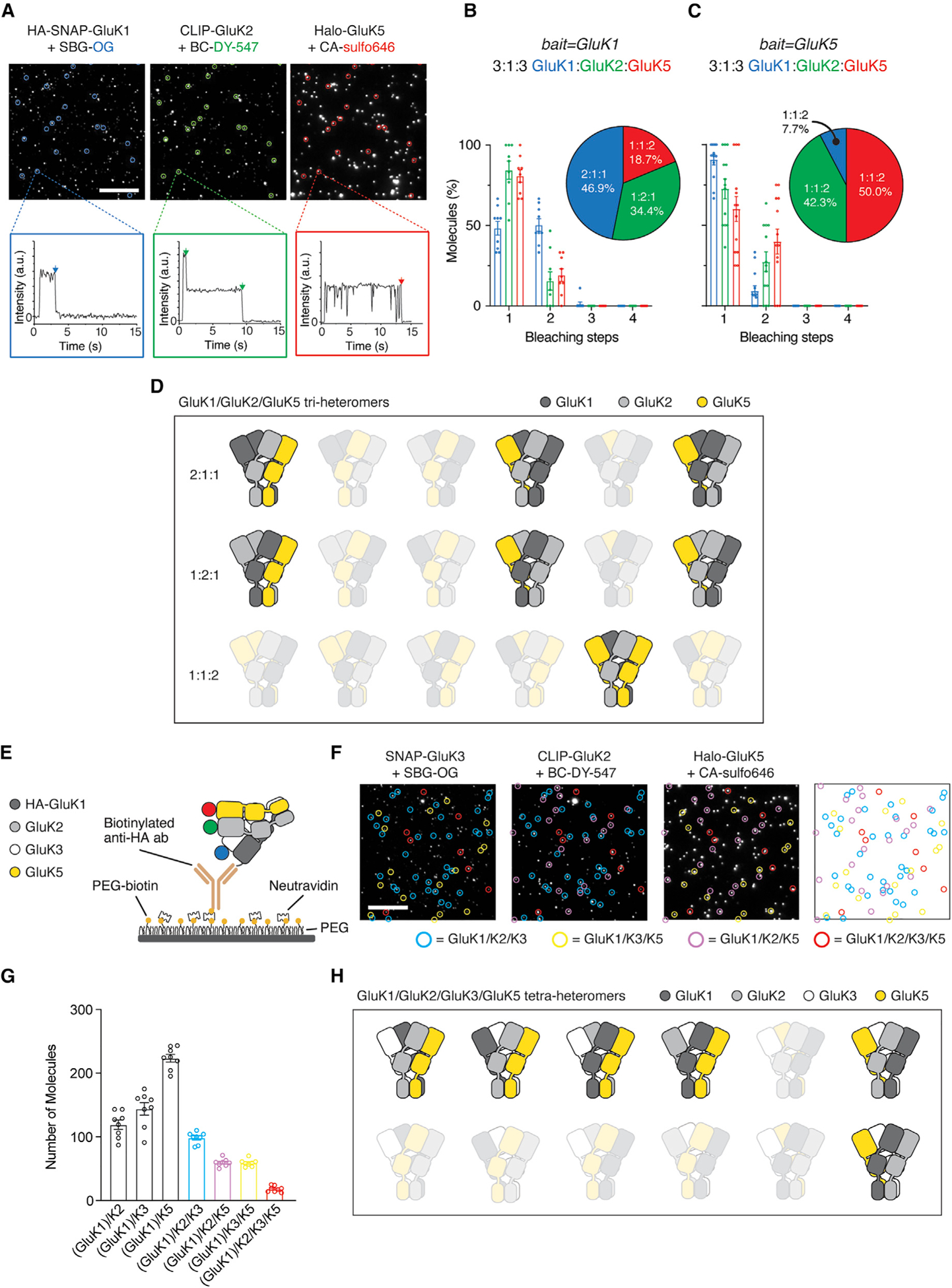
The kainate receptors (KARs) are members of the ionotropic glutamate receptor family and assemble into tetramers from a pool of five subunit types (GluK1-5). Each subunit confers distinct functional properties to a receptor, but the compositional and stoichiometric diversity of KAR tetramers is not well understood. To address this, we first solve the structure of the GluK1 homomer, which enables a systematic assessment of structural compatibility among KAR subunits. Next, we analyze single-cell RNA sequencing data, which reveal extreme diversity in the combinations of two or more KAR subunits co-expressed within the same cell. We then investigate the composition of individual receptor complexes using single-molecule fluorescence techniques and find that di-heteromers assembled from GluK1, GluK2, or GluK3 can form with all possible stoichiometries, while GluK1/K5, GluK2/K5, and GluK3/K5 can form 3:1 or 2:2 complexes. Finally, using three-color single-molecule imaging, we discover that KARs can form tri- and tetra-heteromers.
Keywords: cryo-electron microscopy; iGluRs; kainate receptors; single-cell RNA sequencing; single-molecule Förster resonance energy transfer; single-molecule pull-down.
Copyright © 2021 The Author(s). Published by Elsevier Inc. All rights reserved.
Conflict of interest statement
Declaration of interests The authors declare no competing interests.
Figures
References
-
- Acosta-Ruiz A, Gutzeit VA, Skelly MJ, Meadows S, Lee J, Parekh P, Orr AG, Liston C, Pleil KE, Broichhagen J, and Levitz J (2020). Branched Photoswitchable Tethered Ligands Enable Ultra-efficient Optical Control and Detection of G Protein-Coupled Receptors In Vivo. Neuron 105, 446–463.e13. - PMC - PubMed
-
- Ayalon G, and Stern-Bach Y (2001). Functional assembly of AMPA and kainate receptors is mediated by several discrete protein-protein interactions. Neuron 31, 103–113. - PubMed
-
- Birke R, Ast J, Roosen DA, Mathes B, Roßmann K, Huhn C, Jones B, Lehmann M, Haucke V, Hodson DJ, et al. (2021). Sulfonated rhodamines as impermeable labelling substrates for cell surface protein visualization. bioRxiv. 10.1101/2021.03.16.435698. - DOI
Publication types
MeSH terms
Substances
Grants and funding
LinkOut - more resources
Full Text Sources
Research Materials
Miscellaneous
