Sit-to-Stand Power Across the Lifespan: A Cross-Sectional Analysis
- PMID: 34706338
- PMCID: PMC10209912
- DOI: 10.1123/japa.2021-0066
Sit-to-Stand Power Across the Lifespan: A Cross-Sectional Analysis
Abstract
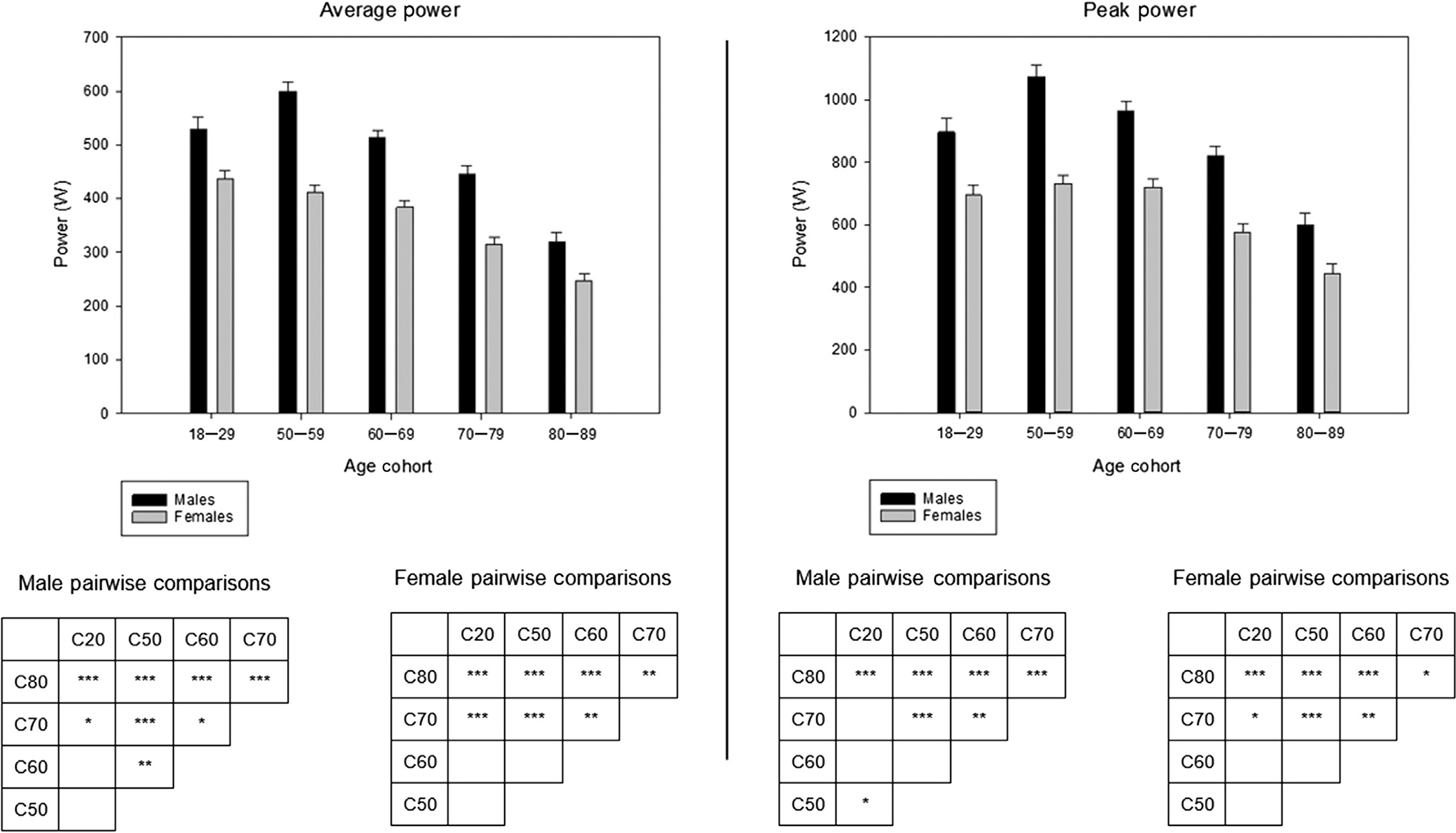
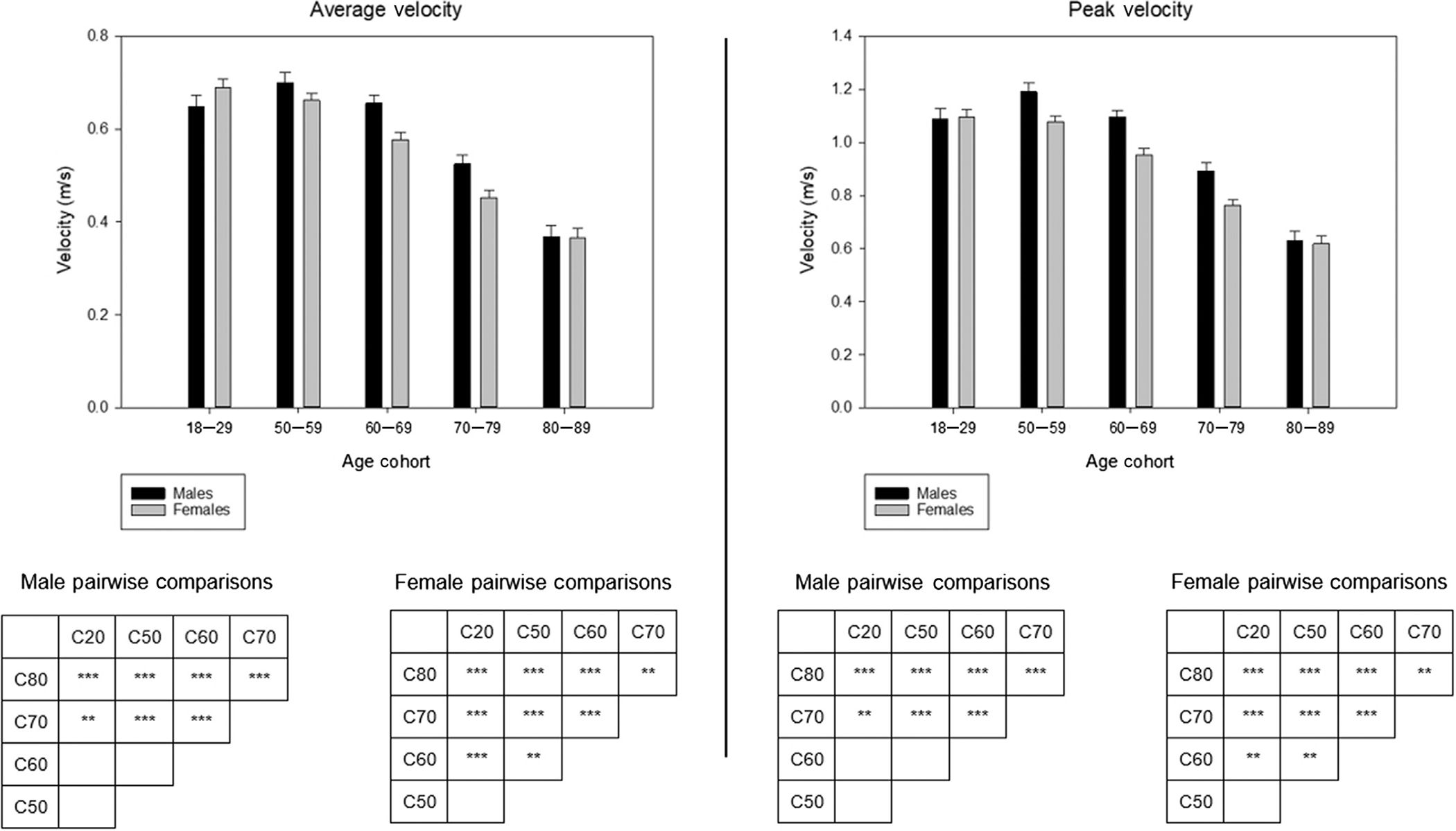
Lower-body power measured by a linear position transducer during the sit-to-stand (STS) movement declines with age and may be a predictor of physical disability in older adults. The purpose of this study was to establish normative data for STS power across the lifespan and to determine if differences exist between age cohorts, sexes, and age cohort-sex subgroups. Adults (N = 557) aged 18-89 were divided into five age cohorts and performed the STS connected to a linear position transducer, which calculated power and velocity during the movement. Significantly lower (p < .01) velocity was observed in a younger age cohort in females than males, whereas males saw a significant average power decrement (p < .01) in a younger age cohort than females. STS power norms give clinicians a metric predicting physical disability and may be of particular interest to males as their power production begins to decline at an earlier age.
Keywords: ADL-specific power; activities of daily living; linear position transducer; normative data; physical disability.
Figures

References
-
- Administration for Community Living. (2018). 2018 profile of older Americans.
-
- Alcazar J, Aagaard P, Haddock B, Kamper RS, Hansen SK, Prescott E, Alegre LM, Frandsen U, & Suetta C (2020). Age- and sex-specific changes in lower-limb muscle power throughout the lifespan. The Journals of Gerontology, Series A: Biological Sciences and Medical Sciences, 75(7), 1369–1378. - PubMed
-
- Balachandran AT, Vigotsky AD, Quiles N, Mokkink LB, Belio MA, & Glenn JM (2020). Validity, reliability, and measurement error of a sit-to-stand power test in older adults: A pre-registered study. Experimental Gerontology, 145, 111202. - PubMed
MeSH terms
Grants and funding
LinkOut - more resources
Full Text Sources