. 2021 Oct;117(4):845-909.
doi: 10.36660/abc.20200266.

Brazilian Position Statement on the Use Of Multimodality Imaging in Cardio-Oncology - 2021

[Article in English, Portuguese]
Marcelo Dantas Tavares de Melo  1 Marcelo Goulart Paiva  2 Maria Verônica Câmara Santos  3 Carlos Eduardo Rochitte  4   5 Valéria de Melo Moreira  5 Mohamed Hassan Saleh  4   6 Simone Cristina Soares Brandão  7   8 Claudia Cosentino Gallafrio  9 Daniel Goldwasser  10   11   12 Eliza de Almeida Gripp  13   14 Rafael Bonafim Piveta  15 Tonnison Oliveira Silva  16   17 Thais Harada Campos Espirito Santo  18   19 Waldinai Pereira Ferreira  20 Vera Maria Cury Salemi  4 Sanderson A Cauduro  21 Silvio Henrique Barberato  22   23 Heloísa M Christovam Lopes  24 José Luiz Barros Pena  25 Heron Rhydan Saad Rached  26 Marcelo Haertel Miglioranza  27   28 Aurélio Carvalho Pinheiro  29 Bárbara Athayde Linhares Martins Vrandecic  30 Cecilia Beatriz Bittencourt Viana Cruz  4 César Higa Nomura  4   31 Fernanda Mello Erthal Cerbino  32   33 Isabela Bispo Santos da Silva Costa  34 Otavio Rizzi Coelho Filho  35 Adriano Camargo de Castro Carneiro  5 Ursula Maria Moreira Costa Burgos  36 Juliano Lara Fernandes  37   38 Marly Uellendahl  33   39 Eveline Barros Calado  40 Tiago Senra  6   31 Bruna Leal Assunção  34 Claudia Maria Vilas Freire  41   42 Cristiane Nunes Martins  30 Karen Saori Shiraishi Sawamura  5   14   43 Márcio Miranda Brito  44   45 Maria Fernanda Silva Jardim  46 Renata Junqueira Moll Bernardes  47 Tereza Cristina Diógenes  48 Lucas de Oliveira Vieira  49   50 Claudio Tinoco Mesquita  13   51   52 Rafael Willain Lopes  5 Elry Medeiros Vieira Segundo Neto  6 Letícia Rigo  53 Valeska Leite Siqueira Marin  54   55 Marcelo José Santos  56 Gabriel Blacher Grossman  57   58 Priscila Cestari Quagliato  6 Monica Luiza de Alcantara  59   60   61 José Aldo Ribeiro Teodoro  62 Ana Cristina Lopes Albricker  63 Fanilda Souto Barros  64 Salomon Israel do Amaral  65 Carmen Lúcia Lascasas Porto  66 Marcio Vinícius Lins Barros  67   68 Simone Nascimento Dos Santos  69   70 Armando Luís Cantisano  71 Ana Cláudia Gomes Pereira Petisco  6 José Eduardo Martins Barbosa  6 Orlando Carlos Glória Veloso  72 Salvador Spina  73 Ricardo Pignatelli  74   75 Ludhmilla Abrahão Hajjar  4   34 Roberto Kalil Filho  4   34 Marcelo Antônio Cartaxo Queiroga Lopes  76   77   78 Marcelo Luiz Campos Vieira  4   15 André Luiz Cerqueira Almeida  79   80
Affiliations

Brazilian Position Statement on the Use Of Multimodality Imaging in Cardio-Oncology - 2021

[Article in English, Portuguese]
Marcelo Dantas Tavares de Melo et al. Arq Bras Cardiol. 2021 Oct.
No abstract available


Figures
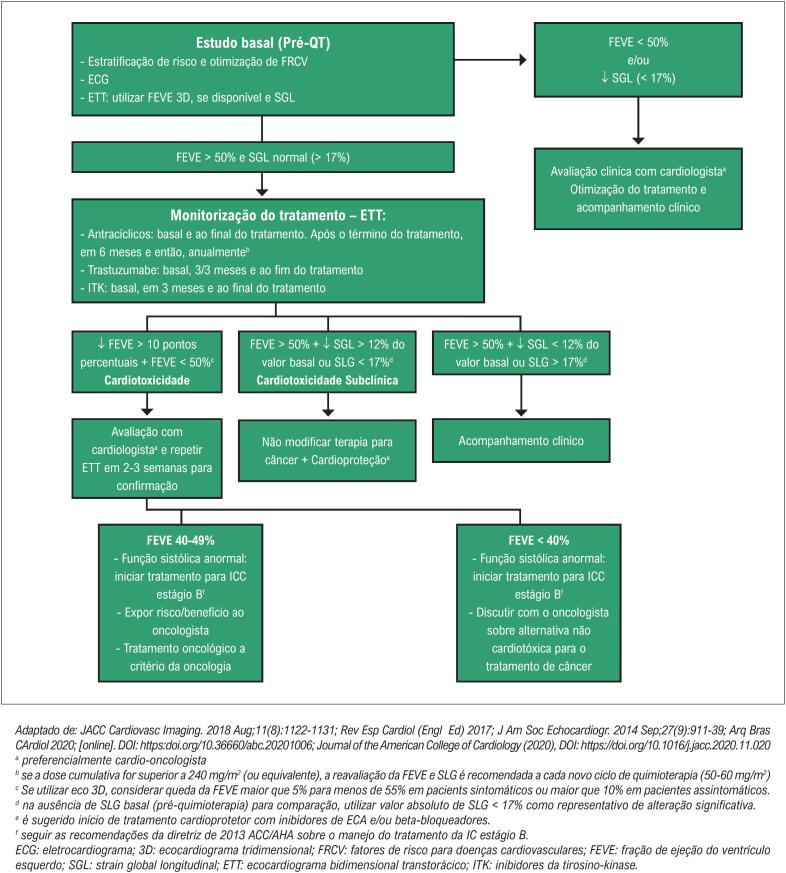
Figura 1
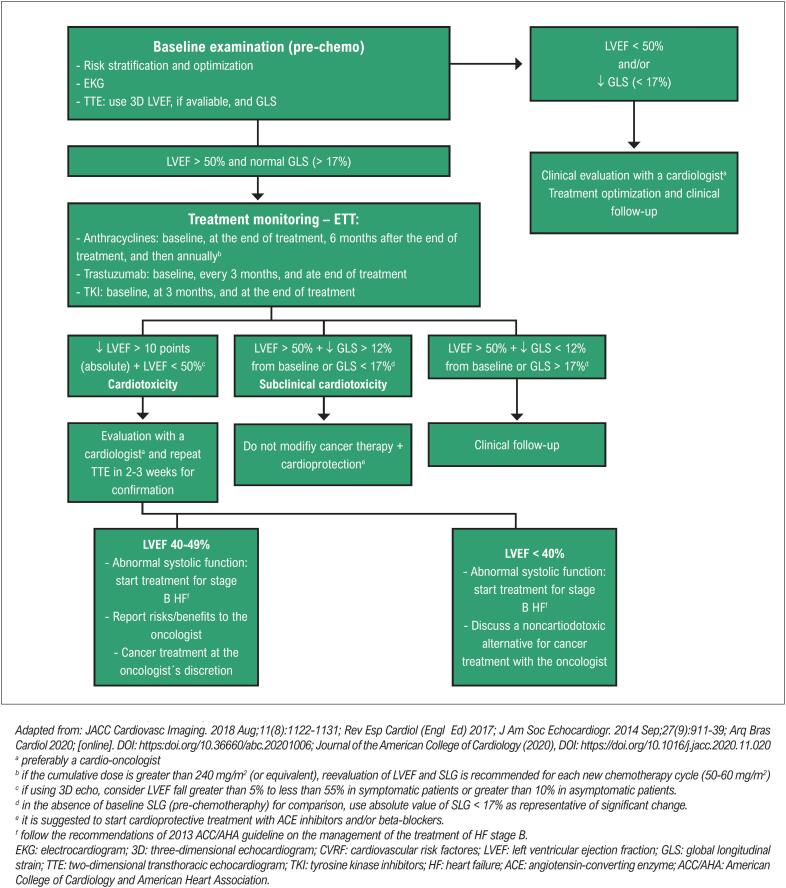
Figura 1. Monitoramento e manejo clínico durante terapia cardiotóxica.
Figura 2
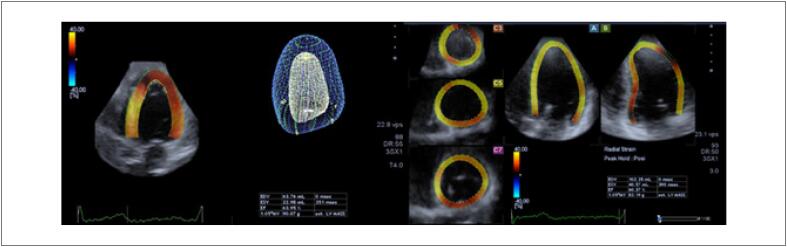
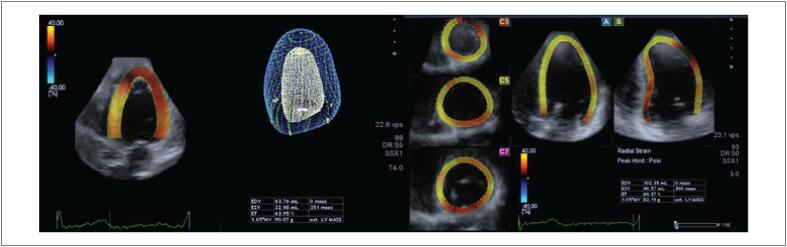
Figura 2. Exemplo de estudo ecocardiográfico tridimensional com análise do full volume e estimativa dos volumes e FEVE.
Figura 3
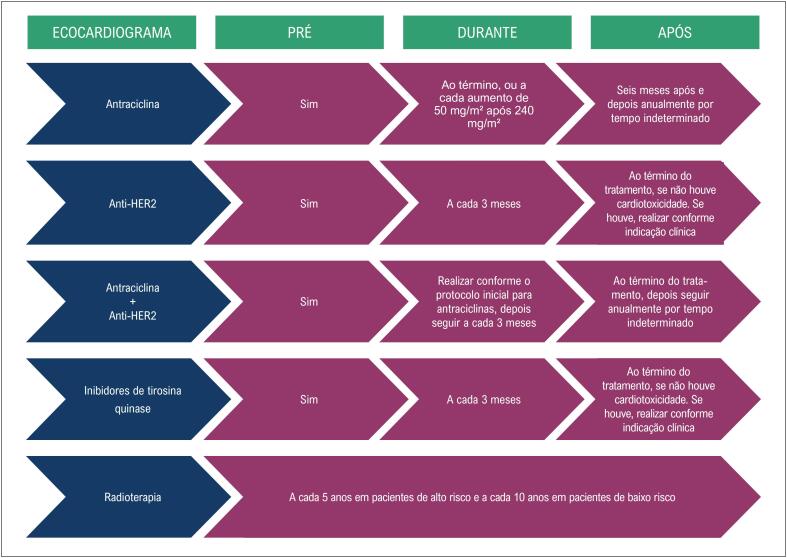
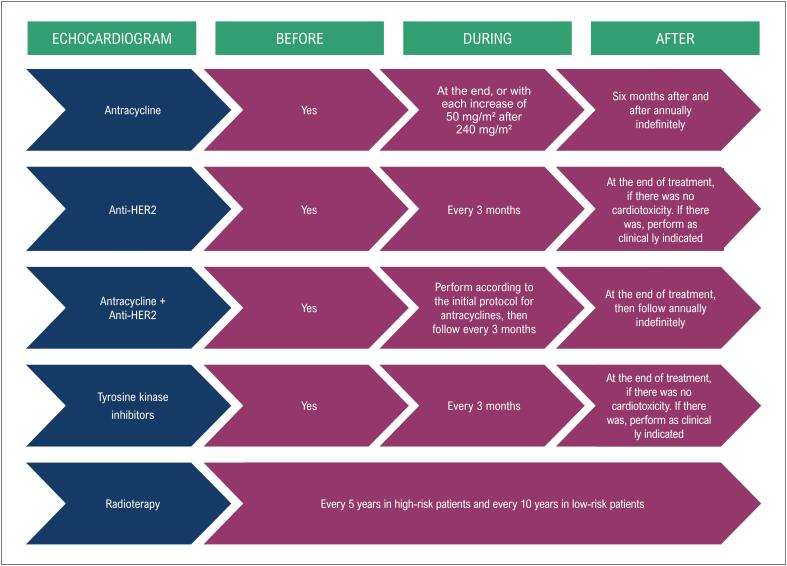
Figura 3. Recomendações para o seguimento ecocardiográfico tardio.
Figura 4
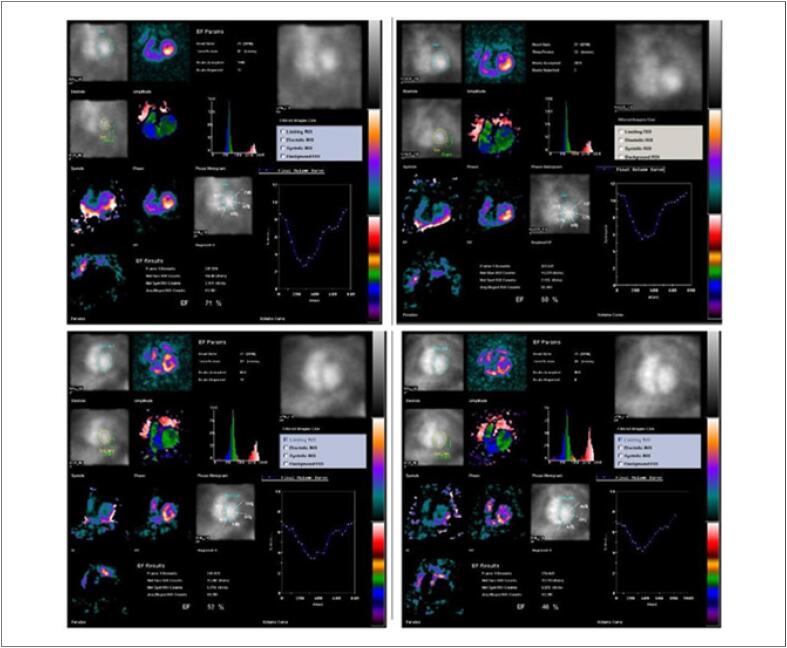
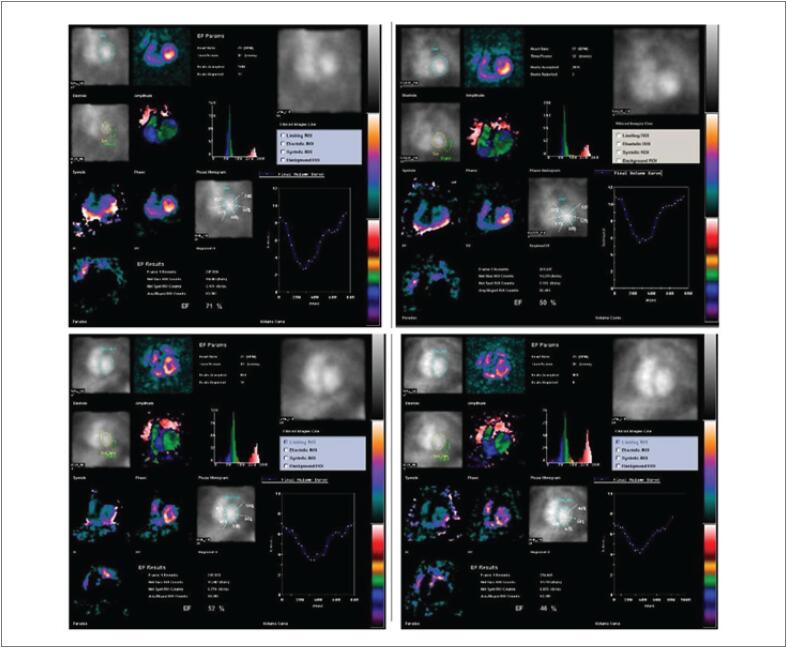
Figura 4. Exemplos de dois pacientes que realizaram ventriculografia radioisotópica para medição da FEVE antes e após o término da quimioterapia (QT) com antracíclicos. Na fileira superior, à esquerda, está a FEVE basal do primeiro paciente, que foi de 71% (normal), e após o término da QT e início de tratamento com trastuzumabe, houve queda da FEVE para 50% (superior à direita). Na fileira inferior, paciente com câncer de mama tinha uma FEVE de 52% antes do início da QT e, no acompanhamento, houve redução da FEVE para 46%, o que motivou início de medicações cardioprotetoras. Imagens gentilmente cedidas pela Dra. Márcia Modesto (Serviço de Medicina Nuclear do Instituto Brasileiro de Controle do Câncer, São Paulo, Brasil).
Figura 5
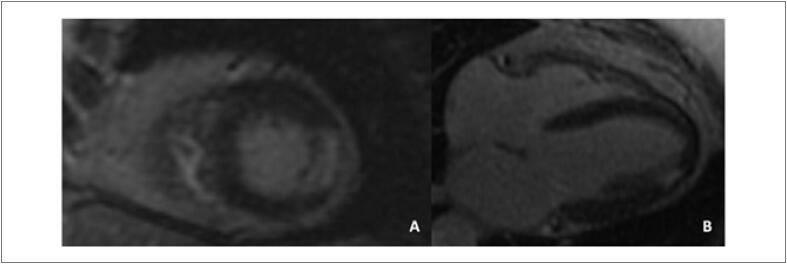
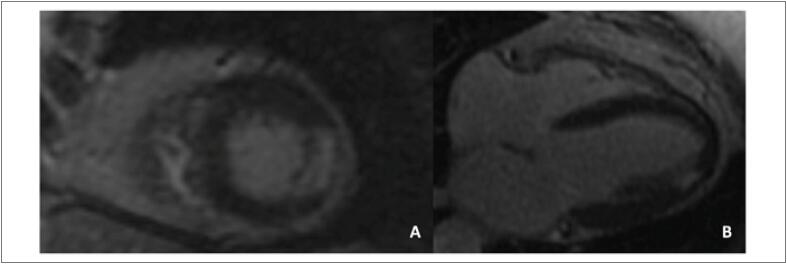
Figura 5. Realce tardio focal em parede ínferolateral do ventrículo esquerdo em paciente com câncer de mama tratada com antraciclina e trastuzumabe.
Figura 6
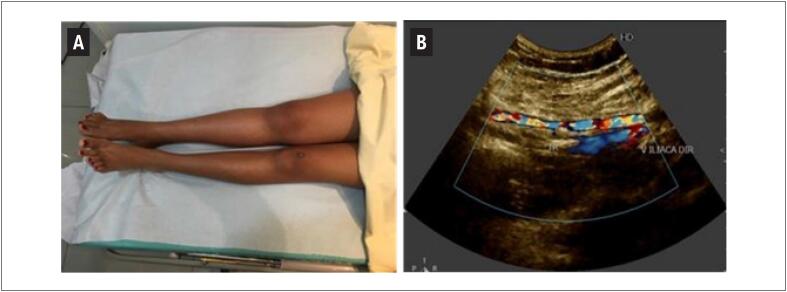
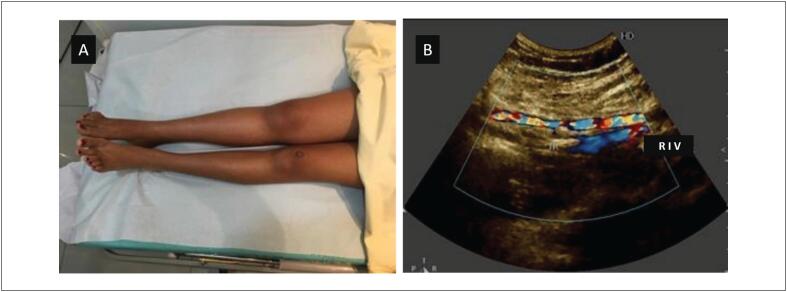
Figura 6. A e B – Edema rizomélico em paciente adolescente com câncer e trombo ocluindo veia ilíaca direita.
Figura 7
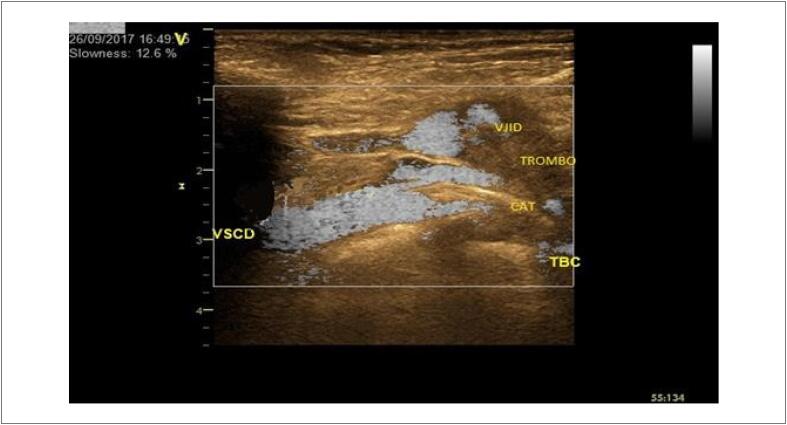
Figura 7. Ultrassonografia vascular (USV) na região supraclavicular proximal, evidenciando trombose na veia jugular interna direita (VJID) proximal, tronco venoso braquiocefálico (TBC) e veia subclávia direita proximal (VSCD). Observa-se o cateter central em VSCD direcionado ao TBC.
Figura 8
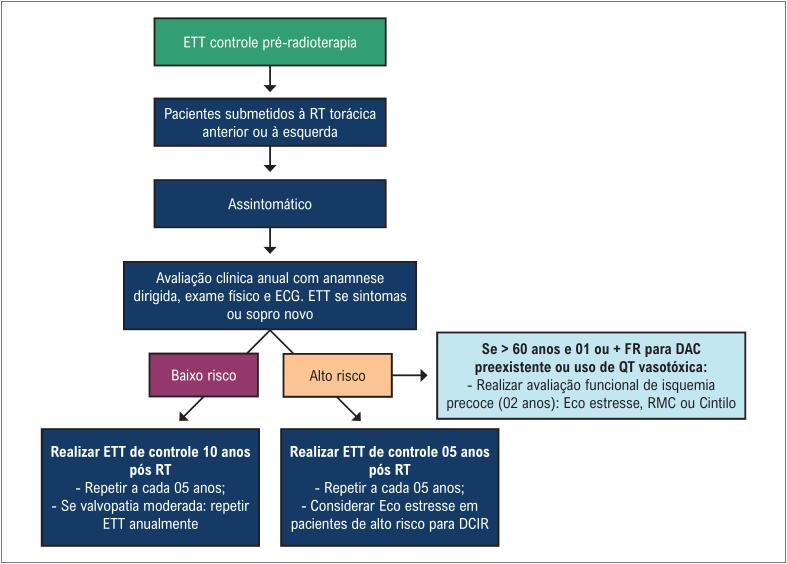
Figura 8. Algoritmo de acompanhamento evolutivo ecocardiográfico após radioterapia torácica.
Figura 9
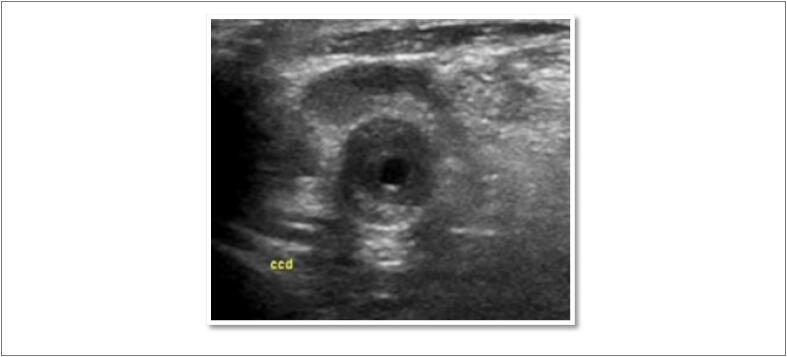
Figura 9. Artéria carótida comum direita em corte transverso com importante espessamento da camada mediointimal levando à grande redução luminal.
Figura 10
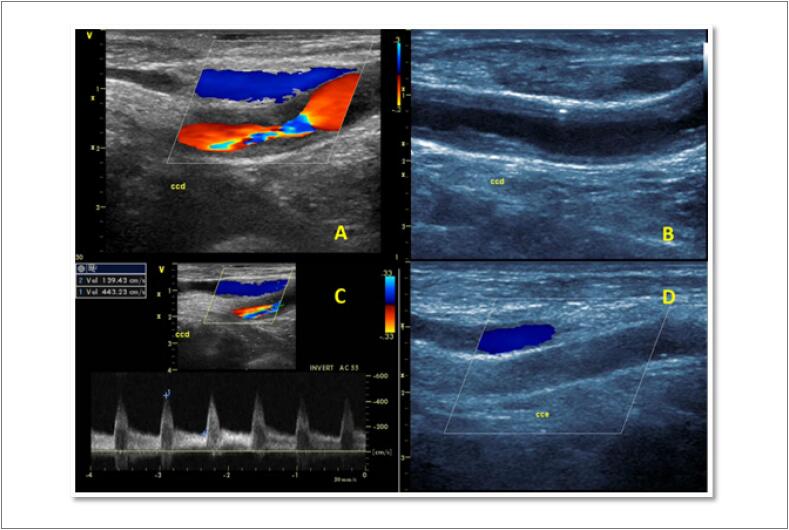
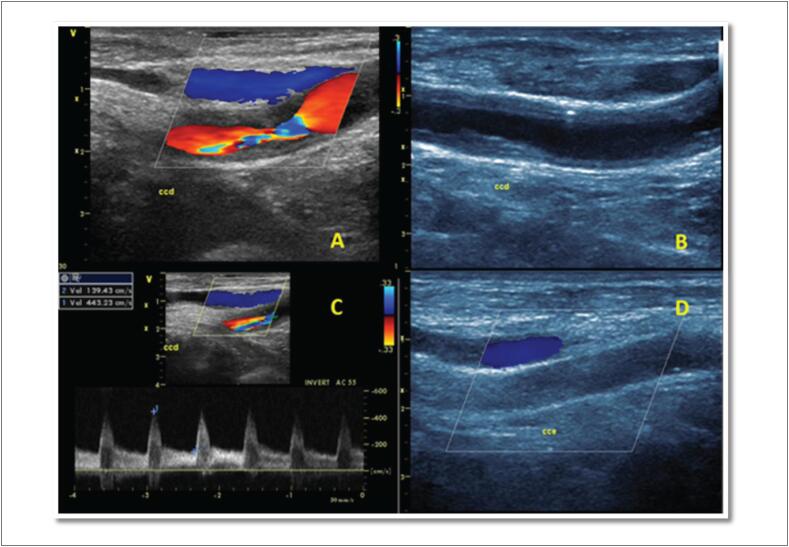
Figura 10. Paciente com arterite actínica, 6 anos após a radioterapia. A. Estenose maior que 70% da artéria carótida comum direita ao Doppler colorido – observa-se grande redução luminal e turbulência do fluxo. B. Artéria carótida comum direita com grande aumento da espessura mediointimal (EMI) ao modo B causando com redução luminal. C. Doppler pulsado com elevação da velocidade de fluxo. D. Carótida comum esquerda ocluída.
Figura 11
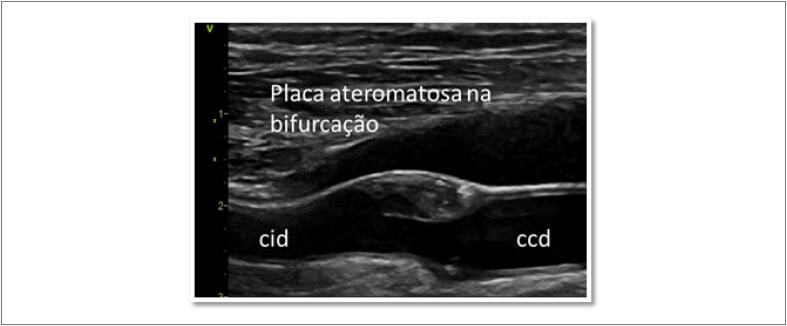
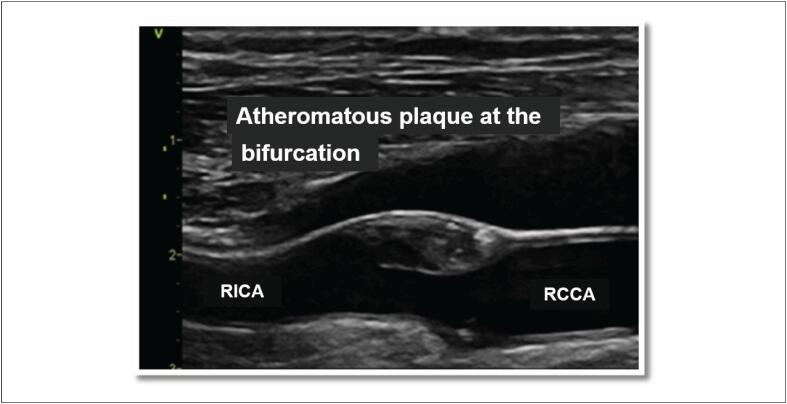
Figura 11. Placa aterosclerótica na bifurcação carotídea.
Figura 12
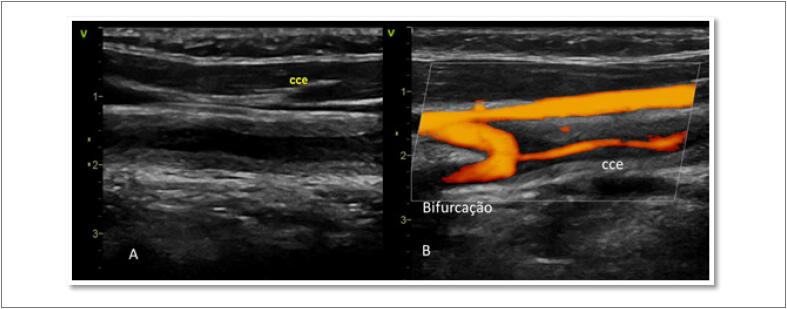
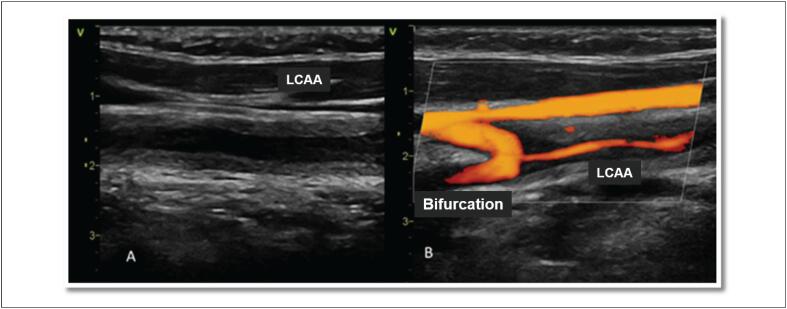
Figura 12. Arterite de Takayassu, sexo feminino, 17 anos de idade. A. Corte longitudinal da artéria carótida comum esquerda mostra importante espessamento concêntrico da parede. B.119 Imagem ao powerDoppler com grande redução luminal da artéria carótida comum, com lúmen preservado a partir da bifurcação carotídea.
Figura 13
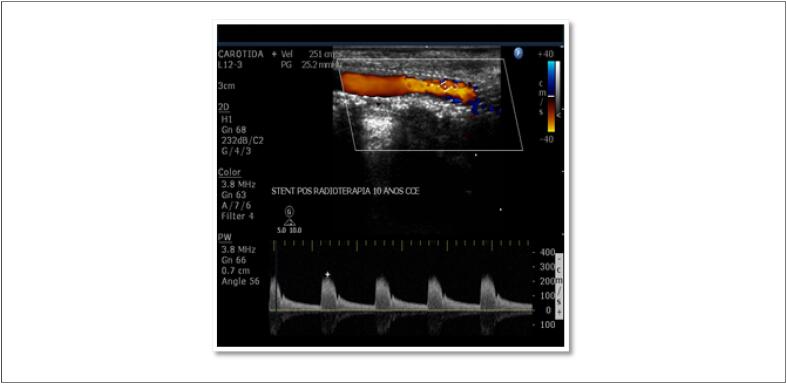
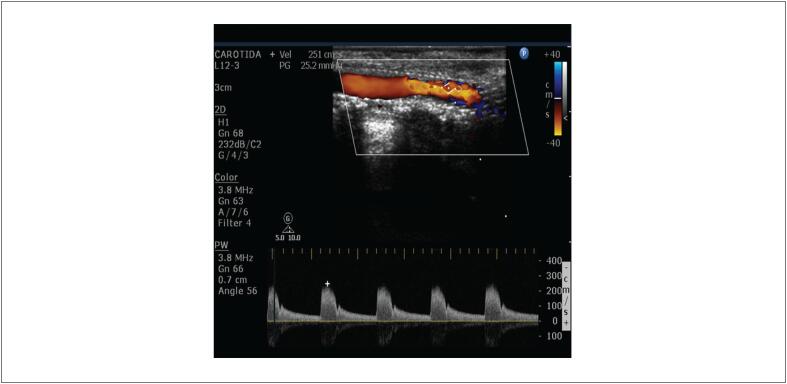
Figura 13. Paciente após 10 anos de radioterapia, com stent na artéria carótida comum esquerda; corte longitudinal demostrando a hiperplasia intimal e fluxo intrastent ao Doppler colorido; Doppler pulsado demonstrando aumento da velocidade local.
Figura 14
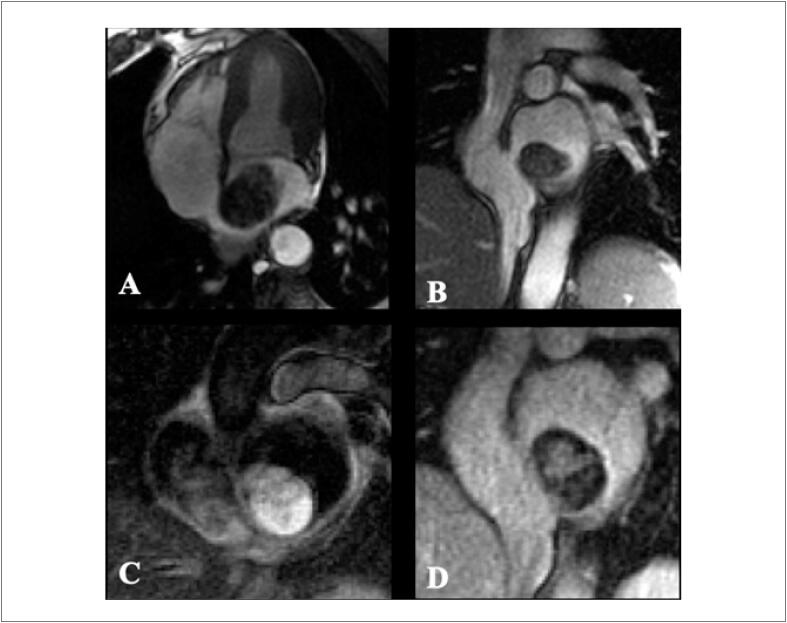
Figura 14. Mixoma em átrio esquerdo.
Figura 15
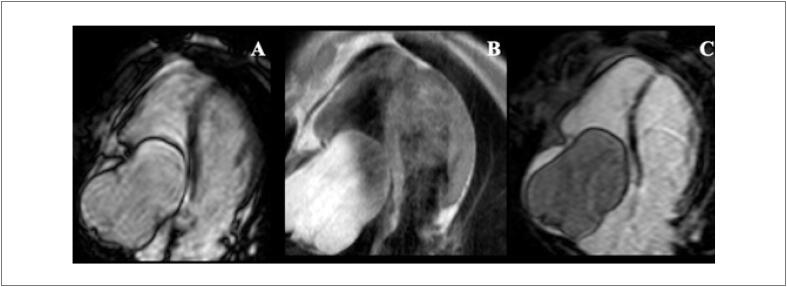
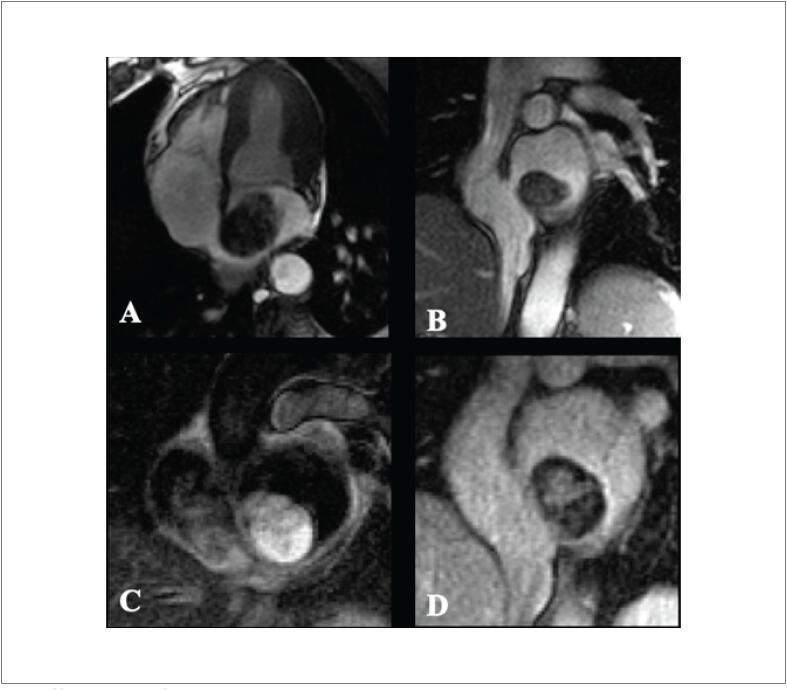
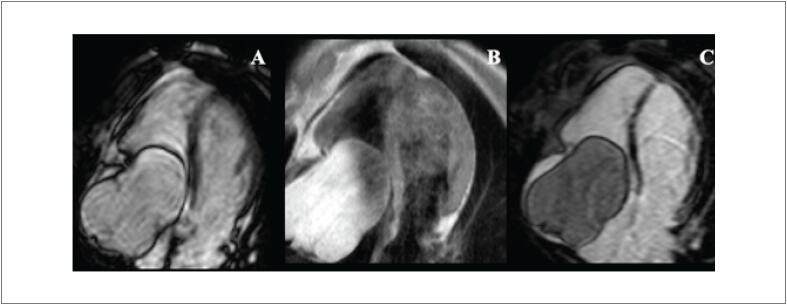
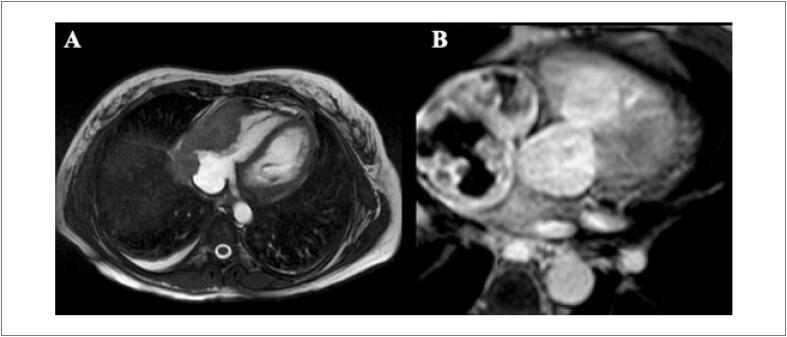
Figura 15. Lipoma em átrio direito. A. Cinerressonância em quatro câmaras mostrando grande lipoma em átrio direito. B. Imagem ponderada em T1 demonstrando que o lipoma é hiperintenso. C. Ausência de realcetardio local.
Figura 16
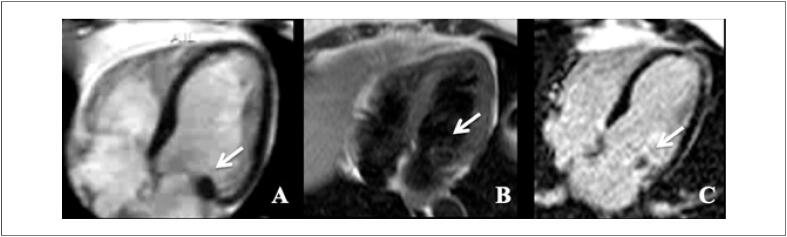
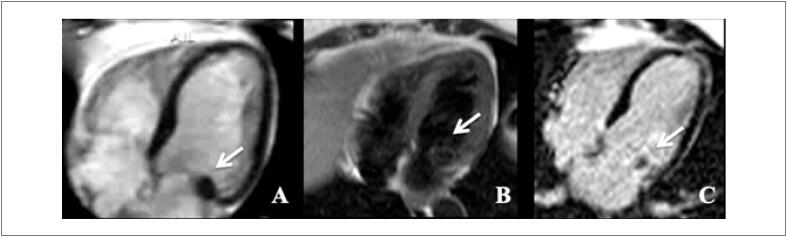
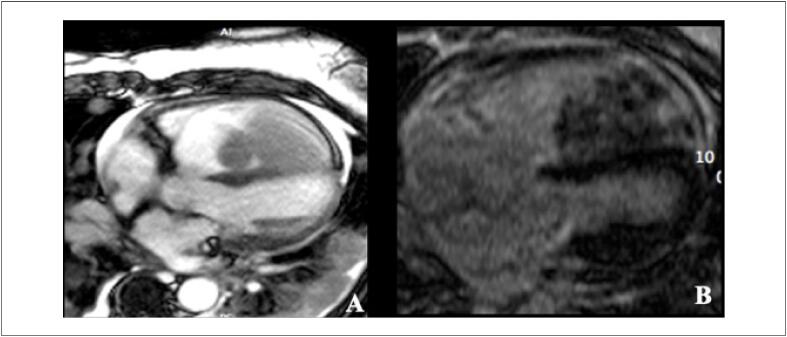
Figura 16. Fibroelastoma papilífero em valva mitral. A. Cinerressonância em quatro câmaras em que se observa a massa hiposinal. B. Imagem ponderada em T1 demonstrando isossinal. C. Sequência de realce tardio precoce com gadolínio demostrando realce leve local.
Figura 17
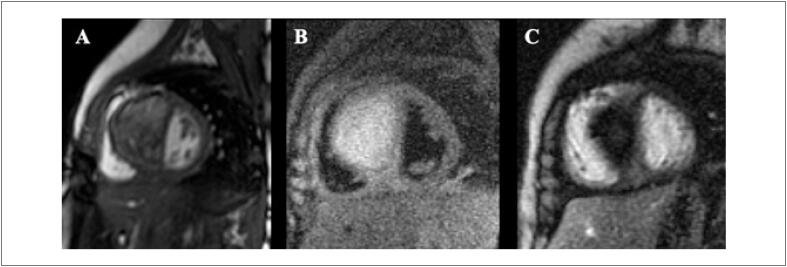
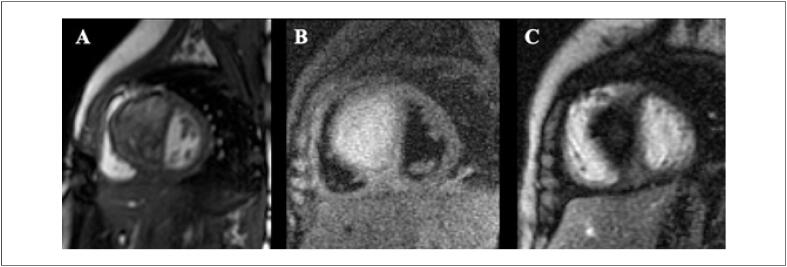
Figura 17. Rabdomioma de ventrículo esquerdo: A. Cinerressonância em eixo curto demonstrando a massa de localização intramural no septo interventricular. B. Imagem ponderada em T2 demonstrando hipersinal. C. Sequência de realce tardio demostrando leve realce local.
Figura 18
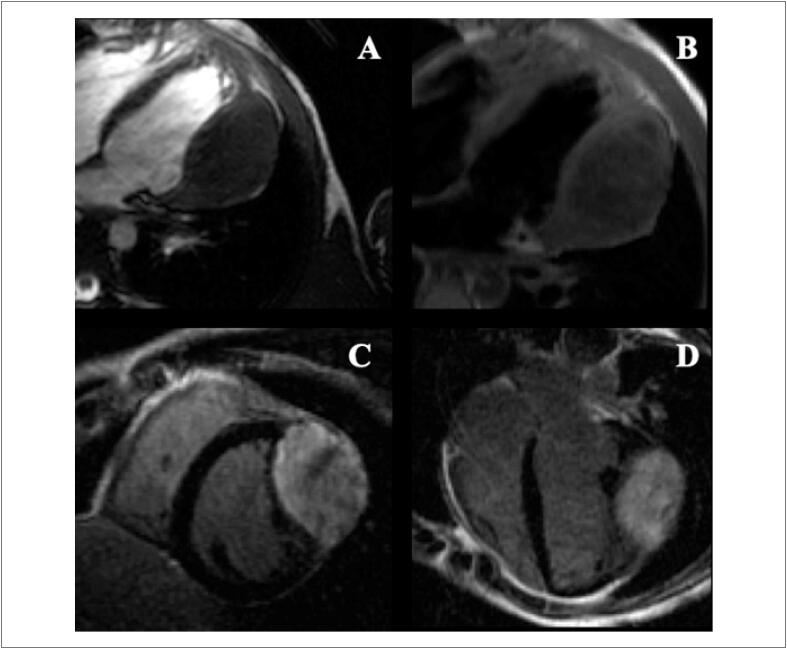
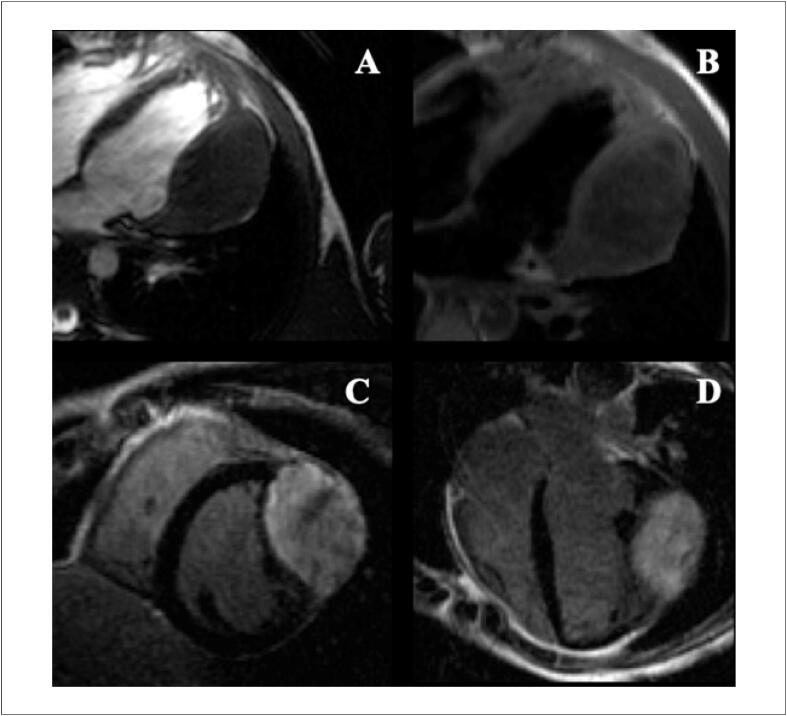
Figura 18. Fibroma intramural. A. Cinerressonância em quatro câmaras mostrando tumor intramural em parede lateral. B. Imagem ponderada em T2 mostrando a massa com hipossinal em relação ao miocárdio. C e D. Imagem de realce tardio em eixo curto e eixo longo mostrando hipersinal homogêneo do tumor compatível com tecido fibroso.
Figura 19
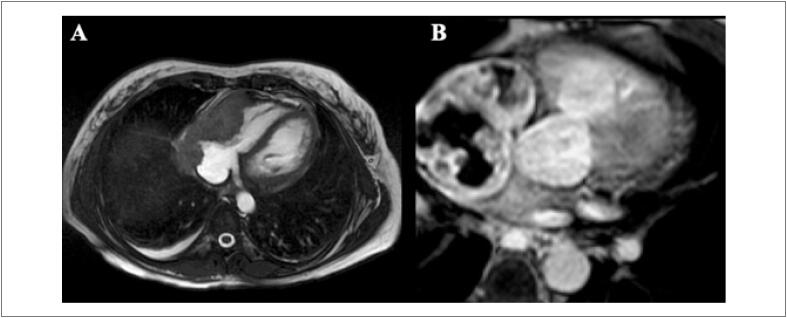
Figura 19. Angiossarcoma em átrio direito. A. Cinerressonância em quatro câmaras mostrando sarcoma com origem na parede posterior do átrio direito com infiltração das suas paredes, da porção basal do ventrículo direito e do pericárdio. B. Imagem de realce tardio com hipersinal heterogêneo da massa em corte axial mais superior.
Figura 20
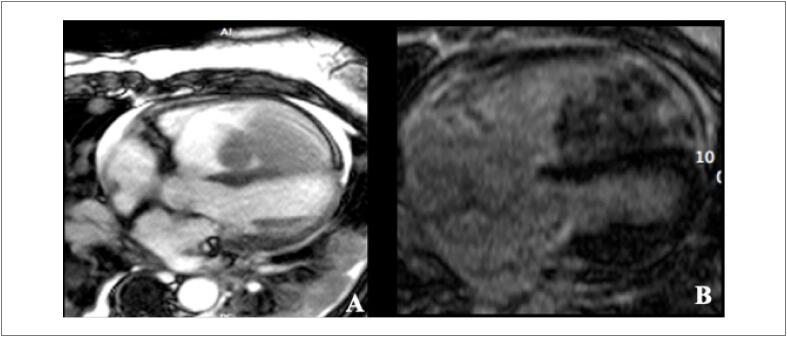
Figura 20. Rabdomiossarcoma em ventrículo direito. A. Cinerressonância em quatro câmaras mostrando massa multilobulada intracavitária em ventrículo direito, de grandes dimensões. B. Imagem de realce tardio com hipersinal heterogêneo da massa.
Figura 21
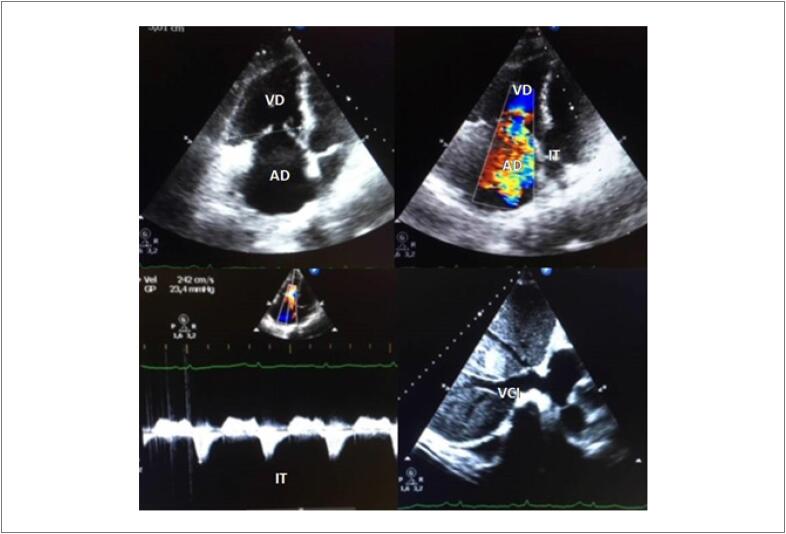
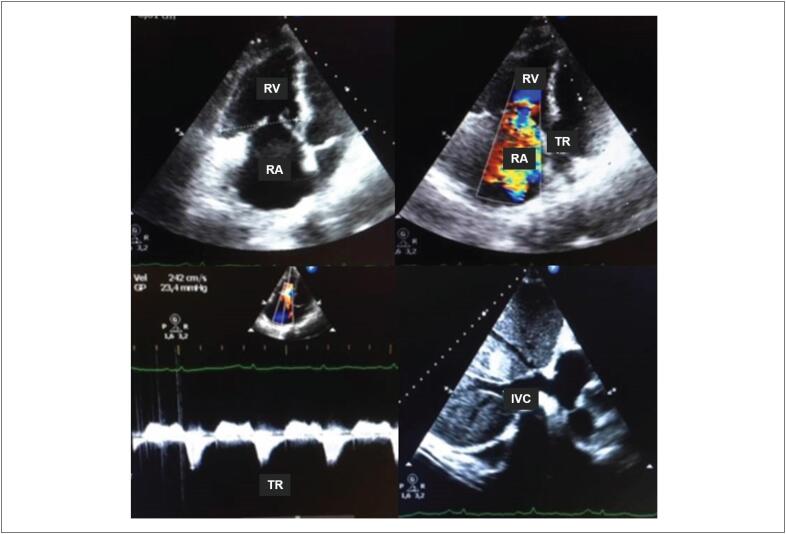
Figura 21. Paciente com tumor carcinoide, metástase hepática, quadro clínico de insuficiência cardíaca direita. VD: ventrículo direito, AD: átrio direito, IT: insuficiência tricúspide, VCI: veia cava inferior.
Figura 22
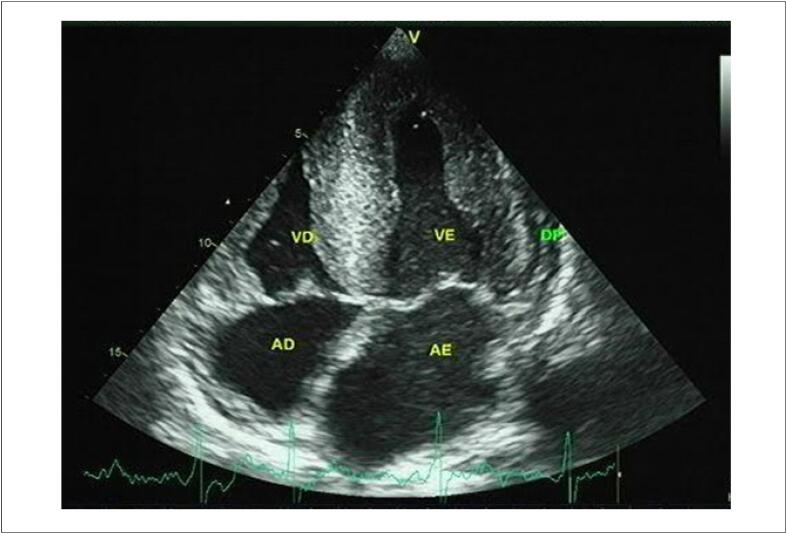
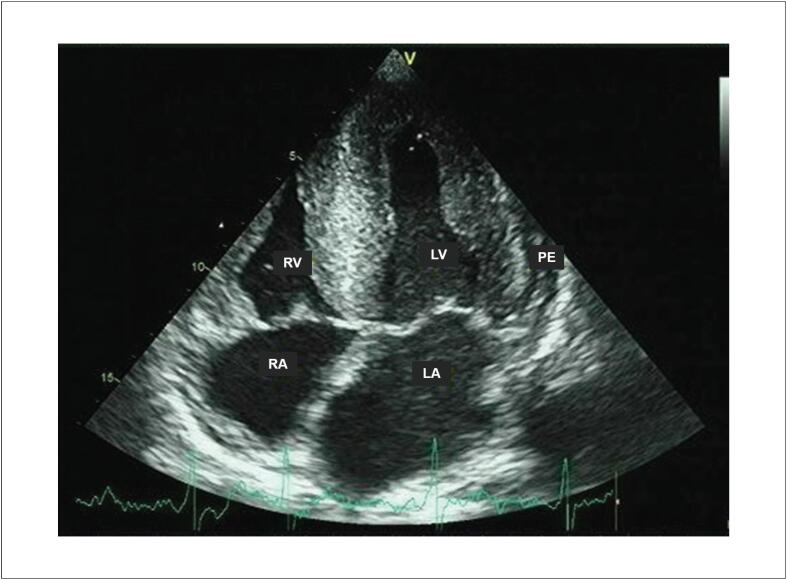
Figura 22. Paciente portador de hipertrofia do ventrículo esquerdo (VE) sem causa determinada. Ecocardiograma evidencia aspecto brilhante ou cintilante granular do miocárdio, sugestivo de amiloidose cardíaca.
Figura 23
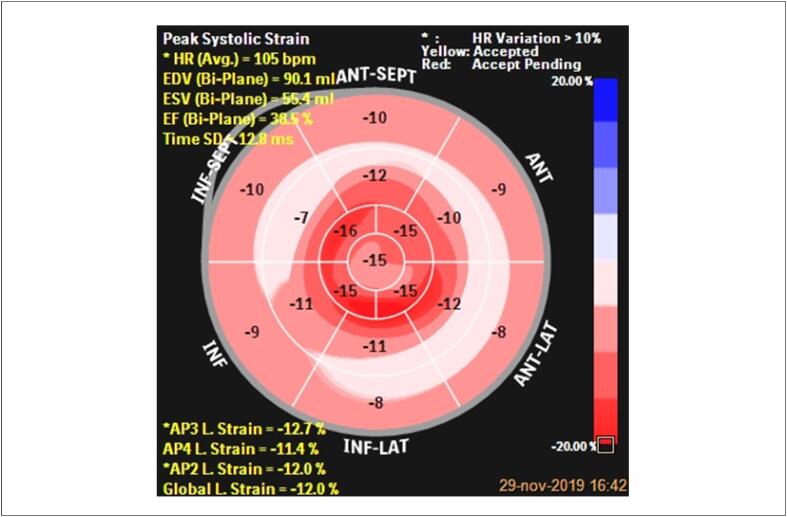
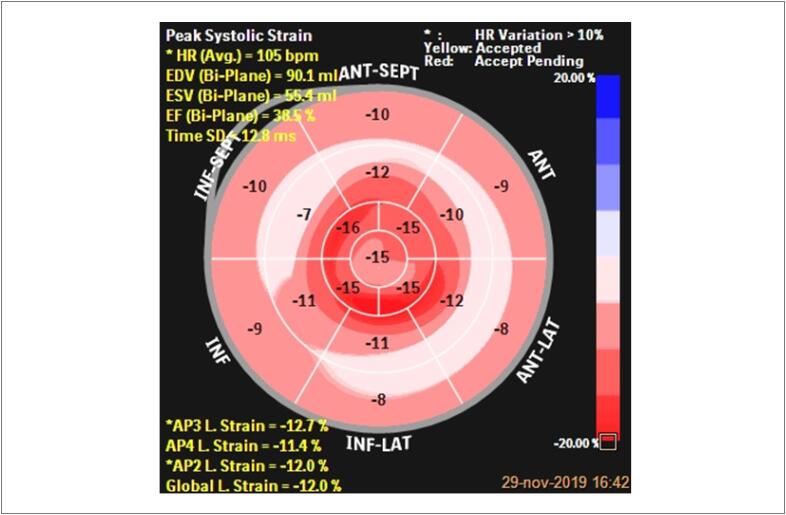
Figura 23. Strain global longitudinal do ventrículo esquerdo em um paciente com amiloidose por transtirretina, demonstrando o seu padrão peculiar que poupa o ápice e acomete mais as porções mediobasais.
Figura 24
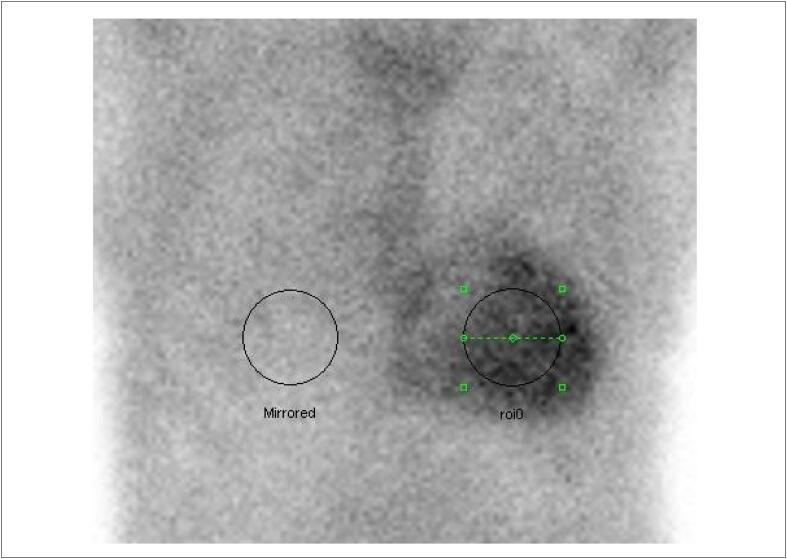
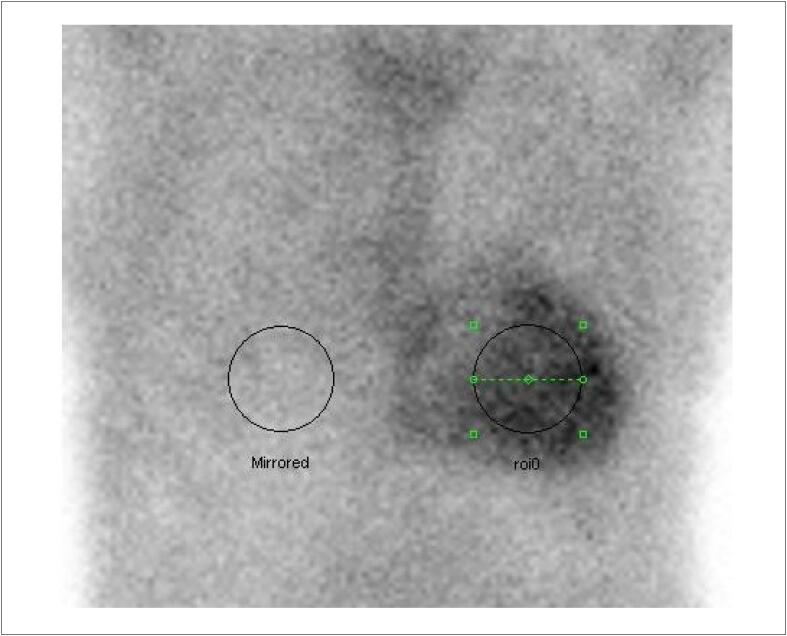
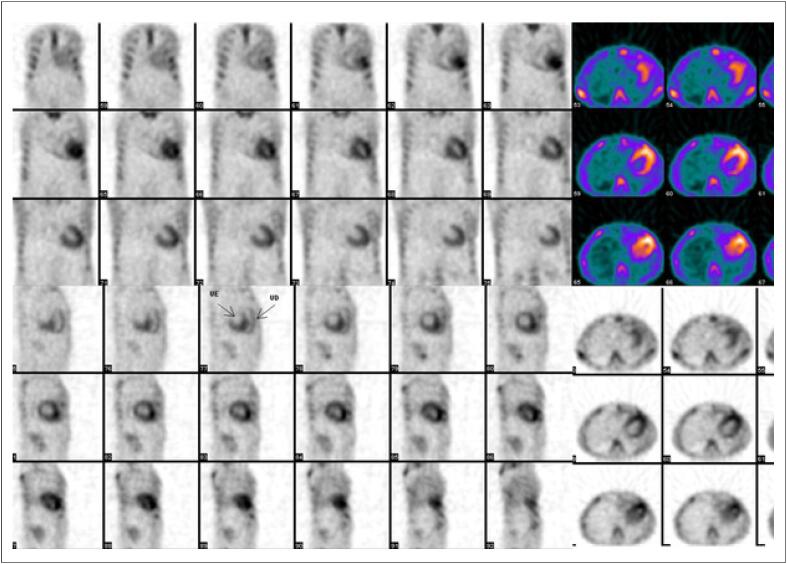
Figura 24. Imagem na projeção anterior do tórax realizada uma hora após a administração intravenosa do pirofosfatomarcado com Tecnécio-99m (99mTc). Cada um dos círculos representa uma região de interesse (ROI) e permite quantificar a concentração do traçador. A relação das contagens entre hemitórax esquerdo e direito (HTE/HTD) deste caso foi de 1,75, sendo, portanto, positiva para amiloidose cardíaca forma transtirretina (ATTR).
Figura 25
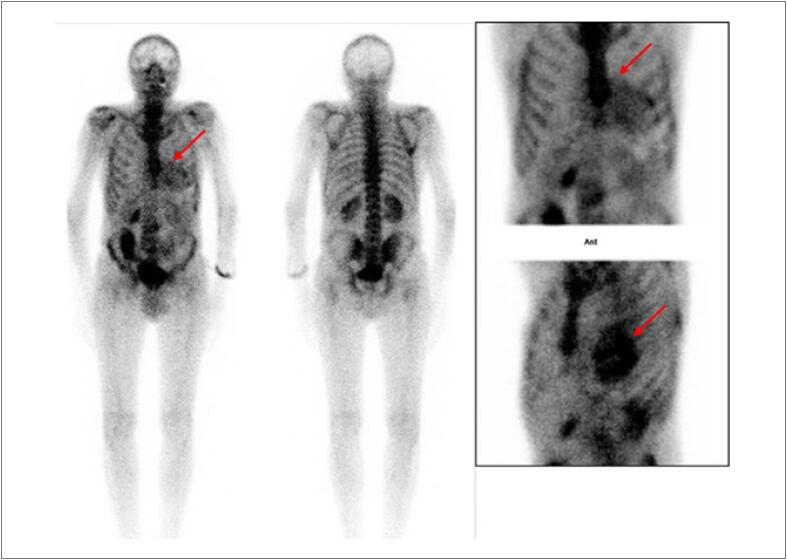
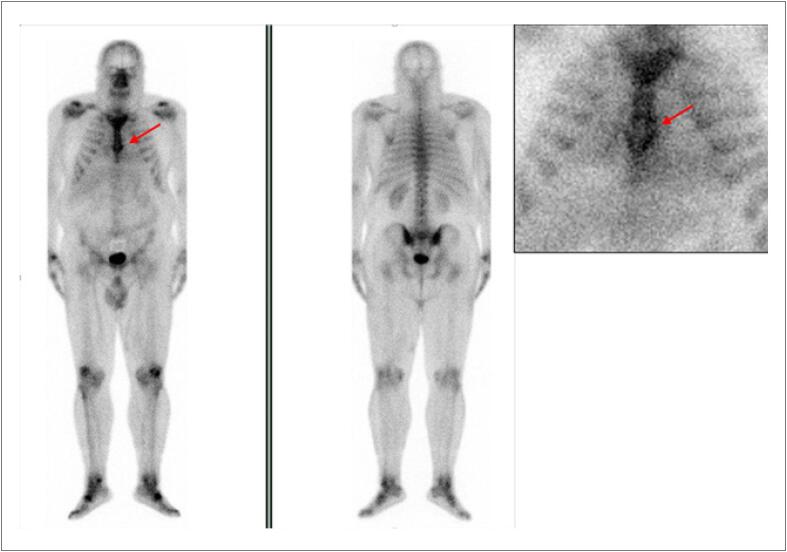
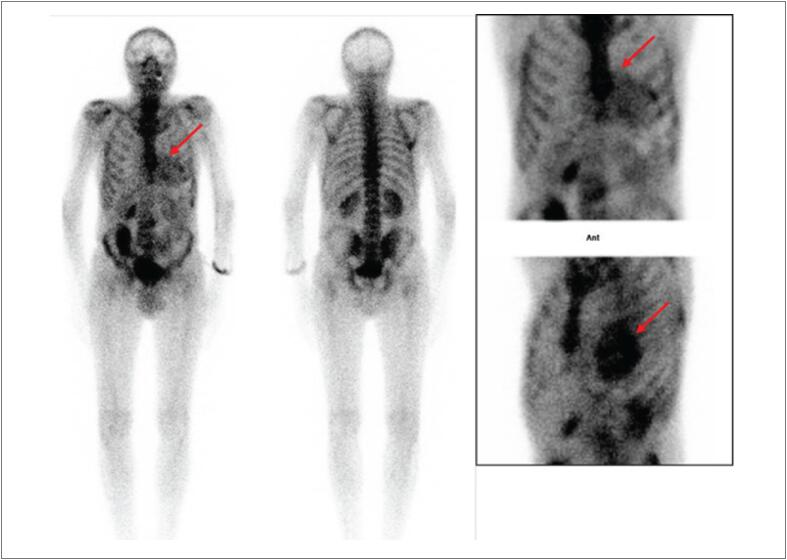
Figura 25. Cintilografia de corpo inteiro e imagens planares do tórax com pirofosfato99mTc demonstrando acúmulo anormal do radiofármaco na projeção do coração (setas) em paciente com insuficiência cardíaca avançada com fração de ejeção preservada. As dosagens séricas de cadeias leves foram negativas e uma biópsia de gordura abdominal foi positiva para amiloidose. O diagnóstico definitivo foi de amiloidose cardíaca por transtirretina.
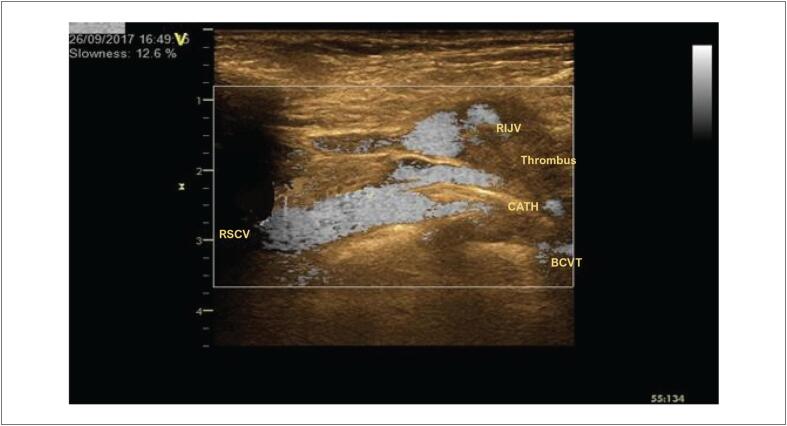
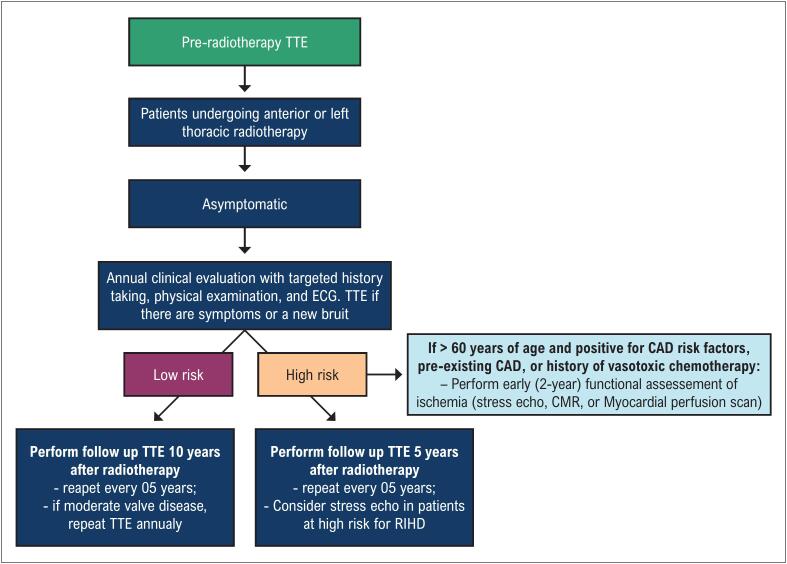
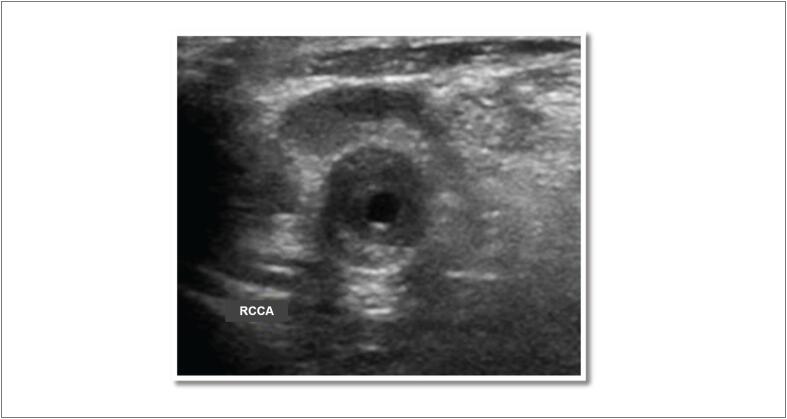
Figura 26
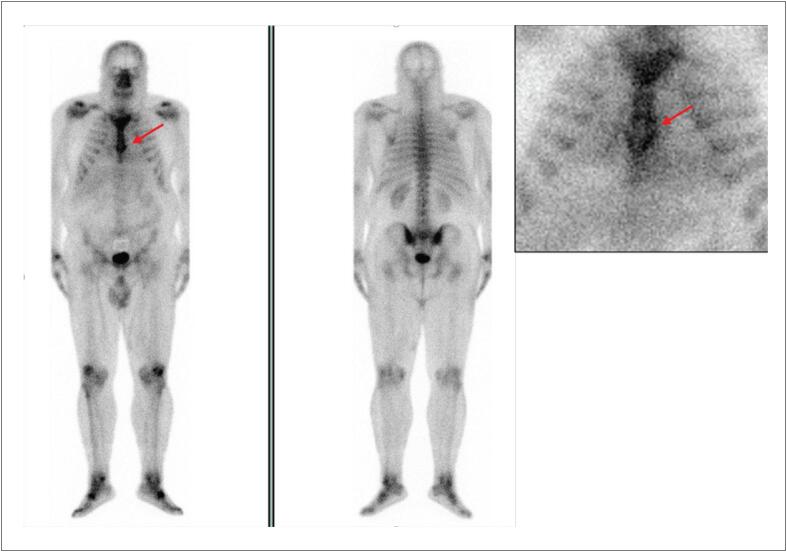
Figura 26. Cintilografia de corpo inteiro e imagens planares do tórax com pirofosfato99mTc demonstrando acúmulo de intensidade leve (grau 1) na projeção do coração ( seta ) em paciente com posterior confirmação de amiloidose de cadeia leve (AL) por achado de pico monoclonal na eletroforese de proteínas séricas e urinárias, aumento da dosagem sérica da forma livre dos anticorpos ( freelight ) e aspirado de medula óssea demonstrando infiltração plasmocitária com celularidade inferior a 10%. A confirmação final foi realizada por biópsia de gordura abdominal, que foi positiva para amiloidose.
Figura 27
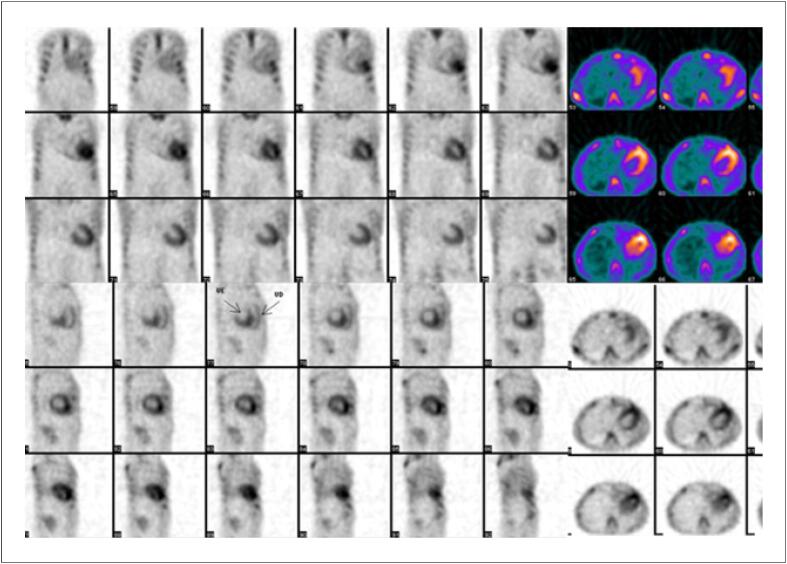
Figura 27. Imagens tomográficas (SPECT) reconstruídas nos eixos axial, coronal e sagital, identificando concentração do pirofosfato99mTc no ventrículo esquerdo e acometimento simultâneo do ventrículo direito (setas) em paciente com suspeita de amiloidose cardíaca forma transtirretina (TTR) mutada, confirmada por teste genético.
Figura 28
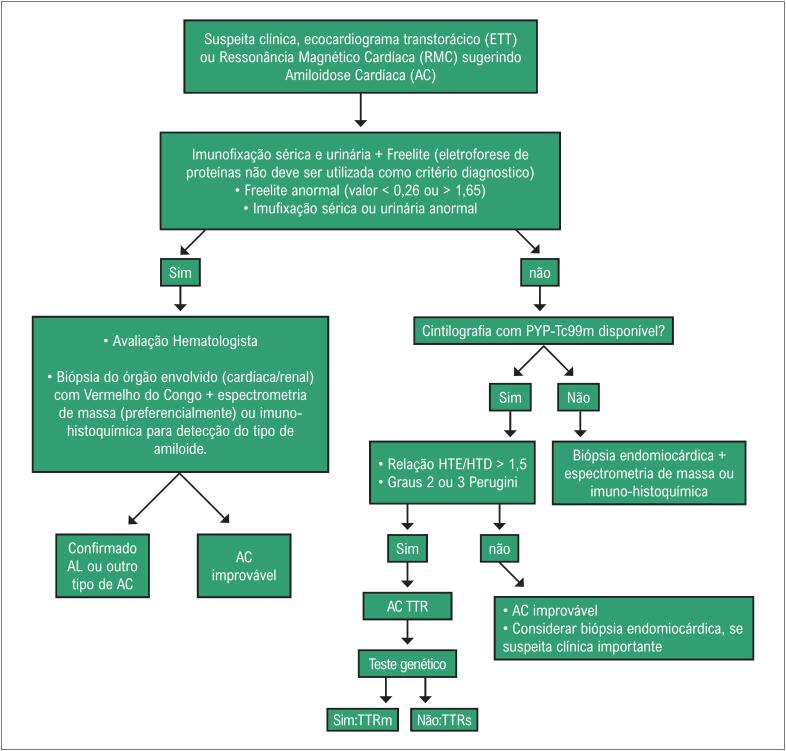
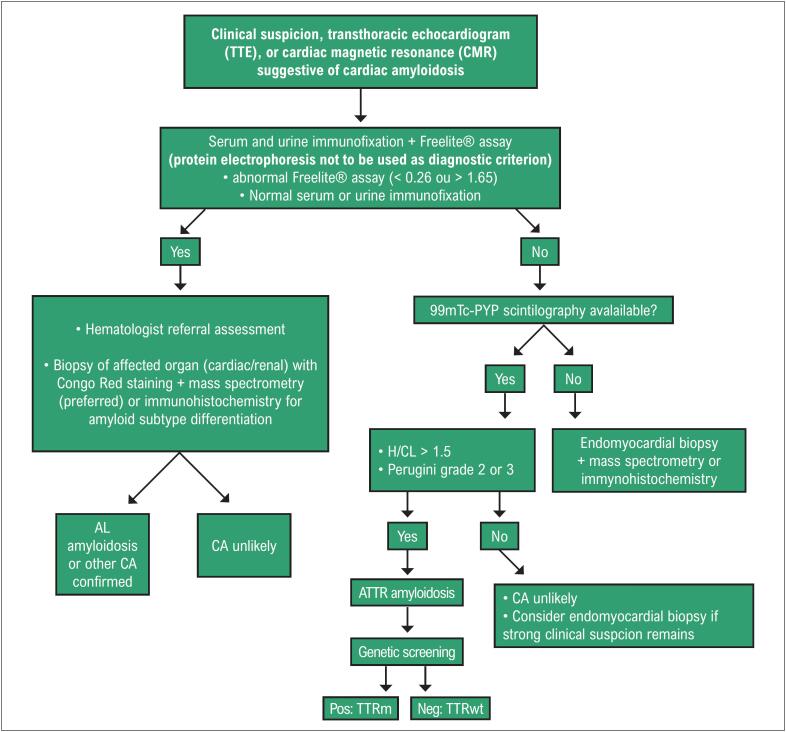
Figura 28. Sequência diagnóstica proposta através da medicina nuclear para casos suspeitos de amiloidose cardíaca (AC). TTR: transtirretina (TTRm: TTR mutada; TTRs: TTR selvagem); AL: amiloidose cardíaca de cadeia leve; PYP: pirofosfato; DPD: ácido 3,3-difosfono-1,2-propanodicarboxílico; 99mTc: tecnécio-99m.
Figura 29
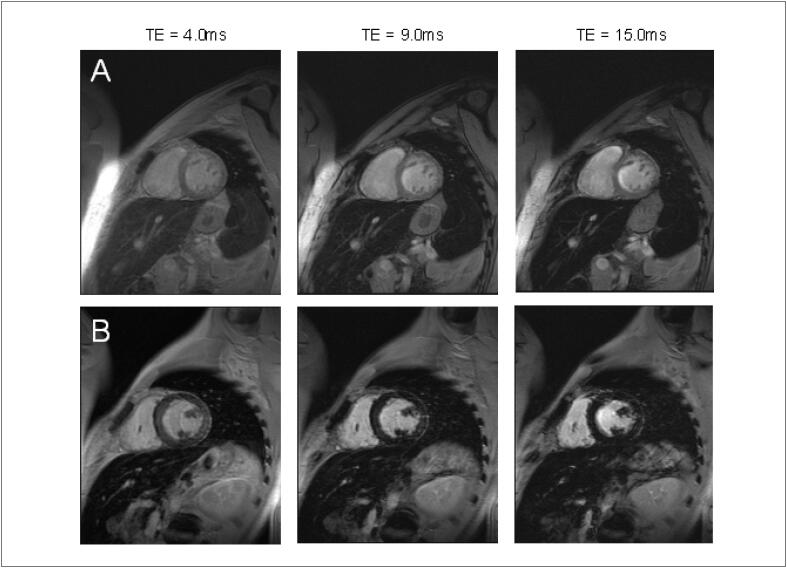
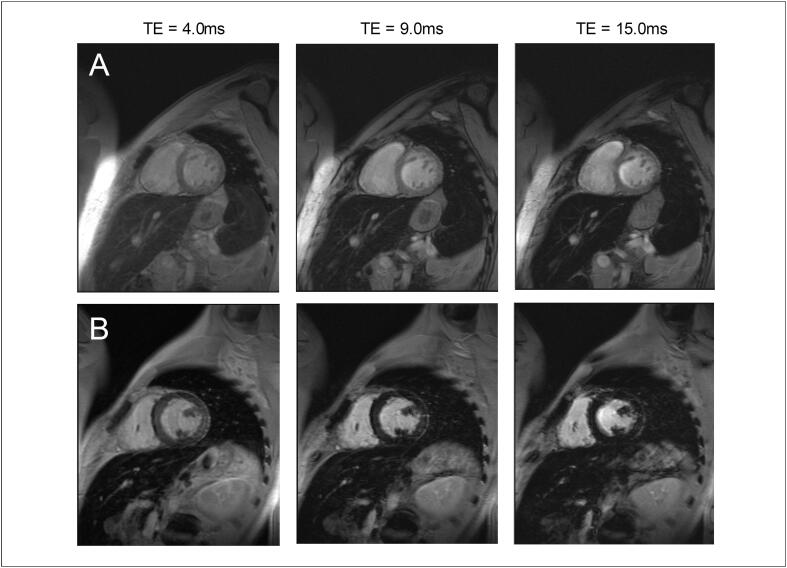
Figura 29. Exemplo de pacientes oncológicos com níveis normais de ferro miocárdico (A) e sobrecarga de ferro significativa (B). O paciente A tem T2* calculado em 22,8 ms com MIC (Myocardial Iron Concentration) = 0,98 mg/g; o paciente B tem T2* de 11,9ms com MIC de 2,2 mg/g. Observa-se o grau maior de escurecimento miocárdico no paciente B com o aumento dos valores de tempo de eco (TE), determinando visualmente o maior grau de sobrecarga miocárdica. O paciente B iniciou terapia de quelação oral de ferro após a determinação da sobrecarga miocárdica pela ressonância.
Figura 30
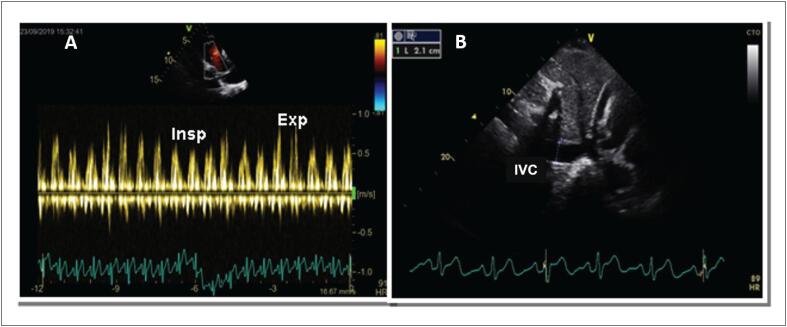
Figura 30. A. Variação do fluxo tricúspide maior que 40%. B. Veia cava inferior túrgida sem variação de seu calibre com manobras respiratórias (paciente com câncer de mama).
Figure 1
Figure 1. Clinical monitoring and management during cardiotoxic therapy.
Figure 2
Figure 2. Example of a tree-dimensional echocardiogram with full volume analysis and estimated volumes and left ventricular ejection fraction.
Figure 3
Figure 3. Recommendations for late echocardiographic follow-up.
Figure 4
Figure 4. Examples of two patients who underwent radionuclide ventriculography to measure left ventricular ejection fraction (LVEF) before and after anthracycline chemotherapy. The upper left image shows the baseline LVEF of the first patient, which was 71% (normal) and then decreased to 50% after the end of chemotherapy and start of trastuzumab therapy (upper right). The lower left image shows the baseline LVEF (52%) of a patient with breast cancer before the start of chemotherapy, which decreased to 46% during follow-up (lower right), leading to the use of cardioprotective medication. The images were kindly provided by Dr. Márcia Modesto (Nuclear Medicine Department of the Instituto Brasileiro de Controle do Câncer, São Paulo, Brazil).
Figure 5
Figure 5. Focal delayed enhancement in the left ventricular inferolateral wall of a patient with breast cancer treated with anthracycline and trastuzumab.
Figure 6
Figure 6. A and B – Rhizomelic edema in an adolescent with cancer and thrombotic occlusion of the right iliac vein (RIV).
Figure 7
Figure 7. Vascular ultrasound of the proximal supraclavicular region showing thrombus in the proximal right internal jugular vein (RIJV), brachiocephalic venous trunk (BCVT), and proximal right subclavian vein (RSCV). A central venous catheter (CATH) is observed in the RSCV directed towards the BCVT.
Figure 8
Figure 8. Algorithm for echocardiographic monitoring following thoracic radiotherapy. ,, CAD: coronary artery disease; ECG: electrocardiogram; echo: echocardiogram; RF: risk factor; RIHD: radiation-induced heart disease; TTE: transthoracic echocardiogram.
Figure 9
Figure 9. Transverse plane of the right common carotid artery showing significant intima-media thickening with consequent luminal narrowing.
Figure 10
Figure 10. Patient with actinic arteritis 6 years after radiotherapy. A. Stenosis > 70% of the right common carotid artery on color Doppler image – significant luminal narrowing and turbulent flow are observed. B. Large increase in intima-media thickness of the right common carotid artery on B-mode image causing luminal narrowing. C. Pulsed-wave Doppler image showing increased flow velocity. D. Occluded left common carotid artery.
Figure 11
Figure 11. Atherosclerotic plaque in the carotid bifurcation.
Figure 12
Figure 12. Takayasu arteritis in a 17-year-old female patient. A. Longitudinal plane of the left common carotid artery (LCCA) showing a significant concentric wall thickening. B. Power Doppler image showing great luminal narrowing of the common carotid artery with preserved lumen from the carotid bifurcation.
Figure 13
Figure 13. Patient after 10 years of radiotherapy with a stent in the left common carotid artery; longitudinal color Doppler image showing intimal hyperplasia and intrastent flow; pulsed-wave Doppler image showing increased local velocity.
Figure 14
Figure 14. Myxoma in the left atrium.
Figure 15
Figure 15. Lipoma in the right atrium. A. Four-chamber cine image of a large lipoma in the right atrium. B. T1-weighted image showing that the lipoma is hyperintense. C. No local delayed enhancement.
Figure 16
Figure 16. Papillary fibroelastoma in the mitral valve. A. Four-chamber cine image of a hypointense mass. B. T1-weighted image showing intermediate signal intensity. C. Early late gadolinium enhancement sequence showing a slight local enhancement.
Figure 17
Figure 17. Rhabdomyoma in the left ventricle: A. Short-axis cine image of an intramural mass in the interventricular septum. B. T2-weighted image showing high signal intensity. C. Delayed enhancement sequence showing a slight local enhancement.
Figure 18
Figure 18. Intramural fibroma. A. Four-chamber cine image of an intramural tumor on the lateral wall. B. T2-weighted image of a hypointense mass in relation to the myocardium. C and D. Short- and long-axis delayed enhancement image showing homogeneously high signal intensity of the tumor compatible with fibrous tissue.
Figure 19
Figure 19. Angiosarcoma in the right atrium. A. Four-chamber cine image of a sarcoma arising from the posterior wall of the right atrium and invading the walls, the basal portion of the right ventricle, and the pericardium. B. Delayed enhancement image of a heterogeneously hyperintense mass on upper axial plane.
Figure 20
Figure 20. Rhabdomyosarcoma in the right ventricle. A. Four-chamber cine image of a large multilobulated intracavitary mass in the right ventricle. B. Delayed enhancement image showing a heterogeneously hyperintense mass.
Figure 21
Figure 21. Patient with a carcinoid tumor, liver metastasis, and clinical status of right heart failure. RV: right ventricle, RA: right atrium, TR: tricuspid regurgitation, IVC: inferior vena cava.
Figure 22
Figure 22. Patient with left ventricular hypertrophy with no determined cause. Echocardiogram showing shiny or granular scintillating aspect of the myocardium suggestive of cardiac amyloidosis. PE: pericardial effusion; LA: left atrium; LV: left ventricle; RV: right ventricle; RA: right atrium.
Figure 23
Figure 23. Global longitudinal strain of the left ventricle in a patient with transthyretin amyloidosis, demonstrating a peculiar pattern that preserves the apex and majorly affects the middle and basal segments.
Figure 24
Figure 24. Anterior image of the chest 1 hour after intravenous administration of technetium-99m-labeled pyrophosphate. Each of the circles represents a region of interest (ROI) and allows for quantification of tracer concentration. The ratio between left and right hemithorax counts, in this case, was 1.75, therefore positive for transthyretin amyloidosis.
Figure 25
Figure 25. Whole-body scintigraphy and planar chest images with technetium-99m-labeled pyrophosphate show abnormal radiopharmaceutical accumulation projecting from the heart (arrows) of a patient with advanced heart failure with preserved ejection fraction. Serum light-chain measurements were negative, and abdominal fat biopsy was positive for amyloidosis. The definitive diagnosis was transthyretin amyloidosis.
Figure 26
Figure 26. Whole-body scintigraphy and planar chest images with technetium-99m-labeled pyrophosphate showing light-intensity accumulation (grade 1) projecting from the heart (arrow) of a patient with subsequent confirmation of light-chain amyloidosis due to a monoclonal spike in serum and urine electrophoresis, increased serum free light-chain antibodies, and bone marrow aspirate showing plasma cell infiltrate < 10%. Final confirmation was performed by abdominal fat biopsy, which was positive for amyloidosis.
Figure 27
Figure 27. Reconstructed single-photon emission computed tomography scans of the axial, coronal, and sagittal axes showing accumulation of technetium-99m-labeled pyrophosphate in the left ventricle and simultaneous involvement of the right ventricle (arrows) in a patient with suspected mutant transthyretin amyloidosis, confirmed by a genetic test.
Figure 28
Figure 28. Proposed nuclear medicine diagnostic sequence for suspected cases of cardiac amyloidosis (CA). TTE: transthoracic echocardiogram; MRI: magnetic resonance imaging; TTR: transthyretin amyloidosis (TTRm: mutant TTR; TTRwt: wild-type TTR); AL: light-chain amyloidosis; PYP: pyrophosphate; DPD: 3,3-diphosphono-1,2-propanodicarboxylic acid;99mTc: technetium-99m.
Figure 29
Figure 29. Example of patients with cancer with normal myocardial iron levels (A) and significant iron overload (B). T2* in patient A was 22.8 ms with a myocardial iron concentration (MIC) of 0.98 mg/g; in patient B, T2* was 11.9 ms with an MIC of 2.2 mg/g. More myocardial darkening is observed in patient B with increased echo time values, visually determining the highest degree of myocardial overload. Patient B was initiated on oral iron chelation therapy after myocardial overload was determined by magnetic resonance imaging.
Figure 30
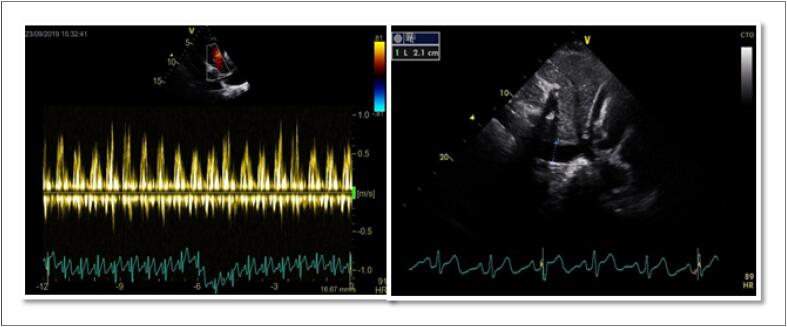
Figure 30. A. Tricuspid valve flow variation > 40%. B. Dilated inferior vena cava (IVC) with no caliber variation with respiratory maneuvers (patient with breast cancer).

References

    1. Santos MO. Estimate 2018: Cancer Incidence in Brazil. Revista Brasileira de Cancerologia. 2018;64(1):119–120.
    2. Santos MO. Estimate 2018: Cancer Incidence in Brazil. Revista Brasileira de Cancerologia. 2018;64(1):119-20.
    1. DeVita VT, Jr., Rosenberg SA. Two hundred years of cancer research. N Engl J Med. 2012;366(23):2207–2214. - PMC - PubMed
    2. DeVita VT, Jr., Rosenberg SA. Two hundred years of cancer research. N Engl J Med. 2012;366(23):2207-14. - PMC - PubMed
    1. Siqueira ASE, Siqueira AG, Filho, Land MGP. Analysis of the Economic Impact of Cardiovascular Diseases in the Last Five Years in Brazil. Arq Bras Cardiol. 2017;109(1):39–46. - PMC - PubMed
    2. Siqueira ASE, Siqueira-Filho AG, Land MGP. Analysis of the Economic Impact of Cardiovascular Diseases in the Last Five Years in Brazil. Arq Bras Cardiol. 2017;109(1):39-46. - PMC - PubMed
    1. Zamorano JL, Lancellotti P, Rodriguez Munoz D, Aboyans V, Asteggiano R, Galderisi M, et al. 2016 ESC Position Paper on cancer treatments and cardiovascular toxicity developed under the auspices of the ESC Committee for Practice Guidelines: The Task Force for cancer treatments and cardiovascular toxicity of the European Society of Cardiology (ESC) Eur Heart J. 2016;37(36):2768–2801. - PubMed
    2. Zamorano JL, Lancellotti P, Rodriguez Munoz D, Aboyans V, Asteggiano R, Galderisi M, et al.2016 ESC Position Paper on cancer treatments and cardiovascular toxicity developed under the auspices of the ESC Committee for Practice Guidelines: The Task Force for cancer treatments and cardiovascular toxicity of the European Society of Cardiology (ESC). Eur Heart J. 2016;37(36):2768-801. - PubMed
    1. Armenian S, Bhatia S. Predicting and Preventing Anthracycline-Related Cardiotoxicity. Am Soc Clin Oncol Educ Book. 2018;38:3–12. - PubMed
    2. Armenian S, Bhatia S. Predicting and Preventing Anthracycline-Related Cardiotoxicity. Am Soc Clin Oncol Educ Book. 2018;38:3-12. - PubMed

Publication types